

Fashion
EU MEPs approve phased ban on Russian gas imports from 2026


The European Parliament has approved new legislation to phase out imports of Russian gas, aiming to safeguard the bloc’s energy security from what lawmakers describe as systematic weaponisation by the Russian Federation.
The European Parliament has approved landmark legislation to phase out Russian gas imports, banning spot-market LNG from early 2026 and ending pipeline gas imports by September 30, 2027.
The law advances phase-out timelines, introduces penalties for breaches, and tightens checks to prevent circumvention.
MEPs also secured a commitment for proposed legislation to ban Russian oil imports by late-2027.
Under the new rules, spot-market Russian liquefied natural gas (LNG) will be banned from the EU once the regulation enters into force in early 2026. Imports of Russian pipeline gas will be phased out by September 30, 2027. During negotiations, EU co-legislators agreed to bring forward the phase-out timelines for most existing import contracts.
The regulation also introduces penalties, to be enforced by member states, against operators found to be in breach of the new requirements, the European Parliament said in a release.
Alongside gas measures, Members of the European Parliament (MEPs) secured a political commitment from the European Commission to propose legislation banning all imports of Russian oil. The Commission is expected to present this proposal in early 2026, with the aim of ensuring an effective oil import ban as soon as possible and no later than late-2027. MEPs also tightened the conditions under which any temporary suspension of the ban could be granted, limiting such exemptions to genuine energy security emergencies.
To prevent circumvention, operators will be required to provide customs authorities with more detailed and robust evidence on the country of production of gas prior to import or storage in the EU.
“This is historic: the EU is taking a giant step towards a new era free of Russian gas and oil. Russia can never again use fossil fuel exports as a weapon against Europe. Now, we must act without delay to implement this agreement and turn our attention to oil imports, where we will hold the European Commission to its commitment to make a proposal early in 2026,” said lead MEP for the industry, research and energy committee (ITRE), Ville Niinisto (Greens/EFA, Finland)
“We have strengthened the European Commission’s initial proposal by introducing a pathway towards a ban on oil and its products, ending long-term contracts sooner than originally proposed, and securing penalties for non-compliance,” said Inese Vaidere (EPP, Latvia), lead MEP for the International Trade Committee.
The legislation, already agreed with the Council, was adopted by the European Parliament with 500 votes in favour, 120 against, and 32 abstentions. It now requires formal endorsement by the Council before publication in the Official Journal.
Fibre2Fashion News Desk (HU)










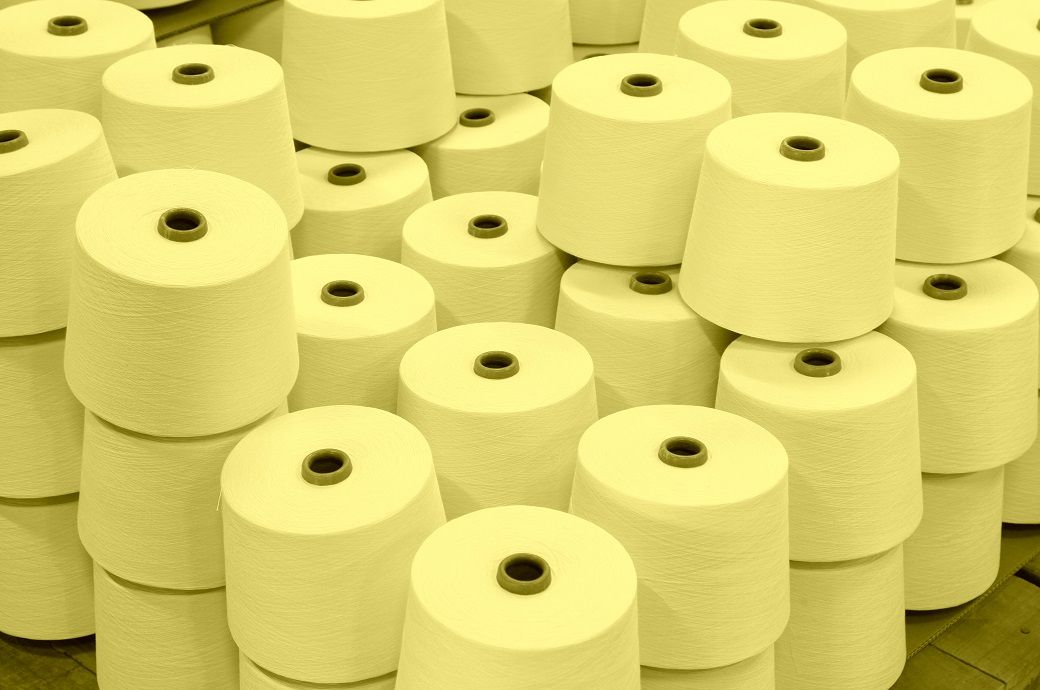
In the Tiruppur market, cotton yarn trade soared by ****;*–** per kg since last Friday. Spinning mills are increasing yarn prices to cover additional cost of production due to costly cotton. Cotton prices jumped by ****;*,***–*,*** per candy in the last couple of days. A trader from Tiruppur market told Fibre*Fashion, “It was inevitable to increase yarn prices as mills cannot absorb such steep rise in cotton prices. Even after increase in yarn prices, supplies are still limited as mills are exporting yarn at attractive prices. Indian spinning mills’ cotton yarn export ratio increased up to ** per cent of its total production from nearly ** per cent, few months ago.”
In Tiruppur, knitting cotton yarn prices were noted as: ** count combed cotton yarn at ****;***–*** (~$*.**–*.**) per kg (excluding GST), ** count combed cotton yarn at ****;***–*** (~$*.**–*.**) per kg, ** count combed cotton yarn at ****;***–*** (~$*.**–*.**) per kg, ** count carded cotton yarn at ****;***–*** (~$*.**–*.**) per kg, ** count carded cotton yarn at ****;***–*** (~$*.**–*.**) per kg, and ** count carded cotton yarn at ****;***–*** (~$*.**–*.**) per kg.

The company’s consolidated revenues stood at $921 million for the quarter ended March 31, 2026, down 1.7 per cent year on year (YoY), or 4 per cent on a constant currency basis. DTC revenues rose 12.1 per cent, while wholesale revenues declined 9.9 per cent. Gross margin fell to 56.8 per cent from 57.8 per cent, while operating income declined 9.9 per cent to $201 million. Diluted earnings per share (EPS) slipped to $2.71 from $2.83.
Crocs has reported better-than-expected Q1 2026 results, with revenue at $921 million, down 1.7 per cent, driven by 12.1 per cent DTC growth. Gross margin fell to 56.8 per cent, while EPS dipped to $2.71.
The Crocs brand grew modestly, but HEYDUDE declined.
CEO Andrew Rees highlighted strong consumer demand and raised FY26 guidance, projecting EPS of $13.20-13.75.
“We are pleased to have started the year with better-than-expected results, fuelled by broad consumer relevance for both of our brands and disciplined execution,” said Andrew Rees, chief executive officer (CEO) at Crocs. “We delivered enterprise revenue of over $900 million, supported by strong consumer response to product newness and consistent brand storytelling.”
The Crocs brand posted modest growth, with revenues up 0.8 per cent to $767 million, supported by a 12.9 per cent rise in DTC sales. International markets remained resilient, growing 7.2 per cent. However, North America revenues declined 6.1 per cent, Crocs said in a press release.
HEYDUDE revenues fell 12.3 per cent to $154 million, weighed down by a sharp 24.7 per cent drop in wholesale sales, although DTC revenues rose 8.6 per cent.
The company ended the quarter with $131 million in cash and reduced total borrowings to $1.34 billion.
Crocs lifts FY26 outlook; sees modest margin expansion
For full-year 2026, Crocs now expects revenues to range from down 1 per cent to up 1 per cent, with adjusted diluted earnings per share projected between $13.2 and $13.75. The company also anticipates modest expansion in adjusted operating margin.
For the second quarter, revenues are expected to decline slightly, with Crocs brand growth of 1–3 per cent and HEYDUDE projected to fall 12-14 per cent. Adjusted operating margin is forecast at around 24.7 per cent.
“Based on our first quarter performance, we are raising our full-year outlook on both the top- and bottom-line,” added Rees. “We remain confident in the long-term health of the business as we drive diversified growth across brands, channels and markets.”
Fibre2Fashion News Desk (SG)

The rise was largely driven by a rebound in energy costs. Prices of non-regulated energy products surged from a 2 per cent decline to a 9.9 per cent increase, while regulated energy prices rose 5.7 per cent after previously contracting, Istat said in a press release.
Italy’s inflation rose to 2.8 per cent YoY in April 2026 from 1.7 per cent in March, driven by a sharp rebound in energy prices, Istat said.
Monthly inflation stood at 1.2 per cent.
Goods inflation strengthened, while services inflation eased.
Transport costs increased notably.
The harmonised index (HICP) rose 2.9 per cent YoY, reflecting higher prices and seasonal factors.
In contrast, services inflation showed signs of moderation. Prices for recreation-related services eased to 2.6 per cent YoY, while transport services slowed sharply to 0.5 per cent. Overall services inflation decelerated to 2.4 per cent from 2.8 per cent in March.
Goods inflation, however, strengthened significantly, rising 3.2 per cent YoY compared with 0.8 per cent in the previous month. This narrowed the inflation gap between goods and services to -0.8 percentage points, down from +2 percentage points in March.
The monthly increase in the index was primarily led by higher prices for non-regulated energy (+5.7 per cent), transport services (+1.6 per cent), and recreation-related services (+1.4 per cent).
Among major consumption categories, water, electricity and fuels recorded a sharp 5.3 per cent annual increase, while transport prices rose 3.8 per cent.
Italy’s harmonised index of consumer prices (HICP), which allows comparison across the euro area, rose 2.9 per cent YoY in April, up from 1.6 per cent in March. On a monthly basis, HICP increased 1.7 per cent, partly reflecting the end of seasonal discounts in clothing and footwear.
Fibre2Fashion News Desk (SG)


Cotton price surge lifts yarn rates sharply in South India

Oil prices fall as Trump pauses Project Freedom to seek final peace deal with Iran

US’ Crocs’ Q1 strong on DTC growth; margins, EPS decline

A Brain Implant for Depression Is About to Be Tested in Humans

Pro wrestling star Steph De Lander reveals how colleague’s advice helped lead her to title triumph at ACW

‘I had £20,000 stolen and had to fight a 13-month fraud reporting rule to get it back’

-
 Tech1 week ago
A Brain Implant for Depression Is About to Be Tested in Humans
-
 Sports1 week ago
Pro wrestling star Steph De Lander reveals how colleague’s advice helped lead her to title triumph at ACW
-
Business1 week ago
‘I had £20,000 stolen and had to fight a 13-month fraud reporting rule to get it back’
-

 Entertainment1 week ago
Norway joins Type 26 Frigate Programme to boost NATO naval power
-

 Tech1 week ago
Are tech leaders risking a cyber resourcing crisis? | Computer Weekly
-

 Entertainment1 week ago
Melania Trump says ABC should ‘take a stand’ on late-night host Kimmel
-
 Business6 days ago
PSX plunges over 4,800 points | The Express Tribune
-
 Business1 week ago
Starmer says ‘tide could be turning’ on shoplifting epidemic