

Fashion
French menswear season to feature 35 shows, with two Paris debutantes, and Balenciaga return

Published
December 18, 2025
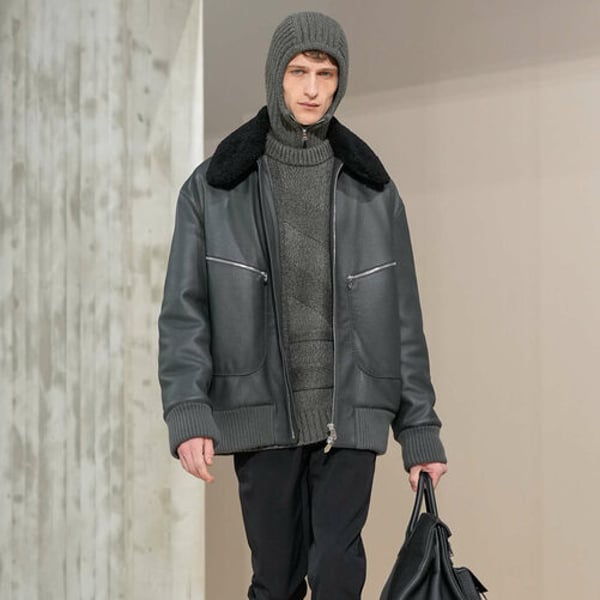
This January’s French menswear catwalk season will feature 35 live shows, including two Paris debutantes, and at least 32 presentations, including a surprise return by Balenciaga
Scheduled to last six days from Tuesday, January 20 to Sunday evening, January 25, the season will welcome debut Paris shows by two noted young brands: Jeanne Friot and Magliano, according to the official calendar released Thursday by the Federation de la Haute Couture et de la Mode (FHCM), French high fashion’s governing body.
Though the season’s most anticipated shows will be the debut of Grace Wales Bonner at Hermès, the return of Jacquemus, and the second menswear collection by Jonathan Anderson for the house of Dior. However, the house of Saint Laurent, notorious for its erratic show dates, has gone missing again from the French calendar, after showing last June.
In terms of new arrivals, Jeanne Friot is a gender-neutral brand based in Paris founded by Friot in 2020. A graduate of the Duperré School and then the Institut Français de la Mode in 2018, Friot cut her teeth at several fashion houses, including Balenciaga. Her show will open the season on Tuesday morning, in a busy opening day which finishes with Pharrell Williams’ fifth runway collection for Louis Vuitton.
Luca Magliano is a Bologna-born creator who first received recognition at the Who Is On Next? menswear awards in 2017. Six years later, Magliano nabbed the coveted Karl Lagerfeld award at the 2023 LVMH Prize. Last January he staged a dramatic show in Florence as Pitti’s guest designer, in a skilful and dramatic display that cleverly combined gender fluidity and quirky Italian tailoring.
Though the season’s hottest ticket will be Wales Bonner’s opening act at Hermès with a Saturday evening show, where she succeeds Veronique Nichanian after a three-decade-plus tenure. Jacquemus will climax the menswear season with the final show on Sunday night.
Anderson’s second Dior Homme menswear show will be staged on Tuesday afternoon, which ends with an evening show by Alexandre Mattiussi for his line Ami.
Balenciaga, which had previously presented menswear mainly in co-ed shows under designer Demna, will try out a novel format under his successor Pierpaolo Piccioli. The house will unveil its menswear online on January 15, when most buyers and press will be attending the Pitti menswear salon in Florence, before physically unveiling the collection on January 20 in its historic Paris HQ.
Elsewhere, Paris will also welcome back inventive perennials like Yohji Yamamoto, Comme des Garçons, Junya Watanabe, and Rick Owens. And feature shows by happening labels such as Willy Chavarria, Kidsuper, Sacai, 3. Paradis, and Kolor.
As noted, the house of Loewe has decided not to stage a runway show in the next menswear season in Paris in January. Instead, it will combine menswear and womenswear into a co-ed show during the next women’s ready-to-wear season in the French capital in March. While J.W. Anderson, the house of Loewe’s former designer Jonathan Anderson, who decamped to Dior, will also not stage a runway event.
In a busy week, four fresh arrivals will hold presentations: ERL by Eli Russell Linnetz from Los Angeles; Saudi label Kml; eco-friendly brand Sonia Carrasco; and Japanese minimalist label ssstein. While three other labels return after brief hiatuses: Charles Jeffery Loverboy, Maison Kitsuné, and Post Archive Faction (PAF).
Copyright © 2025 FashionNetwork.com All rights reserved.









The uncertainty has increased noticeably, with the ongoing conflict involving Iran weighing heavily on corporate confidence. The escalation has effectively stalled hopes of a near-term economic recovery, particularly as energy markets remain volatile, ifo said in a press release.
In the manufacturing sector, sentiment declined after showing improvement in recent months. The drop was driven largely by a significant deterioration in expectations, while firms also reported a less favourable view of their current business situation. Energy-intensive industries were particularly affected, underscoring the pressure from elevated input costs.
Germany’s business sentiment weakened in March, with the ifo business climate index falling to 86.4 from 88.4 amid rising uncertainty and the Iran conflict dampening recovery hopes.
Manufacturing saw a sharp drop in expectations, especially in energy-intensive sectors.
Trade sentiment also declined due to inflation concerns, although current conditions remained relatively stable across sectors.
The trade sector also registered a decline in sentiment, primarily due to a more pessimistic outlook. Concerns over rising inflation among German consumers have led to weaker expectations in both wholesale and retail segments, signalling subdued demand conditions ahead.
Despite the gloomier outlook, businesses in the trade sector reported a slightly improved assessment of their current situation. This suggests that while present activity remains relatively stable, confidence in future performance is deteriorating.
Fibre2Fashion News Desk (SG)
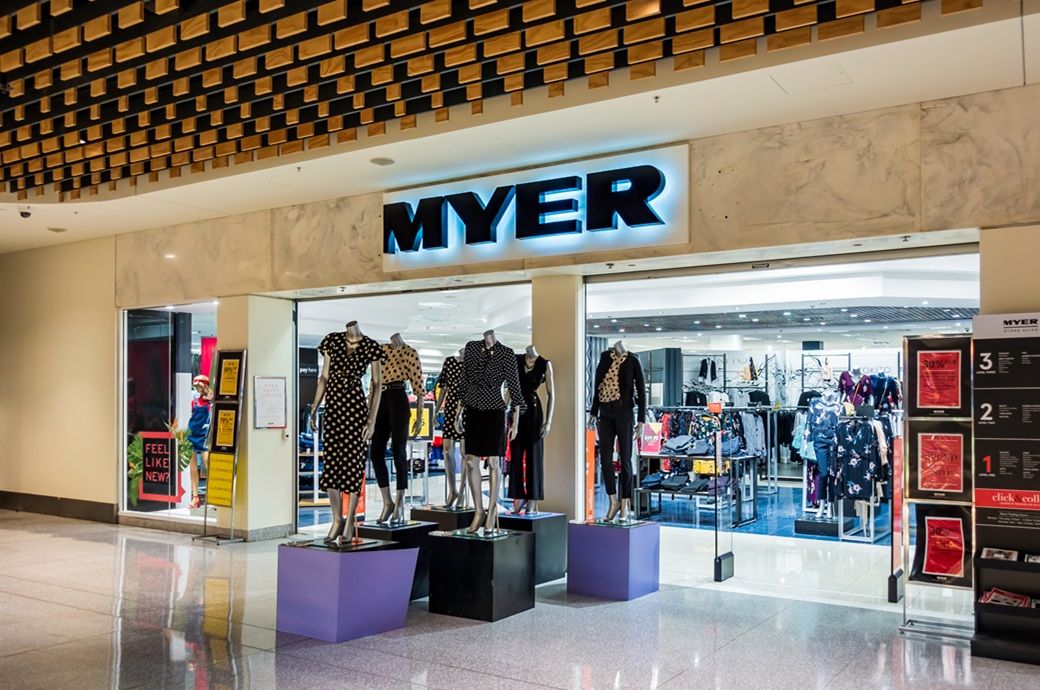
Operating gross profit surged 35.1 per cent to $886.0 million, while underlying earnings before interest and tax (EBIT) rose 10.5 per cent to $112.8 million. Underlying net profit after tax (NPAT) increased 21.7 per cent to $51.7 million, with statutory net profit after tax (NPAT) up 32.8 per cent to $40.3 million.
Myer has reported strong H1 FY26 results, with total sales rising 24.5 per cent to $2,279.5 million and NPAT up 21.7 per cent to $51.7 million.
Growth was supported by Apparel Brands integration and strategic investments.
Loyalty members reached 5.1 million.
Early H2 FY26 sales rose 1.7 per cent, though the company remains cautious amid macroeconomic pressures and weak discretionary demand.
The company maintained strong financial discipline, with cost of doing business at 27.9 per cent of total sales, within its FY26 target of around 29 per cent. Myer also reported a robust net cash position of $287 million, reflecting strong cash conversion and balance sheet flexibility, Myer said in a press release.
Myer’s ongoing transformation strategy continued to gain traction during the period, particularly through its customer engagement and brand expansion initiatives. The relaunched Myer one loyalty programme reached a record 5.1 million active members, supported by enhanced personalisation driven by AI-led data modelling.
The company also strengthened its product portfolio, introducing new exclusive brands and securing partnerships with global names such as Fenty Beauty, La Mer, Gap, and Topshop.
“Our H1 result reflects momentum across our business as we continue to implement the Myer Group Growth Strategy. Sales growth was achieved both in store and online, and our disciplined cost management allowed us to make targeted investments including in e-commerce, marketing, product, merchandise and supply chain to deliver on our plan,” said Olivia Wirth, executive chair at Myer.
“We achieved our biggest Black Friday on record for Myer Retail, and total sales for the group through the important trading months of December and January were in line with last year—a good outcome that demonstrates the resilience of the business,” added Wirth.
The integration of Myer Apparel Brands progressed steadily, with the company targeting at least $30 million in annualised synergies, alongside an additional $10 million from integrating sass & bide, Marcs, and David Lawrence.
Operationally, Myer continued to optimise its store network, closing 22 stores and opening 12 during the period, while advancing its omni-channel capabilities. The company is set to launch an expanded Myer Marketplace platform in May 2026.
Supply chain efficiency also improved, with 32 per cent of online orders fulfilled through third-party logistics and distribution centres, compared to 13 per cent a year earlier.
In the first seven weeks of the second half (H2), total sales grew 1.7 per cent YoY, with Myer Retail sales up 2.2 per cent, driven by strong performance in home and kids categories.
Despite the positive momentum, the company remains cautious amid macroeconomic uncertainty and pressure on discretionary spending.
“Given the current volatility in the wider macroeconomic environment and the ongoing pressures on discretionary spending, we are more focused than ever on delivering value for our customers,” added Wirth.
Fibre2Fashion News Desk (SG)


Transfer rumors, news: Could Foden leave Man City this summer?

Germany’s ifo index drops to 86.4 in March as uncertainty weighs on

Just Eat and Autotrader among five firms under investigation over online reviews

-
 Fashion1 week ago
Sales at US apparel, clothing accessories stores up 4% YoY in Jan 2026
-
 Entertainment1 week ago
Val Kilmer revived 1 year after death through AI
-
 Fashion1 week ago
US’ G-III Apparel’s FY26 sales fall 7% to $2.96 bn
-
 Business1 week ago
Brits cashing in jewellery as gold price hits record high
-

 Sports1 week ago
March Madness 2026 – How to watch in SA, start time, schedule, TV channel for NCAA championship basketball tournament
-

 Fashion6 days ago
China’s textile & apparel exports surge 17% to $50 bn in Jan-Feb 2026
-
 Business1 week ago
Video: The Effects of High Oil Prices
-
 Business6 days ago
Flipkart group CFO to leave co amid IPO plans – The Times of India