Connect with us

Business

Stats overhaul: New inflation and GDP base year series slated for February; IIP to follow in May – The Times of India

Published

on

Stats overhaul: New inflation and GDP base year series slated for February; IIP to follow in May – The Times of India


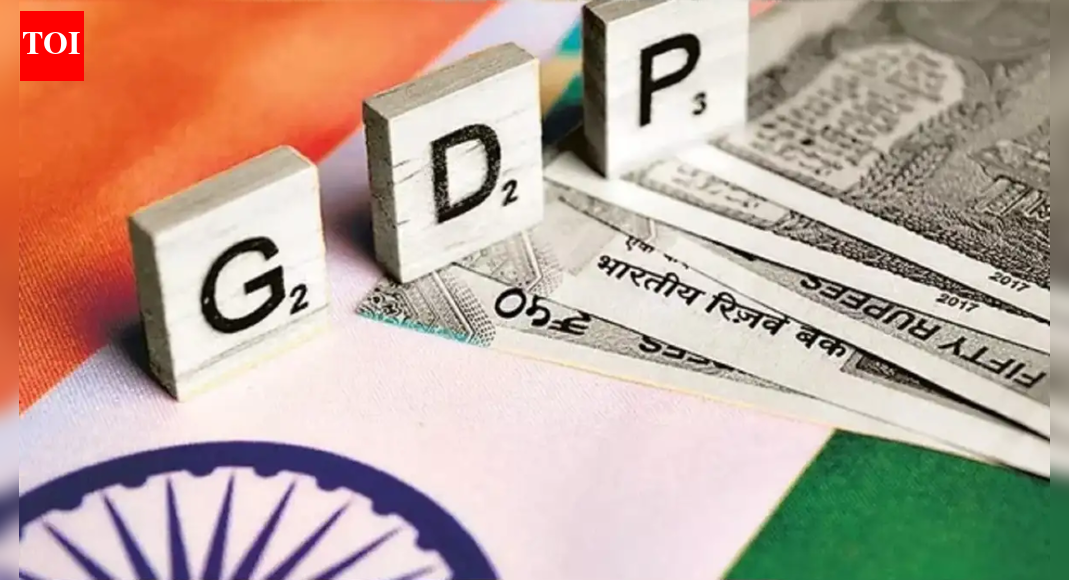
India’s key macroeconomic indicators are set for a base-year reset early next year, with the government announcing timelines for releasing new series of retail inflation, national accounts and industrial production data, PTI reported.The Ministry of Statistics and Programme Implementation (MoSPI) said on Monday that a new series of Consumer Price Index (CPI) data, reflecting a revised base year, will be released in February 2026, alongside updated national accounts data, while the revised Index of Industrial Production (IIP) series will be rolled out in May.According to an official statement, a new CPI series with base year 2024=100 is scheduled for release on February 12, 2026. The revised National Accounts data, with 2022-23 as the base year, will follow on February 27, 2026. The new IIP series, also using 2022-23 as the base year, is slated for release on May 28.Ahead of the data rollout, the ministry has convened a pre-release consultative workshop on the base revision of GDP, CPI and IIP on Tuesday. This follows an earlier workshop held in Mumbai on November 26.The primary objective of the consultation is to share proposed methodological and structural changes in the revised data series and seek feedback from stakeholders, the statement said.The workshop will bring together economists, subject matter experts, representatives from financial institutions and the banking sector, users of official statistics, and senior officials from central and state governments. The ministry said participation from a wide range of stakeholders is expected to enrich discussions and help users better understand the changes in the revised series.The event will be attended by NITI Aayog Vice Chairman Suman K Bery as chief guest, along with Chief Economic Advisor V Anantha Nageswaran, MoSPI Secretary Saurabh Garg and Director General (Central Statistics) N K Santoshi.


Source link

Continue Reading
Click to comment

Leave a Reply

Your email address will not be published. Required fields are marked *

Business

From Banking To Salaries, Here’s What All Changes From January 1, 2026

Published

on

From Banking To Salaries, Here’s What All Changes From January 1, 2026


Last Updated:

The 8th Pay Commission is expected to come into force from January 1, 2026, following the conclusion of the 7th Pay Commission on December 31

A new income tax return (ITR) form is likely to be introduced in January 2026.

With just days left for the curtain to fall on 2025, the arrival of the new year will bring more than fresh calendars and resolutions. From January 1, 2026, a host of policy and regulatory changes are set to kick in, directly impacting farmers, salaried employees, young people and the wider public. Banking rules, social media regulations, fuel prices and government schemes are all in line for an overhaul.

While every new year ushers in tweaks to existing rules, 2026 is expected to see several big-ticket changes. The government’s renewed push on data protection and social media oversight, along with revisions in banking norms, is likely to alter how people transact, spend and access services.

Banking rules set for overhaul

One of the key changes will be in how credit scores are updated. Credit bureaus will now be required to refresh customer data every week instead of once every 15 days, making credit histories more dynamic and responsive.

Several major banks, including SBI, PNB and HDFC, have already reduced loan interest rates, a move that is expected to benefit borrowers in the new year. Revised fixed deposit (FD) interest rates will also come into effect from January 2026.

Banks have further tightened norms related to UPI and digital payments, along with stricter enforcement of PAN-Aadhaar linking. From January 1, PAN-Aadhaar linkage will be mandatory to access most banking and government services; failure to comply could lead to denial of services.

SIM verification rules have also been made more stringent, particularly for messaging platforms such as WhatsApp, Telegram and Signal, in a bid to curb fraud and misuse.

Social media and traffic curbs in focus

The Centre is considering stricter social media regulations for children below 16 years, on the lines of measures introduced in countries such as Australia and Malaysia. Discussions are underway on age-based restrictions and parental controls.

On the mobility front, several cities are preparing to impose fresh curbs on diesel and petrol commercial vehicles to combat rising pollution levels. In parts of Delhi and Noida, plans are being discussed to restrict deliveries using petrol-powered vehicles.

Relief for government employees

The 8th Pay Commission is expected to come into force from January 1, 2026, following the conclusion of the 7th Pay Commission on December 31. This is likely to bring a revision in pay structures for central and state government employees.

In addition, dearness allowance (DA) is set to rise from January 2026, providing a salary boost amid persistent inflation. Some states, including Haryana, are also expected to review and raise minimum wages for part-time and daily-wage workers.

Key changes for farmers

In states such as Uttar Pradesh, farmers are being issued unique IDs that will be mandatory to receive installments under the PM-Kisan scheme. Without the ID, beneficiaries may not receive the credited amounts.

Under the PM Kisan Crop Insurance Scheme, farmers will now be eligible for compensation if crops are damaged by wild animals. However, losses must be reported within 72 hours to claim insurance benefits.

What it means for the general public

A new income tax return (ITR) form is likely to be introduced in January, pre-filled with details of banking transactions and expenditure, simplifying compliance but increasing scrutiny.

Prices of LPG and commercial gas cylinders will be revised from January 1, while aviation turbine fuel (ATF) prices will also be updated the same day, changes that could have a ripple effect on household budgets and airfares.

Click here to add News18 as your preferred news source on Google.

Follow News18 on Google. Join the fun, play games on News18. Stay updated with all the latest business news, including market trendsstock updatestax, IPO, banking finance, real estate, savings and investments. To Get in-depth analysis, expert opinions, and real-time updates. Also Download the News18 App to stay updated.
Disclaimer: Comments reflect users’ views, not News18’s. Please keep discussions respectful and constructive. Abusive, defamatory, or illegal comments will be removed. News18 may disable any comment at its discretion. By posting, you agree to our Terms of Use and Privacy Policy.

Read More


Source link

Continue Reading

Business

Despite 250 Million Users, Why Truecaller Faces An Uncertain Future

Published

on

Despite 250 Million Users, Why Truecaller Faces An Uncertain Future


Last Updated:

Truecaller faces uncertainty in India as TRAI pilots CNAP, a network-level caller ID system, challenging its core service for 250 million users

Truecaller faces risk in India as government pilots CNAP caller ID feature.

Truecaller faces risk in India as government pilots CNAP caller ID feature.

Once hailed as a digital saviour in a country drowning in spam calls, Truecaller today finds itself at a crossroads in its biggest market. With the government pushing ahead with CNAP, a network-level caller identification system, questions are being raised over whether the app that taught Indians to recognise unknown numbers is slowly being rendered redundant.

Founded in 2009 in Stockholm by Alan Mamedi and Nami Zarringhalam (then students at the Royal Institute of Technology), Truecaller was born out of a simple problem: the irritation of receiving calls from unknown numbers. What began as a modest solution for BlackBerry users quickly expanded to Android and iOS, riding the global smartphone wave. The company, originally registered as True Software Scandinavia AB, would eventually go public, turning a student idea into a listed tech firm.

The app’s early growth relied heavily on crowdsourcing. Users identified callers, flagged spam and helped build a massive database that steadily improved in accuracy. By 2012, Truecaller had found global traction, but its defining moment came two years later in India. As spam calls exploded across the country, the app struck a chord with Indian users desperate for relief. By the mid-2010s, India had emerged as Truecaller’s fastest-growing market, and remains its largest today, with over 250 million users.

Recognising India’s importance, the company localised aggressively. Since 2018, all Indian user data has been stored within the country, addressing regulatory and privacy concerns. A majority of Truecaller’s workforce is now based in India, even as its headquarters remain in Stockholm. In November 2024, the founders stepped away from day-to-day operations, handing over the reins to Rishit Jhunjhunwala as CEO, a move seen as signalling a new chapter for the firm.

Truecaller’s business model has largely followed the freemium route – basic caller identification for free, with revenue flowing from advertising, premium subscriptions and enterprise solutions. Paid users get an ad-free interface, stronger spam protection and verification badges. For years, this model worked, until CNAP entered the conversation.

CNAP, or Calling Name Presentation, is a proposed network-level feature being piloted by the Telecom Regulatory Authority of India (TRAI). Unlike app-based solutions, CNAP will display a caller’s name directly on the phone screen, using telecom databases linked to verified KYC records. The idea is simple: no downloads, no permissions, no third-party access to contacts. Once rolled out fully across operators such as Jio, Airtel and Vodafone-Idea, the feature could fundamentally alter how Indians identify callers.

For users, the appeal is obvious. CNAP is expected to be free, built into the network and arguably more reliable than crowdsourced naming. For Truecaller, however, it poses an existential challenge. Industry watchers believe a significant section of users may simply uninstall the app once the same function is delivered natively by telecom operators, without intrusive permissions.

Analysts suggest that Truecaller may need to reinvent itself in India, possibly by doubling down on AI-driven fraud detection, business communication tools or other value-added services that go beyond caller names. Without such a pivot, its relevance in a post-CNAP ecosystem could diminish sharply.

The company has not officially commented on CNAP so far, though it maintains that user safety remains its top priority.

Click here to add News18 as your preferred news source on Google.

Follow News18 on Google. Join the fun, play games on News18. Stay updated with all the latest business news, including market trendsstock updatestax, IPO, banking finance, real estate, savings and investments. To Get in-depth analysis, expert opinions, and real-time updates. Also Download the News18 App to stay updated.
News business Despite 250 Million Users, Why Truecaller Faces An Uncertain Future
Disclaimer: Comments reflect users’ views, not News18’s. Please keep discussions respectful and constructive. Abusive, defamatory, or illegal comments will be removed. News18 may disable any comment at its discretion. By posting, you agree to our Terms of Use and Privacy Policy.

Read More


Source link

Continue Reading

Business

Govt Debunks Viral Claim, Says I-T Dept Has No Blanket Access To Private Digital Data Under New Act

Published

on

Govt Debunks Viral Claim, Says I-T Dept Has No Blanket Access To Private Digital Data Under New Act


Last Updated:

PIB Fact Check says these powers are restricted to formal search and survey operations.

The powers cannot be used for routine information gathering/processing, or even for cases under scrutiny assessment, the income tax department said.

The government on Monday dismissed a social media claim suggesting that the income tax department will gain sweeping powers to access private digital data such as emails and social media accounts from April 1, 2026, calling the information “misleading”.

In a post on X, PIB Fact Check clarified that a claim made by the handle @IndianTechGuide had incorrectly interpreted provisions of the Income Tax Act, 2025. The IndianTechGuide’s post had alleged that the tax department would have blanket “authority” to access citizens’ digital platforms to curb tax evasion.

“A post by @IndianTechGuide claims that from April 1, 2026, the Income Tax Department will have the ‘authority’ to access your social media, emails, and other digital platforms to curb tax evasion. PIBFactCheck. The claim being made in this post is misleading,” PIB Fact Check said.

Terming the claim “misleading”, PIB Fact Check said that the relevant provisions under Section 247 of the Income Tax Act, 2025, are narrowly defined and apply only in specific circumstances. According to the clarification, the provisions of section 247 of the Income Tax Act 2025 are strictly limited to Search and Survey operations. “Unless a taxpayer is undergoing a formal search operation due to evidence of significant tax evasion, the department has no power to access their private digital spaces,” PIB said.

The government emphasised that the Income Tax Department does not have the authority to access private digital spaces for routine information gathering, processing of returns or even during scrutiny assessments. Such powers, PIB Fact Check said, are meant exclusively for cases involving black money and large-scale tax evasion uncovered during authorised search and survey actions.

“The powers cannot be used for routine information gathering/processing, or even for cases under scrutiny assessment. These measures are specifically designed to target black money and large-scale evasion during search and survey, not the everyday law-abiding citizen,” it added.

It further pointed out that the ability of tax authorities to seize documents and evidence during search and survey operations is not new and has existed since the enactment of the Income Tax Act, 1961. The 2025 law, it said, does not expand these powers to cover ordinary, law-abiding taxpayers.

“The power to seize documents and evidence during search and survey operations has existed since the 1961 Act,” it added.

The clarification comes amid growing public concern and online speculation around data privacy and surveillance following the passage of the Income Tax Act, 2025. The government’s response seeks to reassure taxpayers that there is no change in the scope of routine tax administration and that private digital communications remain protected unless a taxpayer is subject to a legally sanctioned search operation.

Click here to add News18 as your preferred news source on Google.

Follow News18 on Google. Join the fun, play games on News18. Stay updated with all the latest business news, including market trendsstock updatestax, IPO, banking finance, real estate, savings and investments. To Get in-depth analysis, expert opinions, and real-time updates. Also Download the News18 App to stay updated.
News business tax Govt Debunks Viral Claim, Says I-T Dept Has No Blanket Access To Private Digital Data Under New Act
Disclaimer: Comments reflect users’ views, not News18’s. Please keep discussions respectful and constructive. Abusive, defamatory, or illegal comments will be removed. News18 may disable any comment at its discretion. By posting, you agree to our Terms of Use and Privacy Policy.

Read More


Source link

Continue Reading

Trending