Sports
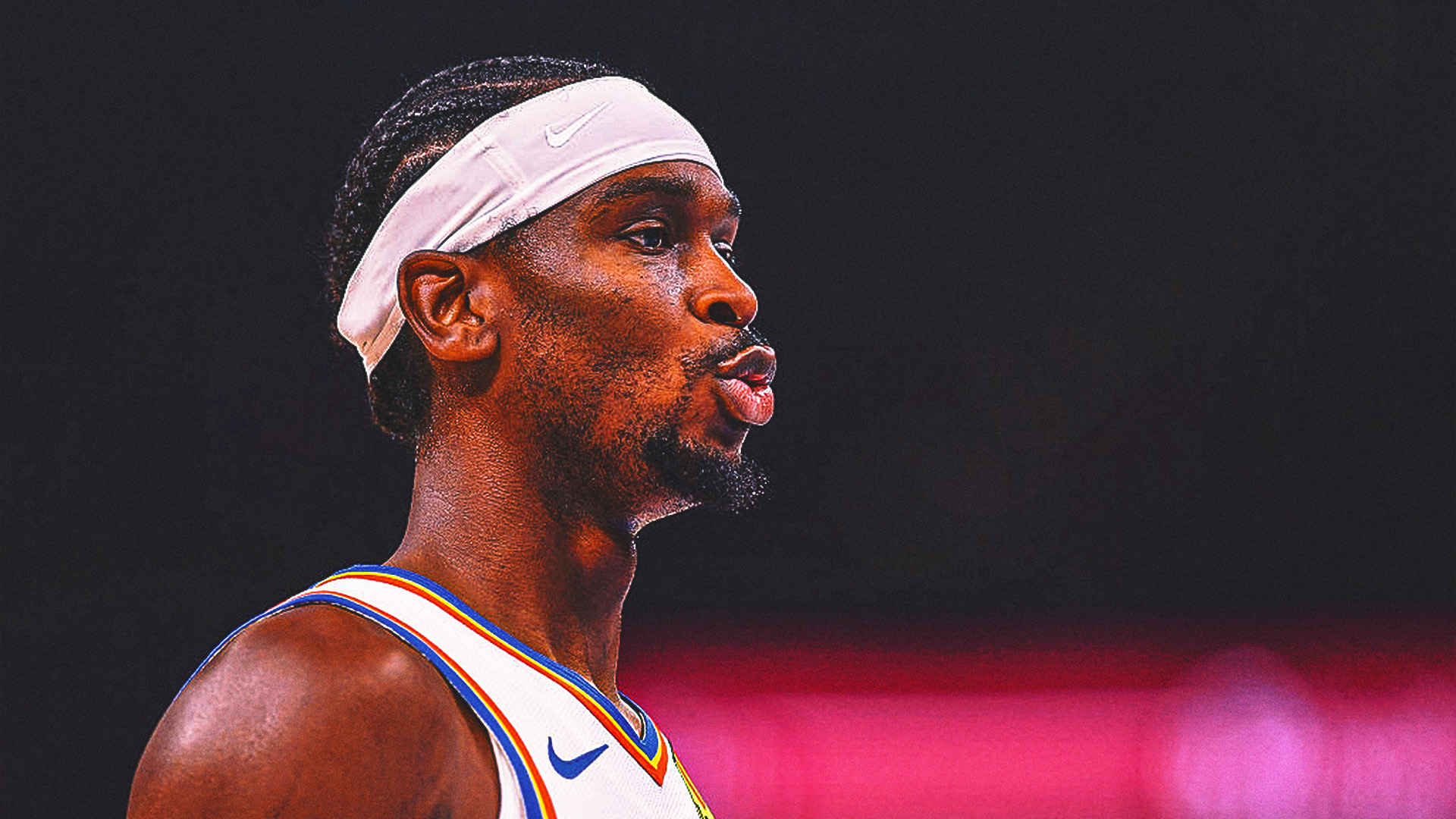
The 10 sports moments that defined 2025
From the Luka Doncic trade to WNBA players’ bold statement to a bonkers college football coaching carousel.
Source link
Sports
Ranking the FBS coaching hires: How all 30 moves grade out
After compiling a perfect coaching pedigree — he played for Bill Walsh, Tom Osborne and Bill Belichick and coached for Frank Solich and Chip Kelly — and going unbeaten at UCF in 2017, former Nebraska quarterback Scott Frost returned to Lincoln to save a flailing Cornhuskers program. It was perfect timing, and it seemed as if there were approximately a 100% chance of things working out beautifully.
Frost went 16-31 and was fired early in his fifth season.
After leading Cincinnati to extended success (53-10 from 2018 to 2022, including making the 2021 College Football Playoff), former Ohio State player and longtime Buckeyes assistant Luke Fickell took the Wisconsin head coaching job. He had a great résumé, had proved his player development chops and had modern ideas but was grounded in Big Ten physicality. It was a perfect hire.
Three years in, Fickell is 17-21. During the season, speculation swirled about his job status, and when the school announced he was returning for 2026, the Badgers actually perked up and played well down the stretch. But they still went 4-8, their worst record in 35 years.
The two most perfectly logical college football hires of the past decade either didn’t work out or haven’t to date, proving that the process of grading coaching hires immediately after they’re made is almost completely pointless. We never know how coaches will handle their new surroundings, and so much is determined by the school doing the hiring (or, in some cases, plain old luck).
Grading hires is also fun, however. And in this moment in college football’s transition to becoming a player-compensation sport, it’s a particularly interesting thought exercise. So we’re going to do it anyway.
Though a few vacancies are still on the board, we’ve seen 30 FBS head coaches hired thus far in the 2025-26 coaching carousel. Some schools sought a proven winner and committed the type of big-money (and guaranteed) contracts for which the sport has become increasingly known. Others opted for up-and-coming assistants, potentially choosing to invest some of those savings into player talent.
We don’t yet know who will be rewarded for their moves, and we know we’re going to be wrong with about half of our opinions. But let’s grade this year’s hires based purely on the logic at hand. I’m honestly a pretty easy grader — I just need to understand (and, preferably, agree with) the thought process. Therefore, a hire ranking into the 20s might still land a pretty good grade. But in theory, the higher the grade, the more likely the hire will succeed.

Grade: A+ (probably the best job available, filled by the best available coach)
1. Lane Kiffin, LSU. We won’t overthink this one. Everything about the run-up to Kiffin’s departure from Ole Miss was dramatic and strung out, and it will forever be part of his coaching biography that he left an active playoff team for a school he had beaten weeks earlier. But in his past nine years as a head coach, he has won double-digit games six times (at schools without much, or any, recent history of doing that), and he engineered the Rebels’ best three-year run in 60-plus years. He checks almost every box for a school that can afford to hire a guy who checks lots of boxes.
Grade: A (this just makes all the sense in the world)
2. James Franklin, Virginia Tech. Last summer, I used stats to look at which coaches have done the best job of overachieving against their school’s recent history. Granted, Franklin’s average will go down once I’ve added this year’s Penn State team to the mix, but heading into 2025 he was No. 8 among all long-term coaches of the past 20 years.
Vanderbilt had averaged 3.1 wins per season over a 35-year period, and he won 24 games in three seasons there. Penn State had enjoyed four top-10 finishes in 19 years and was still dealing with sanctions when he arrived in 2014, and he oversaw five top-10 finishes in a nine-year run. No matter how the run at PSU ended, for Tech to land someone with that type of résumé was an absolute coup.
3. Eric Morris, Oklahoma State. OSU was at its best under Mike Gundy when it was lighting up the scoreboard with an innovative offense. Morris teams do that. He was Texas Tech’s offensive coordinator as Patrick Mahomes transitioned from high-three-star recruit into Patrick Mahomes. Morris took on an unrecruited option quarterback named Cam Ward at Incarnate Word in 2020, and five years later Ward became the No. 1 pick in the draft. At North Texas, Morris took a walk-on (and high school backup) named Drew Mestemaker and turned him into a 4,000-yard passer. Morris might have the best quarterback-development track record in the sport at the moment, and in both of his head coaching stops he led historically unsuccessful programs to new heights. It’s hard to ask for much more.
4. Jon Sumrall, Florida. The dirty little secret about Tulane this season is, the Green Wave weren’t actually great at anything. Sumrall had to rebuild a healthy portion of his depth chart after last season’s nine-win campaign, and he ended up starting a quarterback (Jake Retzlaff) who arrived in July. But through sheer will and adaptability, his team won 11 games and an American Conference title. That’s three conference titles for Sumrall in four years as a head coach. He can put together teams and units with outstanding talent, but even when he doesn’t, he finds a way to win.
5. Jim Mora, Colorado State. CSU sure seemed to make a logical hire in Jay Norvell four years ago, but the former Nevada coach could never generate traction, and now the Rams are on an extended run of dreadful play: one winning season and an average SP+ ranking of 105.5 in the past eight years. But they aren’t in as much of a funk as UConn was in when it hired Jim Mora, and after a couple of iffy seasons he produced something brilliant: The Huskies won 18 games in 2024 and 2025 after winning just 19 in the previous seven seasons.
6. Mark Carney, Kent State. The best Kent State could have hoped for when firing Kenni Burns in mid-April — maybe the single most awkward time on the calendar, at least when there was a spring portal window — was that Carney, the offensive coordinator and new interim head coach, would do enough to earn the job permanently. Man, did he do so. The Golden Flashes were 1-23 under Burns but perked up to 5-7 this fall. Were they actually good? Not really. Do we have any idea how Carney will navigate an ever-tricky offseason? Nope. The challenges are just beginning, but Carney earned the right to take them on.
7. Matt Campbell, Penn State. When Campbell took over at Iowa State in 2016, the Cyclones had enjoyed two ranked finishes ever, none higher than 19th. He engineered a No. 9 finish in 2020 and a No. 15 showing in 2024, succeeding enough that going 8-4 in 2025 almost seemed disappointing. He had eight winning seasons in nine years after ISU had just seven between 1981 and 2016. The problem for almost anyone Penn State hired was going to be that he wouldn’t have a résumé that stacked up with that of the guy it just fired (Franklin). Campbell comes about as close as one can get.
8. Charles Huff, Memphis. Huff was an assistant for Nick Saban and James Franklin, he went to four bowls and won a Sun Belt title in four years at Marshall, and he inspired enough loyalty with his players that, when the Thundering Herd let him leave for Southern Miss a year ago, more than 20 followed him to Hattiesburg and helped the Golden Eagles surge from 1-11 to 7-5. He has built teams around potent offenses and strong defenses. Another hire who checks lots of boxes.
Grade: A- or B+ (perfectly sensible)
9. Bob Chesney, UCLA. Chesney took Assumption University to the Division II quarterfinals. He took Holy Cross to the FCS quarterfinals. He took James Madison to the College Football Playoff. Chesney is 132-51 as a head coach, and while he took over a great situation at JMU, he handled the jump in competition with as much ease as one could have hoped for. The reason this isn’t an outright A grade is that he has coached only in the East and Northeast, and UCLA is about as far away from there as possible. But in a world with such transient rosters, I’m not sure that actually matters.
10. Will Stein, Kentucky. Of the teams in the current AP top 10, six are led by first-time head coaches. Hiring a known entity is great, but I was curious which schools would attempt to land the next Dan Lanning instead of a known (and expensive) winner. What better candidate for that title might there be than Stein, the guy who has operated a ruthlessly efficient offense for Lanning for three years and has ties to the state of Kentucky as well (albeit, mostly at Louisville)?
11. Collin Klein, Kansas State. When Chris Klieman suddenly announced his retirement in early December, K-State clearly had a succession plan ready to go. Not that it was hard to piece together. Klein quarterbacked the Wildcats to a Big 12 title under Bill Snyder in 2012 and produced the No. 7 offense in the country (per SP+) as Klieman’s coordinator in 2023 before moving on to Texas A&M. It’s as if he were produced in a lab to be K-State’s head coach one day. (Granted, you could have said the same about Frost and Nebraska.)
12. Alex Golesh, Auburn. Golesh inherited a program that had gone just 8-37 over the previous four seasons, and he immediately went 7-6 twice, then finished his run with a 9-3 team that was just six points away from 11-1. We’ll see if he can craft advantages from heavy tempo in a conference that has already seen plenty of it from Josh Heupel’s Tennessee and Lane Kiffin’s Ole Miss, but if you can win nine games at USF, you can win nine games at Auburn.
13. Jimmy Rogers, Iowa State. Rogers went 27-3 with an FCS national title in two seasons at South Dakota State, and although he had inherited a brilliantly crafted culture in Brookings, he went to Washington State last season and immediately put together an exciting team there too. Built around defense, the Cougars nearly beat Ole Miss, Virginia and James Madison on the road down the stretch. Now he inherits a pretty good culture from Matt Campbell. This seems like a “Chris Klieman to Kansas State” type of hire — only Rogers is just 38 — and, well, that was a great hire.
Grade: B (don’t absolutely love it but won’t be surprised if it works out)
14. Mike Jacobs, Toledo. Jacobs is basically Bob Chesney from two years ago. He brought the now-closed Notre Dame College to the Division II semifinals, then did the same for Lenoir-Rhyne. He went to Mercer and immediately built on what Drew Cronic had started, going 20-6 and reaching the playoffs twice. Jacobs is 94-23 as a head coach at two levels and three diverse schools. It’s a big jump to the FBS, but we’ve seen plenty of guys do it well.
He’s also an Ohio guy. Bonus points for that.
15. Pete Golding, Ole Miss. Put in the ridiculously tough spot of trying to ensure continuity when Lane Kiffin left before the school’s first playoff run, Golding’s promotion makes plenty of sense. And I enjoyed his selection of East Carolina coordinator John David Baker to run the offense next year, so that’s one hurdle cleared. It seems that continuity hires have lower ceilings in general, so I’m at least a smidgen skeptical, but he obviously cleared his first hurdle with aplomb thanks to Ole Miss’ CFP blowout of Tulane.
16. Morgan Scalley, Utah. Scalley worked for the departing Kyle Whittingham for 19 seasons, and he was named Utah’s head coach in waiting 18 months ago, so he has had plenty of time to prepare for the job. His history isn’t pristine, and succession plans often fail, but the logic here is pretty easy to understand.
17. Tosh Lupoi, California. With obvious exceptions, most of the best active and recent coaches have come from the offensive side of the ball, so right or wrong, I tend to look at defensive coordinator-to-head coach hires with a bit more scrutiny. Or at least, I wait to see if said former DC makes an offensive coordinator hire that doesn’t seem either hostile to recent offensive trends (the Will Muschamp special) or focused too heavily on a “pro-style” approach that often lacks identity.
Long known as an elite recruiter, Lupoi has spent the past four seasons slowly building Oregon’s defense into a wrecking ball. It was beyond time for him to get a head coaching opportunity, and he aced his first test in making sure quarterback Jaron-Keawe Sagapolutele stays in Berkeley. But his first offensive coordinator is a young former Oregon staffer who spent the past three seasons as assistant QBs coach in the very pro-style pros.
Join us in welcoming Offensive Coordinator @JordanSom_TBB to Bear Territory 👏🐻#GoBears pic.twitter.com/MP1tvbLT7z
— Cal Football (@CalFootball) December 19, 2025
Maybe Jordan Somerville will turn out to be a genius hire, but I don’t love the logic there. It produces a slight point deduction, at least.
18. Kirby Moore, Washington State. The former Mizzou offensive coordinator was worshipped by Tigers fans in his first year on the job and jeered in his third year when the points tapered off after a quarterback change and quarterback injury. That tends to be the way it goes. But he has the pedigree — he played for Boise State’s Chris Petersen, and he’s Kellen Moore’s brother — and honestly, when your track record of hires is as strong as Washington State’s of late, you get the benefit of the doubt.
19. Billy Napier, James Madison. Napier was able to build major talent advantages at Louisiana and went 33-5 in his last three seasons there. That seems like extremely relevant experience now that he’s returning to the Sun Belt at a school that is building a strong infrastructure.
I don’t absolutely love this hire, but the reasons are mostly aesthetic. First, we saw him run a sloppy and mistake-prone program at Florida for 3½ seasons, and even if Florida isn’t anything like JMU, that’s still a data point. Plus, I don’t like when schools stray from a model that works. JMU had done the “Hire an FCS overachiever” thing for three straight hires and was rewarded beautifully for it. I just assumed the school would go after someone like Lehigh’s Kevin Cahill.
20. Neal Brown, North Texas. Last we saw Brown at the mid-major level, he was leading Troy to 32 wins and a Sun Belt title (plus a win over LSU) in his final three seasons there. As with Napier, that might be all the experience that matters. He went just 37-35 in six seasons at West Virginia after that, though, which muddies the waters at least a bit. His offensive identity has muddied, too, through the years, which is at least a slight concern considering UNT just enjoyed its best season ever with a specific identity.
21. JaMarcus Shephard, Oregon State. I’d love to have seen some solo coordinator experience on the résumé, as jumping straight from position coach (or even co-coordinator) can be tricky. But if you’re looking for a potential overachiever for a school that desperately needs a shot in the arm, hiring someone who has coached for Bobby Petrino, Jeff Brohm, Mike Leach and Kalen DeBoer — and has a bit of experience in the Pacific Northwest (plus a reputation as a strong recruiter) — seems like a great place to start. And getting a guy who can answer a question like this at his introductory news conference is even better.
22. Brian Hartline, South Florida. Like Lupoi, Hartline is regarded as a masterful recruiter, and at USF he might be able to build at least some of the talent advantages that he was used to at Ohio State. He hasn’t yet hired a defensive coordinator — that could impact my thoughts quite a bit — and he went with a trusted old friend, former Ohio State co-coordinator Tim Beck, as his OC. None of this screams “tactical advantages,” but if Hartline recruits well enough, maybe it won’t matter.
23. Jason Candle, UConn. A Mount Union product like Campbell, Candle won 81 games, two MAC titles and three division crowns (plus two MAC Coach of the Year awards) in 10 seasons at Toledo. He’s the school’s winningest coach — he’s clearly good. But with the talent advantages he was able to compile at UT, it always seemed that his Rockets should have won more than they did. That waft of disappointment makes it hard to evaluate him.
24. Ryan Silverfield, Arkansas. Like Candle, Silverfield was able to build an excellent base of talent and score some big wins over teams such as Arkansas, Florida State, West Virginia, Iowa State and Mississippi State. But that made the letdown losses that followed — like a ghastly defeat against UAB this season — even more disappointing. Silverfield is clearly solid, but he won’t have many athleticism advantages in the SEC.
25. Ryan Beard, Coastal Carolina. Bobby Petrino’s defensive coordinator at Missouri State for three seasons (and also his son-in-law), Beard has been regarded as a solid up-and-comer for a while. He took over the Bears in 2023 and went 19-16, and while that’s more impressive than it sounds — it includes a solid 7-5 debut and No. 99 SP+ ranking in MSU’s 2025 FBS debut — it’s still a pretty light résumé.
Grade: B- or C+ (I understand, but I’m not totally sure I agree)
26. Tavita Pritchard, Stanford. There’s a certain poetry to general manager Andrew Luck hiring Pritchard, the quarterback before him at Stanford and the player who led the upset of USC that put Stanford’s late-2000s rise into motion. Pritchard has plenty of coaching experience too, including 13 seasons at Stanford. But the Cardinal averaged an offensive SP+ ranking of 84.0 in his five years as OC. He did oversee Jayden Daniels‘ excellent rookie season in the pros, and he has witnessed what it takes to build Stanford up. But that run as OC is hard for me to look past.
27. Alex Mortensen, UAB. Mortensen was the fired Trent Dilfer’s offensive coordinator, and offense was definitely the Blazers’ stronger unit. UAB pulled a huge upset of Memphis after Mortensen took over as the interim coach, so you can probably see the hiring logic here. But the Blazers otherwise played to projections under Mortensen, and this seems a bit like settling to me.
28. Will Hall, Tulane. Hall led West Georgia to the Division II semifinals in 2014 and 2015, he knows Tulane well (three years as an assistant), and he enjoyed brief success as Southern Miss’ head coach, going 7-6 in 2022. But while Southern Miss has become an awfully hard job, his Golden Eagles collapsed to 4-20 in 2023 and 2024. I’d love to have seen him take on a longer coaching rehab stint before getting the keys to such a high-profile Group of 5 job.
Grade: C (are you sure about this?)
29. Blake Anderson, Southern Miss. Southern Miss caught a bad break of sorts, making such a good hire (Charles Huff) that he left for a higher-rung job after just one season. But hiring Anderson, who had one winning season in his past four head coaching seasons (one at Arkansas State, three at Utah State) and was fired by USU for failing to adhere to reporting requirements regarding “investigating issues of sexual misconduct, including domestic violence” and failing to “manage the team in a manner that reflects USU’s academic values” is questionable for any number of reasons.
30. Pat Fitzgerald, Michigan State. At first glance, this seems right. Fitzgerald, still only 51, won 110 games at Northwestern with a pair of division titles and three seasons of double-digit wins. Who better than a known Big Ten overachiever to take over a program that has fallen into quite an underachieving rut?
That logic falls apart pretty quickly, however. Even including his success during the 2020 Covid season, a year in which lots of teams and coaches saw success they couldn’t maintain under normal circumstances, Fitzgerald went 14-31 in his last four seasons at Northwestern. Its average offensive SP+ ranking over these four years was a ghastly 108.5, and perhaps more worrisome is that, following the retirement of longtime defensive coordinator Mike Hankwitz after 2020, his last two teams sank to 49th and then 62nd in defensive SP+. The Wildcats fell to 3-9 in 2021 and 1-11 in 2022.
Simply put: If Michigan State had employed Fitzgerald from 2019 to 2022, the school would have fired him. Jonathan Smith was just fired for going 4-15 in part of two seasons, and instead of embarking on a thorough replacement search, the school replaced him the very next day with a guy who went 4-20 in his past two years. Fitzgerald has no track record of success in the NIL-and-transfers era either, and while it might turn out that he has all the right answers, why would you pay $6 million a year to find out?
(Plus, while Fitzgerald was found to have not known about or encouraged the hazing and sexual abuse that was allegedly occurring during his time at NU, that’s only so much of an exoneration for a the-buck-stops-here type of coach.)
This is the one power-conference hire I just don’t like. Again: Maybe things will work out great. Our guts are wrong about hires all the time. Fitzgerald is still pretty young, and no one simply forgets how to coach. But with so little recent success and with so much recent change in the sport, I assumed he would need to prove himself at the G5 level before being handed the keys to a big-time program again. State is taking a massive risk.
Sports
Wetzel: Is this the last straw for NCAA enforcement?
Whatever remaining power the NCAA still has to enforce whatever rules are remaining might be in serious trouble after a ruling last week in an Alabama state court.
Judge Andrew J. Hairston of the circuit court of DeKalb County, Alabama, on Monday granted a preliminary injunction to former Tennessee football coach Jeremy Pruitt that for now prohibits the NCAA’s enforcement of a six-year “show cause” penalty. The NCAA sanction effectively made Pruitt unemployable in college athletics for that time period.
Pruitt coached the Vols from 2018 to ’20, but he was fired after the school uncovered recruiting violations. In 2023, the NCAA’s committee on infractions [COI] concluded the program committed 18 Level I violations, mostly related to paying prospects and their families (back when this was illegal).
The NCAA summarily ruled that Pruitt was directly involved, leading to his individual punishment in addition to the program receiving a reduction of 28 scholarships and a $9 million fine. Pruitt spent one year with the New York Giants before becoming a teacher and coach at Plainview High School in Alabama.
The show cause is one of the few NCAA punishments that still have teeth; essentially a banishment from college athletics that, at least theoretically, deters coaches and administrators from violating various rules.
College sports, like any sports entity, needs an effective rule enforcement process.
The significance of the Pruitt injunction is that it wasn’t based on the merits of Pruitt’s claim of innocence (which, if true, would limit the NCAA’s scope to one case) but rather the unfairness of a process that, Judge Hairston ruled, made it impossible for Pruitt to even mount a defense.
“Pruitt has a reasonable likelihood of proving that, had he been given the opportunity for an objective, impartial, fact-finding process, the COI would have imposed a less-restrictive punishment, if one at all,” the order reads.
Hairston noted, for example, that the NCAA system doesn’t allow for basic legal abilities, such as the right to cross-examine witnesses or compel records from third parties.
He additionally wrote that the COI, by accepting Tennessee’s admission of guilt, didn’t properly consider Pruitt’s case, which Hairston said includes an “overwhelming degree of conflicting and incomplete statements” from witnesses that could have helped him.
Tennessee was also financially incentivized to deem Pruitt guilty because it allowed a “for cause” firing of a coach who was just 16-19 in three seasons. While the NCAA’s $9 million fine was significant, it spared the school from paying Pruitt a $12.7 million buyout for a performance-based firing.
“So UT saved $3.7 million and the NCAA got $9 million,” said David Holt, of the Loftin Holt Hill & Hargett law firm out of Huntsville, Alabama, which represented Pruitt.
That deal set the tone, the court said, for how Pruitt could fight the charges.
“That the COI accepted UT’s version of the events, disallowed Pruitt the opportunity to adequately present and/or defend his case, and levied disproportionate penalties against Pruitt,” Hairston wrote. “… A reasonable-minded juror could conclude that the COI’s infractions process was procedurally and substantively deficient.”
Pruitt and the NCAA were ordered into mediation, for now. The NCAA did not respond to a request for comment.
This is a single preliminary injunction in a single case in a single state circuit court, not a federal one. The decision is open to appeal. Yet longtime NCAA observers believe it could serve as the groundwork for anyone looking to challenge any NCAA penalty, including show causes.
“This can become an existential threat to the enforcement system,” said Arkansas-based lawyer Tom Mars, who has a long history of trying college sports-related cases but wasn’t involved in this one.
Said Mars: “The rules on their face are inconsistent with how justice is administered everywhere else in the United States.”
NCAA enforcement was already struggling with penalties written for a bygone era in the rapidly changing landscape of college athletics.
What were once bedrock sanctions such as scholarship reductions are largely moot and easily worked around in an era where direct revenue-sharing or NIL deals can allow for a star player to just pay his own tuition as a “walk-on,” for example.
The show cause was still effective at keeping rule-breaking coaches out of the college game. Now, perhaps, even that is at risk due to the NCAA’s own infractions structure.
“The system is not designed to reach the truth or give the accused due process,” said Brantley Loftin III, another of Pruitt’s attorneys.
Considering the NCAA’s abysmal legal record of late, it’s not hard to see how this might snowball.
It was, after all, a single federal court ruling out of West Virginia in 2023 that prohibited the NCAA from forcing transfers from sitting out a year, causing the transfer portal to spin and alter how teams are built.
And it was a single federal court ruling out of Tennessee in 2024 that prohibited the NCAA from punishing any athlete or booster from making a NIL deal during the recruiting process, leading to the current “pay for play” era. And then another in 2024 that stopped the NCAA from counting junior college seasons against eligibility, clearing the way for Vanderbilt’s Diego Pavia, among others, to continue playing.
All of the above were once unthinkable developments.
“We’ve all seen the sea change that has been ongoing the last five years,” Holt said. “[The enforcement process] is the next domino set to fall.”
The times keep changing; the NCAA might have been caught flat-footed again.
Sports
FC Utrecht 1-2 PSV (Dec 21, 2025) Game Analysis – ESPN
United States forward Ricardo Pepi continued his excellent run of form with a goal that helped PSV Eindhoven beat Utrecht 2-1 on Sunday.
Pepi scored the equaliser for his side to bring his scoring run to four consecutive Eredivisie matches — and furthered his case to start for the USMNT at the World Cup next summer.
PSV found themselves behind in the first half, with hosts Utrecht taking the lead through Mike van der Hoorn. The centre-back got on the end of a pinpoint cross from Siebe Horemans to nod home. While the linesman’s flag was initially raised, a VAR review found van der Hoorn to be onside.
The visitors came out fighting in the second half, and it was the U.S. duo of Sergiño Dest and Pepi who linked up cleverly for the equaliser. Dest got the ball in space on the right of the penalty area, and rolled it with pace — beating two defenders — into the six-yard box to Pepi, who finished first time in the bottom left corner.
Ivan Perišić delivered the winner for PSV 15 minutes before time, finishing off a perfectly executed corner routine. Joey Veerman whipped the ball to the near post, where the Croatian winger had timed his run, allowing him to head past the keeper on his side.
Pepi and Eindhoven’s win extended their lead at the top of the table to 12 points by full time. It was their 15th league win of the season, having only dropped points in two matches.
-
Business1 week agoHitting The ‘High Notes’ In Ties: Nepal Set To Lift Ban On Indian Bills Above ₹100
-
Business1 week agoStudying Abroad Is Costly, But Not Impossible: Experts On Smarter Financial Planning
-
Business1 week agoKSE-100 index gains 876 points amid cut in policy rate | The Express Tribune
-
Sports1 week agoJets defensive lineman rips NFL officials after ejection vs Jaguars
-
Fashion4 days agoIndonesia’s thrift surge fuels waste and textile industry woes
-
Business4 days agoBP names new boss as current CEO leaves after less than two years
-
Tech1 week agoFor the First Time, AI Analyzes Language as Well as a Human Expert
-
Entertainment1 week agoPrince Harry, Meghan Markle’s 2025 Christmas card: A shift in strategy