

Business
IRCTC Down? Tatkal Ticket Users Complain Of Repeated ‘Error’ Messages On App; Netizens React; How to Book Train Tickets Online

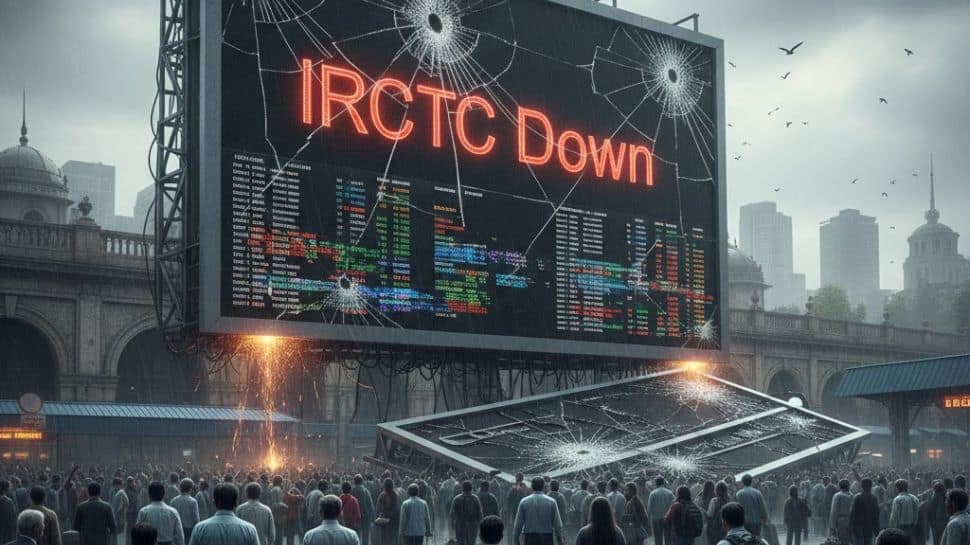
IRCTC Tatkal Train Tickets: IRCTC’s Tatkal ticket booking service came under fire from netizens on Tuesday, with several users taking to social media to report repeated ‘Error’ messages on the app and website during peak booking hours. Many users said they were unable to secure Tatkal tickets despite multiple attempts, alleging that the system failed at critical stages of the booking process. The complaints emerged even as no major outage was officially reported by IRCTC.
IRCTC Down: Downdetector Shows 68% Outage
The online platform Downdetector recorded a spike in complaints, with 68% of users reporting issues with the IRCTC website. The outage reports mainly came from major metro cities such as Delhi, Mumbai, Bengaluru and Kolkata. Meanwhile, 31% of users said they faced problems with the mobile app.
IRCTC: OTP For Tatkal Train Tickets
Indian Railways is set to make one-time passwords (OTPs) mandatory for booking Tatkal train tickets from railway reservation counters, a move that officials said aims to curb the misuse of the last-minute ticket booking facility. Passengers will have to provide a one-time password, received on their mobile phones, to book Tatkal train tickets from railway reservation counters.









 "EPFO, India Post Launch FREE Doorstep Digital Life Certificate For EPS Pensioners — How To Book Home Visit")
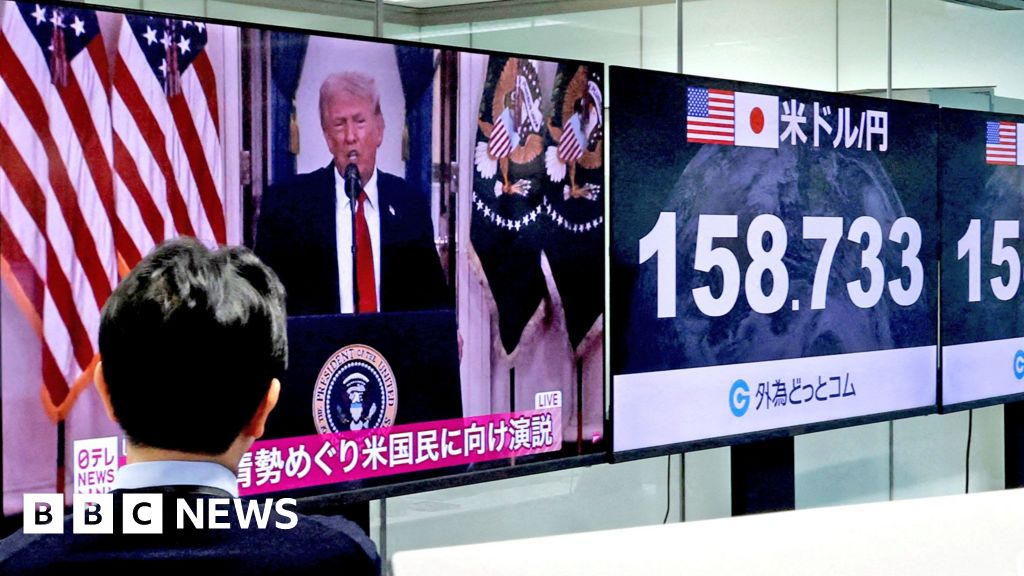
The US president said he’ll bring Iran “back to the Stone Age” but gave no detail on ending the war.
Source link

Whether you are a first-time landlord navigating a buy-to-let or a seasoned contractor with an expanding team, running a successful business isn’t just about growth. It also means making sure you have the right protection in place.
Swinton has been providing insurance for over 65 years. Landlord insurance and public liability insurance are key parts of its Business range. A long-standing, well-trusted name, you can rely on Swinton Business to help you find a tailored policy to suit your needs.
Read on to find out how Swinton Business can help protect you and your assets, should the unexpected happen. Plus, there’s a bonus for Independent readers right now too: a free £60 Amazon Gift Card with a qualifying landlord insurance policy or a free £20 Amazon Gift Card with a qualifying public liability insurance policy.
Find out more about Swinton Business now
Swinton Business Landlord Insurance
The rental market has shifted significantly in recent years, with new regulations and changing tenant expectations. Whether you manage a single home, or a portfolio, there’s financial risk that comes with letting out property. Standard home insurance simply isn’t enough to cover the unique challenges of a rental.
Swinton’s Landlord Insurance is designed to provide peace of mind by covering the what ifs. Its specialist policies offer financial protection against a wide range of perils, including fire, storms, floods, and landslips. For those in transition, Swinton provides cover for unoccupied properties for up to 60 days, giving you a safety net during tenant turnovers or renovations.
What is landlord insurance?
Landlord insurance can offer protection against damage caused by factors such as theft, vandalism, fire and flooding. It isn’t a legal requirement for landlords to have it. However, it’s worth knowing that a standard home insurance policy won’t cover your property if it’s being rented out to paying tenants.
If you have a buy-to-let mortgage, having landlord insurance is often a condition of a mortgage agreement. Types of landlord insurance include: commercial property insurance, buy-to-let insurance and landlord legal protection.
Why choose Swinton Business Landlord Insurance?
Swinton has been providing Landlord Insurance for over 15 years. From second homes to diverse portfolios, its experts can help arrange insurance to protect your assets. Offering insurance on both commercial and buy-to-let properties, Swinton Business covers a range of tenants. Better still, if you have more than one property, you can streamline your insurance by protecting them under one policy which may help you save time and money.

Swinton Landlord Insurance cover includes:
- Unoccupied properties are covered for up to 60 days
- Financial protection against a wide range of perils, including – but not limited to – fire, storm, flood and landslip
- 24-hour claims assistance, 365 days a year
Swinton also offers a host of additional options to help you tailor your policy to your specific needs:
- Alternative accommodation
- Theft of keys
- Malicious damage caused by tenants
- Accidental damage
- Holiday home cover
- Landlords content cover
- Land cover
- Landlord Legal Protection
Find out more about Swinton Business now
Swinton Business Public Liability Insurance
For those who are self-employed or own a business, your reputation is everything. But even the most meticulous professional can face an unexpected claim for accidental damage or injury.
What is public liability insurance?
Public liability insurance (PLI) is a type of insurance that protects you in the event your business is held legally responsible for either an injury to a member of the public or damages to their property. In short, if you’re taken to court, having PLI means your insurer will pay the legal costs on your behalf, up to a pre-agreed limit.
While public liability insurance protects business owners from claims made by members of the public, it can also cover claims from contractors and clients. Of course, no two trades are the same, and Swinton’s panel of insurers provides cover for over 500 different professions, including painters and decorators, carpenters, plumbers, electricians and landscape gardeners.
Why choose Swinton Public Liability Insurance?
Swinton compares quotes from a panel of insurers to help you secure a suitable quote. Swinton’s Public Liability Insurance has tailored features for you to find a policy that suits your business needs.
Flexibility is the standout feature here: you can choose limits including £1m, £2m, £5m, or £10m, so you can tailor your cover to meet the specific requirements of your clients or local authorities.
For businesses with a team, Swinton also makes it easy to add employers’ liability. This is a legal requirement for anyone with staff, providing £10m in cover for injury or illness claims. It’s also worth knowing that while having public liability insurance isn’t compulsory under UK law, many businesses choose it so they’re covered should the unexpected happen. A customer or client may ask that you have cover in place before they work with you. Plus, it may be an obligation of your industry regulator or trade bodies.

You can further tailor your policy with additional extras like:
- Tools and business equipment: protection for the essential gear you use every day
- Stock and materials: coverage for items stolen or damaged on-site, at home, or in transit
- Own and hired-in plant: securing heavy machinery like diggers or mixers
- Contract works: protect contract work in progress, in the event of damage by an insured peril before completion
Find out more about Swinton Business now
Insurance you can trust
In a crowded market, experience matters. Swinton Business can help you find the right fit for your unique circumstances. With 24/7 claims assistance available 365 days a year, you can rest easy knowing that if something goes wrong, expert support is only a phone call away.
When shopping for insurance, it’s important to choose a partner that understands the UK business landscape. Swinton has more than a decade of experience for those who value quality and reliability.
Reader offer
There has never been a better time to review your coverage. When you purchase a qualifying policy, Independent readers will receive an added bonus:
- £60 Amazon Gift Card with a qualifying landlord insurance policy
- £20 Amazon Gift Card with a qualifying public liability insurance policy
Protect your property, your equipment, and your professional future today with Swinton Business and treat yourself to something new from Amazon. Ready to protect your business? Click here to get a quote and claim your Amazon voucher Gift Card.
Terms and conditions apply. Visit Swinton.co.uk for more details.

A global recession and widespread fuel rationing are likely if the conflict in the Middle East does not end soon, a leading economic body has warned ahead of a meeting of international allies to try to find a way to end the blockade of the Strait of Hormuz.
Oxford Economics’s latest research shows that the number of tankers passing through the Strait is already down 98 per cent, and if the key shipping route remains closed for an extended period it would see existing oil inventories continually depleted and the current shortfall of 2m barrels per day rising sharply.
That would mean a shortage around the world of 12 per cent of usual oil consumption, requiring fuel rationing and a big hit to world economic growth this year.
“In our prolonged Iran war scenario, we estimate the gap widens to around 13m barrels per day by the sixth month,” said head of oil and gas forecasting, Bridget Payne.
“That represents an unprecedented shortage of around 12 per cent of consumption, leading to widespread rationing concentrated in emerging economies, with significant hits to activity and supply chain disruption.
“Our modelling shows this scenario would trigger a global recession and slow world GDP growth to 1.4 per cent in 2026.”
Oxford’s research shows that the need for rationing would accelerate from the fourth month onward, with the US and Canada among the most protected from this due to both their large domestic production of oil and also their refining capabilities.
Europe, with better refining and strong government policy, sits on a middle ground – but “remains exposed if disruption is prolonged”, says the report.
“Emerging economies across the Asia Pacific and sub-Saharan Africa are the most exposed, combining heavy import dependence with limited inventory cover and, in many cases, weak fiscal and institutional capacity to manage shortages,” it adds.
There are concerns in Bangladesh that it may be the first nation to run out of fuel. Drivers have been pictured queuing for hours to fill up their tanks, while universities have closed as the nation tries to protect its diminishing reserves.
Elsewhere, a raft of countries have taken proactive steps to protect their supplies.
Egypt has ordered shops and restaurants to close early to save on energy consumption, Pakistan has enacted a four-day work week, Philippines has ordered government fuel consumption reduced and Myanmar introducing alternate driving days.
Oxford further reports “panic buying and black markets for LPG” (Liquefied Petroleum Gas) cropping up in India and petrol stations being empty in Thailand.
It comes as foreign secretary Yvette Cooper hosts talks with a coalition of countries to reopen the crucial Strait of Hormuz shipping lane.
Meanwhile, the International Monetary Fund (IMF) warned Britain’s economy is “especially exposed” to spiralling prices because of its reliance on gas‑fired power, with fertiliser supply disruption also contributing to food price inflation which is expected to surge close to 10 per cent later this year.
Keir Starmer has been cautioned the public that price rises are “inescapable” this year due to the conflict in the Middle East, but the government has repeatedly said there is no call for fuel rationing at this stage – though they remain monitoring matters “hour by hour”.
Mr Starmer has also confirmed a virtual gathering will take place on Thursday hosting over 30 nations – not including the US – with a view to finding solutions to reopen the Strait of Hormuz.
Earlier in March, a former BP chief who served as advisor to Gordon Brown when he was prime minister said that the UK should prepare for fuel shortages and urged the government to take stock to ensure “crucial sectors [like] the health service, food supply, hospitals” were amply supplied.
On Wednesday night Donald Trump made further comments to suggest the war would end in weeks rather than months, but “the military timeline differs from the economic one,” said Oxford Economics’ chief global economist Ryan Sweet in response.
“The Strait of Hormuz is still effectively closed, and the baseline assumes that it won’t change until the end of April, removing additional oil supply from the market and adding to the economic costs with each passing day.”
The firm are forecasting average prices for Brent crude oil to be at $113 across April to June. On Thursday morning it sat at $109.
“Governments have been left scrambling to try to limit the impact on companies and consumers, with more rationing of energy likely to come into play,” said Susannah Streeter, chief investment strategist at Wealth Club.
.jpeg)
“The UK government has held off announcing short-term support for sections of society which will be worst hit by the ramp-up in energy bills, with specific help not expected until the autumn. At this stage, with the government still mulling how to alleviate the pain of the energy shock, there could still be phased in hikes to fuel duty, as planned, from September.
“The big concern will be about further damage to energy facilities across the Gulf. The repair work is already likely to take years, and further destruction is likely to keep oil and gas prices elevated for even longer. Brent crude has jumped sharply, reflecting these worries, and European and UK gas futures have also jumped and are set to stay highly volatile.
“Around a fifth of global LNG supplies are usually transported through the Strait of Hormuz, but it remains largely impassable, and it’s becoming clear that there is going to be no easy exit from this war, with a lack of planning increasingly evident.”
Meanwhile, a new report from the Office for National Statistics (ONS) has also highlighted the state of concern among British businesses over energy costs across the second half of the year.
Over half (55 per cent) of businesses expressed some level of concern about energy prices, rising to nearly three-quarters (74 per cent) for businesses with 10 or more employees. In addition, almost two in five (37 per cent) of firms with 10-plus employees said they held concerns over international conflicts impacting supply chains across the coming year.
The questions were asked of businesses during March, after the Middle East conflict had started.


UNC not in men’s Final Four but still looms large
Oil prices jump and shares drop after Trump threatens more Iran strikes
Swinton Business offers tailored policies to suit your needs

-

 Fashion1 week ago
Ho Chi Minh City bizs adjust production plans, seek new supply chains
-

 Fashion1 week ago
India’s Gen Z to drive half of fashion market by 2030: Reedseer
-

 Fashion1 week ago
Japan’s apparel imports rise 22.9% to $2 bn in February 2026
-

 Entertainment1 week ago
Space company plans bold landing on fast-moving asteroid passing near Earth
-

 Entertainment1 week ago
Andrew holds breath as King Charles plans bombshell move amid probe
-
 Business1 week ago
Co-op boss quits after ‘toxic culture’ claims reported by BBC
-
 Business6 days ago
How do you spot a fake online review?
-

 Fashion6 days ago
China rolls out tariff cuts on Congo imports from April 1