

Entertainment
Reclaiming Jinnah’s Pakistan

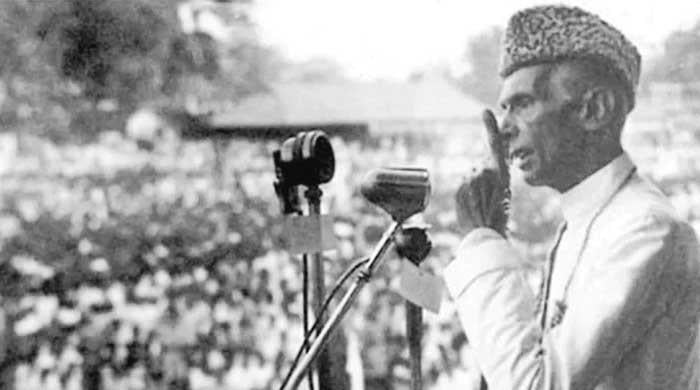
When ruling elites are no longer willing to commit to constitutional values, we can no longer guarantee the constitutionally promised dignified life that Jinnah’s Pakistan promised.
The impact of the 26th and 27th amendments has led to the resignation of two Supreme Court judges and one Lahore High Court judge, who protested the erosion of fundamental rights protections for citizens, which has effectively disfigured the social contract between citizens and the state. The resignation letters are more instructive when read as part of a wider critique of government policy and the Judiciary itself. Public debate is required to reverse a course that has left state and society institutionally and normatively adrift. But what has brought us to this sorry situation?
Although we continue to revere Quaid-i-Azam Mohammad Ali Jinnah as the founder and great leader of Pakistan, we have conveniently ditched a critical feature of his thinking: his concept of Pakistan as a moral or dignified state with defining features of the rule of law, fairness, liberty of conscience and representative democracy.
Jinnah’s speeches and letters set out the founding narrative and include ideals that address various aspects of state design, governance and foreign policy. Instead of a “living” source of inspiration, the Quaid has been consigned to history with the salutary portrait hanging in our hallowed corridors of power and drawing rooms.
What defines a dignified or moral state are the generally accepted moral standards and aspirations that both society and state commit to, which are usually contained in the constitution. On this, Jinnah held, “Islam and its idealism have taught us democracy. It has taught equality of man, justice, and fair play”.
The judiciary has had a vital role in institutionalising the separation between Pakistan as a mere fact and the state as a moral entity. In KB Ali v State (1975), the Supreme Court rejected “standards of reason or morality” as defining valid law. Although foundational for ensuring social cohesion, providing good governance and guaranteeing a dignified life for all, it held that valid law is whatever is commanded by “a competent lawgiver”. After granting near-unbridled powers to the legislature and executive, it has been very difficult for the judiciary to rein in governance within constitutional constraints.
Such judicial reasoning has reduced Jinnah to a historical figure whose task was completed by the administrative-legal recognition of a formal state — a historical fact. By doing this, we have effectively removed Jinnah’s moral ideals from the state’s practices, policy and legal thinking.
Although the judiciary is constitutionally mandated to protect and interpret constitutional norms and values, it has now diverted the course of the state towards secular power-based statecraft.
Not only has this jurisprudence eroded the moral basis of policy, legislation and interpretation, but it has also predisposed Pakistan towards authoritarianism. An “empowered” legislature and executive have variously encroached on the judiciary’s independence. The result: a grotesque performance of elite interests and power politics that exposes the state for what it has become: an oligarchy.
Against the backdrop of a fractured judiciary (by virtue of the 26th Amendment) and weak democratic norms, the recent amendments were passed without rigorous public scrutiny and without consensus on their expected moral and strategic advantages. According to the ICJ, “It is alarming [that] a constitutional amendment of great significance and public interest was passed in such a secretive manner and in less than 24 hours”.
The amendments were also passed while sidelining the founding narrative and two substantive tests that protect the moral content of the Constitution. One that laws inconsistent with or in derogation of fundamental rights are to be void (Article 8) and second that no law shall be enacted which is repugnant to the injunctions of Islam (Article 227).
Our rule of law is thus a fine mix of secular and Islamic protections, which has not been elaborated jurisprudentially, nor enforced by the judiciary to test and inform the design and quality of the constitutional order and governance.
Islamic scholar Mufti Taqi Usmani criticised the 27th Amendment, insisting that absolute or lifetime immunity from prosecution for any person is in violation of Islam and the Constitution (Article 25). The International Commission of Jurists have criticised both the 26th Amendment as a “blow to judicial independence” and the 27th Amendment as a “flagrant attack on the independence of the judiciary and the rule of law”.
Wider implications for the salient features of the constitution and system of governance also need to be examined through the basic structure (of the constitution) doctrine. In the 2015 Supreme Court case, District Bar Association Rawalpindi v Federation of Pakistan, Justice Sheikh Azmat Saeed held, “[A]s long as the amendment has the effect of correcting or improving the constitution and not of repealing or abrogating the constitution or any of its salient feature or substantively altering the same, it cannot be called into question”.
Arguably, with the reconfiguration of judicial appointments, reduced powers of judicial review, transfers and postings, the establishment of a new superior court and related measures, salient features have been altered significantly and warrant rigorous examination.
While Jinnah insisted on justice and complete impartiality as a “guiding principle”, Pakistan ranked a low 129 (out of 142) on the World Justice Project’s Rule of Law Index 2024, reflecting further erosion of an impartial rule of law that ensures equality for all (Article 25).
Commenting on the 26th Amendment, the International Commission of Jurists (ICJ) noted the “extraordinary political influence” and observed that “they [the amendments] erode the judiciary’s capacity to independently and effectively function as a check against excesses by other branches of the state and protect human rights”.
Referring to the 27th Amendment, the ICJ observed, “They will significantly impair the judiciary’s ability to hold the executive accountable and protect the fundamental human rights of the people of Pakistan”. The change in the balance of power needs to be constitutionally justified.
This whole unfortunate constitutional amendment saga betrays the intellectual and moral bankruptcy of our institutions of governance — civil and military bureaucracies and the judiciary. Despite Jinnah insisting that looking after the poor is our “sacred duty”, public welfare is a low-ranking consideration: constitutional social and economic rights, set out in the Principles of Policy, are not even enforceable by the courts.
Instead of a constitutional amendment to make such rights directly enforceable like the fundamental rights, the 26th and 27th amendments arguably erode what little we had of constitutional governance. What is lost in this Faustian bargain is public welfare and dignity — Jinnah’s Pakistan.
A superficial appreciation of the constitution has hollowed out state institutions and society normatively.
Our institutions, intellectuals and constitutionalists have failed to elaborate and hold to Jinnah’s founding narrative and “[t]he great ideals of human progress, of social justice, of equality and of fraternity” to inform policy and legislation, guide future generations and ensure that we stay focused on the original mission.
Not only is this a gross disservice to the ordinary Pakistani who holds Jinnah’s promise dear, but it is also a disservice to Jinnah by not appreciating him in an appropriate intellectual-moral context.
Consequently, and arguably, we are witnessing the resurgence of an executive state that Jinnah battled ferociously for much of his life. We need a new, clear jurisprudence to provide for a morally dignified state. Without rediscovering Jinnah intellectually and morally, we will never realise Jinnah’s Pakistan. Who can the citizens of Pakistan now trust?
The writer is a former secretary of the Law & Justice Commission of Pakistan.
Disclaimer: The viewpoints expressed in this piece are the writer’s own and don’t necessarily reflect Geo.tv’s editorial policy.
Originally published in The News
The royal family’s famouse show faces serious calls to conduct a review of its safety protocols after a heartbreaking loss.
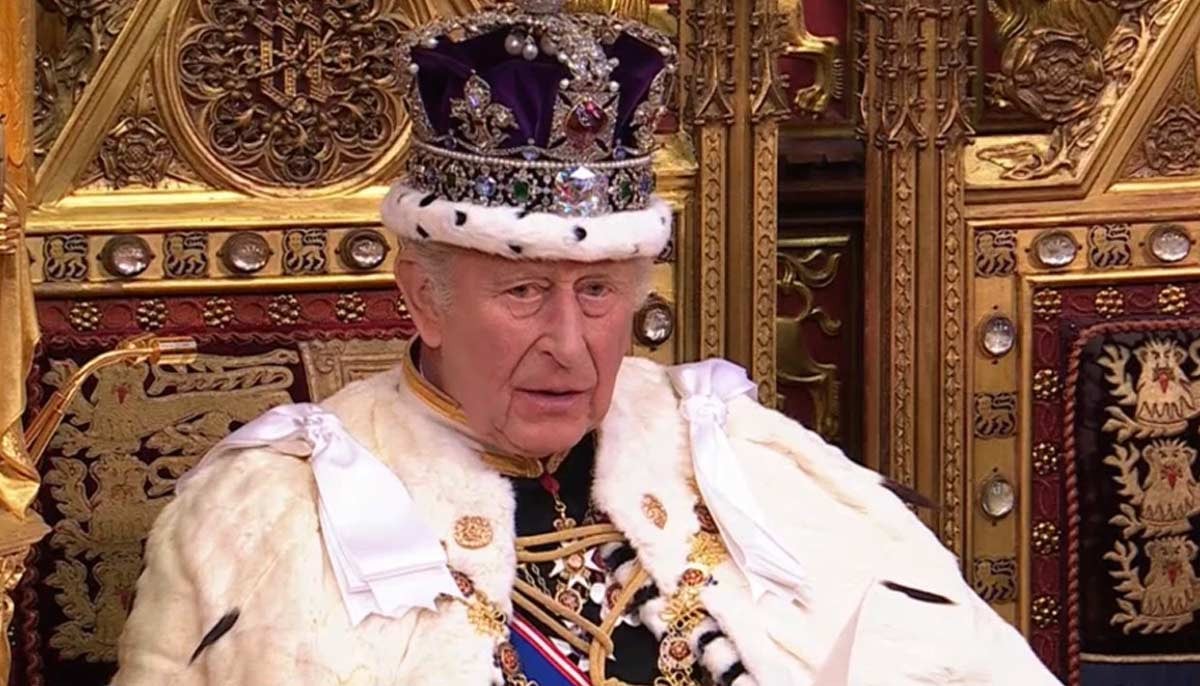
The British monarch, 77, has reportedly taken an action to ensure safety meassure after a young soldier’s detah during a King’s Troop, Royal Horse Artillery performance earlier this month.
Lance Bombardier Ciara Sullivan, 24, lost his life after falling from her horse on May 15.
Heartbroken Britons urged officials to take notice of their concerns. They questioned whether traditional ceremonial practices, including the use of historic headwear rather than modern protective helmets, should continue in public displays.
She had been wearing the regiment’s ceremonial busby hat as part of the King’s Troop full dress uniform.
The insider claimed: “The organisers need to adopt smart strategy to save lives.
“We may face the same situation in the future if the measures are nt taken.”
The First World War-era QF 13-pounder field artillery, constructed from steel and wood with large spoked wheels, is pulled at speed by six horses arranged in three rows.
During performances, riders guide the heavy weaponry through complex arena manoeuvres and sharp turns.
“These carriages were invented centuries ago, before modern safety measures. They are not fit for purpose and nor are the hats. There should be a serious review of horse displays like this,” one source told the Mail.
Another said: “The continued use of traditional headwear that offers only limited protection has to be reviewed in an activity where serious head injuries are an ever-present risk.”
It announced the following morning: “The Royal Windsor Horse Show is continuing as planned, with the omission of The King’s Troop, Royal Horse Artillery display.”
After the shocking incident, Chief Superintendent Michael Loebenberg said: “We are appealing for anyone with information or material relating to the sad death of a military rider at Royal Windsor Horse Show yesterday to please get in touch.”
“At this stage, we have not found any suspicious circumstances. We are working with the Ministry of Defence, the Defence Accident Investigation Branch and Royal Windsor Horse Show organisers HPower to gather as much information as possible to understand how this happened.”
Buckingham Palace released a statment, saying that the King was “greatly shocked and saddened” by the tragedy.
The monarch also conveyed his condolences privately to her family.
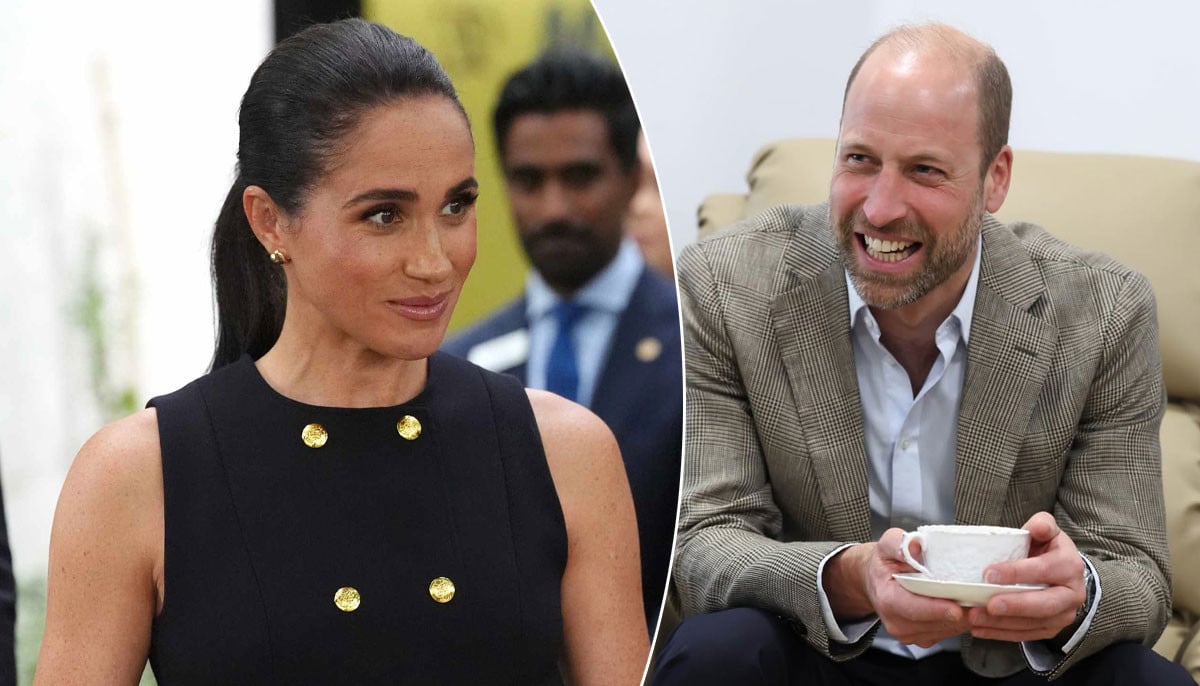
Meghan Markle took a coy approach as she appeared to have doubled down on her stance after a new debate was triggered involving Prince William.
It was believed that the Duchess of Sussex had made a direct attempt to get the future King’s attention with a bold move, knowing fully-well how critical the dynamics are between Prince Harry and William.
The discussion, on the surface, seems to be merely about scones, but experts believes there is something more to it. Eagle-eyed royal watchers noted that only hours after William shared his preferred method to eat the famous British tea-time snack, Meghan’s As Ever had shared a post about scones.
As the debate made headlines over the weekend, Meghan seemed to have reacted to the whole thing with a statement, somewhat confirming suspicions.
“Inspired by the jams Meghan has created in her own kitchen and shared over the years, each spread reflects a small-batch, carefully balanced approach to flavour,” a message read on As Ever alongside a video of the founder.
“Bright and fruit-forward with just a hint of tartness and a whisper of lemon, these spreads are crafted to highlight each fruit’s natural essence without overpowering it.”
In the brief video clip, Meghan shared her family’s preferred jams – Harry likes raspberry, Lilibet likes strawberry and Archie likes both.
The relations between the Sussexes and the Waleses are still at an impasse even though King Charles has begun warming up to his younger son.
Meghan’s move has earned mixed reactions, where some believe this is her usual tactic to steal the spotlight from the royals, other suggest this could be an icebreaker to get a conversation moving between them.

Zayn Malik is overwhelmed with gratitude as fans continue showering him with love and support after The Konnakol Tour launch.
Shortly after wrapping up the opening night of his first-ever headlining arena and stadium tour since his One Direction days, the former boy band star took to social media to thank his supporters.
On Sunday, May 24, the Dusk Till Dawn hitmaker shared a series of photos and a video, featuring some behind-the-scenes glimpse, highlights from the first show and a peek into the prep.
“Night 1 LONDON 02!!! Big thanks to everyone that came out and turned up!” he captioned the carousel. “That was epic ! [red heart emoji].”
The Pillowtalk chart-topper kicked off the 31-date global trek, supporting his fifth studio album of the same name, on Saturday, May 23, at the O2 Arena in London.
Standup comedian Usama Siddiquee was selected alongside DJ Lonyo to provide the opening entertainment to get the arena crowd energised before the 33-year-old singer took the stage.
Taking to his Instagram Stories, Zayn gave a shout out to the fast-rising Bengali-American comedian, writer, and actor.
“@usamastandsup you’re a legend bro,” he wrote over an image of himself watching Usman dominating the stage. “Thank you!”
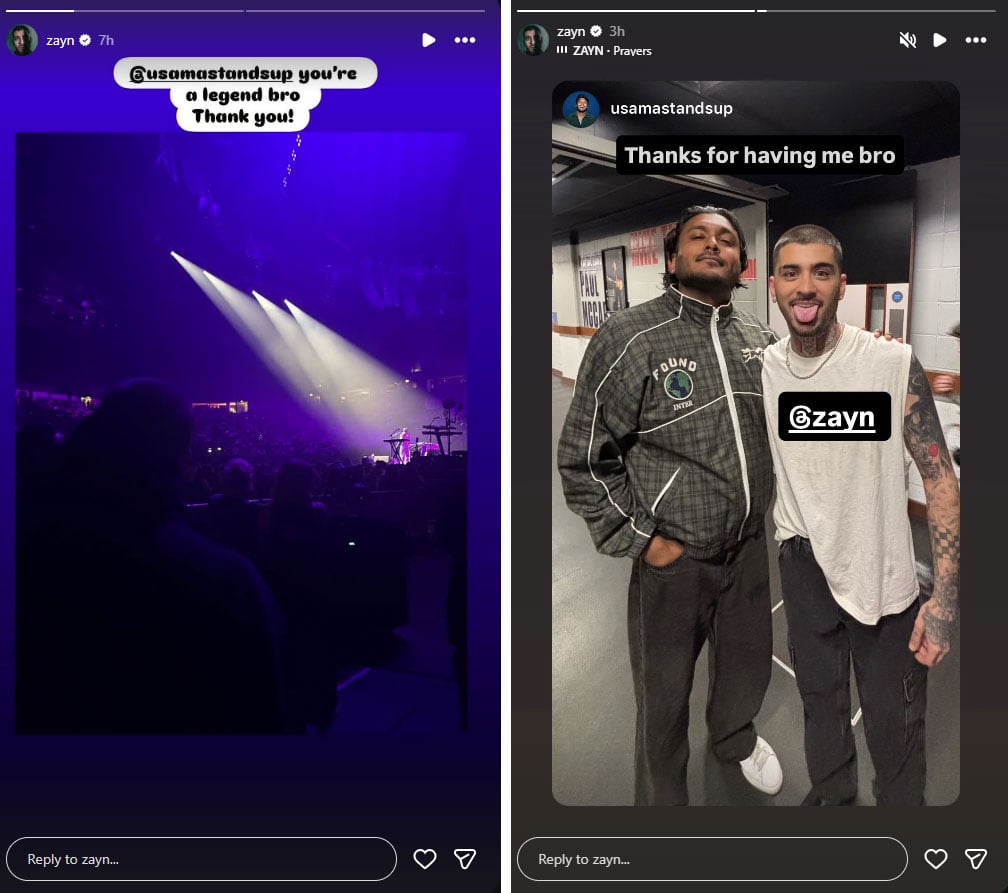
In the following update the Die For Me singer reposted the America’s Got Talent semifinalist’s story.
The text over the duo’s picture read, “Thanks for having me bro.”
Zayn officially announced the Don’t Tell Comedy star as the comedy opener for the major UK arena dates, including the opening night at London’s O2 Arena on followed by the Manchester AO Arena on May 24.


How Bangladesh turned denim into enviable success story

King Charles orders new safety measures after shocking incident

A Probe Took Incredible Pictures of Mars on Its Way to a Far-Off Asteroid

-

 Entertainment1 week ago
Where Pete Davidson, Elsie Hewitt stand after breakup: Details revealed
-

 Politics1 week ago
Rising diesel costs from Iran war strain US school budgets
-

 Tech1 week ago
Why Is Your Grill So Dumb? The Best Grills Set Temp Like an Oven
-

 Tech1 week ago
This Solar-Powered Smart Sprinkler Keeps My Lawn Watered Without Any Power Cables
-

 Fashion7 days ago
Turkiye’s current account deficit expected to widen in 2026: Minister
-

 Entertainment1 week ago
Princess of Wales praised as ‘step ahead’ of royal family
-

 Fashion1 week ago
India’s Pearl Global’s FY26 revenue crosses $521 mn milestone
-

 Fashion6 days ago
Nigeria Kwara Garment Factory, KWS Garment Production Village ink pact