

Tech
Top 10 cyber security stories of 2025 | Computer Weekly


Artificial intelligence (AI) may have dominated wider tech headlines this year – and this held true in the cyber world as well – but at the same time, the security community’s concerns extend far beyond the risk implications of fully autonomous technology, as Computer Weekly’s annual top 10 round-up reflects.
Five years after Covid-19, it’s fair to say that the pandemic remade security, turning it from a specialist subject into something on which everyone has an opinion, and some of the biggest themes to emerge from the dark days of lockdown – remote work and supply chain security – remained talking points in 2025, too.
Another leitmotif was the emergence of quantum computing, and specifically the threat it poses to encryption, while in the US, radical shifts in policy under a new presidential administration had big ramifications for the industry.
Here are Computer Weekly’s top 10 cyber security stories of 2025.
We start with one of the more curious and long-running stories of the past year, the scandal surrounding North Korean operatives who obtained remote IT contractor positions with US companies to generate funds for the isolated regime. Towards the end of January, the US Department of Justice (DoJ) announced the indictment of five men – two North Koreans, a Mexican and two American citizens – in the case.
The prevalence of remote workers, especially since the Covid-19 pandemic, has made virtual job interviews a fact of life, and despite even more organisations issuing return to office (RTO) orders, many continue to hire for fully remote positions where their employees may rarely, if ever, physically meet. Threat actors have been quick to spot this gaping loophole in enterprise security, and human resources departments have been scrambling to respond.
The growth in speculation around the potential of quantum computing and its impact on the security world was a huge topic of conversation this year. In March, the UK’s National Cyber Security Centre (NCSC) published guidance to help support organisations as they get ready for quantum.
While its possibilities appear fantastic, in the medium term the dawn of quantum computing will render current encryption methods used to protect sensitive data obsolete, and the race is now on to develop effective post-quantum cryptography, or PQC. According to the NCSC, organisations should already be planning for PQC, ahead of technical upgrades in the early 2030s. The cyber agency wants the UK’s most at-risk organisations to have fully migrated to PQC by 2035 at the latest.
Supply chain security has become a fixture in the cyber world over the past few years, and the topic still dominated headlines in 2025. In May, the NHS’s digital chiefs wrote to their suppliers asking them to sign up to a cyber covenant.
The NHS has a long and troubled history of cyber attacks and data breaches – with attacks on partners such as OneAdvanced and Synnovis disrupting services and demonstrating the supply chain risks faced by healthcare organisations. The health service asked suppliers to commit to higher standards around supporting and patching systems, deploy multifactor authentication (MFA), always-on cyber monitoring and critical infrastructure logging, and immutable backups, among other things.
Even though it was established during his first administration, the US Cybersecurity and Infrastructure Security Agency (CISA) was not immune to the deep and sweeping cuts enacted by president Donald Trump as his second term kicked into high gear.
With longstanding officials ousted, budget cuts abounding, and threats to the long-running CVE programme that identifies and classifies dangerous vulnerabilities, the US cyber establishment was rocked to the core in 2025, with knock-on effects spreading beyond America’s borders.
With Microsoft’s longest-lived operating system, Windows 10, finally falling out of support in October, there were warnings for users across the UK during the summer of 2025 – prepare to upgrade now, or put your security at risk.
The NCSC’s chief technology officer, Ollie Whitehouse, said that not upgrading was akin to “incurring a debt at a high interest with the threat of forced repayment at a later date” as he implored organisations to upgrade their PC estates. The agency warned that, in addition to the difficulties users will see from being out of support, outdated and now unpatched Windows 10 systems will be prime targets for threat actors – harking back to the WannaCry incident in 2017, which exploited unpatched versions of Windows XP.
The UK government made progress on its Cyber Security and Resilience Bill in 2025, and was finally able to lay it before Parliament in November. Ahead of this, the usual round of consultations, debates and evidence-gathering sessions took place, and in July, the Home Office announced that a legal ban on making ransomware payments – covering hospitals and other public health bodies, public sector organisations such as councils and schools, and operators of critical national infrastructure (CNI), including datacentres – would be included.
Enacting a ransomware payment ban has broad support nationally – the majority of responses to a consultation on the matter supported it – but the subject remains a controversial one, with some sceptical that the ban will make critical UK organisations less attractive targets for cyber criminals and may actually make it harder for some to recover if and when they get hit.
The annual Black Hat cyber fair in Las Vegas brings together security professionals and hackers of all kinds, and always throws up a few oddities. This year, Cisco Talos researchers revealed a series of vulnerabilities – dubbed ReVault – affecting the security firmware and associated application programming interfaces (APIs) in Dell laptops.
During the course of their research, the Talos team discovered that if a vulnerable system was configured to accept a biometric fingerprint login, it was possible to tamper with the firmware so that the fingerprint reader would accept a non-human physical input. In what was surely a first for the security industry, the researchers posted a video online in which they defeated a laptop’s biometric security measures using a spring onion.
Back in the quantum realm, two years after the debut of its Quantum Safe Programme (QSP), Microsoft reported steady progress on incorporating PQC algorithms into some of the foundational components underpinning the security of its product suite in August.
For a tech company as ubiquitous as Microsoft, quantum security is a non-negotiable – getting it wrong could lead to disaster – so Redmond wants to move fast and hopes to have its core services secured before the end of the 2020s. Its overall strategy rests on three core pillars: updating Microsoft’s own and third-party services, supply chain and ecosystem to be quantum-safe; supporting its customers, partners and ecosystems in this goal; and promoting global research, standards and services around quantum security.
In October, political chaos in Washington DC overflowed into the security realm when the federal government was forced to shut down after temporary funding measures failed to get through a deeply divided Congress. Unfortunately, this stalled progress on extending or replacing an Obama-era threat data sharing law, CISA 2015, which expired at the end of September.
CISA 2015 set out a framework for information sharing and offered liability protections to organisations sharing threat data and cyber intelligence in the public interest. Experts feared its absence would not only hurt collaboration between the public and private sectors, but also reduce the US’s ability to act as an effective counterweight to cyber criminals and other threat actors on the world stage. Although CISA 2015 has now been extended, the possibility of another shutdown in early 2026 could cause this story to rear its head again very soon.
Security professionals need only look at the monthly Patch Tuesday alerts to see how Microsoft’s technological dominance puts it at the centre of so many cyber security stories, and the firm frequently comes in for flak from those who think it is not doing enough to fulfil its security obligations. Such voices were in full flood at the end of 2025 when the Australian, Canadian and American cyber intelligence agencies took the step of co-signing an emergency alert and issuing a guide to securing Microsoft Exchange server instances, a key vector in many of history’s most impactful cyber incidents.
The document laid out several proactive protection techniques to be applied to on-premise Exchange Servers as part of hybrid environments, and the Americans described it as a “critical resource” for Microsoft users. But one observer, a former White House cyber policy expert, said that the fact a multilateral coalition felt obligated to produce such a resource was a “devastating commentary on Microsoft’s security posture”.

Tired of the stale, fetid air looming over your apartment like a cloud? Check out the Coway Airmega Mighty, an already wallet-friendly home air purifier that’s even cheaper right now as part of the Amazon Big Spring Sale. It’s currently marked down to just $154, a $76 discount from its typical price, but you’ll want to move quickly if you’re interested, as the deal is only available for a limited time.
Despite its low price tag and squat stature, the Airmega Mighty is capable of cleaning a substantial amount of space. At full bore, it can handle a 361-square-foot space, although you’ll get the best performance, and save your ears, if you’re closer to a 200-square-foot room. If you don’t want it running constantly, there are built-in timers to automatically shut off after 1, 4, or 8 hours, or you can use Eco Mode, which will run until the Might doesn’t sense any dirty air for half an hour.
That’s right, the Airmega Mighty has a built-in air quality sensor, and it reflects the current state of the air quality using a colored light with three levels. It uses those readings to automatically adjust the fan speed and timing settings on the fly, as well as giving you a peak into how bad the air you’re breathing right now is for you. While it lacks integration with smart home setups like Google Home, it makes up for it by handling all of its own business without Wi-Fi or extra apps on your phone.
While the Coway Airmega Mighty is available in three colors, only the black and silver model is currently discounted, so you’ll have to pay full price if it doesn’t match your living room’s color scheme. We’ve put in the work testing every air purifier we could get our hands on, so make sure to check out the full guide if you’re trying to clean up your space. The Coway is discounted as part of Amazon’s Big Spring Sale, and we’ve got the best deals from products we’ve tested gathered in one place if you want to save some bucks.
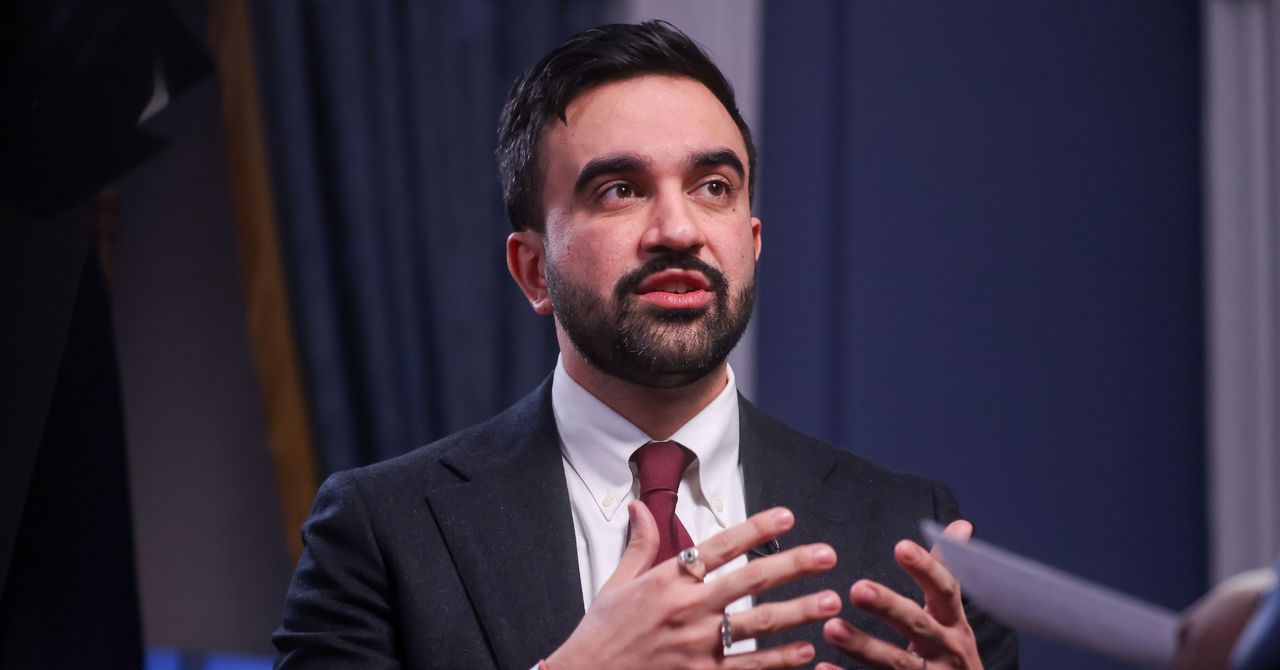
New York City mayor Zohran Mamdani, who rode a social media-fueled campaign to Gracie Mansion, is reversing an Eric Adams–era directive barring TikTok from government-owned devices. Local agencies will now be able to post about their projects on the app, though with new guardrails to protect city networks.
“The Mamdani administration is committed to using every tool in our toolbox to communicate with New Yorkers,” says the email to agencies, obtained by WIRED. “At a moment when people are turning to city government for information about free services, emergency situations, upcoming events, and more, we want to open up new avenues of communication with the public and help deliver the information New Yorkers need.”
In August 2023, then-mayor Adams barred the use of TikTok on government devices, joining the ranks of other state and federal agencies that at the time deemed the app a major security risk. Adams spokesperson Jonah Allon said then that the city’s Cyber Command office had decided that TikTok, which was owned by the Chinese-based company ByteDance, “posed a security threat to the city’s technical networks and directed its removal from city-owned devices.”
The directive resulted in a number of popular city-run accounts shutting down, including accounts for the NYC Departments of Sanitation and Parks and Recreation. As of Tuesday morning, the accounts’ bios read, “This account was operated by NYC until August 2023. It’s no longer monitored.”
Now, these TikTok accounts will be allowed to reopen with a few new rules aimed at protecting the security of NYC’s networks and devices while allowing agencies to communicate with citizens on the popular app. In order to use TikTok, agencies will be required to use separate, government-issued devices for the app that “cannot contain sensitive or restricted data, and they cannot be used for email, internal systems, or privileged access,” according to the email to agencies. Agencies will designate specific staff from media and press offices to run the TikTok accounts with city government emails, not personal ones.
“In a fragmented media landscape, more and more people—especially younger people—are looking beyond the four corners of their television screen to stay informed,” Mamdani said in a statement to WIRED. “Our responsibility is simple: Meet people where they are. That means stepping outside our comfort zones and communicating in ways that reflect how New Yorkers actually live, work, and connect.”
Mamdani’s rule reversal comes after his November election that relied heavily on social media to conduct voter outreach. Mamdani leveraged TikTok to recruit volunteers and amplify his policy platform. Over his first few months in office, Mamdani has continued to leverage social media platforms, publishing a variety of public-service announcements related to city-run programs.
Ahead of dangerous winter weather in January, Mamdani published a video to the official @nycmayor account on Instagram asking New Yorkers to sign up for the city’s free emergency communications program, NotifyNYC. The program netted more than 32,000 new subscribers in the four days after the video was released, according to stats provided by Mamdani’s office. Last year, New York City Emergency Management ran a $240,000 advertising round for NotifyNYC, acquiring around 48,000 new subscribers. Mamdani also created a handful of videos asking New Yorkers to join a Department of Sanitation snow-shoveling program. Around 5,000 people signed up, tripling the number previously enrolled in the program.
The situation has also changed for the app. In January 2026, TikTok finalized a deal with the Trump administration to form a new US-based version of the company run by American investors, including Oracle. The consortium of American investors staved off a nationwide ban of the app.

Yes, it’s a supercar, but it’s also sold very much as a track and road car, one that accommodates a passenger, all of which means road trips and weekend-away stays are very much possible. Well, they would be if there were anywhere at all to store luggage. Lamborghini managed to find some luggage space in its Revuelto design, so there’s no excuse here, really.
The design department otherwise has had a field day. Top-mounted exhausts, dihedral doors, and even an F1-style roof snorkel to accompany that air-braking rear wing deliver an exterior that is nothing short of arresting. Somehow, none of this looks garish or out of place on the Valhalla in person. Everything has a purpose, and nothing seems to scream as flexing or showing off. There’s a cohesion to the Valhalla aesthetic that others might not manage.
Inside, it is much more comfortable than you would imagine. The one-piece carbon-fiber seats look like they are going to be tricky, but on my two-hour road drive, they were supportive and, yes, comfortable. Visibility is surprisingly good, but a camera system is required for the rear view mirror because there’s no rear window. The rest of the interior is minimal, but the steering wheel is excellent (which, as Jony Ive will tell you, is no mean feat) and neatly signals some motorsport cool.
Photograph: Jeremy White
The one gripe for the interior is the dash and center screens, which are clear and responsive, and offer up the usual smartphone mirroring options, but they aren’t luxurious. We’re seeing a lot more effort these days with screen design from Ferrari’s new Luce as well as BMW in the iX3 and i3, but here, Aston has decidedly functional, off-the-shelf-looking displays. If I were parting with a million dollars, I might want more consideration here.
Odin’s Beard
On the road and track is where the Valhalla excels. Impressive doesn’t come close, and, despite the delays, the patience shown by Aston has clearly paid dividends. The ride is superb, as well as being ridiculously quick. The chassis is exceptionally agile, making the car feel alert and light. There are enormous reserves of grip to match the formidable braking and acceleration, and as a result, this is a car that flatters you; it effortlessly seduces you into driving much harder and better than you think you can, all while giving you levels of confidence you wouldn’t think possible.
I’ve driven the Lamborghini Revuelto, and yes, it’s exciting, but also there’s a part of you that is wary—the part that knows that if you don’t keep your wits about you 100 percent of the time, things will go bad very quickly. The Valhalla offers up all of that fun and excitement, but almost none of the trepidation. It is gratifying and intuitive to drive. Anyone can fully enjoy this car, not merely those used to track days. Some will say the engine note is not as full-throated as might be expected in such a car, but others will be having so much fun they won’t care. Nor should they.


Nike shares fall 9% on weak outlook, expected 20% sales decline in China

Prince Harry surprises crowd by calling attendees his source of hope

Wrigley Field to host Big Ten/SEC volleyball doubleheader

-

 Politics1 week ago
Afghanistan announces release of detained US citizen
-

 Sports1 week ago
Broadcast industry CEO says consolidation is ‘essential’ to compete for NFL soaring media rights prices
-

 Entertainment1 week ago
UN warns migratory freshwater fish numbers are spiralling
-

 Tech1 week ago
Can a Home Appliance Fix the Problem of Soft-Plastic Waste?
-
 Business1 week ago
Property Play: Home flippers see smallest profits since the Great Recession, real estate data firm says
-
 Business1 week ago
Gold prices soar in Pakistan – SUCH TV
-

 Fashion1 week ago
ICE cotton slips on weaker crude, profit booking
-
 Business1 week ago
More women are entering wealth management, but few are in advisory roles, study finds