

Tech
IOWN advances next-generation network evolution and innovation | Computer Weekly


As enterprises and connectivity providers know only too well, artificial intelligence (AI) has fuelled an unprecedented surge in network demand – especially in datacentres. Indeed, the emergence and widespread adoption of agentic AI-enabled applications is also reshaping datacentre requirements, prompting a rapid evolution in networking services.
AI-driven datacentre capacity is projected to grow between two to six times over the next five years. And as AI capacity has soared, network infrastructure is constantly having to adapt to a multitude of external pressures and unprecedented strains. The result is that keeping pace with the next wave of AI growth will require new long-haul networks to enable the rapid scaling of capacity needs in both existing and emerging enterprise setups.
This next generation of networks will have to keep pace with new fibre buildouts and AI datacentre sites, offering extended network capillarity – using short-range radio-access technologies to provide local connectivity to things and devices – and greater overall capacity. And as witnessed and articulated at the latest meeting of the Innovative Optical and Wireless Network (IOWN) Global Forum in Dallas in October 2025, advanced all-photonic networks (APNs) will almost certainly play a crucial role in achieving such aims.
Led by global tech giant and comms operator NTT, the IOWN project was created to meet the growing needs of the hyper-connected business world of the future, offering a global communications infrastructure capable of enabling ultra high-speed, high-capacity internet services utilising photonics-based technologies, namely an APN. It also aims to address the almost exponentially rising demand for data and a commensurate rise in energy consumption due to the vast amounts of compute power required by future applications, in particular large language model (LLM) use cases.
As it marked its fifth birthday in January 2025, the IOWN Global Forum said its work this year would place an emphasis on updating reference architectures and technologies while developing early adoption use cases across key industries.
Such work is well-needed: research from Neos Networks in October 2025 warned that mass buildout of datacentres in the UK may not come to fruition as mass availability to fibre remains the critical bottleneck that could slow growth, with as many as four-fifths of firms delaying builds because of network infrastructure constraints.
Assessing in April 2025 how to solve these issues, leading research firm Omdia observed in a study, The all-photonics network enables the next-gen digital economy, that to drive the continued growth of the global AI economy, networks would need to evolve significantly to deliver enhanced capabilities. New, advanced optical networks, it said, were necessary to meet advanced application and service requirements and address surging capacity needs within tight capex targets.
Meeting sustainability goals
As well as supporting business agility to match bandwidth supply to service utilisation, the all-photonic networks also offer the opportunity to have infrastructure with lower power consumption per bit to meet sustainability goals and reduce energy costs. To display the crushing need to address the challenge, the Omdia research calculated that when measured in gigawatts, total global datacentre capacity – what the analyst called the key enabling infrastructure for AI capabilities – is set to grow 57% from 2024 to 2027.
The analyst concluded that APNs can potentially bring benefits to all audiences – from individuals and industry to international markets – and noted that the APN will build upon advances in optics technology that offer improved system reach capabilities, cost optimisation, enhanced optical switching, and advances in multi-layer and supplier management supported by the standards community. For enterprises in particular, it sees benefits for those firms looking for greater security, agility and return on investment for their AI and cloud adoption.
Fast forward to the Dallas conference in October, and the point was made that the optimal networks between datacentres will need to be more open and dynamic to support the sharing of computer resources, solving technology problems and moreover creating value for businesses.
The Dallas meeting was the first published event the forum had hosted to advance photonic technologies. It brought together over 240 attendees from more than 170 member organisations for a series of panels, presentations and technology showcases that demonstrated its global scope and latest advances in next-generation network evolution and innovation.
IOWN Global Forum president and chair Katsuhiko Kawazoe notes that since the association’s last public event in Stockholm, it had made “significant” progress.
“[We are] moving from proof-of-concept to proof-of-value, with completed PoCs now demonstrating real-world benefits,” he says. “We’ve also expanded early adoption use cases into remote construction and warehouse management … We’re focused on scaling to real-world deployment, developing reference models and strengthening industry partnerships.”
At the heart of these advances has been an evolution in the development of the APN, which the technology developers in the consortium say has reached the 2.0 stage. NTT’s Masahisa Kawashima, IOWN technology director and head of the technology working group at the IOWN Global Forum, tells Computer Weekly that over the past year, notable developments included work around multi-domain internet networking – enabling interconnection between private fibre networks – and a new packet forwarding architecture using a Hub and Spoke model. These moves are designed to improve efficiency and quality, supporting low latency and introducing deterministic quality of service.
“Multi-domain internet networking means that we can allow multiple organisations to operate their own APN networks and interconnect them to form a seamless network,” he says. “This is very important. Currently, many people are talking about the deployment of private fibre network. For example, datacentre providers will build private fibre networks to connect their distributed datacentre, but without inter-working technology, their optical networks will just form silos in the computing space. With our work, their private fibre networks will be interconnectable to form one computing space, and that would create huge value in this AI computing era.
“Also, we have defined a new architecture regarding the packet forwarding layer. Traditionally, packet networks used to consist of packet forwarding nodes, distributed geographically. But since we have an IOWN APN instead of distributed packet forwarding nodes, we can deploy a packet forwarding function in the cloud and implement a packet forwarding function in a hub and spoke architecture. This will allow us to improve the implementation of the packet forwarding function in terms of efficiency and also quality. For example, we can provide a packet forwarding service with deterministic quality of service and support new data transfer protocols such as RDMA. This has not been possible with today’s packet networks.”
Kawashima compares the latter capabilities to delivery firm FedEx, with its tracking of a packet at all stages from the moment it is sent to a customer. Deterministic quality means that, for example, latency delays can be bound to a specific value and the APN can assure that there would be no packet loss or packet reordering. A key use case for the assignation of a specific value for latency would be finance, where there is a legal requirement for specific minimum throughput speed for a legally recognised trade.
Looking at this application in greater depth, Kawashima adds that in this industry, finance firms have to deploy their transaction systems with databases that perform synchronous data replication, and in that, the latency between two database nodes should be very small. He observed that the use of the IOWN APN would fundamentally improve the performance of two databases being synchronised.
At its heart, the APN is all about ecosystems and is fundamentally built to allow for the use of geographically distributed components, offering the potential to use specifications from consortia like OpenROADM, a standard developed through collaborative work between carriers and vendors to create and promote an open, disaggregated and efficient optical networking ecosystem that allows for flexible, scalable and fully operational networks supporting various services and applications.
Adopting specifications
The IOWN approach is to take advantage of specifications defined by other consortia such as OpenROADM, as adopting such product specifications is helpful in deploying key components of the optical technology ecosystem. Kawashima sees OpenROADM as defining an open architecture. Traditionally, components are deployed in a single place and operated by a single organisation. The IOWN open APN takes advantage of the same components but allows them to be distributed geographically and operated by multiple organisations.
Other key applications considered include traffic control; using digital twins for more efficient management; network operations, particularly in the space of optical transport systems; and streaming video and TV.
The latter was exemplified clearly in May 2025 by Cho Kabuki, a theatre performance synchronising live and virtual performers in both Osaka, Japan and Taipei City, Taiwan using the APN. Even though the 100Gbps optical network between the two cities – created by NTT and Chunghwa Telecom – spanned around 3,000km, it boasted approximately 17ms one-way latency and 33.84ms round-trip time, with no jitter and stable communication.
The new APN was the product of an agreement signed between the two parties in October 2023, and is said to be based on Chunghwa Telecom and NTT’s strengths in optical and wireless transmission technologies, as well as both companies’ achievements in implementing these technologies. It links the Chunghwa Telecom headquarters in Taipei City and NTT’s Musashino R&D Centre in Japan.
Speaking on Cho Kabuki, and the most important lessons learned, Kawashima notes that for him, the standout was the latency of the connection, which made the performance of acceptable quality.
“We used to know that the latency was very important, and using fibres would help us reduce the latency,” he says. “But once we deployed the [APN], what we have found is that the very short latency would help us as if we were in the same place, even if we were remotely separated. I think one of the important findings of the latency [is that it can] help people understand the difference between traditional networks and the IOWN APN.”
AI support
He also believes that what will come next will be another similar project with Chunghwa or another partner attracted by the live streaming use case, and also support for the world of AI.
“I’m expecting that many organisations would consider building a new venue – like a stadium or musical hall – connected with IOWN APN so that the performance there can be live streamed over the IOWN APN,” says Kawashima. “But also [while] the deployment of financial service datacentres is one thing, another thing is remote GPU [graphics processing units]. Many nations are talking about sovereign AI, building an AI computing infrastructure for their country to keep their industry competitive [as regards] global competition.
“One of the important points is how to achieve global sustainability, [and] what we could do with IOWN APN is deploy an AI computing datacentre in rural areas where renewable energy is abundant and connect such areas with downtowns or suburbia where many industries have their R&D campuses. This is what we can do with IOWN APN, because IOWN APN provides high bandwidth, load, agency and transport.”
In part two of our look at the work of the IOWN project, we find out what use cases the association has been working on and when they are likely to come to fruition.
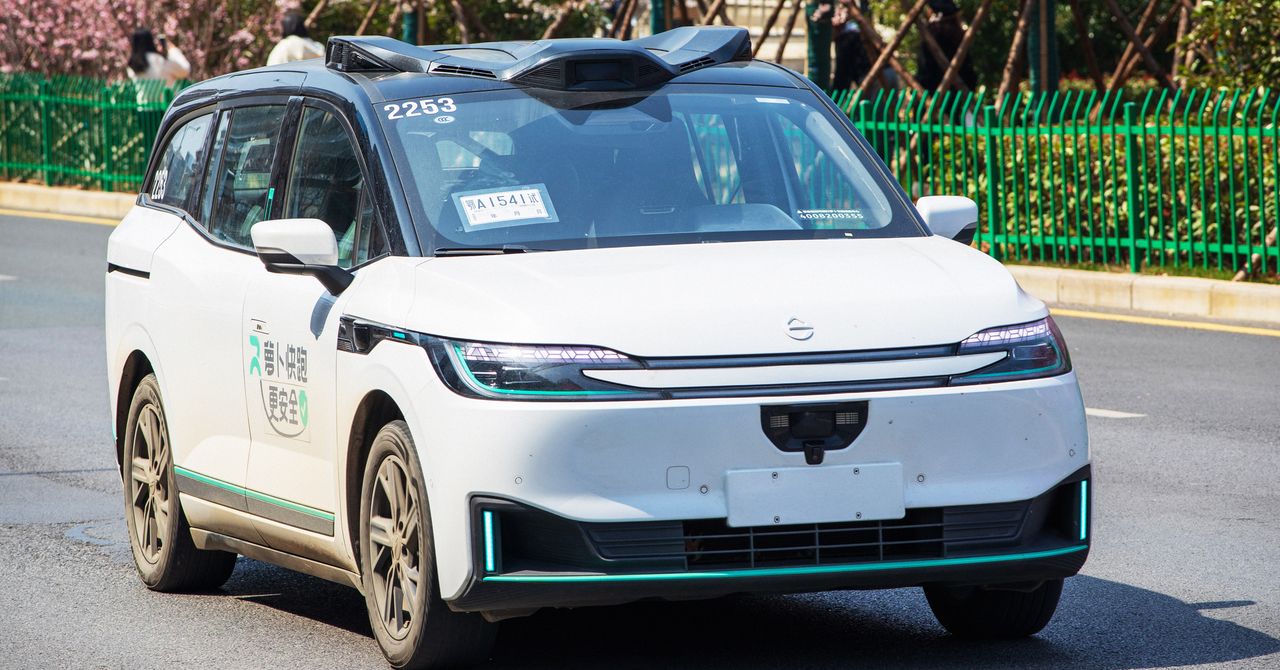
An unknown technical problem caused a number of robotaxis owned by the Chinese tech giant Baidu to freeze on Tuesday in the middle of traffic, trapping some passengers in the vehicles for more than an hour.
In Wuhan, a city in central China where Baidu has deployed hundreds of its Apollo Go self-driving taxis, people on Chinese social media reported witnessing the cars suddenly malfunction and stop operating. Photos and videos shared online show the Baidu cars halted on busy highways, often in the fast lane.
A college student in Wuhan tells WIRED that she was stuck in a Baidu robotaxi with two friends for about 90 minutes on Tuesday. (She asked to be only identified with her last name, He, to protect her privacy.) The student says the car malfunctioned and stopped four or five times during the trip before it eventually parked in front of an intersection in eastern Wuhan. Luckily, it was not a busy road, and the group was not in immediate danger. The screen display in the car asked the passengers to remain in the car with seatbelt on and wait for a company representative to come “in five minutes,” according to a photo He shared with WIRED.
He says it took about 30 minutes to reach a Baidu customer representative on the phone. “They kept saying it would be reported to their superior. But they didn’t explain what caused [the outage] or let us know how long we needed to wait for the staff to come,” He says. But no one ever came, and after another hour of waiting, the three passengers decided to just get out and go home by themselves (the doors weren’t locked).
On Chinese social media, other passengers also complained about being unable to reach Baidu’s customer support. “I tried every way I could think of to call for help using the options the app showed, but the phone line wouldn’t go through, and when I pressed the SOS button it told me it was unavailable. So then what exactly is the SOS for?” wrote one person in a post on RedNote alongside a video showing the button not working. She said she had to force the door to open and get out of the car as traffic halted to a complete stop behind her robotaxi. “Apollo Go, you really owe me an apology,” she wrote.
Baidu didn’t immediately respond to a request for comment. Local police in Wuhan issued a statement around midnight in China that said the situation was “likely caused by a system malfunction,” but the incident is still under investigation. No one was injured and all passengers have exited the vehicles, the police added. It’s unclear how many of Baidu’s robotaxis may have been impacted.
One dash cam recording posted to RedNote shows a car passing 16 Apollo Go vehicles parked on the road in the span of 90 minutes. On several occasions, the video shows the driver narrowly avoiding hitting the robotaxis by braking or changing lanes at the last minute.
Others were apparently not as fortunate. In another RedNote post, a man claimed he crashed into one of the malfunctioning Baidu vehicles. The man wrote in the caption that he was driving over 40 mph on a highway when the car in front of him suddenly changed lanes to avoid the stopped robotaxi. He couldn’t react fast enough and ended up running into the self-driving car. Photos of the man’s orange SUV being towed away show that the car’s front-right fender was completely torn off, and other parts appeared to have sustained major damage.

Tired of the stale, fetid air looming over your apartment like a cloud? Check out the Coway Airmega Mighty, an already wallet-friendly home air purifier that’s even cheaper right now as part of the Amazon Big Spring Sale. It’s currently marked down to just $154, a $76 discount from its typical price, but you’ll want to move quickly if you’re interested, as the deal is only available for a limited time.
Despite its low price tag and squat stature, the Airmega Mighty is capable of cleaning a substantial amount of space. At full bore, it can handle a 361-square-foot space, although you’ll get the best performance, and save your ears, if you’re closer to a 200-square-foot room. If you don’t want it running constantly, there are built-in timers to automatically shut off after 1, 4, or 8 hours, or you can use Eco Mode, which will run until the Might doesn’t sense any dirty air for half an hour.
That’s right, the Airmega Mighty has a built-in air quality sensor, and it reflects the current state of the air quality using a colored light with three levels. It uses those readings to automatically adjust the fan speed and timing settings on the fly, as well as giving you a peak into how bad the air you’re breathing right now is for you. While it lacks integration with smart home setups like Google Home, it makes up for it by handling all of its own business without Wi-Fi or extra apps on your phone.
While the Coway Airmega Mighty is available in three colors, only the black and silver model is currently discounted, so you’ll have to pay full price if it doesn’t match your living room’s color scheme. We’ve put in the work testing every air purifier we could get our hands on, so make sure to check out the full guide if you’re trying to clean up your space. The Coway is discounted as part of Amazon’s Big Spring Sale, and we’ve got the best deals from products we’ve tested gathered in one place if you want to save some bucks.
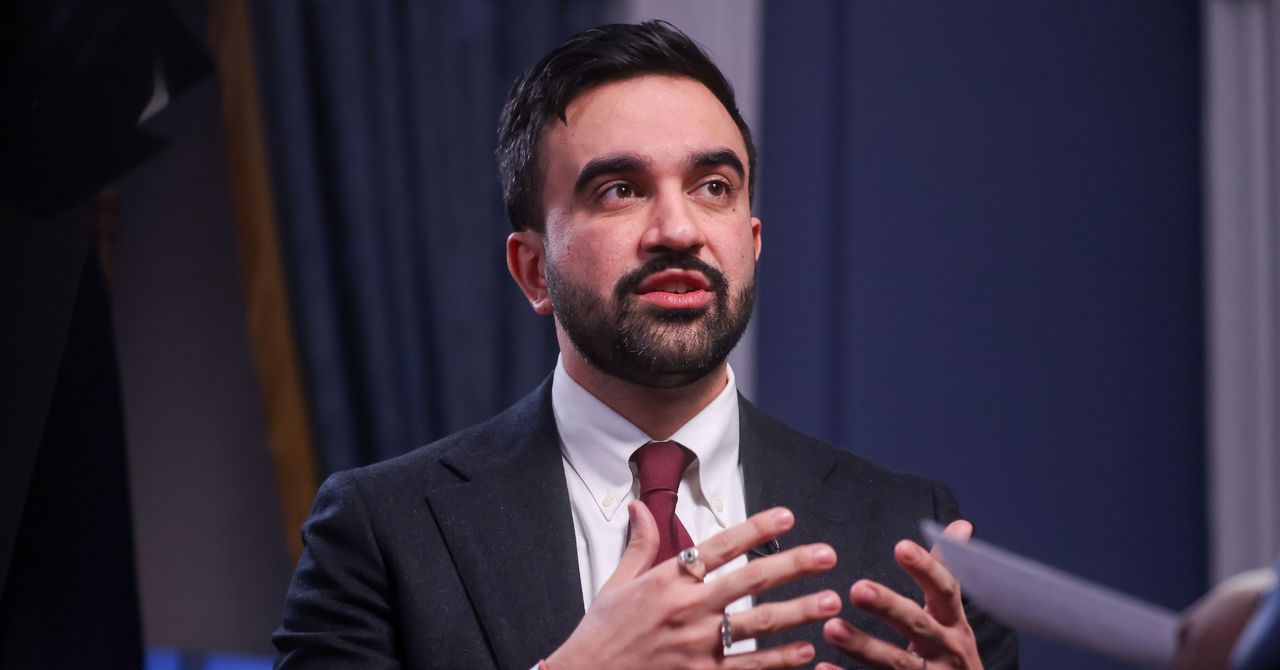
New York City mayor Zohran Mamdani, who rode a social media-fueled campaign to Gracie Mansion, is reversing an Eric Adams–era directive barring TikTok from government-owned devices. Local agencies will now be able to post about their projects on the app, though with new guardrails to protect city networks.
“The Mamdani administration is committed to using every tool in our toolbox to communicate with New Yorkers,” says the email to agencies, obtained by WIRED. “At a moment when people are turning to city government for information about free services, emergency situations, upcoming events, and more, we want to open up new avenues of communication with the public and help deliver the information New Yorkers need.”
In August 2023, then-mayor Adams barred the use of TikTok on government devices, joining the ranks of other state and federal agencies that at the time deemed the app a major security risk. Adams spokesperson Jonah Allon said then that the city’s Cyber Command office had decided that TikTok, which was owned by the Chinese-based company ByteDance, “posed a security threat to the city’s technical networks and directed its removal from city-owned devices.”
The directive resulted in a number of popular city-run accounts shutting down, including accounts for the NYC Departments of Sanitation and Parks and Recreation. As of Tuesday morning, the accounts’ bios read, “This account was operated by NYC until August 2023. It’s no longer monitored.”
Now, these TikTok accounts will be allowed to reopen with a few new rules aimed at protecting the security of NYC’s networks and devices while allowing agencies to communicate with citizens on the popular app. In order to use TikTok, agencies will be required to use separate, government-issued devices for the app that “cannot contain sensitive or restricted data, and they cannot be used for email, internal systems, or privileged access,” according to the email to agencies. Agencies will designate specific staff from media and press offices to run the TikTok accounts with city government emails, not personal ones.
“In a fragmented media landscape, more and more people—especially younger people—are looking beyond the four corners of their television screen to stay informed,” Mamdani said in a statement to WIRED. “Our responsibility is simple: Meet people where they are. That means stepping outside our comfort zones and communicating in ways that reflect how New Yorkers actually live, work, and connect.”
Mamdani’s rule reversal comes after his November election that relied heavily on social media to conduct voter outreach. Mamdani leveraged TikTok to recruit volunteers and amplify his policy platform. Over his first few months in office, Mamdani has continued to leverage social media platforms, publishing a variety of public-service announcements related to city-run programs.
Ahead of dangerous winter weather in January, Mamdani published a video to the official @nycmayor account on Instagram asking New Yorkers to sign up for the city’s free emergency communications program, NotifyNYC. The program netted more than 32,000 new subscribers in the four days after the video was released, according to stats provided by Mamdani’s office. Last year, New York City Emergency Management ran a $240,000 advertising round for NotifyNYC, acquiring around 48,000 new subscribers. Mamdani also created a handful of videos asking New Yorkers to join a Department of Sanitation snow-shoveling program. Around 5,000 people signed up, tripling the number previously enrolled in the program.
The situation has also changed for the app. In January 2026, TikTok finalized a deal with the Trump administration to form a new US-based version of the company run by American investors, including Oracle. The consortium of American investors staved off a nationwide ban of the app.


Iran war worries fail to dampen business sentiment in Japan

EU-funded RegioGreenTex pushes 25 SME pilots to commercialisation

Iran war: Asia stocks jump after Trump suggests conflict could end in weeks

-

 Politics1 week ago
Afghanistan announces release of detained US citizen
-

 Sports1 week ago
Broadcast industry CEO says consolidation is ‘essential’ to compete for NFL soaring media rights prices
-

 Tech1 week ago
Can a Home Appliance Fix the Problem of Soft-Plastic Waste?
-
 Business1 week ago
Property Play: Home flippers see smallest profits since the Great Recession, real estate data firm says
-

 Entertainment1 week ago
UN warns migratory freshwater fish numbers are spiralling
-
 Business1 week ago
Gold prices soar in Pakistan – SUCH TV
-

 Fashion1 week ago
ICE cotton slips on weaker crude, profit booking
-
 Business1 week ago
More women are entering wealth management, but few are in advisory roles, study finds