

Fashion
US’ Stitch Fix delivers strong Q1 FY26 with 7.3% revenue growth


Gross profit rose to $149.3 million but gross margin slipped to 43.6 per cent, down 180 basis points, due to higher product costs and promotional activity. Adjusted EBITDA increased to $13.4 million, reflecting a margin of 3.9 per cent compared with break-even levels seen in earlier turnaround phases.
Stitch Fix has reported a strong Q1 FY26, with revenue up 7.3 per cent to $342.1 million and improved adjusted EBITDA of $13.4 million.
While active clients declined, spending per client increased.
The company posted a $6.4 million net loss but ended debt-free with positive free cash flow.
With rising engagement and an AI-driven strategy, Stitch Fix expects continued growth through FY26.
The company reported a net loss of $6.4 million, nearly unchanged from the $6.26 million loss in the same quarter a year earlier, though operating performance improved on an adjusted basis.
Active clients fell 5.2 per cent YoY to 2.307 million, though revenue per active client improved 5.3 per cent to $559, signalling higher engagement among retained users. Inventory levels increased sharply to $141.5 million from $118.4 million last quarter, aligning with assortment expansion and seasonal buying, Stitch Fix said in a press release.
The company closed the quarter with a strengthened balance sheet, holding $244.2 million in cash, cash equivalents and investments and remaining debt-free. Operating activities generated $10.9 million in cash, and free cash flow turned positive at $5.6 million, marking a key milestone in the restructuring roadmap.
Looking ahead, Stitch Fix forecasts continued growth in the second quarter, projecting revenue between $335 million and $340 million—equating to 7.3-8.9 per cent annual growth. Adjusted EBITDA is expected to range from $10 million to $13 million with a margin of up to 3.8 per cent.
For full FY26, the company expects revenue between $1.32 billion and $1.35 billion, representing 4.2-6.5 per cent YoY growth. Adjusted EBITDA guidance stands at $38-$48 million with a 2.9-3.6 per cent margin. The company anticipates a full-year gross margin between 43 and 44 per cent, advertising expenses representing 9-10 per cent of revenue, and positive free cash flow.
As part of its operational reset, Stitch Fix continues to reflect its discontinued UK business separately, following its exit in fiscal 2024. The company noted that non-GAAP measure reconciliations are unavailable due to uncertainty around restructuring, taxes and other one-time cost fluctuations but cautioned these factors could materially impact GAAP outcomes.
With stabilising financials, rising revenue per client, and accelerating execution of its AI-led retail model, Stitch Fix signalled confidence in sustaining momentum as it moves deeper into fiscal 2026.
“Q1 was a strong start to the fiscal year—we accelerated year-over-year revenue growth to 7.3% and captured considerable market share gains,” said Matt Baer, CEO, Stitch Fix. “As a result of the successful execution of our transformation strategy, we are increasingly becoming the retailer of choice for more of our clients’ apparel and accessories needs. We are doing this by leveraging the latest in GenAI technology, the expertise of our human Stylists, and our assortment of leading brands to deliver the most client-centric and personalised shopping experience.”
Fibre2Fashion News Desk (SG)










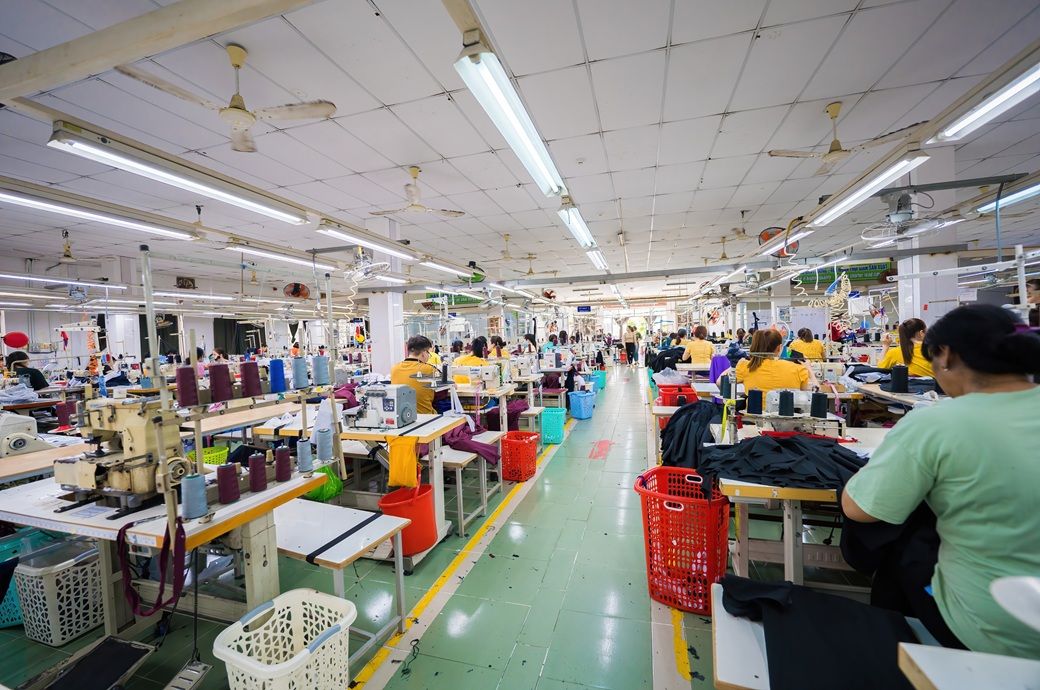
With sustainability benchmarks rising, companies are rethinking how they produce and deliver, pivoting toward greener, more circular models that reduce waste, emissions, and resource use.
The stakes are high. In 2025, Vietnam’s exports to the EU reportedly reached $56.2 billion, up 10.1 per cent year on year, underscoring how pivotal Europe is for the country’s manufacturing base.
Vietnam’s textile and footwear exporters are accelerating sustainability efforts as stricter EU regulations reshape market access requirements.
Rising compliance pressure from measures such as CBAM and ESPR is pushing manufacturers toward circular production, cleaner technologies and greater supply-chain transparency, though limited green finance remains a major challenge for smaller firms.
The EU market, nevertheless, comes with its own challenges as access to this market increasingly depends on meeting strict environmental and product-design requirements.
The EU is rolling out an ambitious sustainability agenda, including the Carbon Border Adjustment Mechanism (CBAM) and the Ecodesign for Sustainable Products Regulation (ESPR). Together, these measures are changing what global suppliers must document, design, and decarbonise.
ESPR shifts expectations toward durability, repairability, and recyclability, while pushing manufacturers to reduce products’ overall environmental footprint. Supply chains are also expected to become more transparent through Digital Product Passports, and practices such as destroying unsold goods being phased out gradually.
For Vietnam’s exporters, compliance is becoming a baseline requirement to keep EU orders and remain competitive.
Recognising this, both the Government and industry players are stepping up. Vietnam’s long-term development strategy for textiles and footwear, which stretches to 2030 with a vision toward 2035, places sustainability at its core. The plan charts a path toward efficient, environmentally responsible growth anchored in a circular economy, where materials are reused, waste is minimised, and production cycles are closed rather than linear.
Crucially, it also provides a legal backbone to help businesses align with global sustainability trends.
On the ground, change is already underway. Textile and apparel manufacturers are investing in renewable energy, upgrading machinery, and fine-tuning production processes to cut emissions and resource use. These shifts are not just about compliance; they are about future-proofing operations in a market where green credentials increasingly determine who wins contracts.
However, the transition has not been entirely seamless. A key barrier seems to be access to green finance, especially for small and medium-sized enterprises. Large firms can more readily fund clean technologies and certification, while smaller suppliers often struggle to fund the shift, risking exclusion from high-value export markets if they cannot keep pace.
There is also a growing recognition that policy support needs to go further. As Vietnam leans into a circular economy, industry voices are calling for a more cohesive and comprehensive framework, one that not only sets clear standards for circular products but also actively incentivises recycling, cleaner production, and sustainable innovation.
Without this, progress risks being uneven, with smaller firms left behind.
Momentum is, nevertheless, building as manufacturers and policymakers push for better-aligned standards and support mechanisms. The goal is to narrow the gap between sustainability ambition and day-to-day implementation across the sector.
The aim is clear: create an ecosystem where businesses of all sizes can invest in circular solutions, strengthen their export capabilities, and meet the EU’s exacting standards head-on.
Fibre2Fashion News Desk (DR)

The increase was driven primarily by higher reinvested earnings and intra-company loans, indicating continued engagement by existing investors with Bangladesh.
Reinvested earnings rose by 318.25 per cent, from $103.79 million in 2024 to $434.10 million in 2025, while intra-company loans increased by 25.68 per cent, from $621.96 million to $781.68 million.
Bangladesh’s net FDI inflows increased by 39.36 per cent last year to $1,770.42 million compared with $1,270.39 million in 2024, the Bangladesh Bank said.
The increase was driven primarily by higher reinvested earnings and intra-company loans.
Reinvested earnings rose by 318.25 per cent, from $103.79 million in 2024 to $434.10 million in 2025, while intra-company loans rose by 25.68 per cent.
Equity capital remained broadly stable, rising by 1.84 per cent, from $544.64 million to $554.64 million in 2025, a release from Bangladesh Investment Development Authority said.
Greenfield project announcements declined by 16 per cent in 2025.
Fibre2Fashion News Desk (DS)


The Backward Logic of Chickenpox Parties

EU green mandates and the Vietnam T&A industry

After provinces, Centre lifts austerity-driven business-hour curbs until May 31

-

 Entertainment5 days ago
Conan O’Brien hat tricks as Oscar host
-

 Tech1 week ago
Could Contact-Tracing Apps Help With the Hantavirus? Not Really
-

 Fashion5 days ago
Italy’s Zegna Group’s Q1 growth boosted by strong organic performance
-

 Sports1 week ago
Bobby Cox, legendary Atlanta Braves manager who led 1995 World Series champions, dead at 84
-

 Entertainment1 week ago
Martin Short: Facing tragedy with joy
-

 Entertainment1 week ago
Tom Brady gets back at Kevin Hart during Netflix roast
-

 Entertainment1 week ago
Martha Stewart: How to make an omelet
-

 Sports1 week ago
Jacob Fatu unleashes vicious assault on Roman Reigns after World Heavyweight Championship loss at WWE Backlash