

Politics
World bids farewell to 2025, a year of Trump, truces and turmoil

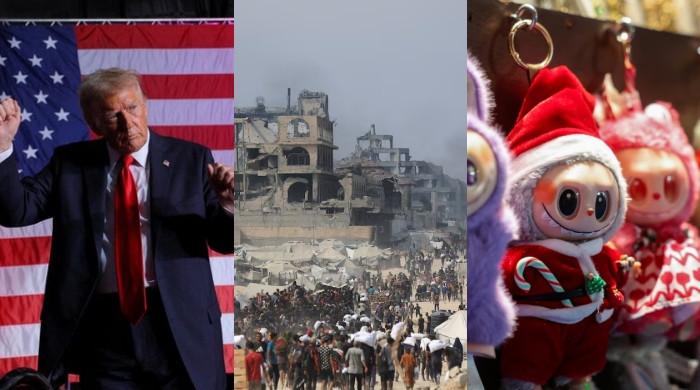
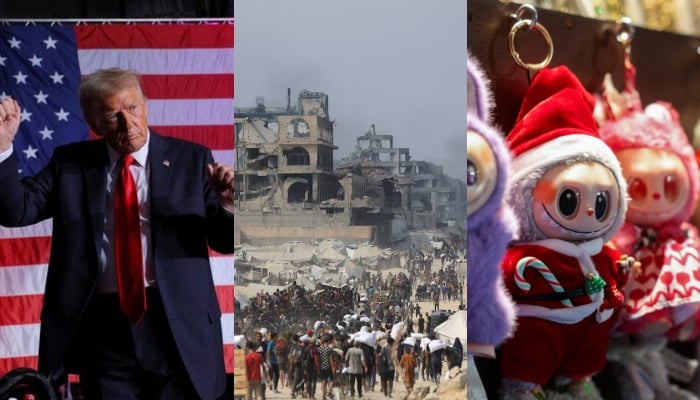
New Year’s Eve revellers toasted the end of 2025 on Wednesday, waving goodbye to 12 months packed with Trump tariffs, a Gaza truce and vain hopes for peace in Ukraine.
It was one of the warmest years on record, the stifling heat stoking wildfires in Europe, droughts in Africa and deadly rains across Southeast Asia.
There was a sombre tinge to party preparations in Australia’s harbour city Sydney, the self-proclaimed “New Year’s capital of the world”.
Barely two weeks have passed since a father and son allegedly opened fire on a Jewish festival at Bondi Beach, killing 15 people in the nation’s deadliest mass shooting for almost 30 years.
Parties will pause for a minute of silence at 11:00pm (1200 GMT) as the famed Sydney Harbour Bridge is bathed in white light to symbolise peace.
“It has been a difficult year for so many people,” said Steph Grant, a 32-year-old Sydney resident.
“Here’s hoping the world looks like a brighter place in 2026,” said Grant, who works in advertising.
Hundreds of thousands of spectators are expected to line Sydney’s foreshore as nine tonnes of fireworks explode on the stroke of midnight.
Security will be tighter than usual, with squads of heavily armed police patrolling the crowds.
Sydney kicks off a chain of celebrations stretching from glitzy New York to the Hogmanay festival on the chilly streets of Scotland.
More than two million people are expected to pack Brazil’s lively Copacabana Beach for what authorities have billed as the world’s biggest New Year’s Eve party.
Truce and tariffs
Labubu dolls became a worldwide craze in 2025, thieves plundered the Louvre in a daring heist, and K-pop heartthrobs BTS made their long-awaited return.
The world lost pioneering zoologist Jane Goodall, the Vatican chose a new pope, and the assassination of right-wing activist Charlie Kirk laid bare America’s deep political divisions.
Donald Trump returned to the White House in January, launching a tariff blitz that sent global markets into meltdown.
The US president used his Truth Social platform to lash out at his sliding approval ratings ahead of midterm elections in 2026.
“The polls are rigged,” he wrote, without providing evidence.
“Our Country is ‘hotter’ than ever before. Isn’t it nice to have a STRONG BORDER, No Inflation, a powerful Military, and great Economy??? Happy New Year!”
But many expect tough times to continue in 2026.
“The economic situation is also very dire, and I’m afraid I’ll be left without income,” said Ines Rodriguez, 50, a merchant in Mexico City.
“All our colleagues are in the same situation: very little work and not very profitable,” said Buenos Aires business owner Fernando Selvaggi, 61.
After two years of war that left much of the Gaza Strip in ruins, US pressure helped land a fragile ceasefire between Israel and Hamas in October.
But with each side already accusing the other of flagrant violations, no one is sure how long the break in hostilities will hold.
Hamas fighters stormed into southern Israel on October 7, 2023, resulting in the deaths of more than 1,200 people.
Israel’s retaliatory assault on Gaza has killed more than 70,000, also mostly civilians, according to the health ministry in the Hamas-run territory, a figure the UN deems credible.
World leaders including China’s Xi Jinping and Russian counterpart Vladimir Putin began exchanging New Year greetings.
Both countries have made much of their presidents’ supposedly close friendship, and Putin was an honoured guest at a spectacular Chinese military parade in September.
Xi said he was “ready to maintain close exchanges with Putin to jointly push for continuous new progress in bilateral ties”, Chinese state news agency Xinhua reported Wednesday.
The war in Ukraine — sparked by Russia’s full-scale invasion in 2022 — meanwhile grinds towards its four-year anniversary in February.
There were hopes a renewed burst of diplomacy might produce a breakthrough this year.
But Russia shot down any notion of a temporary ceasefire in the final days of 2025.
As envoys shuttle between Moscow, Washington and Kyiv, one major obstacle remains: Ukraine is reluctant to give up land, and Russia is unwilling to give it back.
Sports, space and AI
The coming 12 months promise to be full of sports, space travel and serious questions over artificial intelligence.
More than 50 years since the last Apollo lunar mission, 2026 looks to be the year that humankind once again sets its sights towards the moon.
NASA’s Artemis II mission, backed by Elon Musk, plans to launch a crewed spacecraft that will circle that moon during a 10-day test flight.
After years of unbridled enthusiasm, artificial intelligence is starting to face mounting scrutiny.
Nervous investors are already questioning whether the years-long AI boom might be starting to resemble something more like a market bubble.
Athletes will gather on Italy’s famed Dolomites to hit the slopes for the Winter Olympics.
And for a brief few weeks between June and July, nations will come together for the biggest football World Cup in history.
For the first time, 48 teams will compete in the world’s most-watched sports event, playing in venues across the United States, Mexico and Canada.
From the beaches of Brazil to the far-flung reaches of New Zealand, the tournament is expected to draw millions of fans.
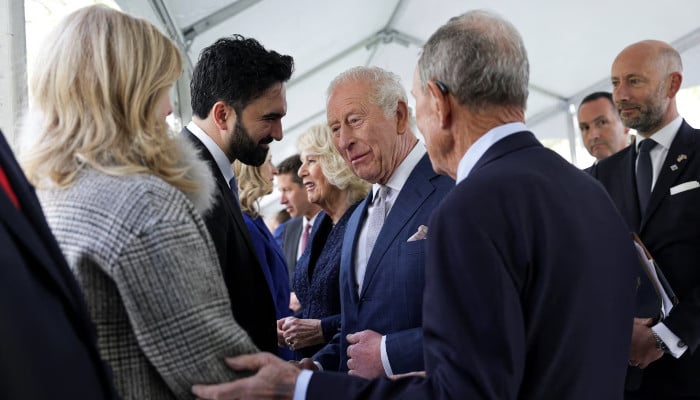
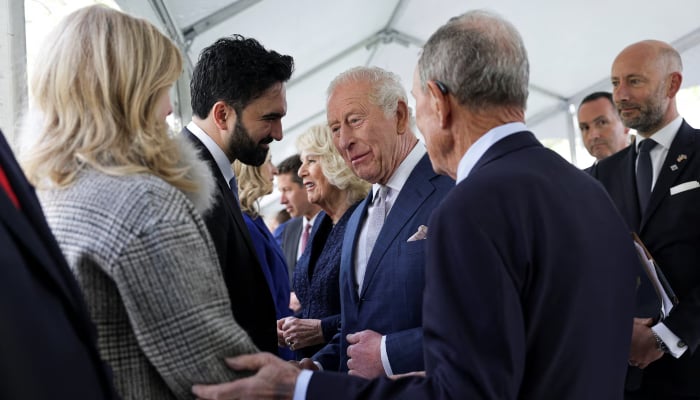
New York City Mayor Zohran Mamdani said on Wednesday he encourages Britain’s King Charles to return the Koh-e-Noor Diamond, with his comments coming during the British monarch’s ongoing US visit.
“If I were to speak to the king separately from that, I would probably encourage him to return the Koh-e-Noor Diamond,” Mamdani, who is Indian American, said when asked at a press conference hours before a ceremony that commemorated victims of the deadly September 11, 2001, attacks.
Later in the day, the king spoke with Mamdani at the ceremony. Buckingham Palace declined to comment. Mamdani’s office did not respond to a request to comment on whether Mamdani brought up the issue with the king.
India has previously repeatedly demanded that Britain return the 105-carat diamond.
Britain’s then colonial governor-general of India arranged for the huge diamond to be presented to Queen Victoria in 1850 after the East India Company had annexed the region of Punjab in 1849 and taken the diamond from a deposed Indian leader.
Charles on Wednesday commemorated victims of the September 11, 2001, attack on New York City, laying a floral bouquet at the memorial where the World Trade Centre’s twin towers once stood.
India received independence from British rule in 1947. The British colonisation of India and the widespread atrocities committed against people during that period remain sensitive issues in the country.
India has previously said the diamond was a “valued piece of art with strong roots in our nation’s history.” The diamond’s possession by the British is seen by many Indians as a symbol of colonial atrocities during British rule.
The diamond has been previously owned by India’s Mughal emperors, shahs of Iran, emirs of Afghanistan, and Sikh maharajas, according to the Historic Royal Palaces charity.
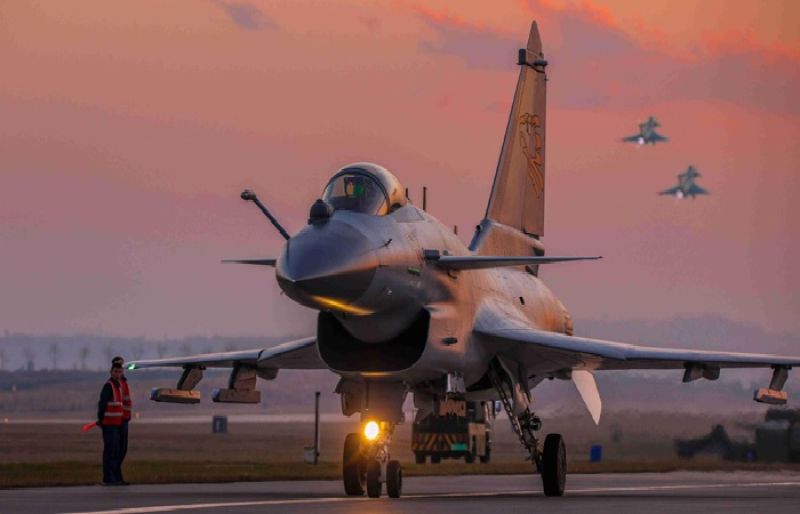
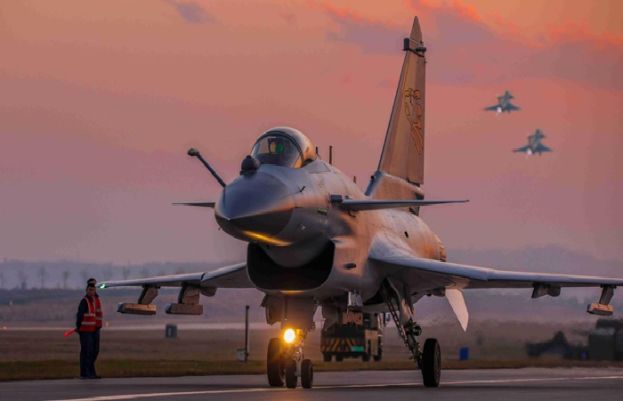
China’s AVIC Chengdu Aircraft Corporation, the maker of J-10C aircraft used by Pakistan to down India’s French-made planes in May last year, has reported a significant surge in profits, according a report by Bloomberg.
Revenue increased by 15.8% to 75.4 billion yuan ($11 billion) in 2025, with profit up 6.5% to 3.4 billion yuan in 2025, the publication cited the jetmaker as saying in a statement.
The numbers are the highest-ever for the company, Bloomberg reported, adding that Chengdu’s first-quarter sales rose almost 80% on year.
The Pakistan Air Force (PAF) inducted J-10C in March 2022, in a major boost to the country’s military capabilities to defend airspace.
At the time, the government said that the fighter jet could carry more advanced, fourth-generation air-to-air missiles, including the short-range PL-10 and the beyond-visual-range PL-15.
The fighter jet saw its first combat use in May 2025 when India launched an unprovoked attack on Pakistan on May 6, following an attack on tourists in the Indian Illegally Occupied Jammu and Kashmir.
Pakistan, during the 87-hour conflict, downed seven Indian fighter jets, including French-made Rafale, and dozens of drones.
The four-day war saw Pakistan successfully employing the Chinese-made HQ-9 air-defence system, PL-15 air-to-air missiles, and J-10C fighter aircraft, credited with downing multiple Indian aircraft.
The PAF also used its JF-17 Thunder jets to destroy India’s S-400 air defence system in Adampur by using hypersonic missiles.
The war between the two nuclear-armed nations ended on May 10 with a ceasefire agreement brokered by the US.
Months after the conflict, Inter-Services Public Relations (ISPR) Director-General (DG) Lieutenant General Ahmed Sharif Chaudhry praised the performance of Chinese-made weapons, saying they performed “exceptionally well. “Of course, lately, recent Chinese platforms, they’ve demonstrated exceptionally well,” Lt Gen Chaudhry said in an interview in October last year.
In November last year, a report presented to the United States Congress acknowledged Pakistan’s “military success over India” in the war.
The US-China Economic and Security Review Commission report — reviewing US-China security and foreign affairs — stated that Pakistan employed advanced Chinese weaponry to enhance its military edge over India.
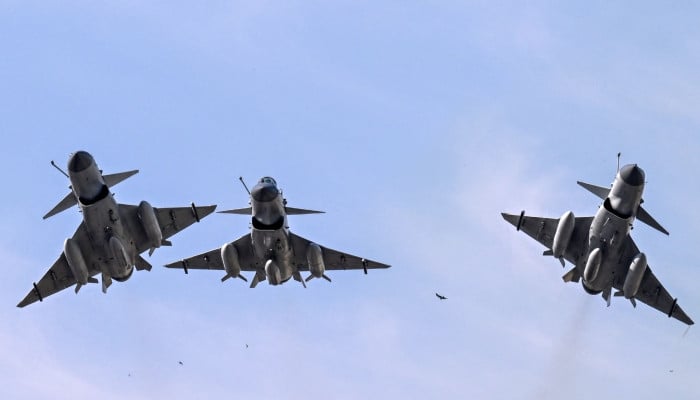
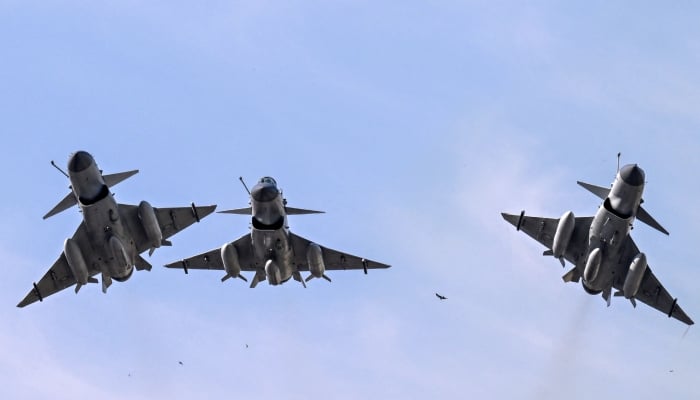
- Revenue up by 15.8% to 75.4 billion yuan in 2025: report.
- Company’s profits up by 6.5% to 3.4 billion yuan in 2025.
- Chengdu sales in first-quarter rose almost 80% on year.
China’s AVIC Chengdu Aircraft Corporation, the maker of J-10C aircraft used by Pakistan to down India’s French-made planes in May last year, has reported a significant surge in profits, according a report by Bloomberg.
Revenue increased by 15.8% to 75.4 billion yuan ($11 billion) in 2025, with profit up 6.5% to 3.4 billion yuan in 2025, the publication cited the jetmaker as saying in a statement.
The numbers are the highest-ever for the company, Bloomberg reported, adding that Chengdu’s first-quarter sales rose almost 80% on year.
The Pakistan Air Force (PAF) inducted J-10C in March 2022, in a major boost to the country’s military capabilities to defend airspace.
At the time, the government said that the fighter jet could carry more advanced, fourth-generation air-to-air missiles, including the short-range PL-10 and the beyond-visual-range PL-15.
The fighter jet saw its first combat use in May 2025 when India launched an unprovoked attack on Pakistan on May 6, following an attack on tourists in the Indian Illegally Occupied Jammu and Kashmir.
Pakistan, during the 87-hour conflict, downed seven Indian fighter jets, including French-made Rafale, and dozens of drones.
The four-day war saw Pakistan successfully employing the Chinese-made HQ-9 air-defence system, PL-15 air-to-air missiles, and J-10C fighter aircraft, credited with downing multiple Indian aircraft.
The PAF also used its JF-17 Thunder jets to destroy India’s S-400 air defence system in Adampur by using hypersonic missiles.
The war between the two nuclear-armed nations ended on May 10 with a ceasefire agreement brokered by the US.
Months after the conflict, Inter-Services Public Relations (ISPR) Director-General (DG) Lieutenant General Ahmed Sharif Chaudhry praised the performance of Chinese-made weapons, saying they performed “exceptionally well,” The News reported, citing Bloomberg.
“Of course, lately, recent Chinese platforms, they’ve demonstrated exceptionally well,” Lt Gen Chaudhry said in an interview in October last year.
In November last year, a report presented to the United States Congress acknowledged Pakistan’s “military success over India” in the war.
The US-China Economic and Security Review Commission report — reviewing US-China security and foreign affairs — stated that Pakistan employed advanced Chinese weaponry to enhance its military edge over India.

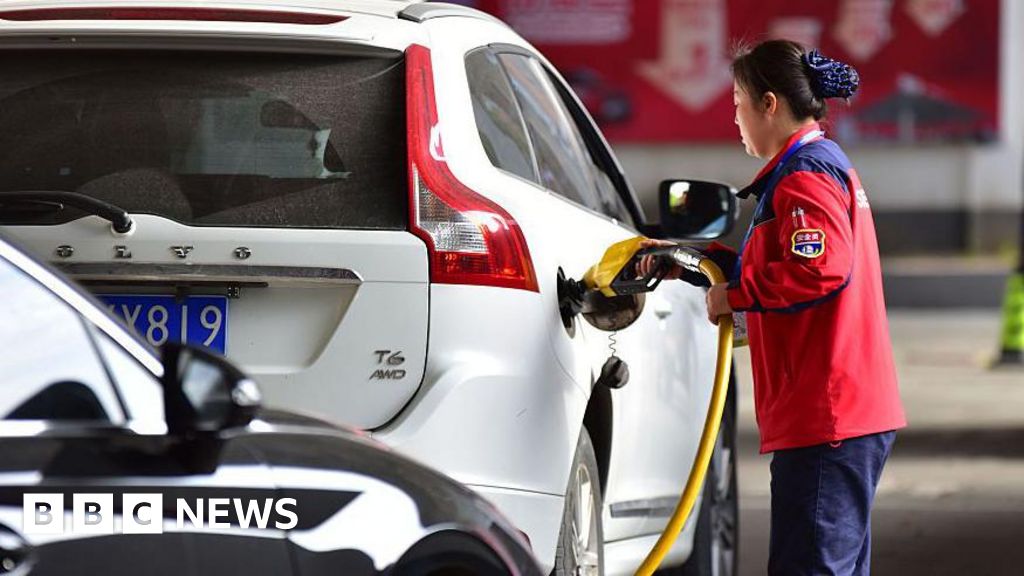
Oil jumps to highest price since 2022 after report Trump to be briefed on new Iran options

Trützschler to showcase advanced textile tech at ITM 2026 in Istanbul

Gold, silver price prediction: Will gold head down to Rs 1.40 lakh/10 grams & silver hit Rs 2.20 lakh/kg? – The Times of India

-
 Business1 week ago
Us-India Trade Talks: US–India trade deal: Where do talks stand & what to expect – explained – The Times of India
-

 Fashion1 week ago
Global energy growth slows to 1.3% in 2025: Report
-
 Business1 week ago
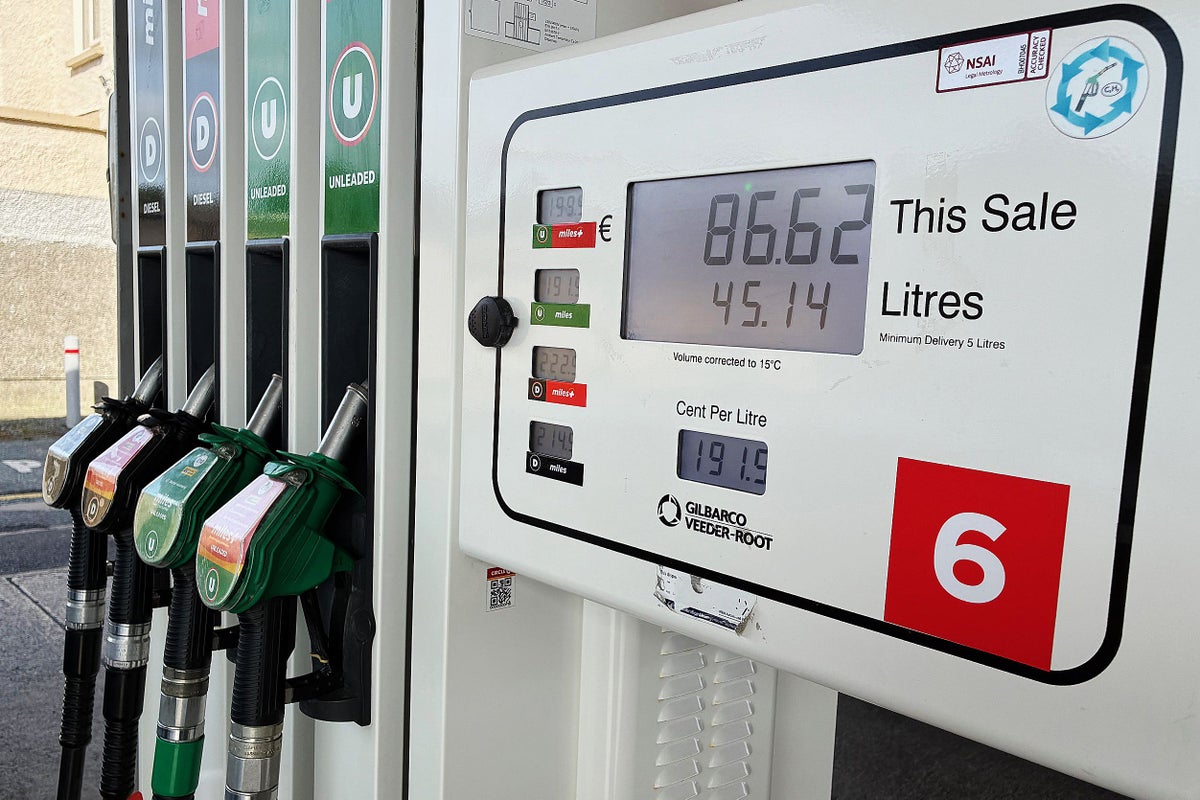
UK inflation accelerates after Iran war drives sharp rise in fuel prices
-

 Tech1 week ago
Nation states responsible for ‘nationally significant’ cyber attacks against UK, says NCSC chief | Computer Weekly
-
 Tech1 week ago
Microsoft faces court battle in £2bn Windows Server class action | Computer Weekly
-

 Sports1 week ago
PSL 11: Hyderabad Kingsmen opt to field after winning toss against Multan Sultans
-
 Business1 week ago
Trump administration in advanced talks for a rescue package for Spirit Airlines, source says
-
 Business1 week ago
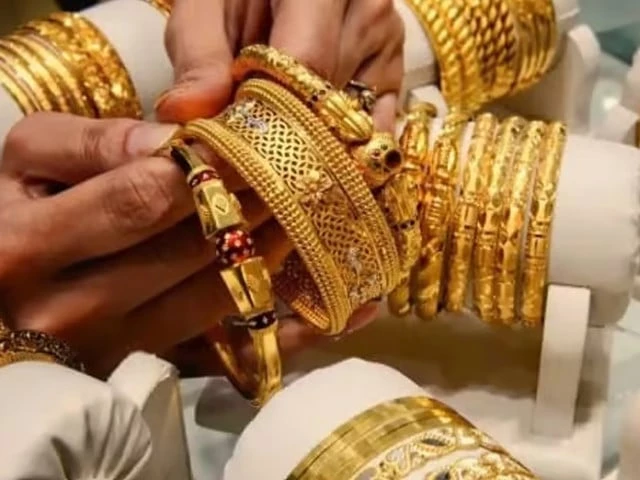
Gold prices in Pakistan Today – April 23, 2026 | The Express Tribune