

Politics
Bangladesh mourns ex-PM Khaleda Zia with state funeral

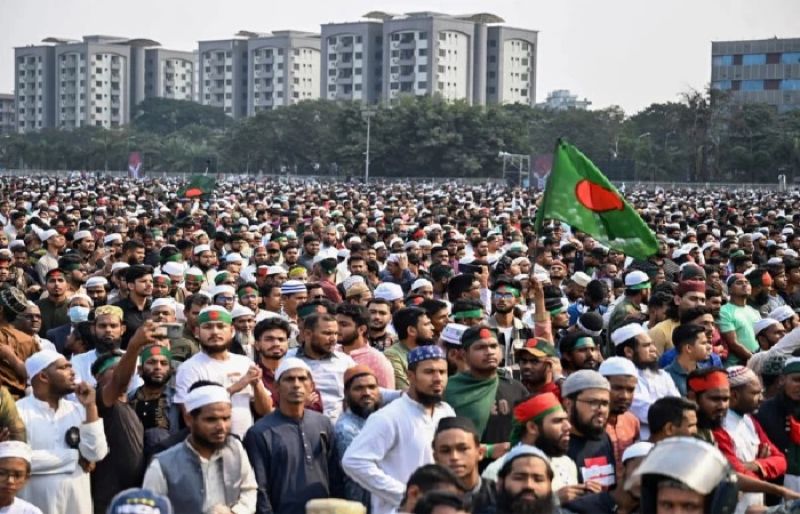
Bangladesh bade farewell on Wednesday to former prime minister Khaleda Zia in a state funeral drawing vast crowds, mourning a towering leader whose career defined politics for decades.
Khaleda, the first woman to serve as prime minister in the South Asian nation of 170 million people, died on Tuesday aged 80.
Flags were flown at half-mast, and thousands of security officers lined the streets as her body was carried through the streets of the capital Dhaka in a vehicle in the colours of the national flag.
Large crowds had gathered outside parliament — many waving national flags or those of Khaleda’s Bangladesh Nationalist Party (BNP) — where the funeral prayers were held at around 3pm local time, according to Dhaka-based Daily Star.
Khaleda was laid to rest alongside her late husband, Ziaur Rahman, who was assassinated in 1981 during his time as president. The burial took place at around 4:30pm local time, Daily Star reported.
Seventy-year-old retired government official Minhaz Uddin, who was attending Khaleda’s funeral, said he had never voted for her, but came to honour the three-time prime minister.
“I came here with my grandson, just to say goodbye to a veteran politician whose contributions will always be remembered,” he said, watching from behind a barbed wire barricade as her body passed by.
“Khaleda Zia has been an inspiration,” mourner Sharmina Siraj told AFP, adding that “it is difficult to imagine women in leadership positions anytime soon”.
The 40-year-old mother of two said stipends introduced by Khaleda to support girls’ education “had a huge impact on the lives of our girls”.
NA speaker meets family, expresses condolences
National Assembly Speaker Sardar Ayaz Sadiq, who is in Bangladesh for the funeral, visited the residence of the former Bangladeshi prime minister, where he met her son and daughter.
According to a statement issued by the NA Secretariat, Sadiq expressed his condolences at the passing of their mother.
“In this hour of grief and sorrow, the government and the people of Pakistan stand with you,” he was quoted as saying. The family of the late premier thanked Sadiq for his condolences.
The NA speaker also met the country’s national security adviser, Khalilur Rehman, the statement said.
It said that Sadiq “conveyed a message of sympathy and condolences on behalf of the residents and prime minister of Pakistan”.
The speaker also met the adviser for law, justice and parliamentary affairs of Bangladesh, Asif Nazrul, where the two discussed matters of mutual interest.
Later, a post on the NA‘s X account said Sadiq also had an interaction with Indian Foreign Minister Dr S, Jaishankar at Bangladesh’s parliament.
‘Legacy lives on’
Despite years of ill health and imprisonment, Khaleda had vowed to campaign in elections set for 12 February — the first vote since a mass uprising toppled her arch-rival Sheikh Hasina last year.
Khaleda’s Bangladesh Nationalist Party is widely seen as a frontrunner, and her son Tarique Rahman, 60, who returned only last week after 17 years in exile, is seen as a potential prime minister if they win a majority.
“She is no more, but her legacy lives on — and so does the BNP,” said Jenny Parvez, 37, who travelled for several hours with her family to watch the funeral cortege pass her on the street.
The interim government, led by Nobel Peace Prize winner Muhammad Yunus, declared three days of national mourning and an elaborate state funeral.
Yunus said Bangladesh had “lost a great guardian”.
‘Unbreakable’
Tarique Rahman said in a statement that “the country mourns the loss of a guiding presence that shaped its democratic aspirations”.
His mother, he added, “endured repeated arrests, denial of medical care, and relentless persecution”, but that “her resilience … was unbreakable.”
Suffering from a raft of health issues, Khaleda was rushed to hospital in late November, where her condition had gradually deteriorated despite treatment.
Nevertheless, hours before her death, party workers had on Monday submitted nomination papers on her behalf for three constituencies for next year’s polls.
Indian Prime Minister Narendra Modi said he hoped Khaleda’s “vision and legacy will continue to guide our partnership”, a warm message despite the strained relations between New Delhi and Dhaka since Hasina’s fall.
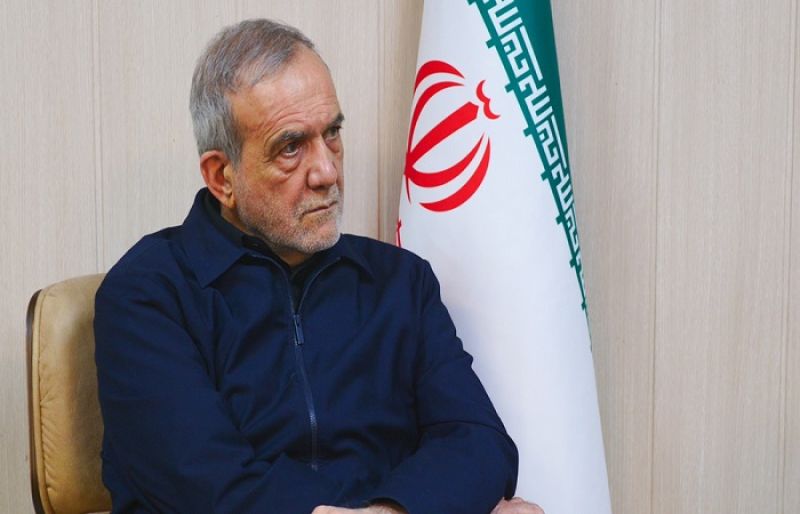

Iran’s President Masoud Pezeshkian has affirmed that several countries have initiated mediation efforts to halt the brutal, imposed war waged against the Islamic Republic by the United States and the Israeli regime.
In a post on the social media platform X on Friday, President Pezeshkian said, “Some countries have begun mediation efforts and our response to them is clear.”
He stressed that these efforts must target the true aggressors, the US and Israel, who launched this unprovoked aggression.
He reiterated Iran’s unwavering commitment to “lasting” peace in the region, declaring, “Yet we have no hesitation in defending our nation’s dignity, sovereignty, and the rights of our great people.”
The president emphasized that any genuine mediation must confront those who underestimated the resilience of the Iranian nation and deliberately ignited this war through their criminal attacks.
The US and the Israeli regime unleashed a new wave of savage aerial aggression against Iran on February 28, barely eight months after their previous unprovoked assaults on the country.
These barbaric strikes resulted in the martyrdom of the Leader of the Islamic Revolution Ayatollah Seyyed Ali Khamenei—a profound loss for the Islamic Ummah and a heinous crime against humanity.
In response, the Iranian government declared 40 days of national public mourning and seven days of official holidays to honor the Supreme Leader’s martyrdom and rally the nation in unity and resolve.
These latest aggressions came even as Tehran and Washington had engaged in three rounds of indirect negotiations in the Omani capital of Muscat and the Swiss city of Geneva, with plans underway for technical talks in Vienna, Austria—demonstrating Iran’s consistent pursuit of diplomacy despite relentless hostility.
Unyielding in the face of this aggression, Iran has launched powerful and precise retaliatory barrages of missiles and drones targeting military sites in the Israeli-occupied territories and US bases across the region, exercising its legitimate right to self-defense and sending a clear message that the Iranian nation will never submit to bullying or occupation.
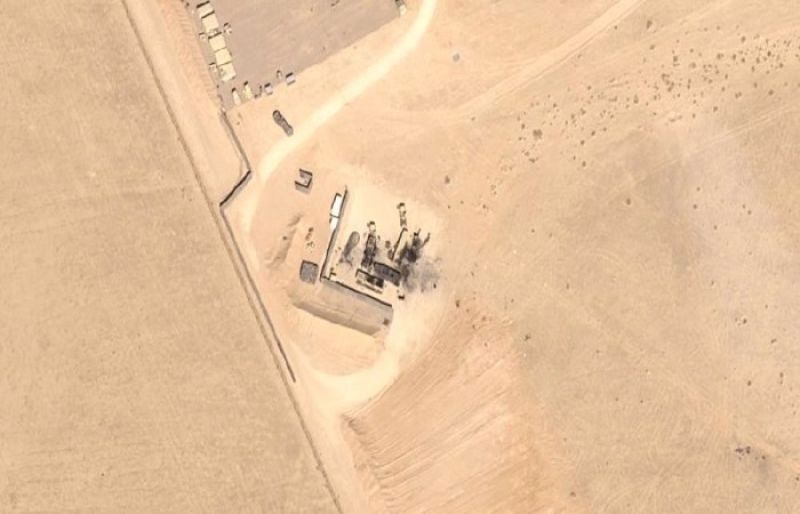

Satellite images show that several US military radars in the UAE and Jordan have been successfully hit by Iranian missiles and drones as the Iranian Armed Forces continue a retaliatory campaign against American and Israeli aggression.
New images from several military installations across the Arabian Peninsula suggest that Iran has focused on disabling the radar infrastructure that forms the backbone of US-supplied missile systems.
One such radar, supporting an American THAAD missile battery at Muwaffaq Salti Air Base in Jordan, appears to have been hit and destroyed in the opening days of the war, according to satellite imagery captured Monday.
The base lies more than 500 miles from Iran, underscoring the reach of Tehran’s retaliatory operations.
Similar damage has also been detected in the United Arab Emirates.
Satellite analysis shows that buildings housing radar-related infrastructure were struck at two locations—near Ruwais and Sader—between February 28 and March 1.At least three structures in Ruwais and four in Sader sustained visible damage, including pull-through vehicle sheds typically used to store radar systems linked to THAAD batteries.
The radar component is considered a critical element of the high-end missile interceptor system, enabling the detection and tracking of incoming ballistic missiles and drones. Without it, the interceptor batteries’ ability to respond to threats is significantly degraded.
Iran’s Islamic Revolution Guards Corps (IRGC) earlier said such strikes were part of its expanding Operation True Promise 4, a campaign launched in retaliation for the unprovoked US-Israeli aggression.
“With the successful destruction of more than seven advanced radars, the eyes of the US and the usurping Zionist regime in the region have been blinded,” the IRGC said in a statement on Wednesday, announcing the 17th stage of the operation.
The latest developments come after the United States and Israel launched a new round of aggression against Iran on February 28, eight months after earlier unprovoked attacks against the country.
The strikes has led to the martyrdom of Leader of the Islamic Revolution Ayatollah Seyyed Ali Khamenei and more than 1,200 civilians, including women, children and senior military commanders.
Iran responded swiftly, unleashing waves of missile and drone attacks targeting Israeli-occupied territories and US bases across the region.
Iranian officials insist the war was imposed on the country and say their ongoing military campaign is a legitimate act of self-defense aimed at neutralizing the infrastructure used to sustain further aggression.

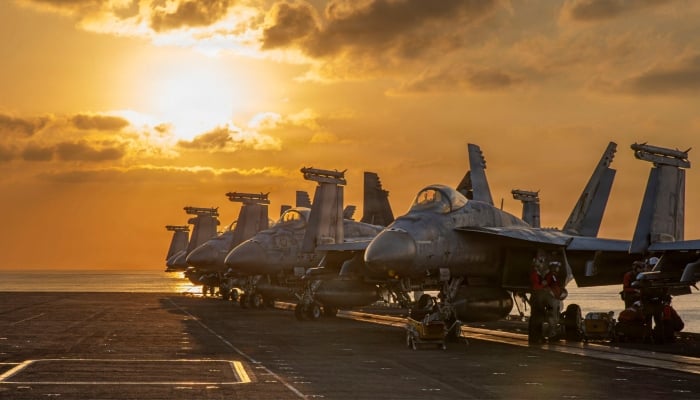
- US refrains from commenting on alleged Russian support.
- Officials say information includes locations of US warships.
- Russia says it was in dialogue with representatives of Iran.
Russia is providing Iran with targeting information that includes locations of US warships and aircraft in the Middle East, the Washington Post reported on Friday, citing three officials familiar with the intelligence.
The extent of Russia’s support to Iran was not entirely clear, but the Iranian military’s own ability to locate US forces has been degraded since the US and Israel launched strikes against Tehran last week, the Washington Post reported.
The war has since escalated, triggering retaliatory strikes by Iran, and ensnared its neighbours as it seeks to impose a high cost on the US, Israel and their allies.
The US military has identified six reserve soldiers killed in Kuwait when a drone slammed into a US military facility in Port Shuaiba. Trump and other senior officials have warned the conflict will likely result in more US military deaths.
A White House spokesperson did not directly comment on the alleged Russian support to Iran.
“The Iranian regime is being absolutely crushed. Their ballistic missile retaliation is decreasing every day, their navy is being wiped out, their production capacity is being demolished, and proxies are hardly putting up a fight,” White House spokesperson Anna Kelly said in a statement, responding to questions from Reuters.
Russia was in dialogue with representatives of Iran’s leadership, the Kremlin said on Friday. It declined to provide details when asked by reporters whether Moscow was helping Tehran.
The conflict has been an unexpected shot in the arm for Russia, with a significant bump in demand for its oil and gas, boosting exports battered in recent years by sanctions linked to its war in Ukraine. The United States has given Ukraine intelligence information during its war with Russia.
The Russian Embassy in Washington and Russia’s mission to the United Nations in New York did not immediately respond to requests for comment.


Winners and losers of the 2026 NHL trade deadline

Ben Stiller condemns use of ‘Tropic Thunder’ clip in political video

Spain, France lead World Cup 2026 Power Rankings, 100 days out

-
 Business1 week ago
Attock Cement’s acquisition approved | The Express Tribune
-
 Politics1 week ago
US arrests ex-Air Force pilot for ‘training’ Chinese military
-

 Fashion1 week ago
Policy easing drives Argentina’s garment import surge in 2025
-
 Business1 week ago
India Us Trade Deal: Fresh look at India-US trade deal? May be ‘rebalanced’ if circumstances change, says Piyush Goyal – The Times of India
-

 Politics1 week ago
What are Iran’s ballistic missile capabilities?
-

 Sports1 week ago
Sri Lanka’s Shanaka says constant criticism has affected players’ mental health
-

 Entertainment1 week ago
Bobby J. Brown, “The Wire” and “Law & Order: SUV” actor, dies of smoke inhalation after reported fire
-

 Sports1 week ago
LPGA legend shares her feelings about US women’s Olympic wins: ‘Gets me really emotional’