Connect with us

Business

‘If System Was Unfair…’: Deepinder Goyal Defends Gig Economy After Workers’ Strike

Published

on

‘If System Was Unfair…’: Deepinder Goyal Defends Gig Economy After Workers’ Strike

Last Updated:

Deepinder Goyal said the record deliveries were completed without any additional incentives for delivery partners

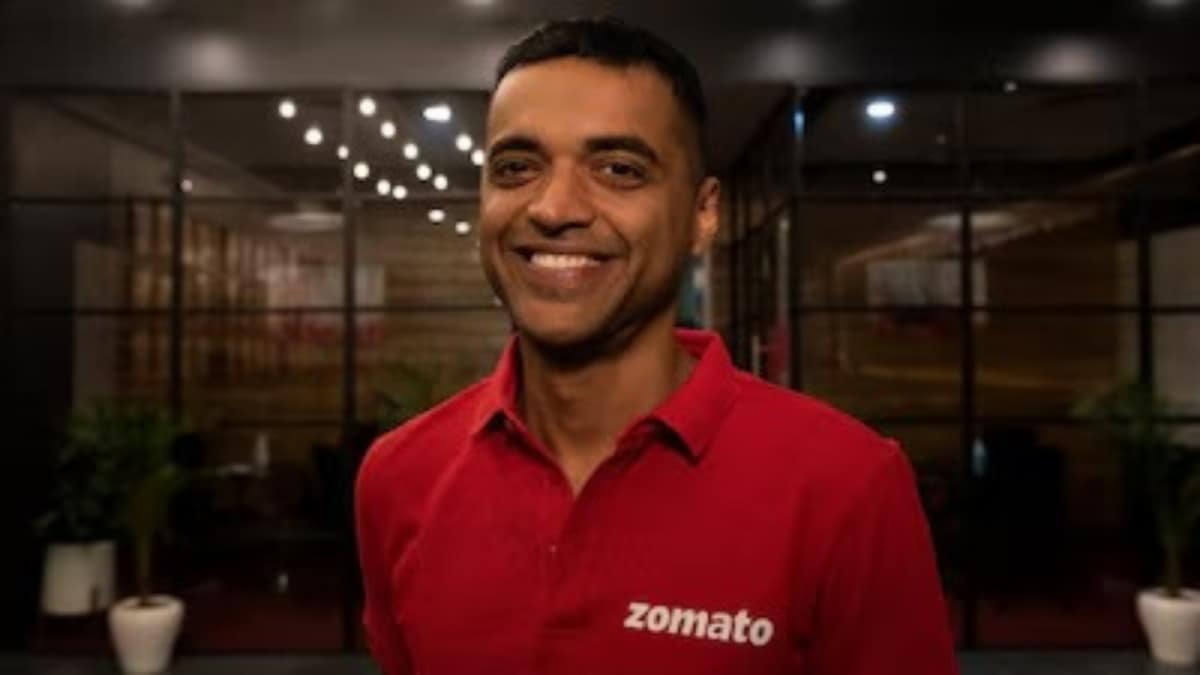
Deepinder Goyal said the gig economy has emerged as one of India’s largest organised job creation engines.

Delivery platform founder Deepinder Goyal defended India’s gig economy, arguing that a system that is fundamentally unfair would not be able to attract and retain large numbers of workers, after delivery partners’ unions held a nationwide strike on December 31.

Deepinder Goyal said that Zomato and its quick-commerce arm Blinkit clocked their highest-ever number of deliveries on New Year’s Eve, despite calls for work stoppages by sections of gig workers.

“One thought for everyone: if a system were fundamentally unfair, it would not consistently attract and retain so many people who choose to work within it,” Deepinder Goyal said in a post on X (formerly Twitter), cautioning against what he described as “narratives pushed by vested interests”.

Record Deliveries Despite Strike, Deepinder Goyal Says 

Deepinder Goyal said that more than 4.5 lakh delivery partners across Zomato and Blinkit delivered over 75 lakh orders to more than 63 lakh customers in a single day- an all-time high for the platforms.

Deepinder Goyal said the record deliveries were completed without any additional incentives for delivery partners, adding that while New Year’s Eve typically sees higher incentives than normal days, this year was no different from previous New Year’s periods.

“Over 4.5 lakh delivery partners showed up for work,” he said, calling their participation significant and not negligible.

‘10-Minute Promise Not About Speeding’

In a follow-up post, Deepinder Goyal addressed concerns around Blinkit’s 10-minute delivery promise, pushing back against criticism that such timelines encourage unsafe driving.

“Our 10-minute delivery promise is enabled by the density of stores around your homes. It’s not enabled by asking delivery partners to drive fast,” he said.

Deepinder Goyal said delivery partners do not even see the promised delivery time on their apps.

“Delivery partners don’t even have a timer on their app to indicate what was the original time promised to the customer,” he added.

Explaining the process, he said orders are typically picked and packed within about 2.5 minutes, after which riders travel an average distance of under two kilometres in about eight minutes, translating to an average speed of around 15 kmph.

‘Hard To Imagine The Complexity’

Deepinder Goyal acknowledged public concern around safety, saying the criticism stems from a lack of understanding of how the system works.

“I understand why everybody thinks 10 minutes must be risking lives, because it is indeed hard to imagine the sheer complexity of the system design which enables quick deliveries,” he wrote.

He also urged sceptics to speak directly to delivery partners.

“If you’ve ever wanted to know why millions of Indians voluntarily take up platform work and sometimes even prefer it to regular jobs, just ask any rider partner when you get your next food or grocery order,” he said, adding, “You will be humbled by how rational and honest they will be with you.”

‘No System Is Perfect’

While defending the gig economy, Deepinder Goyal said platforms remain open to improvement.

“No system is perfect, and we are all for making it better than today,” he said, adding that the sector is “far from what it is being portrayed on social media by people who don’t understand how our system works and why”.

“If I were outside the system, I would also believe that gig workers are being exploited, but that’s not true,” he added.

Click here to add News18 as your preferred news source on Google.

Follow News18 on Google. Join the fun, play games on News18. Stay updated with all the latest business news, including market trendsstock updatestax, IPO, banking finance, real estate, savings and investments. To Get in-depth analysis, expert opinions, and real-time updates. Also Download the News18 App to stay updated.
News business ‘If System Was Unfair…’: Deepinder Goyal Defends Gig Economy After Workers’ Strike
Disclaimer: Comments reflect users’ views, not News18’s. Please keep discussions respectful and constructive. Abusive, defamatory, or illegal comments will be removed. News18 may disable any comment at its discretion. By posting, you agree to our Terms of Use and Privacy Policy.

Read More


Source link

Continue Reading
Click to comment

Leave a Reply

Your email address will not be published. Required fields are marked *

Business

Netflix grants Warner Bros. Discovery 7-day waiver to reopen deal talks with Paramount Skydance

Published

on

Netflix grants Warner Bros. Discovery 7-day waiver to reopen deal talks with Paramount Skydance


Warner Bros. Discovery on Tuesday said it will reopen deal talks with Paramount Skydance under a seven-day waiver from Netflix to explore “deficiencies” in Paramount’s offer to buy the entirety of WBD.

The legacy media company has a pending transaction with Netflix for its streaming and studio businesses. Paramount launched a hostile tender offer straight to WBD shareholders at $30 per share after losing out to Netflix in a bidding war.

“Netflix has provided WBD a limited waiver under the terms of WBD’s merger agreement with Netflix, permitting WBD to engage in discussions with Paramount Skydance (“PSKY”) (NASDAQ: PSKY) for a seven-day period ending on February 23, 2026 to seek clarity for WBD stockholders and provide PSKY the ability to make its best and final offer,” Warner Bros. Discovery said in a release.

“During this period, WBD will engage with PSKY to discuss the deficiencies that remain unresolved and clarify certain terms of PSKY’s proposed merger agreement,” it said.

Paramount leadership has repeatedly said its $30 per share, all-cash offer is not its “best and final.” Last week the company sweetened its offer with additional “enhancements,” but stopped short of raising the per-share value.

Warner Bros. Discovery said Tuesday that a senior Paramount representative informed a WBD board member that it would pay $31 per share if deal talks were to reopen.

Tune in at 4:30pm ET as Netflix co-CEO Ted Sarandos joins CNBC TV. Watch in real time on CNBC+ or the CNBC Pro stream.

After the limited waiver period, Netflix will retain its matching rights provided by the merger agreement, WBD said.

“Throughout the entire process, our sole focus has been on maximizing value and certainty for WBD shareholders,” said WBD CEO David Zaslav in a statement. “Every step of the way, we have provided PSKY with clear direction on the deficiencies in their offers and opportunities to address them. We are engaging with PSKY now to determine whether they can deliver an actionable, binding proposal that provides superior value and certainty for WBD shareholders through their best and final offer.”

WBD also on Tuesday announced a special meeting of shareholders will be held on March 20 and said its board continues to unanimously recommend the Netflix deal over Paramount’s offer.

Netflix said in a statement the shareholder meeting date marked an “important milestone for our transaction with WBD.”

“While we are confident that our transaction provides superior value and certainty, we recognize the ongoing distraction for WBD stockholders and the broader entertainment industry caused by PSKY’s antics,” Netflix said. “Accordingly, we granted WBD a narrow seven-day waiver of certain obligations under our merger agreement to allow them to engage with PSKY to fully and finally resolve this matter.”

Shares of Warner Bros. Discovery were up about 3.5% Tuesday. Shares of Paramount were up about 6%.

Raising regulatory concerns

Either proposed purchase of Warner Bros. Discovery assets comes with regulatory questions.

Media industry insiders and lawmakers have questioned whether Netflix’s proposed deal would win approval as it would bring together two of the top streaming services and could result in higher prices for consumers.

Netflix leadership has repeatedly said the company believes it would win regulatory approval for the deal because it would preserve jobs in a challenged media landscape rife with layoffs.

Paramount has sounded the alarm to WBD shareholders, however, and argues its offer is not only better but would more easily garner government support.

On the flipside, Paramount’s offer has raised questions of foreign funding and antitrust considerations in bringing together two large portfolios of pay TV channels and two major film studios.

Paramount’s deal is financed in part by sovereign wealth funds of Saudi Arabia; Abu Dhabi, United Arab Emirates; and Qatar. Paramount has said those entities have agreed to forgo any governance rights.

In its statement on Tuesday, Netflix called out the foreign funding, which it said it expects to come under scrutiny from international regulators, including the Committee on Foreign Investment in the United States (CFIUS). Netflix said it also expects European authorities “to scrutinize the Middle Eastern investors in PSKY’s consortium and to be skeptical of claims that they are purely passive investors.”

Given Europe’s track record of antitrust enforcement, it’s possible regulatory battles for either deal would be won or lost in that market. Of course, the question still looms of how President Donald Trump will view either transaction. Trump recently said he hadn’t been involved in the process so far and didn’t plan to be, though he has reportedly met with executives from each camp.

Netflix’s statement on Tuesday “unsurprisingly points to a number of arguments Netflix believes it has in its favor,” according to an analyst note from Raymond James on Tuesday, “including better prospects for approval, a clearer national security picture, and financial security.”


Source link

Continue Reading

Business

FTSE 100 hits record high as rate cut hopes rise

Published

on

FTSE 100 hits record high as rate cut hopes rise


Stock prices in London have closed mostly higher, as investors shored up bets on the Bank of England cutting interest rates in March after unemployment increased, while the pound fell.

The FTSE 100 index closed up 82.48 points, 0.8%, at 10,556.17, a new record high. The FTSE 250 ended up 180.35 points, 0.8%, at 23,555.82, and the AIM all-share closed down 4.73 points, 0.6%, at 806.61.

In European equities on Tuesday, the CAC 40 in Paris closed 0.5% higher, while the DAX 40 in Frankfurt ended up 0.8%.

The pound was lower at 1.3531 US dollars on Tuesday afternoon from 1.3629 dollars at the equities close on Monday. The euro stood lower at 1.1830 dollars from 1.1854. Against the yen, the dollar was trading higher at 153.61 yen compared to 153.44.

The unemployment rate came in at 5.2% for the three months ended December, up from 5.1% in the three months ended November. The data was above the FXStreet-cited consensus, which had pencilled in another 5.1% reading.

The ONS estimated that the number of payrolled employees in the UK fell by 121,000, or 0.4%, in the year to December 2025, and decreased by 6,000 on-month.

Pantheon Macroeconomics analyst Rob Wood said: “The rise in unemployment in December and drop in whole-economy average weekly earnings growth will grab the attention, and suggest sharply fading inflation pressures.

“Combined with payrolls still falling slightly the (Monetary Policy Committee) doves have enough to cut rates in March rather than waiting until April, so markets would be right to ramp up the probability of a March cut.”

Deutsche Bank analyst Sanjay Raja said the data “won’t do much to assuage fears that the jobs market remains weak”.

“How high will the jobless rate go? Today’s data suggests there may be a little more room to go before we hit the cyclical peak in the unemployment rate.

“The single month jobless rate already sits at 5.4%. HMRC data suggests more redundancies are ahead. And almost every single survey points to limited hiring plans.

“This will put continued upward pressure on the jobless rate. Put simply, the jobs market remains stuck.”

In response to renewed interest rate cut hopes, Barratt Redrow was up 3.1%. Other property stocks also performed well, with real estate investor Land Securities up 2.4% and fellow housebuilder Persimmon 1.1% higher.

Stocks in New York were mixed, after being closed on Monday for a long weekend. The Dow Jones Industrial Average was marginally higher, the S&P 500 index down 0.1%, and the Nasdaq Composite 0.2% lower.

The yield on the US 10-year Treasury was unchanged from Friday at 4.05%. The yield on the US 30-year Treasury slimmed to 4.68% from 4.70%.

In London, Antofagasta fell 5.7% as it posted revenue and operating profit below analyst expectations.

The London-based miner operating in Chile said pre-tax profit climbed 53% to 3.16 billion US dollars (£2.3 billion) in 2025 from 2.07 billion dollars (£1.51 billion) in 2024.

Revenue increased 30% to 8.62 billion dollars (£6.31 billion) from 6.61 billion dollars (£4.84 billion), albeit a notch below Peel Hunt expectations of 8.68 billion (£6.36 billion). Earnings before interest, tax, depreciation and amortisation grew 52% to a “record” 5.20 billion dollars (£3.81 billion) from 3.43 billion dollars (£2.51 billion).

Operating profit from subsidiaries and share of total results from associates and joint ventures climbed 64% to 3.43 billion dollars (£2.51 billion) in 2025 from 2.08 billion dollars (£1.5 billion) in 2024. It was slightly below market consensus according to Peel Hunt of 3.45 billion dollars (£2.52 billion).

Antofagasta recommended a final dividend of 48 US cents per share for 2025, more than doubled from 23.5 cents a year ago. This brings the total payout for 2025 to 64.6 cents, more than doubled from 31.4 cents.

Peers Endeavour Mining, Anglo American and Fresnillo were also down 4.2%, 2.4% and 2.1% respectively.

On the FTSE 250 index, Raspberry Pi led the way as its shares jumped 36%.

Bloomberg News reported that the gains were driven by a social media post which said AI agents such as OpenClaw could drive demand for the firm’s single-board computers. The post on X attracted 200,000 views.

A spokesperson for Raspberry Pi told Bloomberg that “there’s nothing from the company side beyond what’s already in the public domain”.

SSP Group shares were up 6.6% after UBS raised its rating on the stock to “buy”.

Applied Nutrition was 6.2% higher as it raised its revenue forecast for its current financial year above market expectations, citing a strong first-half performance.

The Merseyside-based wellness brand now sees revenue for the financial year ending July 31 of around GBP140 million, above market consensus of £133.5 million. Revenue will be up 31% from £107.1 million in financial 2025, when it was in turn up 24% from £86.2 million in financial 2024.

The positive results are thanks to the company’s “channel diversification across UK high street health retailers, grocers and discounters” alongside “accelerated demand for a number of…product launches” in the first half of financial 2026, it said.

Among smaller caps, boohoo Group shares fell 6.7% as it confirmed it is preparing to raise £35 million in fresh equity and is in talks with its lenders to create additional liquidity.

The online fast fashion retailer that trades as Debenhams said the equity will be used to pay down its debt and provides the increased financial flexibility to purse its turnaround plan.

It is speaking to its lending syndicate about improved covenant amendments due to its expected reduced leverage.

Boohoo said chief executive Dan Finley and directors Mahmud Kamani and Iain McDonald all will participate in the equity raise at 20 pence per share. Total support for the equity raise from directors and institutional shareholders is in excess of £24 million, boohoo said.

Brent oil was lower at 67.17 dollars a barrel on Tuesday afternoon from 68.42 dollars late on Monday. Gold was down at 4,882.00 dollars an ounce from 4,985.30 dollars.

The biggest risers on the FTSE 100 were Coca-Cola Europacific Partners, up 260.00p at 7,690.00p, Barratt Redrow, up 11.70p at 385.60p, Airtel Africa, up 10.40p at 346.60p, Pearson, up 25.80p at 929.80p and Compass Group, up 58.00p at 2,111.00p.

The biggest fallers on the FTSE 100 were Endeavour Mining, down 176.00p at 4,510.00p, Antofagasta, down 129.00p at 3,617.00p, Weir Group, down 80.00p at 3,430.00p, Anglo American, down 79.00p at 3,499.00p, and Fresnillo, down 80.00p at 3,734.00p.

On Wednesday’s economic calendar, the UK will see CPI and PPI data at 7am GMT, with French CPI later and US building permits and industrial production data to follow in the afternoon.

Wednesday’s corporate calendar has full year results from defence contractor BAE Systems and miner Glencore, among others.

Contributed by Alliance News


Source link

Continue Reading

Business

NPS Active vs Auto Choice: What Works In Volatile Markets?

Published

on

NPS Active vs Auto Choice: What Works In Volatile Markets?


Last Updated:

NPS lets Indians aged 18-70 invest in bonds, government securities, or equity, with active or auto asset allocation and pension benefits at age 60.

Choosing between control and convenience: NPS Active vs Auto Choice during market volatility.

Choosing between control and convenience: NPS Active vs Auto Choice during market volatility.

The National Pension Scheme (NPS) is a government-backed retirement scheme, allowing salaried professionals to save for after-job life.

NPS provides people with the option of investing in corporate bonds, government securities or equity. If you are an Indian citizen between the age of 18 to 70 years, you can invest in NPS. Under this scheme, you can contribute regularly during your working age. After this, at the age of 60, you can withdraw a part of the accumulated money and can get regular pension income from the remaining amount.

NPS gives two options to the subscriber to invest in the scheme, auto and active. An auto choice is an option in which the subscribers give the fund manager the freedom to invest their money wherever they want, whereas, in active choice, the subscriber tells assets his money is to be invested.

What is an active choice in NPS?

This option is available to NPS members who want to select their own asset blend. Subscribers can select the ratio in which their money will be spread across different asset classes under this choice. In other words, you have a say in the assets you own. Even within this option, there are restrictions because a maximum of 75% can be allocated to stocks. This maximum was increased a few years ago from 50%.

What is an auto choice in NPS?

There are three funds in NPS for auto allocation (NPS auto choice option). There is a Default Moderate Life Cycle Fund. In this, the maximum equity investment can be up to 50 per cent. The second is the Conservative Life Cycle Fund, which allows only up to 25% investment in equities. The third is the Aggressive Life Cycle Fund in which you can invest up to 75% in equity.

If you want to choose the active choice, consider three things before doing so. First, are they able to do the right capital allocation by valuing different asset classes? Secondly, if the subscriber has investments elsewhere and NPS is only a part of his overall portfolio, can they go for active choice? Thirdly, if there is a need to change the NPS portfolio in future, you will do so. If you consider yourself true on these three conditions, then you should choose the active choice option to invest in NPS.

Which Is Better Choice?

At a time of market volatility, when performance has remained muted for the past six months to a year, there are concerns about overexposure to equities among a section of subscribers.

“In volatile phases, this design (auto option) can be a big advantage. There is no temptation to time the market. There is no last-minute panic exit. The portfolio quietly adjusts on its own,” Ajay Kumar Yadav, CFP CM, Group CEO& CIO , Wise FinServ added.

On the other hand, Active Choice offers greater flexibility. Yadav explained that it allows investors to decide how much to allocate to equity, corporate bonds, and government securities within prescribed limits. According to him, this option suits investors who understand markets and are comfortable managing asset allocation decisions.

“For example, when interest rates soften, increasing exposure to government securities may enhance returns. After sharp equity corrections, staying invested or even raising equity allocation can strengthen long-term compounding,” he said.

Shantanu Awasthi, Co-founder and CEO of Mavenark Wealth, said Auto Choice operates within a predefined asset allocation structure managed under a single AMC framework. “Auto Choice confines investors to a predefined asset allocation structure managed within a single AMC,” he said, adding that the model offers simplicity and built-in discipline but limits flexibility.

According to Awasthi, Auto is essentially a structured, convenience-led approach where investors outsource both asset allocation and fund selection. While this reduces decision fatigue, it restricts customization and tactical shifts during changing market cycles.

CA Niresh Maheshwari, Director at Wealth Wisdom India Pvt. Ltd., said the bigger risk during volatility lies in investor reaction rather than price swings. “When markets turn volatile, the real risk isn’t the fluctuation, it’s how investors react to it,” he said.

Maheshwari explained that Active Choice may suit investors who understand asset allocation and are comfortable maintaining higher equity exposure, even as they age. “Active Choice are suitable to those who understand markets and asset allocation, want higher equity exposure even as they age, and are comfortable monitoring their portfolio,” he said. However, he warned that discipline is critical — “Without it, flexibility becomes overreaction.”

For investors who prefer a hands-off approach, Maheshwari said Auto Choice may offer more comfort. “Auto Choice works for those who prefer a set-and-forget approach and don’t want to manage risk themselves,” he said. The life-cycle model automatically reduces equity exposure with age, limiting the need for tactical decisions during market swings.

“For long-term retirement investing, behaviour and consistency matter far more than trying to time the market,” Maheshwari added.

Click here to add News18 as your preferred news source on Google.

Follow News18 on Google. Join the fun, play games on News18. Stay updated with all the latest business news, including market trends, stock updates, tax, IPO, banking finance, real estate, savings and investments. To Get in-depth analysis, expert opinions, and real-time updates. Also Download the News18 App to stay updated.

Check JEE Mains Result 2026 Link Here

Disclaimer: Comments reflect users’ views, not News18’s. Please keep discussions respectful and constructive. Abusive, defamatory, or illegal comments will be removed. News18 may disable any comment at its discretion. By posting, you agree to our Terms of Use and Privacy Policy.

Read More


Source link

Continue Reading

Trending