

Business
India-Israel FTA: Why Trade Talks Are Gaining Momentum; Who Buys What And Why It Matters

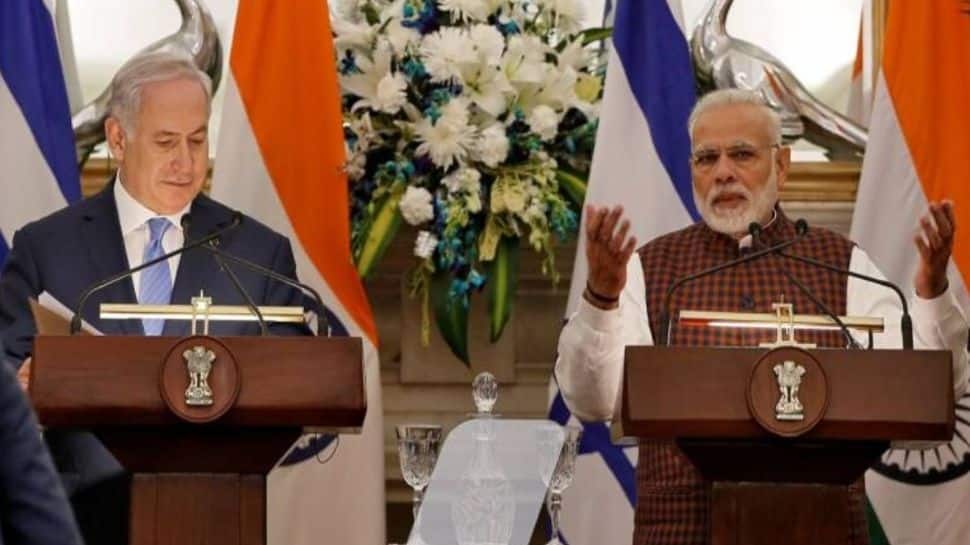
New Delhi: India and Israel are moving closer to a free trade agreement (FTA), with both sides preparing for the next round of discussions in January. Officials close to the development say teams from both countries will meet early in the New Year to take forward negotiations that formally began in November.
At that time, India and Israel signed the Terms of Reference, beginning the official start of talks on the proposed FTA. The focus of the agreement is to expand trade flows and encourage greater investment between the two economies.
According to officials, the January meetings will centre on the overall structure of the India-Israel FTA and the plan that will guide negotiations. Israeli trade representatives are expected to travel to India for these discussions.
The engagement comes as recent trade data points to a slowdown in bilateral commerce. During 2024-25, India’s exports to Israel fell by 52 per cent to $2.14 billion, compared with $4.52 billion in 2023-24. Imports from Israel also declined in the last financial year, dropping 26.2 per cent to $1.48 billion. Taken together, total bilateral trade between the two countries stood at $3.62 billion.
Despite the recent dip, India is Israel’s second-largest trading partner in Asia. Trade between the two countries has traditionally been dominated by diamonds, petroleum products and chemicals. Over the years, the basket has widened, with growing exchanges in electronic machinery, high-tech products, communication systems and medical equipment.
When it comes to exports, India sends a wide range of goods to Israel. These include pearls and precious stones, automotive diesel, chemical and mineral products, machinery and electrical equipment, plastics, textiles and garments, base metals, transport equipment and agricultural produce.
Israel’s exports to India also span major sectors. Major items include pearls and precious stones, chemical and mineral products, including fertilisers, machinery and electrical equipment, petroleum oils, defence-related equipment and machinery and transport equipment.
With both sides looking to strengthen economic ties and reverse the recent fall in trade, the upcoming FTA talks are being closely watched as a potential turning point in the India-Israel economic relationship.

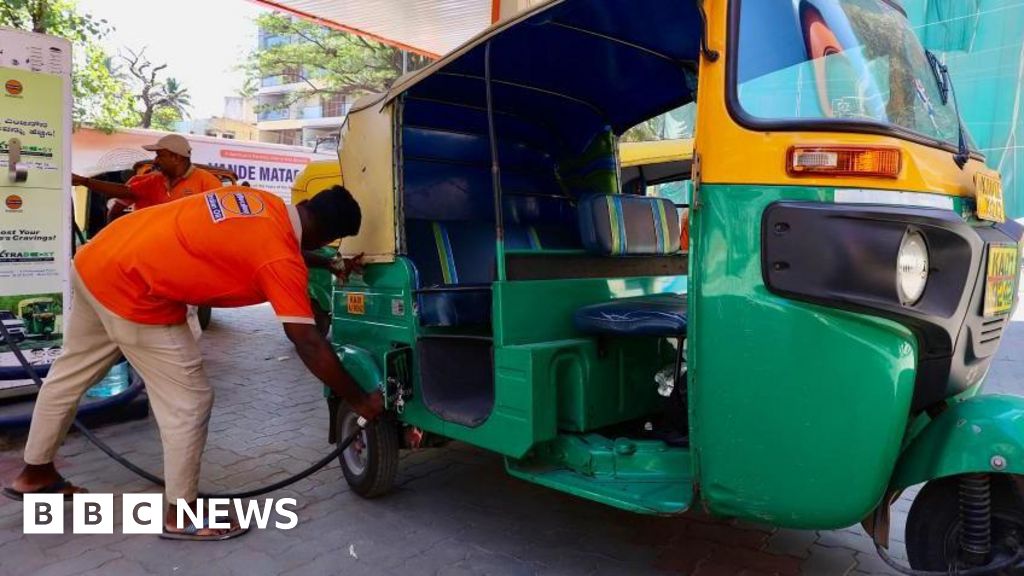
The cost of crude plunged on Wednesday after a deal was announced that includes the opening of the Strait of Hormuz.
Source link
Business
Strait of Hormuz open or close? Only a ‘trickle’ of oil leaving right now despite ceasefire – The Times of India

The tussle over the opening of the Strait of Hormuz continues as the Middle East crisis intensifies, with oil shipments yet to return to normal levels. According to a senior Gulf Oil adviser, any impact on fuel prices in the United States is likely to take time.Tom Kloza, the company’s chief energy adviser, told CNN that he is still “not seeing the evidence of more crude oil departing” the strait, even though reopening the route was reportedly part of the two-week ceasefire agreed on Tuesday night.Iran’s Islamic Revolutionary Guard Corps (IRGC) claimed that traffic through the strait slowed sharply and then stopped, blaming what it described as a violation of the ceasefire by Israel in Lebanon.Kloza said the situation remains uncertain and progress has been slow. “I would emphasize these are really baby steps right now. There’s no indication that the strait is going to reopen, and it seems like a flimsy ceasefire, to say what’s obvious,” he told CNN’s Jake Tapper.He added that only “a trickle” amount of oil is currently leaving the region. Because of the fragile ceasefire, companies are likely to be cautious about sending oil through the route.“It looks as though we’re weeks away from any restoration of even 50% or 70% of the Strait of Hormuz traffic that we depend on,” Kloza said.The situation could escalate further after US President Donald Trump on Thursday issued a fresh warning to Iran over the Strait of Hormuz. Posting on the social media platform Truth Social, he said American military forces and weapons would remain in place until the two sides reach a “real agreement”.“If for any reason it is not, which is highly unlikely, then the “Shootin’ Starts,” bigger, and better, and stronger than anyone has ever seen before. It was agreed, a long time ago, and despite all of the fake rhetoric to the contrary – NO NUCLEAR WEAPONS and, the Strait of Hormuz WILL BE OPEN & SAFE. In the meantime our great Military is Loading Up and Resting, looking forward, actually, to its next Conquest. AMERICA IS BACK!”Global energy supplies continue to face pressure as Iran restricts movement through the Strait of Hormuz, a vital route that carries around 20% of the world’s oil. The conflict has now stretched beyond a month, following strikes on Iran by the United States and Israel on February 28.Meanwhile, oil prices edged up on Thursday after recording their sharpest single-day drop since April 2020, as ongoing tensions in the Middle East and uncertainty over the Strait of Hormuz kept markets unsettled. Brent crude climbed back towards $97 a barrel after a 13% fall on Wednesday, while West Texas Intermediate hovered near similar levels.

Maintenance loans are paid to students in instalments to cover living costs, such as accommodation and food. Loans are means-tested, based on household income. And whereas student tuition loans, to cover course costs, are paid directly to universities, maintenance loans are paid directly to the student.


Apparel imports in France rise to $26.6 bn in 2025

UN attempt to open Strait of Hormuz fails at Security Council vote

Senator Ed Markey visits Shahid Khan to thank WorldBoston for efforts toward peace in Middle East

-
Uncategorized7 days ago
[CinePlex360] Please moderate: “Trump signals p
-
 Business7 days ago
Jaguar Land Rover sees sales recover after cyber attack
-

 Entertainment6 days ago
Joe Jonas shares candid glimpse into parenthood with Sophie Turner
-

 Tech6 days ago
Our Favorite iPad Is $50 Off
-

 Fashion1 week ago
China’s Anta Sports posts record $11.62 bn revenue in 2025
-

 Politics6 days ago
Iran can sustain Strait of Hormuz closure for years, will cut US military logistics: Official
-

 Sports5 days ago
UConn Final Four run could trigger a $50M furniture giveaway for Massachusetts-based Jordan’s Furniture
-
 Business6 days ago
Video: Why Is the Labor Market Stuck?