

Business
Supermarket giants and high street stalwarts to reveal festive figures

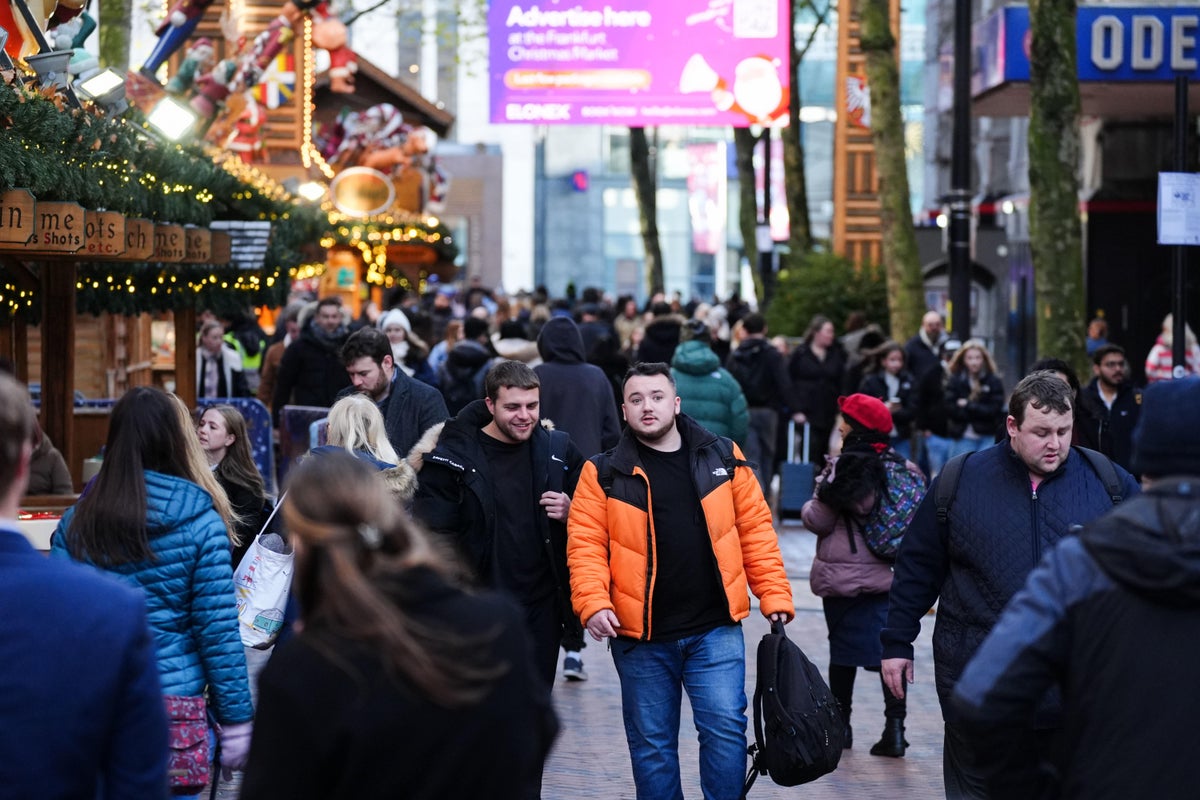
Tesco and Sainsbury’s will reveal whether it was a merry Christmas across their supermarket operations in festive trading updates next week, while Next and Marks & Spencer also report back from the high street.
The UK’s two biggest grocery chains have been battling it out to win over shoppers with their Christmas advertising campaigns and beat off ever-increasing competition from discounters Aldi and Lidl.
Figures from Tesco on Thursday will show how it fared in the so-called golden quarter, having hiked its earnings guidance in October to between £2.9 billion and £3.1 billion.
Christmas trading will be crucial to Tesco meeting guidance, and chief executive Ken Murphy has warned the industry remains “incredibly competitive” amid a price war in the sector.
AJ Bell experts said: “As is the case with many retailers, Tesco’s shares have lost a little momentum since November, and the run-up to the Budget from Chancellor Rachel Reeves.
“However, they are still up by a fifth in the past year and stand very close to levels last seen in 2010.”
The chain has increased its share of the market to 28.3% in recent weeks, according to Worldpanel, and is looking to beat sales growth of 3.7% seen in the previous six-week Christmas period.
Sainsbury’s figures on Friday also come after it recently increased its earnings outlook, saying it is now set for retail earnings of more than £1 billion after a better-than-expected half-year performance.
The group, which also owns the Argos chain, last year saw grocery sales rise 4.1% in the quarter to January, but more disappointing trading in Argos held overall growth back, with sales across the business up 2.7%.
Aarin Chiekrie, equity analyst at Hargreaves Lansdown, said: “The ongoing cost-cutting programme is helping to offset higher employment costs, and savings are also being reinvested in keeping food prices down.
“That should have helped lure in more customers in the run-up to Christmas, a period where shopping trollies get piled higher than usual.”
Outside of the supermarket sector, retail titans Next and M&S will give their verdict on Christmas trading on Tuesday and Thursday respectively.
Next is expected to cap another solid year of trading, having recently upped its guidance once again, saying it expects sales over the festive quarter to be significantly higher than previously predicted.
The fashion and homewares chain said at the end of October it expects full price sales to grow by around 7% in the quarter to January, increasing its guidance from 4.5%.
However, it has repeatedly cautioned over the consumer backdrop and will be watched closely for further comments on how consumer spending is holding up.
Fellow retail bellwether M&S will be hoping for a solid festive performance to help “draw a line under what has been a tough 2025”, according to Mr Chiekrie.
A cyber attack in April hit online sales hard after M&S was forced to suspend all website sales for six weeks, leading to a plunge in first half profits.
With a lingering but smaller impact of the hack in the second half, it will be looking for this to be offset by strong demand for its festive food and fashion ranges.
“The worst looks to be behind M&S now, but the group has some work to do to rebuild investors’ confidence,” said Mr Chiekrie.
Sales figures from Greggs, also on Thursday, will be examined for signs of better trading after slowing sales growth in recent months and a profit warning in July.
The group was impacted by warmer weather in the summer, but has also flagged tough market conditions and weak consumer confidence.

The Government has been urged to stick to its pledge to ban ticket touting amid concerns the policy will be left out of next month’s King’s Speech.
In November, the Government announced that new rules making it illegal to resell tickets for live events for profit would end the “industrial-scale” touting that has caused misery for millions of fans.
Ministers confirmed plans to make it illegal for tickets to concerts, theatre, comedy, sport and other live events to be resold for more than their original cost.
The Labour manifesto promised stronger protections to stop consumers being scammed or priced out of events by touts, who frequently use bots to buy tickets in bulk the moment they go on sale, which they can then sell on for huge mark-ups on secondary ticketing websites.
The proposed rules make it illegal for tickets to be sold at a price above the face value – defined as the original price plus unavoidable fees including service charges.
Service fees will be capped to prevent the price limit being undermined by platforms, which will have a legal duty to monitor and enforce compliance, and individuals will be banned from reselling more tickets than they were entitled to buy in the initial sale.
A host of globally renowned artists have backed the plan, including Radiohead, Dua Lipa and Coldplay.
Following a report in the Guardian that the minister responsible for the policy, Ian Murray, had told music industry groups not to worry if the measure was not part of the King’s Speech on May 13, the Government said it required new primary legislation that it was working to deliver at the earliest opportunity.
A Government spokeswoman said: “Ticket touts are a blight on the live events industry, causing misery for millions of fans.
“We set out decisive plans last year to stamp out touting once and for all, and we are committed to delivering on these for the benefit of fans and industry.”
The music industry and Which? raised concerns about the suggestion of any delay, as sites appeared to show touts selling tickets for the Radio 1 Big Weekend in Sunderland well above the two-ticket limit for buyers and at vastly inflated prices.
Annabella Coldrick, chief executive of the Music Managers Forum, said: “2026 was supposed to mark this Government moving ‘from announcements to action’ but we have little evidence of this to date.
“A ban on ticket touting was one of only two music-related commitments in the Labour manifesto, alongside fixing EU touring.
“These are widely supported, pro-growth measures that will deliver tangible benefits to the British public. However, if ticket resale legislation is not presented in the King’s Speech, it will have the opposite effect and continue to cost those constituents hundreds of millions of pounds a year.
“This Government needs to stand by its promises and get it done.”
Adam Webb, campaign manager at FanFair Alliance, said: “The Government has a big decision to make: will they ‘put fans first’ or not?
“Last November, ministers committed to ‘bold new measures’ to ban online ticket touting and support consumers.
“Enacting these measures should be a no-brainer but, if legislation is not presented in the upcoming King’s Speech, the cycle of industrial-scale exploitation will continue.”
Lisa Webb, consumer law expert at Which?, said: “The Government has promised to put fans first but, if this legislation is not included in the King’s Speech, the only ones celebrating will be the rip-off secondary ticketing websites and online touts.”
The approval came as Donald Trump is to attend a dinner with billionaire Paramount backers the Ellisons.
Source link
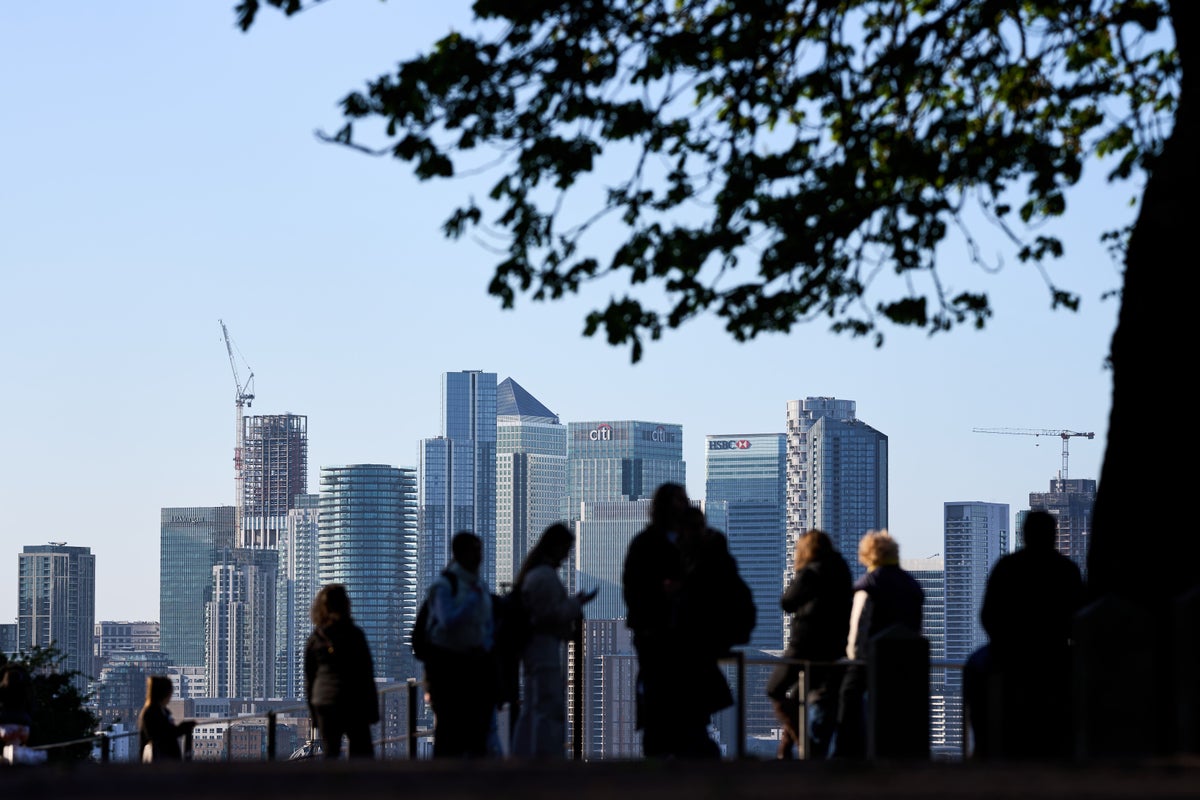
The FTSE 100 posted modest falls on Thursday, closing well above early lows, as investors weighed the latest developments in the Middle East.
The FTSE 100 closed down 19.45 points, 0.2%, at 10,457.01.
It had earlier traded as low as 10,361.45.
The FTSE 250 ended down 207.49 points, 0.9%, at 22,764.52, and the Aim All-Share fell 5.99 points, 0.7%, at 802.13.
US President Donald Trump continued to strike a defiant tone as the US-Iran conflict continued amid the ongoing ceasefire.
Mr Trump said he has ordered the US Navy to “shoot and kill any boat, small boats though they may be… that is putting mines in the waters of the Strait of Hormuz.”
US Central Command said it has ordered 31 vessels to turn around or return to port since the blockade of the Strait of Hormuz began.
While the US Defence Department said on Thursday that its forces boarded a vessel in the Indian Ocean that was transporting oil from Iran.
More optimistically, various news outlets reported that an Iranian diplomatic source told the Russian news agency Ria Novosti on Thursday that preparations for negotiations between Iran and the US in Pakistan could lead to a breakthrough as early as tonight or tomorrow.
AJ Bell analyst Dan Coatsworth noted: “There continue to be mixed messages around peace talks, creating an air of uncertainty that periodically stops investors in their tracks.
“It’s one of those days where investors have dialled back risk appetite to consider what could go wrong, rather than shrugging off the backdrop of conflict to bid markets higher.”
Brent oil traded at 103.25 dollars a barrel on Thursday afternoon, compared to 101.42 dollars at the time of the equities close in London on Wednesday.
Joshua Mahony, chief market analyst at Scope Markets, fears that while previous market moves were “driven by escalation and de-escalation of the conflict, we are now heading towards a slow grind higher for energy prices as the prospect of a drawn-out stalemate comes into play”.
In European equities on Wednesday, the Cac 40 in Paris ended up 0.9%, supported by gains in L’Oreal, and the Dax 40 in Frankfurt fell 0.2%.
In New York, markets stabilised after strong gains on Wednesday.
The Dow Jones Industrial Average was down 0.1%, as was the Nasdaq Composite, while the S&P 500 was 0.1% higher.
Tesla fell 2.6% after it announced a big jump in capex, and some delays to product roll-outs, taking the shine off better-than-expected financial results.
“Tesla’s physical AI ventures offer large potential revenue opportunities, but could take a while to get there”, was how UBS summed up the situation, continuing to believe Tesla is driven by “narrative/sentiment not fundamentals”.
The yield on the US 10-year Treasury was unchanged at 4.29% on Thursday.
The yield on the US 30-year Treasury was flat at 4.89%.
The pound eased to 1.3500 dollars on Thursday afternoon from 1.3506 dollars on Wednesday.
Against the euro, sterling firmed to 1.1551 euros from 1.1525 euros.
In the UK, the private sector regained growth momentum in April, according to preliminary purchasing managers’ index survey results released by S&P Global.
The flash PMI composite output index registered 52.0 points in April, above the 50-point mark that separates growth from contraction, and up from March’s reading of 50.3 points, indicating an accelerated pace of growth.
The reading came in ahead of FXStreet-cited market consensus, which had forecast the UK private sector would slip into contraction with a 49.8-point PMI reading.
JPMorgan analyst Allan Monks noted a surge in input price readings, including within the less energy-intensive services sector.
In addition, the jump in output price readings also indicates that pricing power is “alive and well”, he said.
While the labour market “remains weak”, it’s a “reoccurring theme in the UK data that growth, wage and pricing pressures continue to hold up despite the stall in hiring,” he said.
Mr Monks thinks the report suggests inflation risks should dominate growth risks in the Bank of England’s thinking when it considers interest rates.
The BoE meets next week, and is widely expected to leave rates on hold at 3.75%.
The euro traded lower against the greenback, falling to 1.1708 dollars on Thursday from 1.1722 dollars on Wednesday.
Against the yen, the dollar was trading slightly little changed at 159.50 yen from 159.39 yen.
On the FTSE 100, London Stock Exchange Group climbed 1.1% after it hailed a “record performance” in the first quarter of 2026 and raised its annual guidance.
While Relx shares were down 2.0% despite reporting that it has “started the year well”, and guiding further growth for the full year.
Legal & General fell 5.6% as it traded ex-dividend, as did Fresnillo, which fell 6.4%.
Sainsbury, down 3.7%, was another in the red as the food retailer warned that the Middle East crisis could squeeze profit in the current financial year.
“The conflict in the Middle East will impact both our customers and our business,” it said in a statement as it reported full-year results.
“The duration and extent of these impacts is very uncertain and this is reflected in our profit guidance.”
Chief executive Simon Roberts pledged to do “everything we can” to support customers over the coming months, with “absolute focus on keeping prices low”.
On the FTSE 250, WH Smith plunged 9.2% as it lowered profit guidance and suspended its dividend, taking a more cautious view on passenger numbers as a result of the Middle East crisis.
Man Group shares were down 7.3% after it reported unexpected net outflows in the first three months of 2026, including an eye-watering 6.1 billion dollars redemption by a single client.
The London-based investment management firm reported net outflows of 1.6 billion dollars in the quarter, compared to market consensus, cited by JPMorgan, for net inflows of 1.8 billion dollars.
Outflows included a 6.1 billion dollar redemption from a single client in long-only systematic equity, Man Group said.
Gold traded at 4,731.39 dollars an ounce on Thursday, down from 4,734.05 dollars at the same time on Wednesday.
The biggest risers on the FTSE 100 were Anglo American, up 148.0p at 3,777.0p, Melrose Industries, up 9.6p at 509.6, Rolls-Royce, up 21.6p at 1,160.2p, Vodafone, up 2.15p at 116.25p and BT Group, up 3.85p at 220.25p.
The biggest fallers on the FTSE 100 were Fresnillo, down 234.0p at 3,426.0p, Legal & General, down 14.95p at 253.65p, Sage Group, down 36.0p at 888.2p, J Sainsbury, down 13.0p at 340.1p and Experian, down 102.0p at 2,779.5p.
Friday’s global economic calendar has UK retail sales figures at 7am BST, followed by the Michigan consumer sentiment index and Canadian retail sales data.
Friday’s local corporate calendar has a trading statement from packaging firm Mondi.
– Contributed by Alliance News


Prince William sparks AI debate in motorsport with ‘weak link’ remark

How ‘Michael’ continues to smash the box office despite backlash
Ministers urged to stick to ticket tout ban amid fears of delay

-

 Fashion1 week ago
France’s LVMH Q1 revenue falls 6%, shows resilience amid Iran war
-

 Entertainment1 week ago
Is Claude down? Here’s why users are seeing errors
-

 Tech1 week ago
The Deepfake Nudes Crisis in Schools Is Much Worse Than You Thought
-

 Sports1 week ago
PSL 11: Peshawar Zalmi win toss, opt to field first against Quetta Gladiators
-

 Tech1 week ago
CYBERUK ’26: UK lagging on legal protections for cyber pros | Computer Weekly
-
 Business1 week ago
Standard Life buys rival in £2b deal to create savings giant
-

 Sports1 week ago
World Cup kit ranking: Which teams will look best in 2026?
-
 Business1 week ago
PepsiCo earnings beat estimates as North American food business improves