

Politics
China’s birth-rate push sputters as couples stay child-free


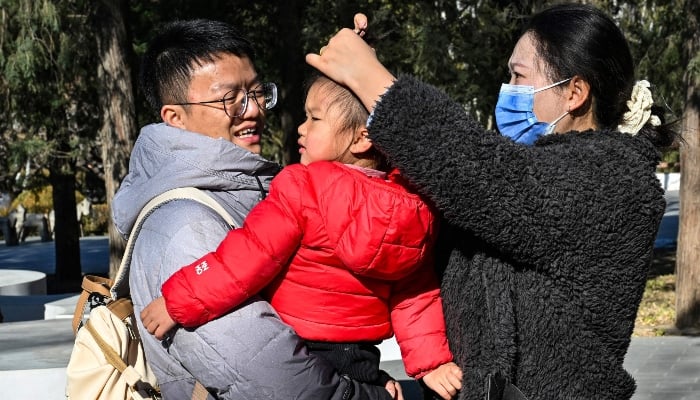
BEIJING: Twenty-five-year-old Grace and her husband are set on staying child-free, resisting pressure from their parents and society to produce offspring, even as China strives to boost its flagging birth rate.
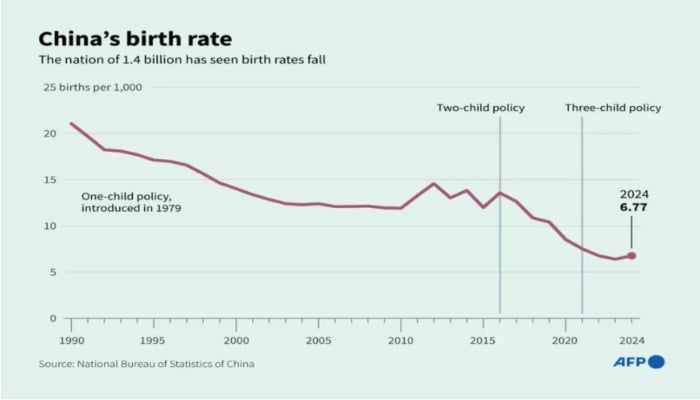
A decade since China scrapped its stringent one-child policy and implemented a two-child policy in January 2016, the nation is dealing with a looming demographic crisis.
The country’s population has shrunk for three straight years, with the United Nations predicting it could fall from 1.4 billion today to 633 million by 2100.
There were just 9.54 million births in China in 2024 — half the number than in 2016 — and concerns about the shrinking and ageing population have been growing as couples choose to buck traditional Chinese norms.
More young people like Grace, who refers to herself and her husband as DINKs — or “dual income no kids” — have either sworn against having children at all or are putting it off for the next few years.
These couples’ reasons run the gamut from high child-rearing costs to career concerns.
Grace, who asked to be identified by her English name over fears of repercussions, said she needed to have a decent income and “some savings” before starting a family.
Without these conditions, “I wouldn’t even consider having kids”, the content creator added.
The term “DINK” has gone viral on Chinese social media, including Xiaohongshu, where its hashtag has received more than 731 million views, sparking differing views on the subject.
“If I were to widely publicise the fact that I’m a DINK and talk about how comfortable my life is, there would definitely be many people who wouldn’t be happy about it,” Grace told AFP.
Changing attitudes
Chinese authorities have rolled out pronatalist incentives after ending its one-child policy — which had been in place for more than three decades to address poverty and overpopulation.
Top leaders have pledged more childcare relief, including subsidies to parents to the tune of $500 per year for every child under the age of three, state media reported in July.
But experts say China, which was overtaken by India as the world’s most populous nation in 2023, still faces significant hurdles in boosting its birth rate.
“The number of people choosing not to marry or not to have children is increasing, and fertility intentions among the younger generation are weak,” He Yafu, an independent Chinese demographer, told AFP.
Cultural constraints have limited the long-term effectiveness of China’s pronatalist measures, said Pan Wang, an associate professor at Australia’s University of New South Wales.
“The one-child policy fundamentally reshaped family norms and also people’s lifestyles, because many people, especially the one-child generation, were used to and often prefer smaller family sizes,” Wang told AFP.
The rising living costs in China and economic uncertainty also continue to deter childbearing, she added.
Beijing resident Wang Zibo, 29, said he and his wife have decided to wait for the “economy to stabilise” before they have children, even though he said he is in “quite good” financial standing.
“Looking at things in China right now, the main reason (why young couples are not having children) is still that the economy is somewhat weak,” he told AFP.
China has struggled to maintain a strong economic recovery from the pandemic, while many employees work long hours under a gruelling “996” culture — 9:00am to 9:00pm, six days a week.
“People have been excessively busy with work… for some, it’s difficult even to find the time to think about (starting a family),” Wang said.
No time, no money
China in 2021 further relaxed its strict family planning controls, allowing couples to have three children — something many couples, especially those living in cities, are reluctant to do.
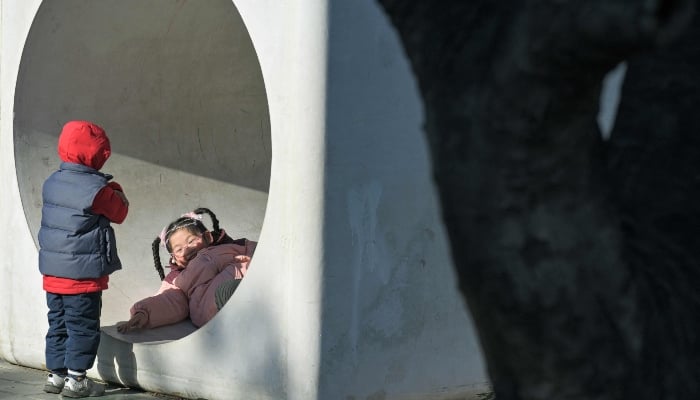
Even having one child is a huge responsibility, Wang said, citing the example of a friend who had a baby shortly after he got married.
“He would constantly tell me… not only do you have no time and you spend all your money on the child, you kind of lose yourself in the process too.”
Demographer He said if China’s fertility rate of around 1.0 persists in the long term, the most obvious consequences will be a continued decline in population size and rapid population ageing.
“This will increase the future burden of elderly care, weaken China’s overall national strength, and drag on economic development,” he added.
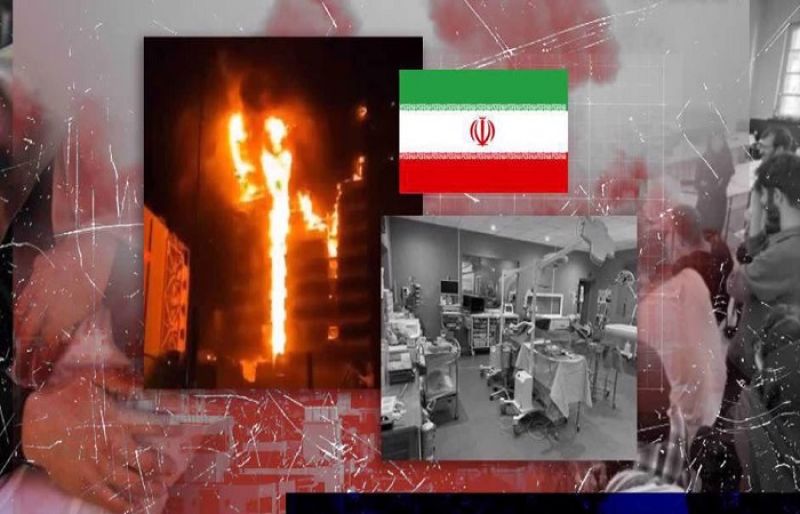

The air at the bombed-out Tehran hospital room hung thick with dust and the metallic tang of recent destruction carried out by the United States and the Israeli regime.
Against a backdrop of shattered concrete, two newborns clung precariously to life. Their breaths were being measured by the rhythmic beep of monitors connected by vital wires.
Amid the dust-choked room following the dastardly US-Israeli aggression, Iranian Red Crescent personnel worked to sever the fragile connection to the damaged infrastructure, to take the infants out of the wreckage.
The Gandhi Hospital in central Tehran, along with a nearby residential building, sustained catastrophic damage from strikes carried out by the United States and Israel late Sunday night, a day after the aggression was launched without provocation.
Immediately following the attack, harrowing footage depicted medical personnel urgently transferring the tiny newborns from their compromised incubators to ambulances.
Hope for new life, IVF centre targeted
The tragedy deepened with confirmation from hospital authorities later about the massive damage incurred by a specialized IVF center there, which lay in ruins.
The IVF centre was a sanctuary where hundreds of hopeful couples had invested their futures, their deepest desires for parenthood.
The US-Israeli aggression destroyed their dreams for future generations that had been painstakingly planned.
“The ledger of violated human rights in this war will be written in blood and shame,” Hossein Kermanpour, Health Ministry spokesman, wrote in a post on his X account.
“For the first time in my life, I am witnessing something I never even saw during the Iran-Iraq War. Patients being carried in their caregivers’ arms, fleeing into smoke-filled streets after missiles exploded beside their hospital,” Kermanpour added.
The assault was not limited to Gandhi Hospital. Reports confirmed that Khatam al-Anbiya Hospital and Motahari Hospital were also directly targeted in Tehran.
Furthermore, several missiles struck near Abuzar Hospital in the southern city of Ahvaz, forcing the immediate evacuation of 21 patients, including those in intensive care, requiring 30 ambulances to reroute them to other centers.
Images from Ahvaz captured the evacuation under dire circumstances. Emergency personnel were moving the sick through the thick plumes of smoke while the terrifying sounds of aerial bombardment still echoed overhead.
The American and Israeli regimes also targeted three emergency medical bases in Sarab, Chabahar, and Hamedan following the Abuzar attack.
A member of the Iranian Parliament said five hospitals and medical centers have been damaged or destroyed during the US-Israeli terrorist attacks on the Islamic Republic.
“Unfortunately, this illegal act of aggression resulted not only in the destruction of the buildings of hospitals and medical centers but also the injury of a number of students and local residents,” Fatemeh Mohammad Beigi, a member of the Parliament’s Health and Treatment Commission, said in a statement on Monday.
She added that a number of these medical centers have been evacuated in fear of more attacks.
Assault on life itself
Iranian President Masoud Pezeshkian denounced the US-Israeli strikes on civilian infrastructure, stating that the attacks on medical facilities “affect life itself and assaults on educational centers jeopardize the future of a nation.”
He made this reference following a US-Israeli strike on an elementary school in the southern Hormozgan Province that killed 171 girls.
He added that “targeting patients and children blatantly violates humanitarian principles.”
The Iranian president called upon the international community to censure the atrocities.
The Director-General of the World Health Organization (WHO), Tedros Adhanom Ghebreyesus, expressed extreme concern over the damage to Gandhi Hospital in Tehran.
Following the bombing, he posted on X, stating, “Reports of Tehran’s Gandhi Hospital being damaged during today’s bombardment of the Iranian capital are extremely worrying.”
Ghebreyesus reiterated that “all efforts must be taken to prevent health facilities from being caught up in the ongoing conflict,” emphasizing that “Health facilities are protected under international humanitarian law” with the hashtag “#healthisnotatarget.”
Strike on hospitals, a pattern
However, this event is part of a disturbing pattern. This is not the first time Israel has attacked medical facilities in the Islamic Republic. During the 12-day military aggression in June, nearly a dozen hospitals were targeted in clear violation of international conventions.
The Geneva Conventions, long considered the bedrock of humanitarian protection in wartime, have been repeatedly flouted by both the US and Israel.
In Gaza, an entire health system has been systematically crippled, and doctors have been killed while on duty since the genocidal war was launched in October 2023.
According to chilling WHO figures, 94 percent of hospitals in Gaza were destroyed by Israel during its two-year-long genocide.
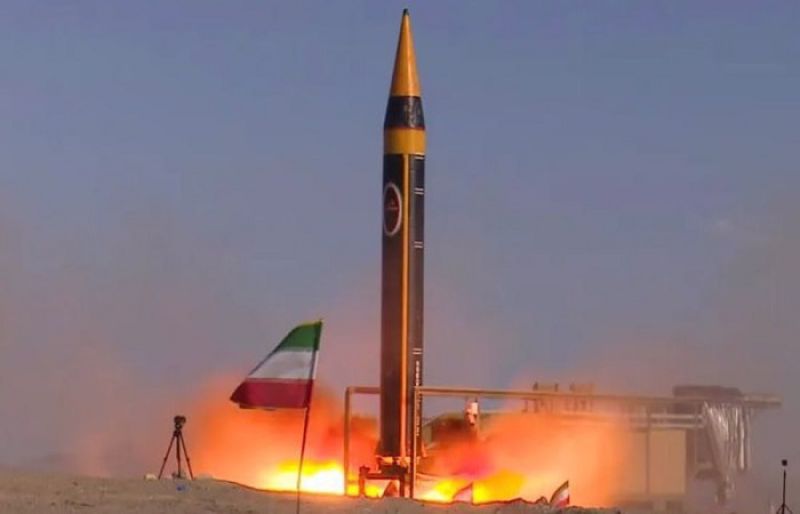

The Islamic Revolution Guards Corps (IRGC) announced early Wednesday that its aerospace force targeted the critical Israeli military infrastructure with heavy Khorramshahr-4 ballistic missiles in the 19th wave of True Promise 4 Operation.
In a statement, the IRGC said the super-heavy missiles, each fitted with a one-ton class warhead, were launched in the pre-dawn hours.
The targets of the strike were central Tel Aviv, Ben-Gurion Airport and Squadron 27 of the Israeli Air Force at the airport, according to the statement.
It said the strategic salvo was preceded by attack drones and that the strike package penetrated “seven layers” of regional and domestic air defenses to reach its objectives.
Khorramshahr-4 is one of Iran’s most advanced weapons, a roughly 13-metre missile with a boost weight of nearly 30 tonnes and a maneuverable re-entry warhead (MaRV) capable of carrying over 1,000 kilograms of explosive payload.
The IRGC statement also said that in the previous wave its forces had successfully struck some 20 US military targets across Bahrain, the United Arab Emirates and Kuwait.
The statement described the strikes as part of coordinated, multi-axis action by Iran’s armed forces that exceeded US and Israeli expectations and had altered the operational calculus of the ongoing war imposed on the Islamic Republic.
In the statement, the IRGC further said American troops were fleeing regional bases and seeking shelter in hotels in host countries, while decrying the US military for using civilian facilities in Persian Gulf states as cover for military activity.
The statement also warned that such movements are under constant intelligence surveillance and that Iranian forces remain prepared to target aggressor troops.
The IRGC says at least 560 American troops have been killed in retaliatory operations and many more injured since Saturday.
- Focus on bunkers storing ballistic missiles, equipment.
- One underground site struck overnight, says military.
- Analysts differ on Iran’s remaining stockpile.
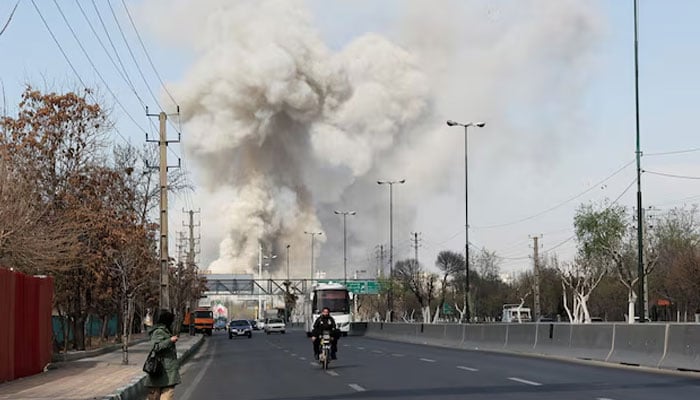
Israel’s war in Iran is entering a second phase that will see its fighter jets attacking ballistic missile sites buried deep underground, two sources familiar with Israel’s military campaign said.
The joint air assault with the US in Iran is nearing the end of its first week after opening salvos killed the country’s leaders and set off a regional war with Iranian attacks in Israel, the Gulf and Iraq, and Israeli attacks in Lebanon.
Israel’s military says it has hit hundreds of Iranian missile launchers above ground that could target Israeli cities. The second phase will include bunkers storing ballistic missiles and equipment, said the sources, who spoke on condition of anonymity because of the sensitivity of the subject.
One said Israel aimed to neutralise Iran’s ability to launch aerial attacks at Israel by the end of the war, which was also focused on taking out the Islamic Republic’s leadership.
A military spokesperson did not immediately respond to a request for comment on its attack plans. The military has previously asserted that it and the US military took control of much of Iran’s airspace in the opening days of the attacks.
In a statement on Thursday, the military said that, overnight, the Air Force struck “an underground infrastructure site used by the Iranian regime to store ballistic missiles and storage sites for missiles intended for use against aircraft.”
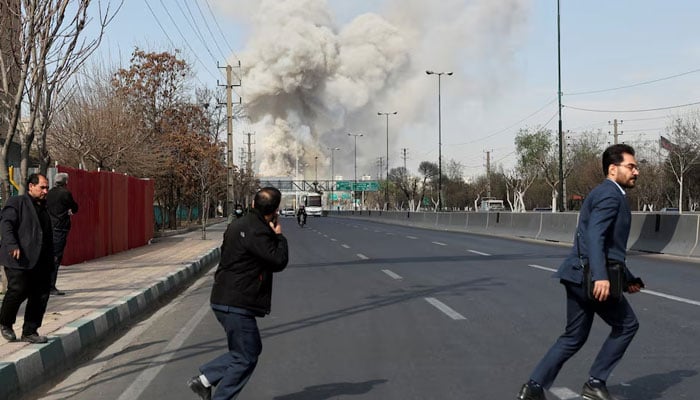
The military has not previously announced attacks on underground missile facilities, according to a review of its public statements since the start of the joint US-Israeli attacks on Saturday.
Estimates of Iran’s missile stockpile vary widely, from roughly 2,500 before the war, according to Israel’s military, to around 6,000 according to other analysts. The extent of what remains could prove critical to how the war develops. Tehran has continued to carry out missile attacks on Israel and across the region.
Douglas Barrie of the UK-based International Institute for Strategic Studies said on Wednesday that the think tank assesses Iran still possesses some land-attack cruise missiles, precision-guided weapons that fly low to evade radar detection.
Israel’s Air Force fighter jets have carried out near-constant sorties since Saturday, accelerating further in pace after Lebanon’s Hezbollah fired rockets at Israel, drawing heavy Israeli airstrikes as far north as Beirut.
In some cases, the same Israeli warplanes have struck both Iran and Lebanon in a single operation: bombing targets in Tehran or western Iran on the way out, and striking Hezbollah sites on the way back, one of the sources familiar with the plans and an Israeli security source said.
Israeli and US officials say ballistic missile and drone launches from Iran have declined since Saturday, a decrease that they attribute in part to US and Israeli strikes on Iranian launch sites and related military infrastructure.
The Israeli military has said that the decrease could also reflect an effort by Tehran to preserve its missile stocks as it prepares for a drawn-out war of attrition.
Eran Lerman, a former Israeli deputy national security adviser, said the hope from the initial week of strikes was that Iran’s ruling system would “begin to disintegrate earlier, more quickly”.
“But this has yet to happen and as long as it doesn’t, the system needs to be further and further degraded,” Lerman said.


OpenAI Had Banned Military Use. The Pentagon Tested Its Models Through Microsoft Anyway

Don’t Risk Birdwatching FOMO—Put Out Your Hummingbird Feeders Now

Savannah Guthrie visits “Today” studio, says she intends to return to show

What are Iran’s ballistic missile capabilities?

India Us Trade Deal: Fresh look at India-US trade deal? May be ‘rebalanced’ if circumstances change, says Piyush Goyal – The Times of India

Attock Cement’s acquisition approved | The Express Tribune

-
 Politics1 week ago
What are Iran’s ballistic missile capabilities?
-
Business7 days ago
India Us Trade Deal: Fresh look at India-US trade deal? May be ‘rebalanced’ if circumstances change, says Piyush Goyal – The Times of India
-
Business1 week ago
Attock Cement’s acquisition approved | The Express Tribune
-
 Politics1 week ago
US arrests ex-Air Force pilot for ‘training’ Chinese military
-

 Fashion1 week ago
Policy easing drives Argentina’s garment import surge in 2025
-
 Business1 week ago
Households set for lower energy bills amid price cap shake-up
-

 Sports1 week ago
Sri Lanka’s Shanaka says constant criticism has affected players’ mental health
-

 Sports6 days ago
LPGA legend shares her feelings about US women’s Olympic wins: ‘Gets me really emotional’