

Politics
US forces kill 55 Venezuelan, Cuban military personnel in Maduro raid

- Havana reports 32 Cuban troops killed during raid.
- US forces seize Maduro, fly him to New York.
- Delcy Rodriguez sworn in as interim president.
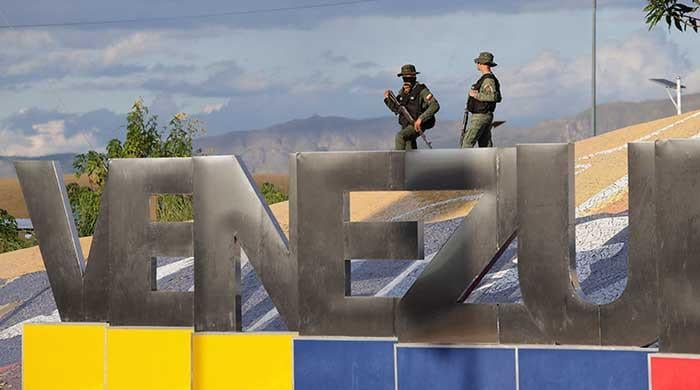
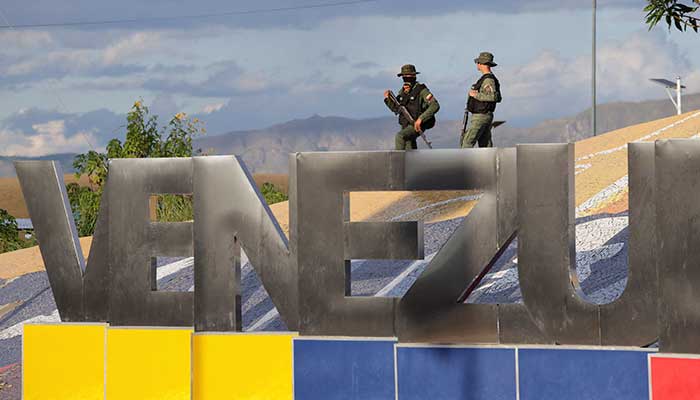
US forces killed 55 Venezuelan and Cuban military personnel during their stunning raid to capture Nicolas Maduro, tolls published by Caracas and Havana showed Tuesday.
In the first confirmation of its losses, Venezuela’s military said 23 of its service members died in Saturday’s attacks by the United States, which led to the ouster of Maduro as the country’s leader. Caracas has yet to give an official figure for civilian casualties.
Cuba, which had already announced that 32 members of its armed forces and interior ministry security personnel assigned to duties in Caracas were killed in the raids, also listed its dead.
They ranged in age from 26 to 67 and included two colonels and one lieutenant colonel.
Many of the dead Cubans are believed to have been members of Maduro’s security detail, which was largely wiped out in the attacks, according to Defence Minister Vladimir Padrino Lopez.
The assault began with bombing raids on military targets and culminated with US special forces swooping in by helicopter to seize Maduro and his wife Cilia Flores from a compound.
They were later taken to New York, where they appeared in court on Monday and pleaded not guilty to drug trafficking and other charges.
Mexican President Claudia Sheinbaum on Tuesday called on the United States to ensure Maduro receives a “fair trial.”
Interim president’s challenges
Hours after their court appearance, Maduro’s former deputy Delcy Rodriguez was sworn in as interim president.
US President Donald Trump said he is willing to work with her, as long as she submits to his demands on providing US companies access to Venezuela’s massive oil reserves.
Rodriguez faces a delicate balancing act in trying to respond to those demands while keeping Maduro loyalists on her side.
She has sought to project unity with the hardliners in Maduro’s administration, who control the security forces and powerful paramilitaries that have patrolled the streets in the days since the deposed leader’s capture.
In a sign that a repressive security apparatus remains in place, 14 journalists and media workers, most of them representing foreign media, were detained while covering the presidential inauguration at parliament on Monday, a journalists’ union said.
Two other journalists for foreign media were detained near the Colombian border.
All were later released.
Opposition lashes out
Opposition leader Maria Corina Machado, who has been given no role by Washington in the post-Maduro transition, said in a Fox News interview that Rodriguez was not to be trusted.
“Delcy Rodriguez as you know is one of the main architects of torture, persecution, corruption, narcotrafficking,” she said.
“She’s the main ally and liaison with Russia, China, Iran, certainly not an individual that could be trusted by international investors.”
Trump has so far backed Rodriguez, but warned she would pay “a very big price, probably bigger than Maduro” if she does not comply with Washington’s agenda.
So far she has made no changes to the cabinet, with Interior Minister Diosdado Cabello and Padrino Lopez, widely seen as wielding the real power in Venezuela, retaining their posts.
‘We will win’
A retired general who held high-ranking positions in the military predicted that Rodriguez would throw open Venezuela to US oil and mining companies and perhaps resume diplomatic ties, broken off by Maduro in 2019.
He also believed she would seek to appease criticism of Venezuela’s dire rights record by releasing political prisoners.
Trump on Tuesday called Maduro a “violent guy” who “killed millions of people” and whose government engaged in torture.
“They have a torture chamber in the middle of Caracas that they are closing up,” he claimed.
The constitution says that after Maduro is formally declared absent, elections must then be held within 30 days.
Machado told Fox News that “in free and fair elections, we will win by over 90% of the votes, I have no doubt about it.”
She vowed to “turn Venezuela into the energy hub of the Americas”; “dismantle all these criminal structures” and “bring millions of Venezuelans that have been forced to flee our country back home.”
She also offered to give her Nobel prize — an award Trump has long publicly coveted — to the US president.
Machado said, however, that she had not spoken to Trump since October 10.
- Sukhoi Su-30MKI fighter jet crashes during training.
- Jet went missing after taking off from Jorhat airbase.
- Dead pilots identified as Sq Ldr Anuj, Flight Lieutenant Duragkar.
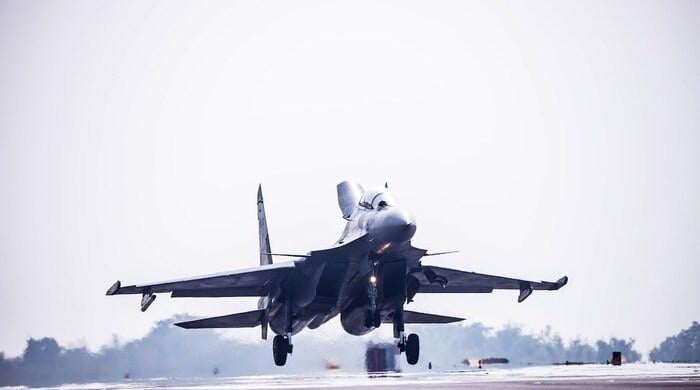
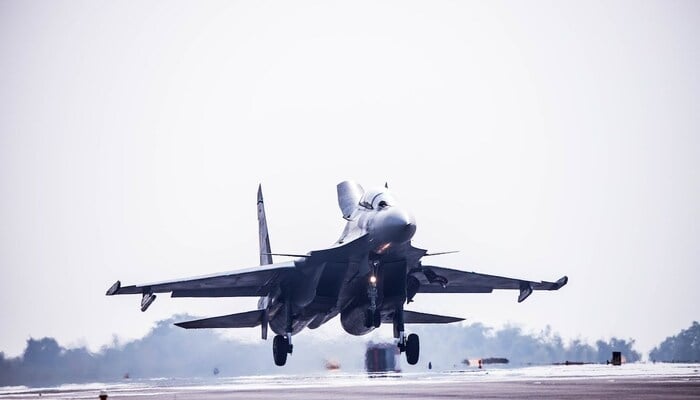
Two pilots from the Indian Air Force (IAF) were killed after a Sukhoi Su-30MKI fighter jet crashed in India’s northeastern state of Assam, NDTV reported, citing officials.
The Indian Air Force said on Friday that a fighter jet, which was on a training mission, crashed in the northeast Indian state of Assam.
“The Su-30MKI, which was on a training mission, crashed in the area of Karbi Anglong, Assam, approx 60 km from Jorhat,” the Indian Air Force said on X.
The aircraft had gone missing shortly after taking off from the Jorhat airbase. Communication with the Russian-origin fighter jet was lost at 7:42pm, according to officials.
The crash occurred in Assam’s Karbi Anglong district, around 60 kilometres from the airbase. The aircraft reportedly went down in a remote hilly area.
The IAF identified the deceased pilots as Squadron Leader Anuj and Flight Lieutenant Purvesh Duragkar.
“All personnel of the IAF express sincere condolences, and stand firmly with the bereaved family in this time of grief,” the Air Force said in a post on X.
Local residents in the area said they heard a loud explosion from a nearby hill and saw a ball of fire shortly afterwards.
India’s Defence Minister Rajnath Singh said he was “deeply saddened” by the loss of the two pilots in the “tragic” crash.
The Sukhoi Su-30MKI is a two-seater, long-range fighter aircraft developed by Russian manufacturer Sukhoi. It is produced under licence in India by state-run Hindustan Aeronautics Limited (HAL) for the IAF.
The aircraft was first inducted into the Indian Air Force in 1997, and the service currently operates a fleet of more than 260 Su-30MKI jets.
Similar incidents have occurred in recent years. A Sukhoi fighter jet crashed in Nashik, Maharashtra, in June 2024, while another Su-30 aircraft crashed in January 2023 shortly after taking off from the Gwalior airbase in Madhya Pradesh.
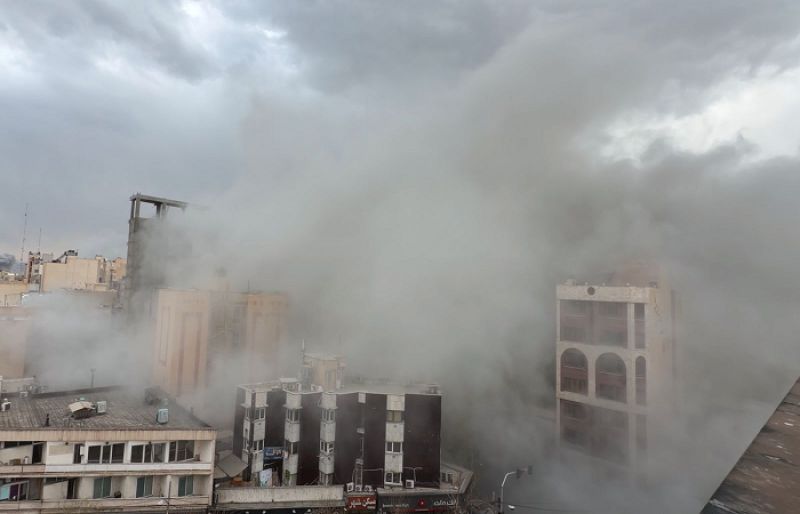

TEHRAN: The head of the Iranian Red Crescent Society, Pir Hossein Kolivand, has said that recent US-Israeli airstrikes on Iran have damaged more than 3,000 civilian properties, according to reports cited by Al Jazeera.
Kolivand stated that the strikes affected 3,643 civilian locations, including 3,090 residential homes, highlighting the significant impact on populated urban areas.
Civilian Infrastructure Hit
According to the Red Crescent chief, the attacks also caused damage to several public and service facilities, including:
528 commercial and service centres
14 healthcare and pharmaceutical facilities
9 Red Crescent sites
Officials said the majority of the destruction occurred in densely populated residential areas, raising humanitarian concerns.
Growing Humanitarian Impact
The latest figures underscore the expanding civilian toll as the conflict involving Iran, the United States, and Israel continues to intensify.
Emergency teams from the Iranian Red Crescent are currently involved in rescue, relief and medical operations in affected areas.
Authorities have not yet released updated casualty figures but say humanitarian agencies are continuing to assess the full extent of the damage.
- Hegseth acknowledges US military was investigating incident.
- Press Secy Leavitt says Iran continues to targets civilians, children.
- Rubio says US would not deliberately target a school.
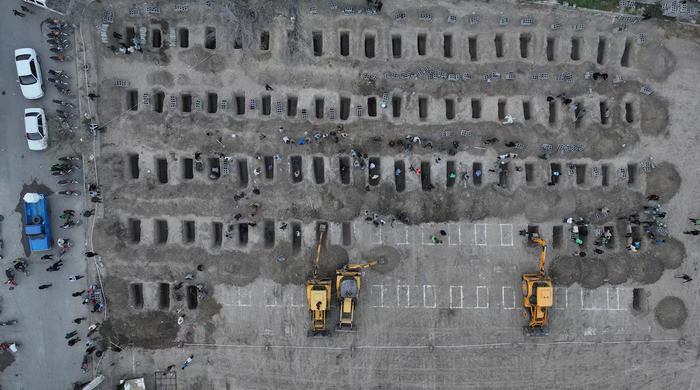
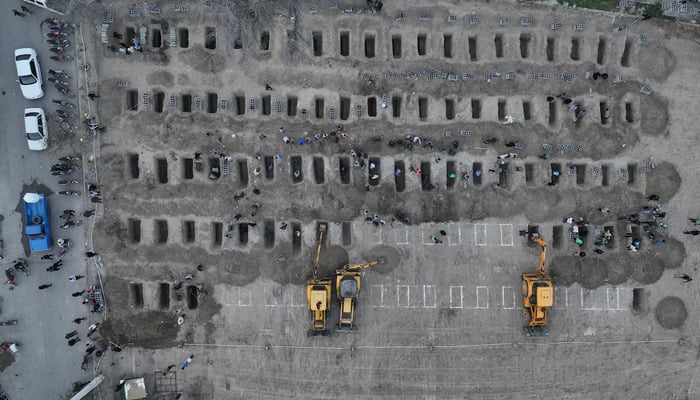
US military investigators believe it is likely that US forces were responsible for an apparent strike on an Iranian girls’ school that killed scores of children on Saturday but have not yet reached a final conclusion or completed their investigation, two US officials told Reuters.
Reuters was unable to determine more details about the investigation, including what evidence contributed to the tentative assessment, what type of munition was used, who was responsible or why the US might have struck the school.
US Defence Secretary Pete Hegseth on Wednesday acknowledged the US military was investigating the incident.
The officials, who spoke on condition of anonymity to discuss sensitive military matters, did not rule out the possibility that new evidence could emerge that absolves the US of responsibility and points to another responsible party in the incident.
Reuters could not determine how much longer the investigation would last or what evidence US investigators are seeking before the assessment can be completed.
The White House did not directly comment on the investigation, but press secretary Karoline Leavitt said in a statement to Reuters, “While the Department of War is currently investigating this matter, the Iranian regime targets civilians and children, not the United States of America.”
Asked about the incident during a news briefing on Wednesday, Hegseth said: “We’re investigating that. We, of course, never target civilian targets. But we’re taking a look and investigating that.”
US Secretary of State Marco Rubio told reporters on Monday that the United States would not deliberately target a school.
“The Department of War would be investigating that if that was our strike, and I would refer your question to them,” Rubio said.
Israeli and US forces have until now divided their attacks in Iran both geographically and by target type, a senior Israeli official and a source with direct knowledge of the joint planning said. While Israel was striking missile launch sites in western Iran, the United States was attacking such targets, as well as naval ones, in the south.
The UN human rights office, without saying who it believed was responsible for the strike on the school, called on Tuesday for an investigation.
“The onus is on the forces that carried out the attack to investigate it,” UN human rights office spokesperson Ravina Shamdasani told a press briefing in Geneva.
Images of the girls’ funeral on Tuesday were shown on Iranian state television. Their small coffins were draped with Iranian flags and passed from a truck across a large crowd towards the grave site.
Deliberately attacking a school, hospital, or any other civilian structure would likely be a war crime under international humanitarian law.
If a US role were to be confirmed, the strike would rank among the worst cases of civilian casualties in decades of U.S. conflicts in the Middle East.


OVS brings Italian fashion to Mumbai retail scene

The War on Iran Puts Global Chip Supplies and AI Expansion at Risk

Care Ratings projects India’s FY27 GDP growth at 7.2%

-
 Business1 week ago
Attock Cement’s acquisition approved | The Express Tribune
-

 Politics1 week ago
What are Iran’s ballistic missile capabilities?
-
 Business1 week ago
India Us Trade Deal: Fresh look at India-US trade deal? May be ‘rebalanced’ if circumstances change, says Piyush Goyal – The Times of India
-

 Fashion1 week ago
Policy easing drives Argentina’s garment import surge in 2025
-
 Politics1 week ago
US arrests ex-Air Force pilot for ‘training’ Chinese military
-

 Sports7 days ago
LPGA legend shares her feelings about US women’s Olympic wins: ‘Gets me really emotional’
-
 Business7 days ago
Greggs to reveal trading amid pressure from cost of living and weight loss drugs
-

 Fashion1 week ago
Texwin Spinning showcasing premium cotton yarn range at VIATT 2026