

Business
Fortune 500 Chinese firm eyes investment | The Express Tribune


Xiamen C&D conveyed its interest in investing in Pakistan’s automobile, steel and iron sectors
ISLAMABAD:
Special Assistant to the Prime Minister (SAPM) Haroon Akhtar Khan held a meeting with representatives of Fortune 500 Chinese company Xiamen C&D, during which the company expressed strong interest in making large-scale investments in Pakistan.
The meeting was attended by Chairman Export Processing Zones Authority (EPZA) Freedoon Akram Sheikh, according to a statement issued on Wednesday.
Xiamen C&D conveyed its interest in investing in Pakistan’s automobile, steel and iron sectors. The SAPM said Xiamen C&D is a globally renowned company with a strong presence across international supply chains, steel, minerals, automotive, real estate, international trade and logistics.
Akhtar assured that Chinese investors will be provided full government facilitation and support. He said that under the prime minister’s directives, the National Industrial Policy will further empower industries and investors. The SAPM emphasised that the government will work closely with Xiamen C&D to advance investment opportunities.






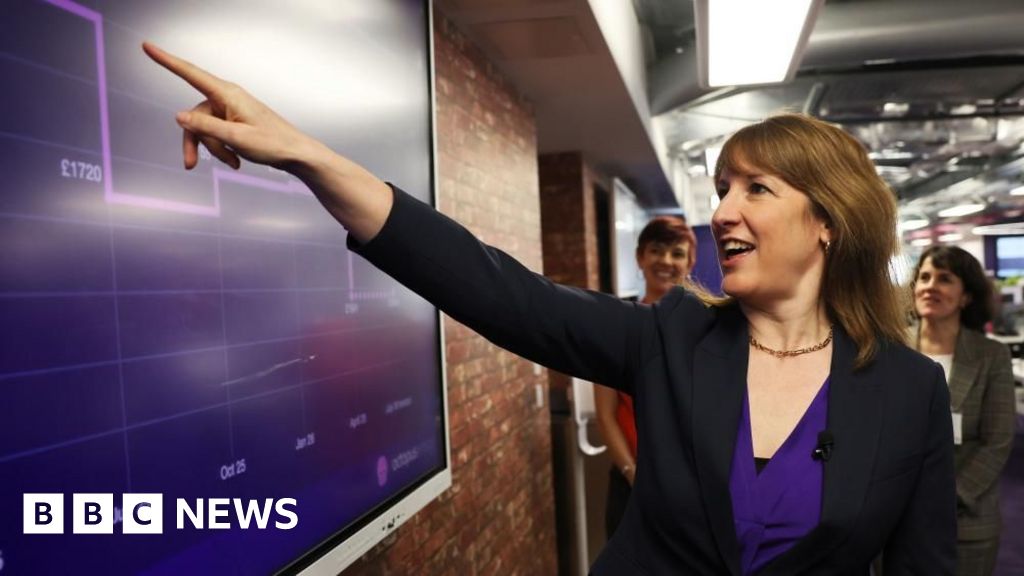
The Chancellor is trying to use this moment as a launching pad for a wider attempt to gee up consumer and business confidence.
Source link
Business
Oil market price battle: Russia and Iran offer deeper discounts to China as crude piles up at sea – The Times of India

Russian and Iranian oil producers are reportedly offering deeper discounts to compete for the same limited pool of Chinese buyers after India pulled back from purchases. Analysts say India’s imports from Russia could fall by 40 per cent from January levels, to around 600,000 barrels a day, according to a scenario from Rystad Energy, as reported by Bloomberg.Much of the displaced crude is heading east, sparking a price war with Iranian suppliers, long favoured by China’s independent refiners, known as teapots. Russian Urals crude is reportedly selling at about $12 a barrel below ICE Brent, up from a $10 discount last month. Iranian Light crude is going for as much as $11 below the global benchmark, widening from $8–$9 in December, according to traders.
“The Chinese private refiners cannot take in much more as their capacity is likely maxed out,” said Jianan Sun, an analyst at Energy Aspects, noting that sanctioned barrels are building up in both onshore and offshore storage.China’s teapots historically act as a pressure valve, absorbing barrels shunned by others, but their capacity is limited; they account for roughly a quarter of the country’s refining capacity and are also subject to government import quotas. Major state-owned refiners, meanwhile, have traditionally avoided Iranian crude and have recently largely stayed away from Russian barrels as well.With China unable to fully absorb the displaced supply, unsold oil is piling up in Asian waters, leaving Russia and Iran scrambling. The Kremlin has already cut output, depriving it of funds for its war in Ukraine, while Iran is trying to ship as much oil as possible amid fears of a potential US strike.Data shows Russian oil deliveries to Chinese ports rose to 2.09 million barrels a day in the first 18 days of February, a roughly 20 per cent increase from January and nearly 50 per cent higher than December. By contrast, Iranian exports to China have fallen about 12 per cent from a year earlier, to roughly 1.2 million barrels a day, according to Kpler. The firm estimates nearly 48 million barrels of Iranian crude are now at sea, up from about 33 million in early February. Russian cargoes sitting in Asian waters total around 9.5 million barrels.A potential US strike on Iran could disrupt exports if oil facilities are targeted or shipments through the Strait of Hormuz are blocked. Russian barrels carry a “relatively lower level of risk” for Chinese buyers compared with Iranian crude, said Lin Ye, vice president of oil markets at consultancy Rystad Energy, citing optimism over a potential ceasefire in Ukraine.
The FTSE 100 reached fresh heights on Wednesday, with well-received results from HSBC, and gains in mining stocks, paving the way for another record-breaking day.
“The strong showing from the UK stock market so far in 2026, on top of a major success in 2025, bodes well for changing its reputation from unloved to admired,” said Russ Mould, investment director at AJ Bell.
The FTSE 100 index ended up 125.82 points, 1.2%, at 10,806.41, a record close and its best level for the day.
The FTSE 250 ended up 135.85 points, 0.6%, at 23,636.89, and the AIM All-Share closed up 1.26 points, 0.2%, at 816.79.
London’s brighter mood was reflected elsewhere in Europe.
The CAC 40 in Paris closed up 0.5% on Wednesday, while the DAX 40 in Frankfurt ended 0.8% higher.
Stocks in New York were also higher. The Dow Jones Industrial Average was up 0.4%, the S&P 500 index was 0.6% higher, and the Nasdaq Composite advanced 1.0%.
Across the pond all eyes point towards earnings from Nvidia, due for release after the New York market close.
David Morrison, senior market analyst at Trade Nation, said: “Tonight’s results will focus initially on revenues and earnings. In prior quarters, Nvidia has often surprised investors with bullish forward guidance, and if there’s good news here, then that should underpin the share price.
“But data centre revenue, chip demand and hyperscale cloud spending are all important elements, while competition (another recent issue) and margins will also be poured over by analysts.”
The pound was little changed at 1.3537 dollars on Wednesday afternoon, from 1.3536 dollars at the equities close on Tuesday.
The euro stood higher at 1.1804 dollars, from 1.1787 dollars. Against the yen, the dollar was trading higher at 156.39 yen, compared with 155.71 yen.
The yield on the US 10-year Treasury widened to 4.05% on Wednesday from 4.04% on Tuesday. The yield on the US 30-year Treasury was flat at 4.69%.
In London, shares in HSBC hit an all-time high after better-than-expected fourth-quarter results.
The 7.9% gain took the Asia-focused lender’s market value to £239.29 billion, overtaking AstraZeneca as the most valuable listed UK company.
Cambridge-based drugs firm AstraZeneca has a market value of a touch below £236 billion after falling 0.7% on Wednesday, with oil major Shell, up 1.3%, a distant third at £169.72 billion.
For the fourth quarter of 2025, HSBC said adjusted pre-tax profit rose to 8.59 billion dollars from 7.32 billion dollars a year ago, ahead of 7.85 billion dollars consensus.
JPMorgan said the profit beat was driven by strong banking net interest income, and impairments coming in 12% lower than forecast.
Looking ahead, chief executive Georges Elhedery said HSBC is “raising our ambition and targeting a 17% [return on tangible equity] or better, excluding notable items, in each year from 2026 to 2028”.
“We are also targeting year-on-year revenue growth over the same period on the same basis, rising to 5% in 2028,” he added.
JPM said the new targets are slightly above consensus expectations for annual revenue growth of 4.2% in 2028.
Citi analyst Andrew Coombs said it was “a good print”, with “potential for high-single digit consensus EPS upgrades”.
Mining stocks were also in demand as metals prices rose.
Gold firmed to 5,204.64 dollars an ounce on Wednesday from 5,142.02 dollars on Tuesday. Silver rose 4.1% and copper gained 0.9%.
Miners Fresnillo, Antofagasta and Anglo American rose 7.3%, 5.7% and 4.4% respectively.
Also in the green was St James’s Place, after it said it will increase shareholder returns after reporting better-than-expected 2025 results.
The London-based asset manager rose 6.6%, as it reported a post-tax underlying cash result of £462.3 million in 2025, up 3.4% from £447.2 million the year prior, and ahead of £445.5 million company-compiled consensus. Pre-tax profit increased 28% to £1.34 billion from £1.05 billion.
Post-tax underlying cash basic earnings per share of 87.0 pence, increased 6.1% from 82.0p, ahead of 84.2p consensus.
In addition, the firm intends to increase total annual shareholder distributions to 70% (from 50%) of the underlying cash result through a combination of dividends and share buy-backs.
But Diageo shareholders had a day to forget, as shares plunged 13% after it cut full-year sales guidance and slashed its dividend.
London-based Diageo operates in more than 180 countries with a portfolio of more than 200 brands, including top sellers such as Johnnie Walker whisky, Smirnoff vodka, Tanqueray gin and Guinness stout.
It said net sales fell 4.0% year-on-year to 10.46 billion dollars in the six months to December 31, from 10.90 billion dollars a year ago, below VA consensus of 10.57 billion dollars.
Sales declined 2.8% on an organic basis, compared to VA consensus for a 2.0% drop, with organic volumes down 0.9% and a negative price/mix of 1.9%.
“Trading conditions remained challenging in the first half of the year. We believe this was largely due to further macroeconomic and geopolitical uncertainty, and weak consumer confidence in key markets,” the company said in a statement.
For the financial year, Diageo now expects a full-year organic net sales decline of 2% to 3%, “given further weakness in the US”. It had previously predicted an outcome between “flat to slightly down”.
In addition, the firm halved its first-half payout to 20 cents per share from 40.50 cents a year prior.
New chief executive Dave Lewis said he is “confident that this is the right action” to “drive stronger shareholder value over the coming years”.
Dan Coatsworth, head of markets at AJ Bell, said: “There is no point trying to dress up the six-month figures. These are awful results, and the repair job is massive.”
On the FTSE 250, Trainline shares buckled as chief executive Jody Ford signalled his departure.
Shares in the London-based digital rail and coach ticketing platform fell 7.5%, as it said Mr Ford intends to step down as chief executive after more than six years at the company.
A formal search process to find his successor has begun, the firm added.
Brent oil traded lower at 70.76 dollars a barrel on Wednesday afternoon, from 71.16 dollars late Tuesday.
The biggest risers on the FTSE 100 were HSBC, up 102.60p at 1,394.00p, Metlen Energy & Metals, up 2.70p at 37.65p, Fresnillo, up 294.00p at 4,326.00p, St James’s Place, up 83.50p at 1,343.00p and Relx, up 142.00p at 2,415.00p.
The biggest fallers on the FTSE 100 were Diageo, down 238.00p at 1,636.00p, Haleon, down 27.80p at 377.90p, Croda, down 99.00p at 3,113.00p, Babcock International, down 29.00p at 1,374.00p and Tesco, down 8.30p at 492.20p.
Thursday’s global economic calendar has US initial jobless claims data.
Thursday’s domestic corporate calendar has full-year results from jet engine maker Rolls-Royce, advertising agency WPP, exchange operator and data provider London Stock Exchange and kitchen supplier Howden Joinery.
Contributed by Alliance News


College track athlete allegedly stabbed to death by girlfriend over suspected affair

Lionel Messi ‘deeply regrets’ not learning English

US says Iran trying to rebuild nuclear programme

-

 Entertainment1 week ago
Queen Camilla reveals her sister’s connection to Princess Diana
-

 Tech1 week ago
Rakuten Mobile proposal selected for Jaxa space strategy | Computer Weekly
-

 Politics1 week ago
Ramadan moon sighted in Saudi Arabia, other Gulf countries
-

 Entertainment1 week ago
Robert Duvall, known for his roles in "The Godfather" and "Apocalypse Now," dies at 95
-
 Business1 week ago
Tax Saving FD: This Simple Investment Can Help You Earn And Save More
-

 Politics1 week ago
Tarique Rahman Takes Oath as Bangladesh’s Prime Minister Following Decisive BNP Triumph
-

 Tech1 week ago
Businesses may be caught by government proposals to restrict VPN use | Computer Weekly
-

 Sports1 week ago
Usman Tariq backs Babar and Shaheen ahead of do-or-die Namibia clash