

Business
Workers’ rights reforms will cost billions less after concessions, analysis shows

Archie MitchellBusiness reporter
 Getty Images
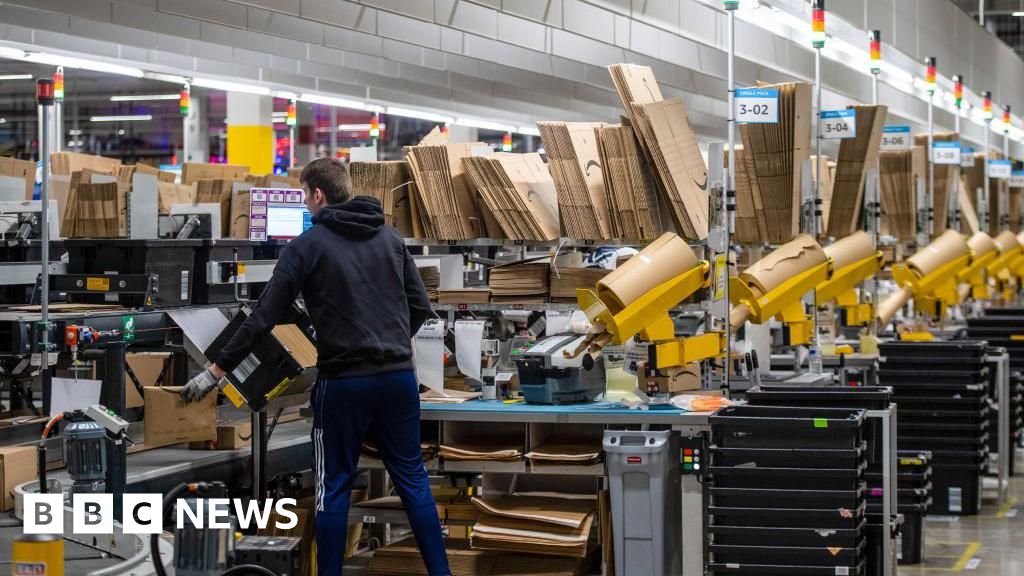
A series of concessions on Labour’s flagship workers’ rights reforms will cut the cost to firms adopting them by billions of pounds, a government impact assessment shows.
An initial analysis by officials found that implementing the party’s measures to bolster workers’ rights would cost firms up to £5bn a year.
However, an updated analysis on Wednesday, which took into account major concessions made by ministers, said it will now cost companies £1bn a year.
The concessions were welcomed by business groups, but faced fierce criticism from some left-wing Labour MPs and union leaders.
The Employment Rights Act will give workers access to sick pay and paternity leave from the first day on the job and introduce new protections for pregnant women and new mothers.
In November, Labour dropped plans to give all workers the right to claim unfair dismissal from their first day in a job. Instead, it will bring in enhanced protections after six months in employment, the bill’s most significant measure.
Alongside concessions on unfair dismissal, the government will phase in the overall package over several years, with many of the measures still subject to consultation and secondary legislation.
The revised impact assessment also said the lower cost estimate reflected “clearer implementation timelines” and more available evidence about the policies.
But the British Chambers of Commerce said the £1bn figure “is likely to be a massive underestimate”.
Policy director Kate Shoesmith said: “The impact figure doesn’t adequately account for the harder to quantify costs. Those include staff time for understanding and implementing new processes or explaining these to colleagues.
“Concessions such as introducing the six-month qualifying period will reduce costs – but not on the scale this latest assessment suggests.”
The shadow business and trade secretary, Andrew Griffith, said: “The government spent a whole year denying it, but even after they fudged the figures to favour them, the truth is clear: their Unemployment Act will cost businesses billions.
“They have also been forced to admit it will cost young and vulnerable people their jobs – just as we always warned.”
The latest impact assessment also said the Employment Rights Act would have a small positive impact on employment, boosting the amount of people in work by 0.1%.
It also said the new measures could have a “small, positive direct impact on economic growth”.
Meanwhile, stronger workers’ rights could benefit about 18 million workers, up from an earlier estimate of around 15 million, the analysis showed.
Trade unions welcomed the latest impact assessment, saying it would bring “significant benefits to UK workers, our economy and wider society”.
The Trades Union Congress (TUC) said stronger rights at work are “good for workers and employers – driving up labour market participation, improving health, raising productivity and boosting demand”.
Its general secretary Paul Nowak called for ministers to “finish the job as soon as possible”, warning that secondary legislation to bring in the measures must be “watertight”.
Mike Clancy, general secretary of the Prospect trade union, said: “This impact assessment is clear that the Employment Rights Act is good for workers, good for growth, and good for wider society.
“The sensible compromises agreed between Government, businesses, and trade unions were intended to make this legislation more workable for all parties, while still delivering robust protections for workers, and this report clearly demonstrates the success of that approach.”
The Department for Business and Trade (DBT) said the Employment Rights Act will “transform the world of work, delivering stronger protections and higher living standards”.
A spokesperson said: “By making work pay, and more secure, this new analysis demonstrates how it will boost productivity, cut staff turnover, and put more money in the pockets of working people.”
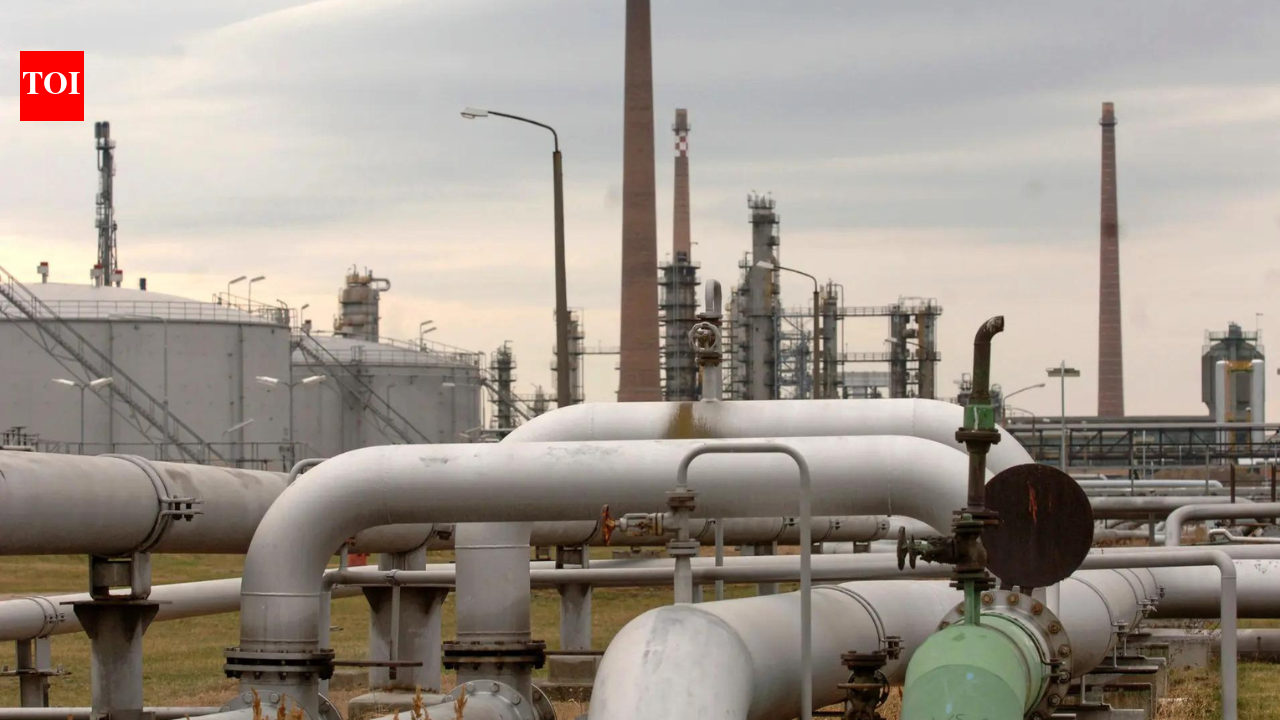
NEW DELHI: Govt on Saturday significantly increased export duties on diesel and aviation turbine fuel to dissuade oil refiners from exporting these fuels and to ensure adequate availability in the domestic market amid ongoing tensions in West Asia. The ministry of finance issued a series of notifications hiking the export duty on diesel by more than 150% – from Rs 21.5 per litre to Rs 55.5 per litre – with immediate effect. The levy on ATF, or jet fuel, was increased from Rs 29.5 per litre to Rs 42 per litre. The export duty on petrol continues to be nil. Under the revised structure, the special additional excise duty on high-speed diesel has been raised to Rs 24 per litre, while the road and infrastructure cess now stands at Rs 36 per litre, which means a large chunk will now flow to the Centre. Govt said these duties are not meant to boost revenue, but to stop fuel exporters from taking undue advantage of price differences. The Centre had, on March 27, imposed an export duty of Rs 21.5 per litre on diesel and Rs 29.5 per litre on ATF in a bid to check windfall gains, as fuel was in short supply in international markets due to a squeeze on energy supplies amid the military conflict and export curbs imposed by China. It had also slashed excise duty on diesel and petrol to shield consumers and oil companies from the impact of high crude prices. Retail prices of automobile fuels in India have not increased despite high volatility in the international crude market, while only a small part of the international price pressure has been passed on to domestic flights. The windfall tax on exports of diesel and ATF helps the Centre partly offset the impact of the excise duty cut. On March 27, govt had estimated revenue gains from export duties at around Rs 1,500 crore in a fortnight. The further hike in export duties is likely to lead to higher revenue gains. In a statement, the ministry of petroleum had said, “At a time when international diesel prices have surged sharply, the levy is designed to disincentivise exports and ensure that refinery output is directed first tow-ards meeting domestic demand.“

Stock markets are as turbulent as they have ever been. Those not used to seeing their wealth jump and plunge from day to day might well be wary of trying them out for the first time.
But by investing for the longer term, investors who pick a stocks and sharesISA will almost certainly do better than those who play it safe by holding savings in cash – and they will never pay tax on any earnings.
The average stocks and sharesISA account is worth over £65,000, significantly higher than the typical cash ISA, which holds less than £13,500.
“With UK inflation elevated at around 3 per cent over the past year, it’s not a great time to be sitting on cash, especially given that over the past 12 months, the average stocks and sharesISA grew around 11 per cent, compared to an average return of 3.48 per cent for cash ISAs,” explained Dan Moczulski, eToro UK’s managing director.
With the new tax year’s allowance now in effect – worth £20,000 per person – we asked five experts to pick one fund they would be willing to buy into themselves.
While not recommendations for everybody, they offer food for thought, as well as better diversification and lower risk than buying individual company shares.
Scottish Mortgage FTSE 100
Annabel Brodie-Smith, communications director of the Association of Investment Companies (AIC)
Brodie-Smith is going for the Scottish Mortgage FTSE 100 investment trust managed by Baillie Gifford.
This company invests around the world in exciting private companies like SpaceX and Revolut, as well as public-listed companies like Meta, Nvidia and ASML.
Get a free fractional share worth up to £100.
Capital at risk.
Terms and conditions apply.
ADVERTISEMENT

Get a free fractional share worth up to £100.
Capital at risk.
Terms and conditions apply.
ADVERTISEMENT
They are aiming to invest in the companies shaping the future – a mix of technology, healthcare, consumer services and more. The trust currently trades on a 5 per cent discount and has low charges of 0.31 per cent. This is an investment trust for long-term investors with a high appetite for risk.
This fund went up 27 per cent in the last year and is up 68 per cent over five years.

iShares Over 15 Years Gilts Index Fund (UK)
Alan Miller, CIO at SCM Direct
This fund tracks the FTSE Actuaries UK Conventional Gilts Over 15 Years Index and is therefore a fund investing solely in sterling-denominated UK government bonds, with a minimum remaining maturity of 15 years. It holds 27 gilts, has net assets of £2.95bn, and carries a Morningstar Gold medal.
There are no performance fees and a charge of just 0.1 per cent a year.
Miller says: “One of the most compelling opportunities in the market is hiding in plain sight: UK government bonds.
“Here’s the number that stops people in their tracks: 4.95 per cent compounded over 10 years is a 62 per cent return before charges, backed entirely by the UK government and sheltered from tax inside an ISA.”
Gilt yields are close to multi-decade highs. Locking in a yield to maturity of nearly 5 per cent inside an ISA wrapper, where all income and gains are tax-free, is exceptional by historical standards, and at an ongoing charge of just 0.1 per cent per annum, virtually nothing is lost to fees.
He adds: “Boring has rarely looked this good. It’s the kind of deal most active fund managers can only dream of offering.”
This fund is basically flat over the last year and up 9 per cent over five years. That’s because interest rates have been very low – as they are now higher, it should fare better from here.
Man Income
Paul Agnell, head of investment research, AJ Bell
Of the Man Income fund, Agnell says: “The fund’s pragmatic and analytical managers, Henry Dixon and Jack Barrat, invest in undervalued UK companies across the market cap spectrum, which are paying a yield at least in line with the market. In order to avoid value traps, the managers also look at a firm’s cashflow and assets.”
So, the team seek out undervalued and unloved companies, of which the UK market continues to present opportunities.
Their investment process centres on identifying two types of stocks: those trading below their replacement cost (what it would cost today to replace a company’s assets and operations) that are also cash generative, and those where the market appears to be undervaluing profit streams.
The fund has made an excellent start to 2026, up over 10 per cent in the first two months alone and was up 28 per cent over 2025. Banks were a key contributor over 2025, led by Lloyds, but with strong contributions also coming from Barclays and Standard Chartered.
The charge on the Man Income fund is 0.9 per cent.
Murray International
Philippa Maffioli, Blyth-Richmond Investment Managers
Murray International aims to blend global diversification with a solid income stream. The yield is around 3.5 per cent.
Maffioli says: “I like Murray International’s focus on dependable cashflows and sensible valuations, rather than chasing the highest yield. It also isn’t tied to the UK market, so you’re spreading risk across regions and currencies.”

Day-to-day decisions now sit with Martin Connaghan and Samantha Fitzpatrick, but the approach remains consistent: sustainable income with long-term growth potential. If you reinvest the dividends, it can be a strong compounding option over time.
It charges fees of 0.5 per cent. It is up 36 per cent in the last year and up 60 per cent over five years.
Pantheon Infrastructure Plc
Jonathan Moyes, head of investment research, Wealth Club
Pantheon Infrastructure Plc aims to provide investors with some diversification away from global stock markets while providing the potential for attractive equity-like returns over the longer term.
The FTSE 250 trust co-invests alongside some of the world’s leading infrastructure managers. Its portfolio includes large-scale data centres, gas distribution networks, US renewable energy and storage developers, as well as one of Europe’s leading temperature-controlled logistics and transport businesses.
Moyes says: “These assets are prized for their mission-critical nature and long-term contracted revenue streams. Nonetheless, shares in Pantheon Infrastructure change hands at an attractive 13 per cent discount to net asset value.”
That means the shares in the fund are valued more highly than the actual fund, which means easy wins – if that discount narrows. Trusts’ valuations do not always do so, while others might trade at a premium – in other words, more than the sum of their parts.
Investors should note this is a high-risk investment and should form part of a diversified portfolio. The trust has total ongoing charges of 1.29 per cent. The fund is up 30 per cent in the last year, but is too new for a five-year view.
Depending on which investment platform you use, and like any other fund, there may also be share dealing costs, so look to minimise those where you can so they don’t eat into your long-term returns.
When investing, your capital is at risk and you may get back less than invested. Past performance doesn’t guarantee future results.
Business
Government raises diesel, ATF export duties as oil prices stay volatile; petrol duty remains nil – The Times of India

The finance ministry on Saturday announced a sharp increase in export duties on diesel and Aviation Turbine Fuel (ATF), while keeping the duty on petrol unchanged.According to the ministry, the export duty on diesel has been raised from Rs 21.5 per litre to Rs 55.5 per litre, while that on ATF has been increased from Rs 29.5 per litre to Rs 42 per litre. The revised rates will take effect immediately.The move comes as the government weighs steps to prevent higher fuel costs from feeding into airfares. Officials are reviewing tax and fee measures to protect airlines and passengers amid volatile global oil prices.
The earlier duties, imposed on March 26, were aimed at boosting domestic fuel availability during the conflict in West Asia and preventing exporters from gaining from widening global price differences as crude prices surged.The tensions escalated on February 28 when the United States and Israel launched military strikes on Iran, drawing a strong response from Tehran. A temporary pause followed on April 8, when the three countries agreed to a two-week ceasefire after the conflict disrupted energy markets across the Middle East.Export duty on petrol continues to remain nil.


Lucy Liu reveals shocking cancer misdiagnosis story

Caitlin Clark’s Fever make several key offseason signings in championship pursuit

USA vs. Japan (Apr 11, 2026) Live Score – ESPN

-

 Entertainment1 week ago
Joe Jonas shares candid glimpse into parenthood with Sophie Turner
-

 Tech1 week ago
Our Favorite iPad Is $50 Off
-

 Sports1 week ago
UConn Final Four run could trigger a $50M furniture giveaway for Massachusetts-based Jordan’s Furniture
-
 Business1 week ago
Gold prices in Pakistan Today – April 3, 2026 | The Express Tribune
-

 Entertainment1 week ago
Blake Lively reacts to harassment claims dismissal against Justin Baldoni
-
 Business1 week ago
Video: Why Is the Labor Market Stuck?
-

 Politics1 week ago
Iran can sustain Strait of Hormuz closure for years, will cut US military logistics: Official
-

 Entertainment1 week ago
Barbie Ferreira reveals where she stands with ‘Euphoria’ girls after exit