

Politics
Turkish foreign minister says talks held on defence pact with Pakistan, Saudi Arabia

- Turkish FM stresses need for broader regional cooperation, trust.
- Says issues could be resolved if nations “be sure of each other”.
- Bloomberg reports Ankara in advanced talks to join defence pact.
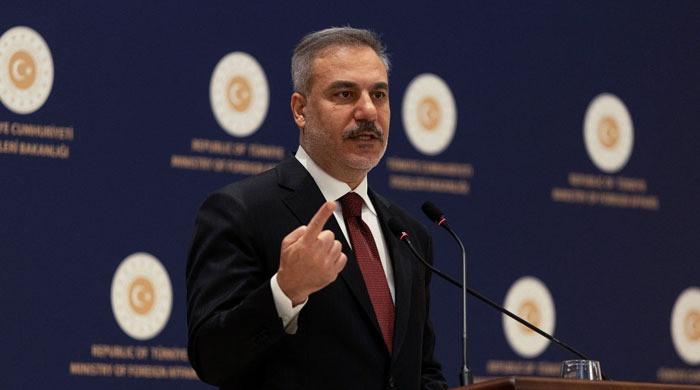
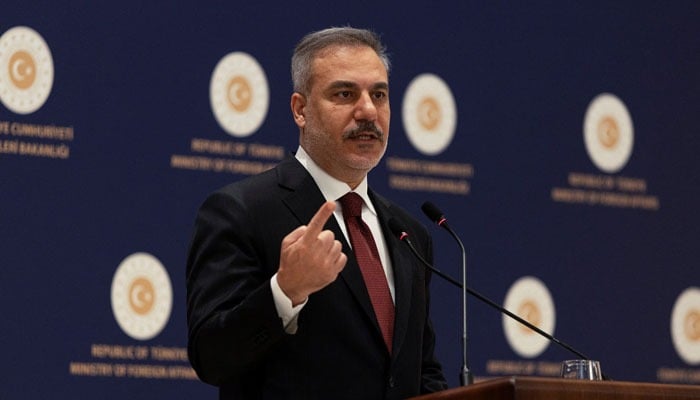
Turkish Foreign Minister Hakan Fidan said on Thursday that talks have been held on a possible defence pact with Pakistan and Saudi Arabia, but no agreement has been signed.
Responding at a press conference in Istanbul to a question about whether there might be such an alliance, Fidan pointed to what he said was a need for broader regional cooperation and trust, and added that regional issues could be resolved if relevant countries would “be sure of each other”.
His comments follow a Bloomberg report last week that said Ankara was at an “advanced stage of discussions” to join the Strategic Mutual Defence Agreement (SMDA) between Pakistan and Saudi Arabia.
The publication, citing people familiar with the matter, reported that the talks were likely to conclude with a deal.
The SMDA between Pakistan and Saudi Arabia treats an attack on either nation as an act of aggression against both. It was signed on September 17, 2025, during Prime Minister Shehbaz Sharif’s visit to Saudi Arabia.
The Bloomberg report stated that Turkiye was mulling joining the pact amid concerns over the reliability of the United States, and its increasingly overlapping interests with those of Saudi Arabia and Pakistan in South Asia.
Pakistan and Turkiye maintain decades-long defence ties, under which Ankara is building corvette warships for the Pakistan Navy.
Turkiye has also upgraded numerous F-16 fighter jets of the Pakistan Air Force, and also shares its drone technology with Islamabad.
Pakistani officials credit the country’s military success against India in the May 2025 conflict to strengthened defence agreements.
On Wednesday, PM Shehbaz said Pakistan was engaged in discussions with multiple countries on defence agreements, including the sale of its fighter jets.
“After Pakistan won the war last year, the demand for Pakistani fighter jets has increased […] many countries are actively engaged with us to acquire the jets,” the premier said while addressing a meeting of the federal cabinet.
Prior to that, Minister for Defence Production Raza Hayat Haraj told the BBC that Islamabad was in talks with several countries over potential agreements to sell JF-17 Thunder fighter jets.
Pakistan and India went to war in May last year after India launched an unprovoked attack on Pakistan following the attack on tourists in the Indian Illegally Occupied Jammu and Kashmir (IIOJK).
New Delhi maintains that the terrorists who killed 26 tourists in IIOJK’s Pahalgam were Pakistanis — an accusation that Islamabad has denied and has also asked India to partake in a neutral investigation.
Pakistan, during the 87-hour conflict, downed its six fighter jets, including three Rafale, and dozens of drones.
The war between the two nuclear-armed nations ended on May 10 with a ceasefire agreement brokered by the United States.
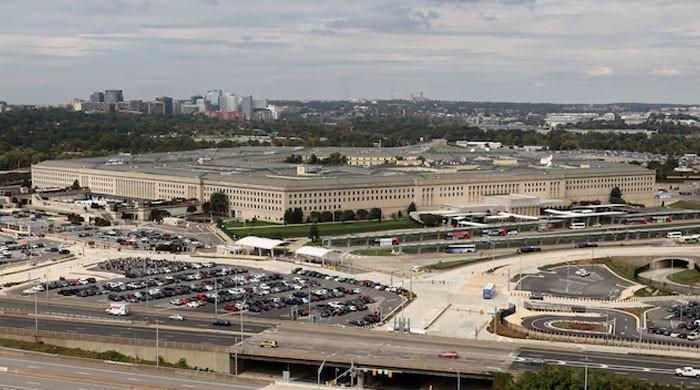
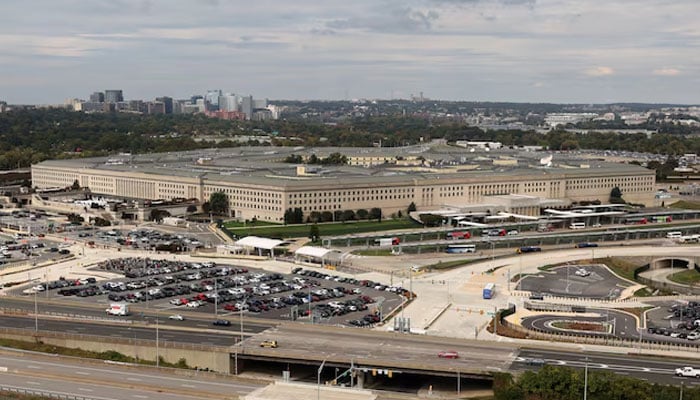
The US military asked mining companies last Friday to help boost domestic supplies of 13 critical minerals used to make semiconductors, weapons and other products, a document reviewed by Reuters showed.
The request, the day before the US and Israel launched strikes on Iran, is the latest example of Washington’s push for more access to the materials used widely in warfare.
The Pentagon asked members of the Defence Industrial Base Consortium (DIBC), a group of more than 1,500 companies, universities and others that supply the military, for proposals to be submitted by March 20 for projects that could mine, process or recycle select minerals, the document showed.
While the DIBC has worked on minerals-related issues for some time, there was no immediate indication as to whether the timing was intentionally coordinated to coincide with the start of the strikes on Iran.
The list of 13 minerals sought includes arsenic, bismuth, gadolinium, germanium, graphite, hafnium, nickel, samarium, tungsten, vanadium, ytterbium, yttrium and zirconium.
The US is reliant on imports for most of the 13. China is a dominant global producer of all of them.
DIBC member Guardian Metal Resources plans to apply for funding for its two tungsten projects in Nevada, said J.T. Starzecki, the company’s executive chairman. Tungsten is used to harden steel and China is the world’s largest producer.
“This is the opportunity we’ve been waiting for,” Starzecki told Reuters. “Our plan is to look for an application that would give us a funding package to allow us to get to full production at both sites.”
American Tungsten, which is developing an Idaho mine for that metal, plans to apply for funding next week that would complement a loan it has applied for from the US Export-Import Bank, said CEO Ali Haji.
The Pentagon asked for detailed information on the costs, including labour and material, needed to build a mine or processing facility. Projects could be awarded development funds ranging from $100 million to over $500 million, according to the request.
The document did not specify why only those 13 minerals were chosen. Some — including germanium, graphite and yttrium — have been subject to export restrictions by China, the top global producer.
Yttrium shortages, especially, have set off alarm bells throughout the aerospace industry. One of the 17 rare earths, yttrium is used in coatings that keep engines and turbines from melting at high temperatures. Without regular application of these coatings, engines cannot be used.
Colorado-based Energy, also a DIBC member, said it is developing facilities to process gadolinium and samarium by 2027, and is considering processing yttrium.
“The domestic supply of critical minerals remains essential to safeguarding both national security and economic stability,” said Mark Chalmers, the Energy Fuels CEO.
Nickel is a widely traded metal and Indonesia is the top global producer. Yet Jakarta has been throttling exports of the metal used widely in stainless steel and battery production.
The White House, DIBC and Pentagon did not immediately respond to requests for comment.
Latest request
DIBC’s request is just the latest attempt by the Trump administration to increase US supply of key critical minerals. China has been using its market control as diplomatic leverage in ongoing trade disputes with Washington.
Last month, Trump officials launched a $12 billion minerals stockpile backed by the US Export-Import Bank and proposed a preferential minerals trading bloc with more than 50 allies.
That trading bloc would aim to use reference prices for minerals derived in part by a Pentagon-created artificial intelligence programme, Reuters reported last week.
The administration has also taken equity stakes in rare earths miner MP Materials, Lithium Americas, and copper-and-cobalt developer Trilogy Metals.
Separately on Wednesday, the Defence Logistics Agency, which buys a range of goods for the US military, asked for information from miners on potentially acquiring lithium, chromium and tellurium for military stockpiles.
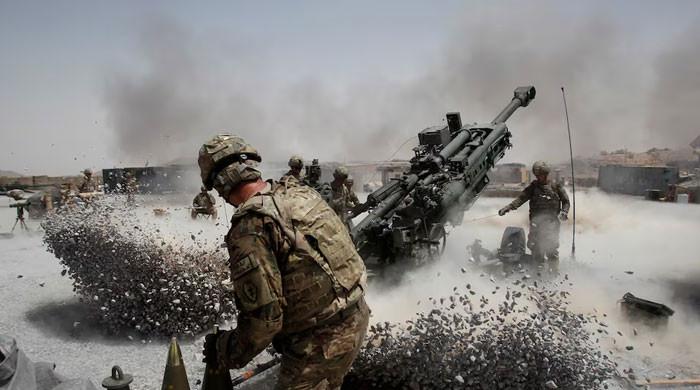
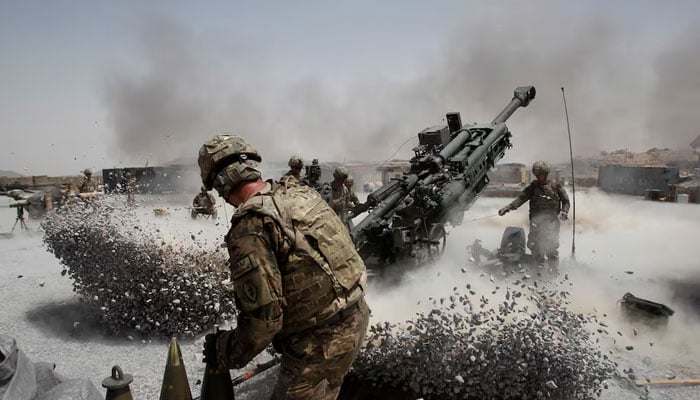
Despite promising to end United States’ involvement in costly and destructive foreign wars, President Donald Trump, together with Israel, has launched a massive military assault on Iran, targeting its leadership as well as its nuclear and missile infrastructure.
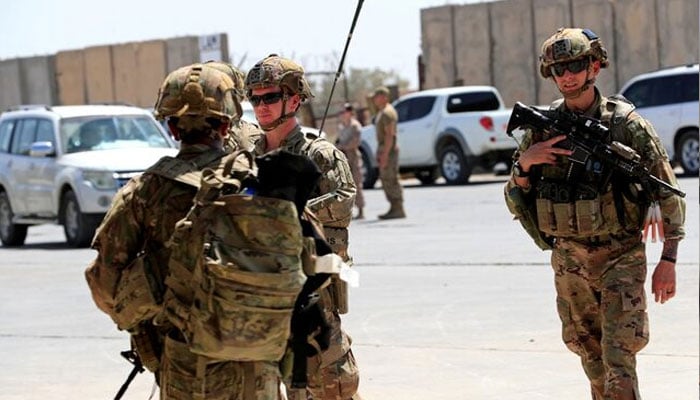
Since the September 11, 2001, attacks on New York and Washington DC, the United States has engaged in three full-scale wars and conducted bombing operations in at least 10 countries. These operations have ranged from large-scale invasions to targeted air strikes and drone campaigns, often carried out over multiple years.
In the immediate aftermath of 9/11, then-President George W Bush declared a “war on terror”, launching a global military campaign that reshaped US foreign policy.
The wars in Afghanistan and Iraq were followed by military operations in Pakistan, Syria, Yemen and other regions, as successive administrations expanded or sustained counterterrorism efforts.
Two decades of war and its costs
Research by Brown University’s Watson Institute for International and Public Affairs estimates that US-led wars since 2001 have directly caused approximately 940,000 deaths across Afghanistan, Pakistan, Iraq, Syria, Yemen and other conflict zones, according to Al Jazeera report.
The figure excludes indirect deaths resulting from displacement, destruction of infrastructure, limited access to healthcare and food shortages, the report said.
According to the report, the United States has spent an estimated $5.8 trillion on post-9/11 wars. This includes $2.1 trillion allocated by the Department of Defence, $1.1 trillion by the Department of Homeland Security, $884 billion added to the Pentagon’s base budget, $465 billion for veterans’ medical care and roughly $1 trillion in interest payments on war-related borrowing.
In addition, the US is projected to spend at least another $2.2 trillion on veterans’ care over the next three decades, bringing the total estimated cost of its post-2001 wars to approximately $8 trillion.
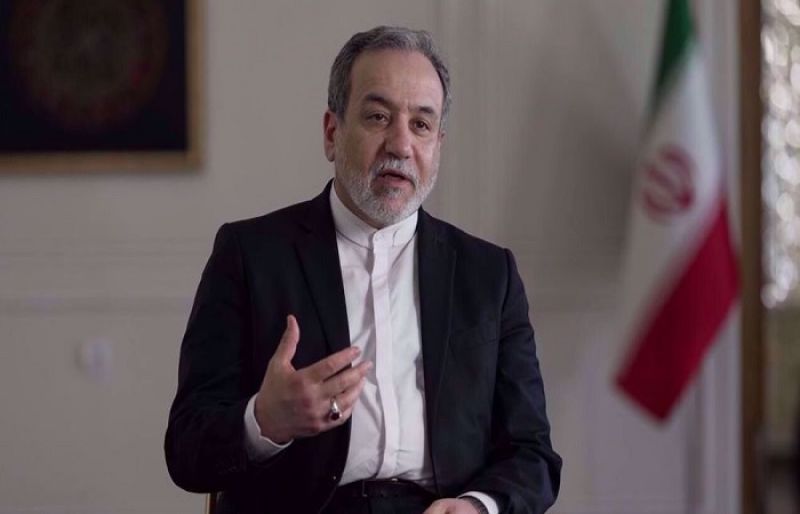

Iran’s Foreign Minister Abbas Araghchi says US President Donald Trump betrayed both the indirect negotiations with Tehran and the American people by launching unprovoked aggression against Iran.
In a post published on social media platform X on Wednesday, Araghchi said, “When complex nuclear negotiations are treated like a real estate transaction, and when big lies cloud realities, unrealistic expectations can never be met. The outcome? Bombing the negotiation table out of spite.”
“Mr. Trump betrayed diplomacy and Americans who elected him,” added the top diplomat.
Iran and the US were in the midst of indirect negotiations regarding Iran’s nuclear program, with Iranian negotiators and the Omani mediators expressing strong hope that an agreement could be reached.
On Friday, one day before the Israeli-US aggression against Iran and immediately after the third round of negotiations in Geneva, Switzerland, Omani diplomats went so far as to say that a new comprehensive agreement was closer than ever.
However, on Saturday, Israeli and US armed forces launched a series of attacks against strategic targets across Iran, killing several senior officials.
Trump’s especial envoy to West Asia Steve Witkoff, head of the US negotiating team, had earlier tried to pave the way for the US aggression on Iran by falsely claiming that it was the Iranian side that had undermined the process.
However, a diplomat familiar with the process of the negotiations told MS NOW that Witkoff’s claims are completely false and Iranians were open to a fair but comprehensive agreement with the US.
“I can categorically state that this is inaccurate,” said the diplomat, referring to Witkoff’s account.
According to the Persian Gulf diplomat, who spoke on condition of anonymity, the Iranian delegation had told Witkoff during indirect negotiations on Iran’s nuclear program that Tehran enriched the uranium after Trump pulled the US out of a 2015 nuclear agreement brokered by former President Barack Obama’s administration.
Scores of Iranian cities have been targeted in the US-Israeli aggression. Leader of the Islamic Revolution Ayatollah Seyyed Ali Khamenei was assassinated in the Saturday attack.
Since then, Iranian armed forces have swiftly and decisively retaliated against these strikes by launching barrages of missile and drones against Israeli-occupied territories as well as on US bases in region.
Iranian officials have stated that targeting US military bases in the region constitutes “legitimate self-defense.”
Referring to Article 51 of the Charter of the United Nations, they said that Iran has the legal right to defend itself against “acts of aggression” by the US or the Israeli regime.


These $500 Windows Laptops Show That the MacBook Neo Has Serious Competition

US Senate rejects bid to limit Trump’s Iran war powers

Sydney Leroux teases comeback after missing 2025 NWSL season

India Us Trade Deal: Fresh look at India-US trade deal? May be ‘rebalanced’ if circumstances change, says Piyush Goyal – The Times of India

What are Iran’s ballistic missile capabilities?

US arrests ex-Air Force pilot for ‘training’ Chinese military

-
Business6 days ago
India Us Trade Deal: Fresh look at India-US trade deal? May be ‘rebalanced’ if circumstances change, says Piyush Goyal – The Times of India
-
 Politics7 days ago
What are Iran’s ballistic missile capabilities?
-
 Politics7 days ago
US arrests ex-Air Force pilot for ‘training’ Chinese military
-
 Business1 week ago
Households set for lower energy bills amid price cap shake-up
-
 Business6 days ago
Attock Cement’s acquisition approved | The Express Tribune
-
 Fashion1 week ago
OECD GDP growth slows to 0.3% in Q4 amid mixed trends
-

 Fashion6 days ago
Policy easing drives Argentina’s garment import surge in 2025
-
 Business5 days ago
Greggs to reveal trading amid pressure from cost of living and weight loss drugs