

Fashion
Saks bonds worth just 1 cent hand hedge funds a painful lesson

By
Bloomberg
Published
January 16, 2026
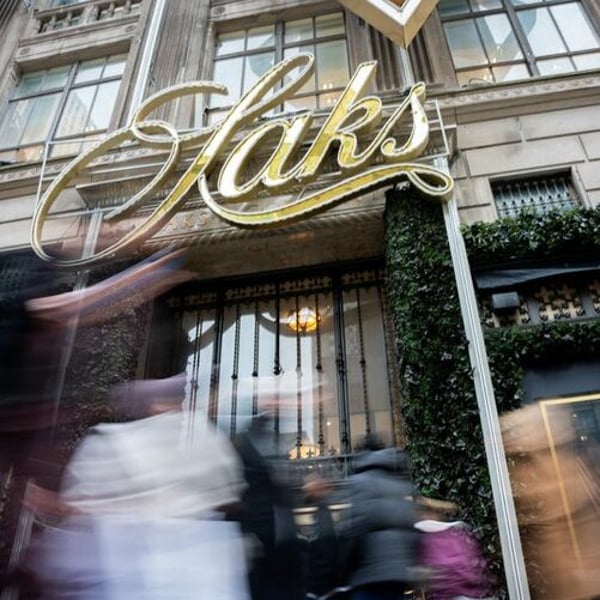
At first glance, Saks looked like exactly the kind of mess hedge funds love. Just months after the company borrowed $2.2 billion to finance its takeover of rival Neiman Marcus, the newly formed luxury retail powerhouse was already running short on cash. Creditors spooked by the pace of the slide rushed for the exits, offering the bonds for less than 40 cents on the dollar.
Bargain hunting hedge funds gleefully took the debt off their hands. This was, after all, a marquee name with valuable brands, prime real estate, big-name backers, and a business that executives said just needed a bit more time to steady itself. Firms including Pentwater Capital Management and Bracebridge Capital jumped in, chasing the promise of eye-popping returns.
Much is still to be determined in the wake of Saks’ bankruptcy this week, including any recovery for its creditors. Yet in the meantime, the episode is shaping up to be a painful lesson in the dangers of trying to catch a falling knife. The bonds that distressed-debt shops snapped up on the cheap are now being bid at less than 1 cent, according to broker runs. The hundreds of millions in extra financing they provided, which sits higher in the repayment pecking order, isn’t faring much better, changing hands around 10 cents.
Through Saks’ Chapter 11 filing, a clearer picture has emerged of a company that quickly veered off plan. Targets were missed, savings failed to materialise, cash drained at a rapid clip, and fixes meant to stop the bleeding never did. Bonds with roughly $486 million of face value held by Pentwater are now quoted at pennies on the dollar, as are about $257 million held by Bracebridge.
“This was a ticking time bomb, and the fuse was lit the day the merger was consummated,” said Mark Cohen, the former director of retail studies at Columbia Business School. “I’ve never seen anything go bad this fast; I don’t know that anyone has.”
A representative for Saks declined to comment beyond the company’s bankruptcy filing. Pentwater and Bracebridge declined to comment. Even after the staggering declines, Saks’ biggest creditors aren’t ready to throw in the towel.
In its bankruptcy filing, the company said it had secured roughly $1.75 billion in post-petition financing, including $1.5 billion from a group of senior secured bondholders betting a second act could yet salvage the retailer- and their own fortunes, possibly by converting battered debt positions into significant equity stakes.
Some will also collect fees for helping arrange the financing. What’s more, the structure of the post-bankruptcy financing Saks has lined up could allow certain debtholders to realise better returns on the company’s outstanding bonds than where they’re currently trading, some investors suggested.
Pentwater and Bracebridge are among those putting up more money, according to people with knowledge of the matter.
Whether it’s enough to turn around a company that burned through more cash than it generated last year remains to be seen. Perennially late payments have “damaged trust” with Saks’ suppliers, the retailer said in bankruptcy documents, and while new management is working to repair those relationships, some vendors may decide to take their business elsewhere.
The company is also facing stiff objections from unsecured creditors, including Amazon.com Inc., that are seeking to block access to the new financing package. The tech giant, which previously acquired a $475 million preferred equity stake in the luxury retailer, recently called its investment in Saks “presumptively worthless.” Other equity holders including Rhone Capital and Insight Partners also suffered significant losses, separate people familiar with the situation said.
Representatives for Amazon and Insight Partners didn’t respond to requests for comment. Rhone Capital declined to comment.
Some investors who opted not to participate in the latest debtor-in-possession financing were concerned that the rescue could echo other recent misfires. They pointed to First Brands Group, the bankrupt auto-parts supplier whose lenders put up more than $1 billion post bankruptcy, only to watch their super-senior bonds crater in value as the company burned through the cash and signalled it would need even more money.
With rescue financing, “you get a lot of structuring fees, an above-market interest rate, liens on the best collateral, an equity cushion below you, with the added upside that you’re in control as the restructuring process plays out,” said Rishi Goel, the global head of distressed debt at Aegon Asset Management.
“But it’s got to be structured correctly. The equity value below you has to be real,” Goel said. “If you’re misled, or the business is worth less than you thought or becomes worse than you thought, the value can dry up quickly.”
For now, Saks has said that stores under all its brands are open. A number of creditors say they are confident that new management, led by former Neiman Marcus Chief Executive Officer Geoffroy van Raemdonck, can steer the company through bankruptcy and, once it emerges, make its portfolio of luxury department stores profitable.
Not everyone is convinced. “The rationale for putting these two businesses together made no sense form the get go, and it’s hard to believe that these deep-pocketed masters of the universe fell for it,” Cohen said.













Fashion demand in 2026 remains intact but more selective, with consumers spending cautiously and prioritising value, durability and versatility.
Intentional purchasing and promotion sensitivity are reshaping pricing dynamics and margin structures.
Polarised consumer behaviour is pushing brands to rebuild trust, justify full price and align sustainability with longevity.
Source link
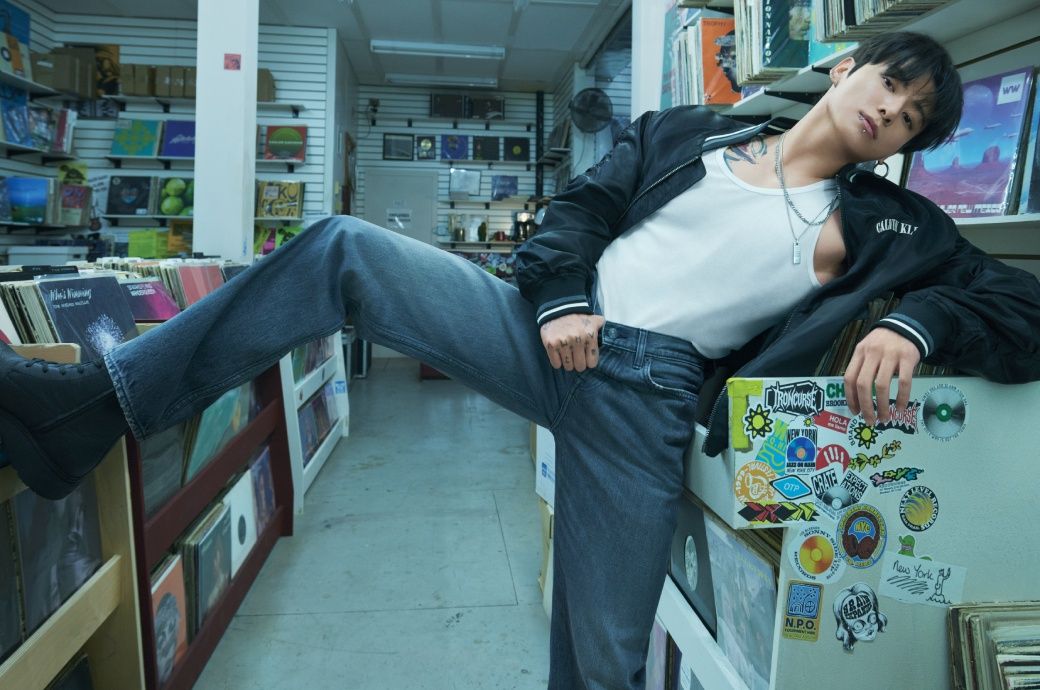
Directed and shot by Mert Alas, the new chapter sharpens the focus on denim as the ultimate expression of personal style through icon Jung Kook’s distinctive and influential point of view as he lives in the moment.
Calvin Klein, owned by PVH Corp., has unveiled its Spring 2026 denim campaign fronted by BTS icon Jung Kook.
Directed and photographed by Mert Alas, the cinematic film fuses music, movement and city energy, highlighting 90s Straight, Baggy and reworked Trucker silhouettes.
A special appearance by Rosie Perez amplifies the brand’s signature visual storytelling.
The campaign unfolds across a series of immersive worlds, unified and guided by Jung Kook’s style, attitude and way of living. The high-impact film fuses fashion and entertainment, moving to an instantly recognizable soundtrack and brought to life through the artist’s signature choreography and commanding presence. The interplay of music and movement – complete with a cameo from New York City legend Rosie Perez – captures the impact synonymous with Calvin Klein’s iconic visual storytelling.
Calvin Klein jeans are at the center of the wardrobe with hero silhouettes leading the narrative: the effortless attitude of the 90s Straight; the relaxed and nostalgic proportions of the Baggy; and new interpretations of the iconic Trucker jacket — all reimagined with elevated washes and designed for versatility. Casual logo tees and oversized bombers complete the looks, reinforcing denim as both uniform and statement.
“I love Calvin Klein jeans because they’re designed to be lived in,” said Jung Kook. “The looks I wore for this campaign nod to ‘90s style while feeling completely modern. It was exciting to bring together my love of music, dance and fashion against the energy of the city.”
Note: The headline, insights, and image of this press release may have been refined by the Fibre2Fashion staff; the rest of the content remains unchanged.
Fibre2Fashion News Desk (RM)

Premier Li Qiang, who delivered the report at the opening of the fourth session of the 14th National People’s Congress in Beijing, said the growth target is “well aligned with the country’s long-range objectives through the year 2035 and is broadly in line with the long-term growth potential of China’s economy, with favorable conditions in place for achieving this target.”
China has set a GDP growth target of 4.5–5 per cent for 2026, alongside goals to stabilise employment, manage inflation, maintain grain output and cut emissions.
The plan also preserves flexibility for structural reforms under the 15th Five-Year Plan, aiming to balance steady economic expansion with long-term, high-quality and sustainable development.
Main development targets for 2026 also include a surveyed urban unemployment rate of around 5.5 per cent, creation of over 12 million new urban jobs, a rise in the consumer price index of around 2 per cent, personal income growth in step with economic growth, a basic equilibrium in the balance of payments, grain output of around 700 million tonnes, and a drop of around 3.8 per cent in carbon dioxide emissions per unit of GDP.
Qiang said the targets took into account the need to leave room for structural adjustments, risk prevention and reform in the opening year of the 15th Five-Year Plan (2026–30) period, to lay a solid foundation for improved performance in the coming years. Government at local level should, taking into account their own conditions, make solid efforts to deliver positive outcomes, he added.
Analysts said the 2026 target reflects a pragmatic approach in recognising structural and cyclical challenges facing the world’s second-largest economy, while pursuing reasonable growth in line with high-quality development.
Fibre2Fashion News Desk (JP)


US Senate backs Trump’s Iran operations after House vote

Harry Kane calf injury imperils Bundesliga record chase

Here’s Every Country Directly Impacted by the War on Iran

Attock Cement’s acquisition approved | The Express Tribune

What are Iran’s ballistic missile capabilities?

India Us Trade Deal: Fresh look at India-US trade deal? May be ‘rebalanced’ if circumstances change, says Piyush Goyal – The Times of India

-
Business1 week ago
Attock Cement’s acquisition approved | The Express Tribune
-
 Politics1 week ago
What are Iran’s ballistic missile capabilities?
-
Business7 days ago
India Us Trade Deal: Fresh look at India-US trade deal? May be ‘rebalanced’ if circumstances change, says Piyush Goyal – The Times of India
-

 Politics1 week ago
US arrests ex-Air Force pilot for ‘training’ Chinese military
-

 Fashion1 week ago
Policy easing drives Argentina’s garment import surge in 2025
-
 Business6 days ago
Greggs to reveal trading amid pressure from cost of living and weight loss drugs
-

 Sports1 week ago
Sri Lanka’s Shanaka says constant criticism has affected players’ mental health
-

 Sports6 days ago
LPGA legend shares her feelings about US women’s Olympic wins: ‘Gets me really emotional’