

Business
Budget 2026: New Tax Regime May Get Home Loan, Health Insurance Deductions


Last Updated:
Budget 2026 may bring middle-class relief as experts urge adding home loan interest and Section 80D health insurance deductions to the new tax regime



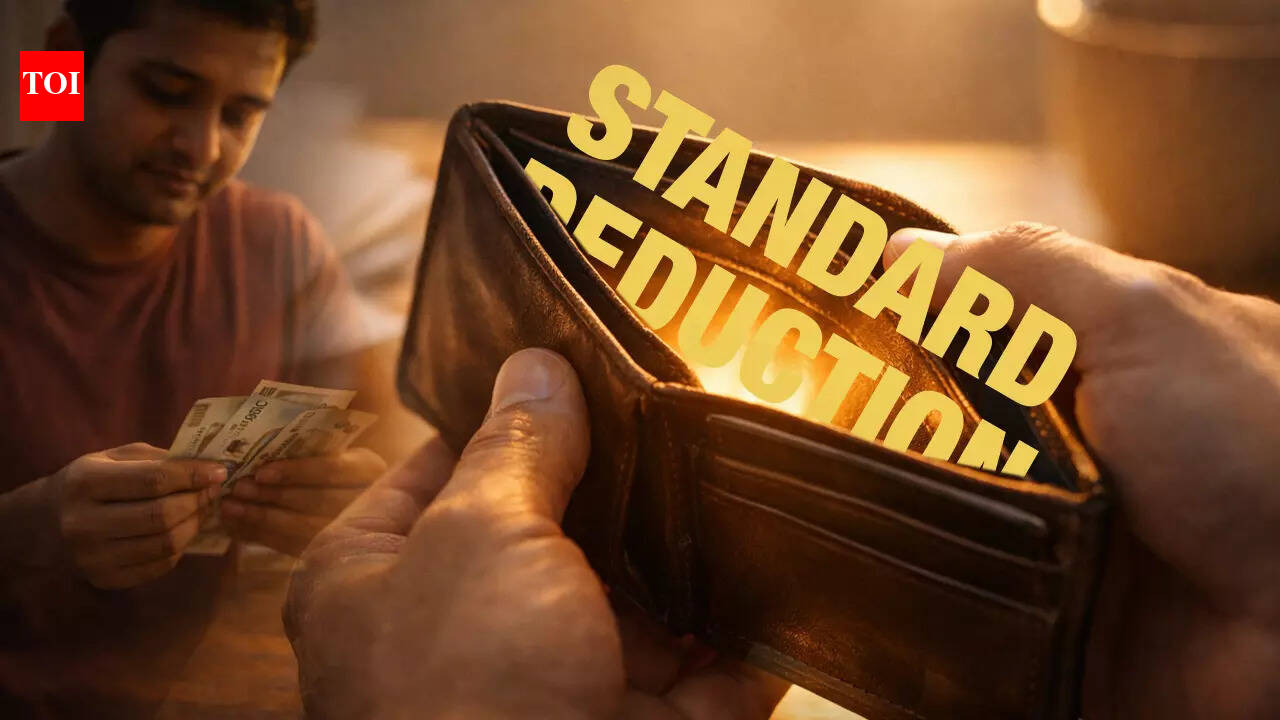
At present, most popular deductions are available only under the old tax regime. (AI-Generated Image)
As the Centre prepares to present the Union Budget in February 2026, expectations are building around possible changes to the personal income tax framework, with policymakers facing mounting pressure to make the new tax regime more attractive for middle-class taxpayers.
A key demand emerging from tax experts and industry bodies is the inclusion of select deductions, particularly home loan interest and medical insurance premiums, within the new regime. At present, most popular deductions are available only under the old tax regime, prompting many taxpayers to forgo lower tax rates in favour of exemptions and deductions.
According to reports in The Economic Times, experts have urged the government to consider allowing Section 80D deductions for health insurance in the new regime. Niyati Shah, Chartered Accountant and Personal Tax Head at 1 Finance, said a capped deduction of Rs 25,000 to Rs 50,000 for health insurance premiums would be justified, given that medical inflation is running at an estimated 12-14% annually.
Viswanathan Iyer, Senior Associate Professor at the Great Lakes Institute of Management, Chennai, told TOI that for an individual earning Rs 15 lakh annually, a standard or health insurance deduction of Rs 1 lakh could translate into tax savings of about Rs 4,000.
Another report suggested that Section 80D should be made available under both tax regimes, with higher limits for senior citizens. Business Standard quoted Shah as saying that the policy focus should be on healthcare, housing and retirement, recommending a simple flat deduction for home loan interest or house rent allowance (HRA), along with a capped health insurance benefit.
SR Patnaik, Partner and Taxation Head at Cyril Amarchand Mangaldas, proposed higher interest deductions on savings and fixed deposits and an upward revision of the income threshold for the 30% tax slab.
Housing-related tax relief has also emerged as a major talking point. Reports in The Financial Express and by trading platform Upstox quoted experts, including Abhishek Soni, as calling for an increase in the home loan interest deduction under Section 24(b) from the current Rs 2 lakh-Rs 3 lakh, citing rising property prices and higher EMIs. The Institute of Chartered Accountants of India (ICAI), in its pre-Budget memorandum, has recommended allowing Section 80D deductions in the new regime to improve health insurance penetration.
The debate has spilled over to social media, where Budget 2026 has become a trending topic. Financial expert Sumit Kapoor (@moneygurusumit) posted on X that health insurance deductions under Section 80D could return to the new regime, along with partial home loan benefits, potentially pushing effective tax-free income up to Rs 17 lakh.
CA Himank Singla echoed similar expectations, citing possible standard deductions of Rs 1–1.5 lakh, health insurance benefits and home loan relief. Journalist Ninad Sheth suggested that substantial interest deductions on home loans and GST benefits for affordable housing were “almost certain”, while some users speculated that the home loan interest cap could be raised to as much as Rs 5 lakh.
Currently, the new tax regime offers lower tax rates but virtually no deductions, apart from a standard deduction of Rs 75,000 for salaried employees. In contrast, the old regime allows deductions of up to Rs 2 lakh on home loan interest and up to Rs 25,000 on medical insurance premiums under Section 80D, rising to Rs 50,000 for senior citizens.
For the ongoing framework, income up to Rs 12 lakh is effectively tax-free under the new regime due to an enhanced rebate under Section 87A, extending to Rs 12.75 lakh when the standard deduction is factored in. On an annual income of Rs 15 lakh, the tax liability under the new regime works out to about Rs 1.56 lakh after deductions.
Experts argue that if limited deductions such as home loan interest and health insurance premiums are allowed within the new regime, taxpayers could benefit from both lower rates and meaningful relief. For instance, a Rs 2 lakh home loan interest deduction could reduce taxable income by the same amount, resulting in tax savings of Rs 60,000 for someone in the 30% slab. A Rs 25,000 health insurance deduction would save another Rs 7,500. If higher caps are introduced, savings could rise substantially.
 Click here to add News18 as your preferred news source on Google.
January 21, 2026, 20:09 IST
Read More



Business
Jamie Dimon issues rare CEO criticism of Trump’s immigration policy: ‘I don’t like what I’m seeing’

Jamie Dimon, chief executive officer of JPMorgan Chase & Co., during the 2025 IIF annual membership meeting in Washington, Oct. 16, 2025.
Samuel Corum | Bloomberg | Getty Images
JPMorgan Chase CEO Jamie Dimon said Wednesday that he disagreed with President Donald Trump’s approach to immigration, offering a rare public rebuke by a U.S. corporate leader of one of Trump’s signature policies.
Dimon, speaking on a panel at the World Economic Forum in Davos, Switzerland, initially praised Trump’s moves to secure the borders of the world’s largest economy. Illegal crossings at the U.S.-Mexico border fell to the lowest level in 50 years for the period from October 2024 to September 2025, the BBC reported citing federal data.
But Dimon, who has long advocated for immigration reform to boost U.S. economic growth, also made an apparent reference to videos of U.S. Immigration and Customs Enforcement officers rounding up people alleged to be undocumented immigrants.
“I don’t like what I’m seeing, five grown men beating up a little old lady,” Dimon said. “So I think we should calm down a little bit on the internal anger about immigration.”
It’s unclear if Dimon was speaking about a specific incident, or more broadly about ICE confrontations.
In the first year of his second term, Trump has overhauled U.S. immigration policy with a focus on mass deportations, tightened asylum access and ramped-up spending for ICE personnel and facilities. Among a torrent of new policies that changed the landscape for seeking American citizenship, the administration also rescinded guidance on where ICE arrests could happen, leading to raids at schools, hospitals and places of worship.
Unlike during Trump’s first term, American CEOs have mostly avoided public criticism of his policies. Wall Street analysts have speculated that business leaders fear retribution from the Trump administration, which has sued media companies, universities and law firms, and instead choose to appeal to the president out of the public spotlight.
On Wednesday, Dimon said that he wanted to know more about who is being swept up in ICE raids: “Are they here legally? Are they criminals? … Did they break American law?”
“We need these people,” Dimon added. “They work in our hospitals and hotels and restaurants and agriculture, and they’re good people .… They should be treated that way.”
‘A climate of fear’
For years, in annual shareholder letters and media interviews, Dimon has cited an immigration overhaul as one of the main avenues to unlock higher U.S. economic growth.
The veteran CEO of JPMorgan, the world’s largest bank by market cap, has previously supported a merit-based system for green cards as well as citizenship for people brought to America as children, and pushed back on proposals to limit H-1B visas.
On Wednesday, Dimon urged Trump to allow citizenship “for hardworking people” and “proper asylum” opportunities.”
“I think he can, because he controlled the borders,” Dimon said.
Later in the wide-ranging interview, The Economist Editor-in-Chief Zanny Minton Beddoes, told Dimon that she was surprised at how careful he and other CEOs were in speaking about Trump.
“You are one of the more outspoken business leaders,” Beddoes said. “I’m genuinely struck by the unwillingness of CEOs in America to say anything critical. There is a climate of fear in your country.”
Dimon pushed back, saying that he let his views be known about Trump’s tariffs, immigration policies and stance towards European allies.
“I think they should change their approach to immigration,” Dimon said. “I’ve said it. What the hell else do you want me to say?”

NEW DELHI: Union cabinet on Tuesday approved the continuation of Atal Pension Yojana (APY) up to 2030-31, along with extension of funding support for promotional and developmental activities and gap funding. PM Narendra Modi said the decision will ensure old-age income security for low-income group and workers in unorganised sector. APY offers a guaranteed pension of Rs 1,000 to Rs 5,000 per month starting at age 60, based on contributions.
Natalie ShermanBusiness reporter
 Getty Images
US President Donald Trump appeared on course for a setback at America’s top court on Wednesday over his unprecedented move to fire a central bank governor.
Supreme Court justices from the left and right asked why they should speed through such an impactful decision, citing concerns about process and implications for central bank independence and the wider economy.
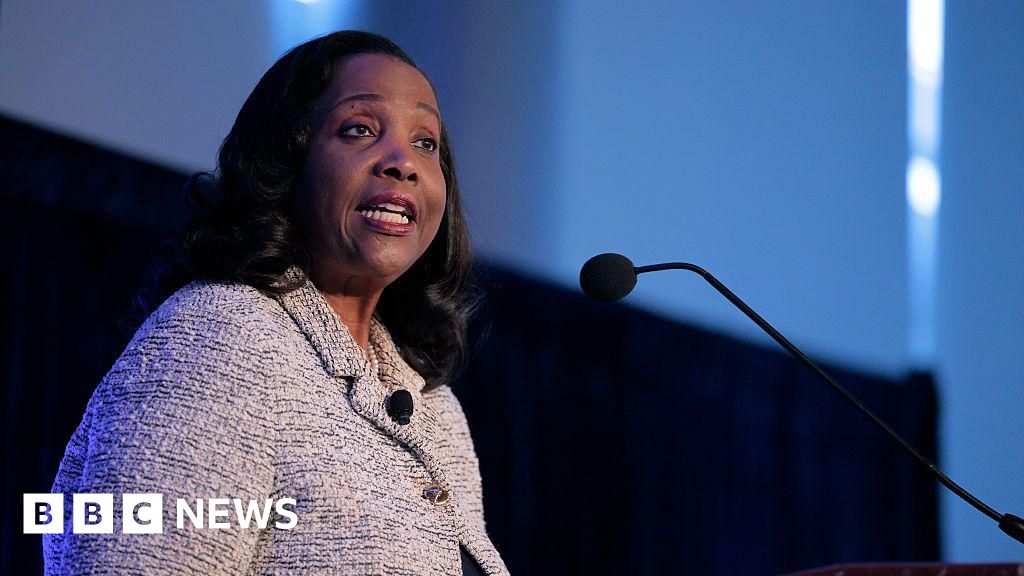
Trump in August said he was removing Federal Reserve governor Lisa Cook, accusing her of engaging in mortgage fraud, which she has denied.
Cook has argued she did not receive due process to dispute those claims, which Fed defenders say were a pretext to allow Trump to assert more control over the bank.
Justice Brett Kavanaugh, a conservative who was appointed by Trump, was among the justices to express sympathy with Cook’s arguments, asking: “What’s the fear of more process here?”
He later warned the administration’s interpretation of the law would “weaken, if not shatter, the independence of the Federal Reserve”.
‘Quite a big mistake’
By law, a president can only remove governors of the Federal Reserve “for cause”.
That requirement was intended to shield the central bank from political pressure and allow it to make policy independently.
The White House contends it has met that bar, accusing Cook of filing mortgage forms claiming two different principal residences at the same time. Banks typically offer lower interest rates for primary homes.
The Trump administration has asked the court to allow the president to remove Cook, a move lower courts had blocked while the case played out.
“Even if it’s inadvertent or a mistake, it’s quite a big mistake,” said solicitor general D John Sauer, who was arguing the case for the administration.
He said such conduct could undermine confidence in the bank and that courts were bound to defer to the president’s judgement when it comes to finding a cause.
He dismissed questions about process, noting that Trump had alerted Cook to the issue on social media before formally firing her.
“There was a social media post,” he said. “And the response was defiance.”
‘Nothing criminal whatsoever’
Cook has denied committing fraud.
In a November letter to the Justice Department, her lawyers said the claims were based on “cherry-picked, incomplete snippets of the full documents”.
They said there was “one stray reference to primary residence” in a mortgage application for an apartment in Alabama, but noted that the file also contained “truthful and more specific disclosures about the property’s use”.
“There is no fraud, no intent to deceive, nothing whatsoever criminal or remotely a basis to allege mortgage fraud,” her lawyers wrote.
Arguing on behalf of Cook, Paul Clement said people in her position should have the chance to present their evidence and be shielded from having a decision made in advance.
He said the administration’s interpretation of the law would make the protection that Congress intended by inserting the “for cause” requirement “toothless”.
Some justices indicated that they shared those concerns.
The “position that there’s no judicial review, no process required, no remedy available, very low bar for cause that the president alone determines – that would weaken if not shatter the independence of the Federal Reserve,” Kavanaugh said.
The lawsuit is seen as high stakes, given swirling debate about Trump’s efforts to influence the Fed, which he wants to lower interest rates more aggressively to boost economic growth.
Federal Reserve chairman Jerome Powell was among the officials expected to attend. He is facing his own criminal probe related to cost overruns during renovations of Fed properties – concerns he has called “pretexts”.
In other recent cases, the Supreme Court, which has a 6-3 conservative majority, has allowed the White House to proceed with firings.
But it has signalled that it views the Federal Reserve, which was designed to set policy independently from the White House, as different.
In a statement after the hearing, Cook’s lawyers said they were “hopeful” the court would recognise the importance of the Fed being able to operate free from political interference.
In her own statement, Cook said: “This case is about whether the Federal Reserve will set key interest rates guided by evidence and independent judgment or will succumb to political pressure.
“For as long as I serve at the Federal Reserve, I will uphold the principle of political independence in service to the American people.”
Several justices, including conservatives, indicated they were hesitant to greenlight Cook’s removal without courts having resolved issues like whether the mortgage filings, which were made before Cook was appointed, would meet the bar for a “for cause” firing.
“We know that the independence of the agency is very important and that that independence is harmed if we decide these issues too quickly and without due consideration,” said Justice Sonia Sotomayor, a liberal. “So to me, waiting to have at least the lower courts look at these issues first makes the most sense.”
“Is there any reason why this whole matter had to be handled by everybody… in such a hurried manner?” asked Justice Samuel Alito, a conservative.
Justice Amy Coney Barrett, another Trump appointee, pressed Sauer to explain what harm the president would suffer by waiting, noting that the court had been warned of potentially dire economic consequences of a decision that could weaken belief in the central bank’s independence.
“There’s a risk,” she said. “Doesn’t that counsel… caution on our part?”


UK upper house approves social media ban for under-16s

If Liverpool want to be successful, all roads lead through Szoboszlai

Iran releases protest toll, says 3,117 killed in ‘foreign-backed’ terrorism

-

 Entertainment1 week ago
X (formerly Twitter) recovers after brief global outage affects thousands
-

 Politics5 days ago
Saudi King Salman leaves hospital after medical tests
-

 Sports7 days ago
Pak-Australia T20 series tickets sale to begin tomorrow – SUCH TV
-
 Business6 days ago
Trump’s proposed ban on buying single-family homes introduces uncertainty for family offices
-

 Fashion5 days ago
Bangladesh, Nepal agree to fast-track proposed PTA
-

 Tech1 week ago
Two Thinking Machines Lab Cofounders Are Leaving to Rejoin OpenAI
-

 Tech6 days ago
Meta’s Layoffs Leave Supernatural Fitness Users in Mourning
-

 Tech5 days ago
Petlibro Offers: Cat Automatic Feeders, Water Fountains and Smart Pet Care Deals