

Politics
The robbery that shook Britain, the whole incident has come to light

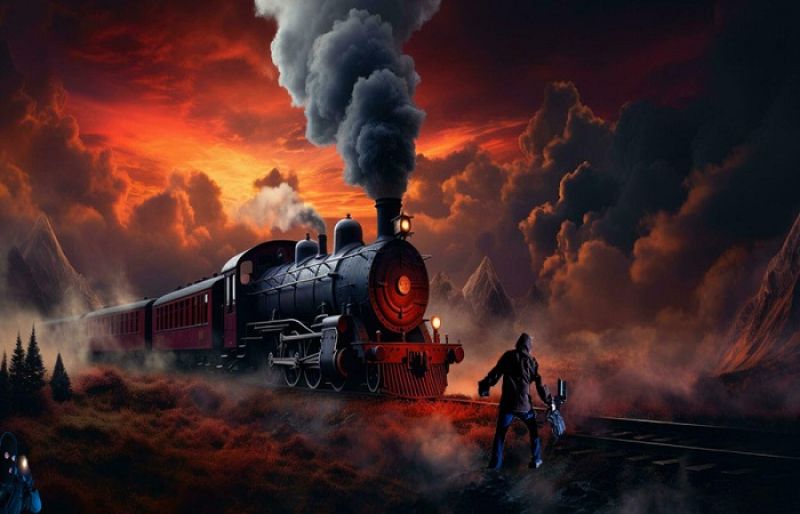

The Great Train Robbery was a planned robbery in which a group of 15 criminals managed to stop a Royal Mail train traveling from Glasgow to London and escaped with a huge amount of money. The train was carrying cash and valuables, with a total estimated value of 2.6 million pounds.
Planning and preparation:
The gang spent months planning the robbery. They had inside knowledge of Royal Mail operations and knew which route the train would take. They learned that the train would be carrying a large amount of cash on a specific date.
Signalman:
The robbers stopped the train near a place called Cheddington, Buckinghamshire. One member of the gang was working at the signal box, where he misled the train crew by changing the signal, diverting the train onto a deserted track where the robbers were waiting.
Train Hijacking:
The robbers quickly boarded the train, overpowering the crew. They used a combination of force and intimidation. There was little resistance from the crew as the criminals were well prepared. They took control of the train, which was carrying 75 tons of cash.
The loot:
The money was in the form of cash crates that weighed a lot. Despite the robbers’ best efforts to create a clear route, the loot was heavy, and it was not easy to move. They loaded the money onto a truck and fled the scene, heading to a remote location where they distributed the cash.
Escape route:
The robbers fled to a deserted farmhouse in the countryside where they hid for several days. They also used various false identities and changed their appearances to avoid detection.
Outcome and investigation:
Hunt:
The police launched a large-scale manhunt after the robbery. Initially, the robbers fled with it, and there was much speculation about their whereabouts. However, they made some key mistakes that ultimately led to their arrest.
Mistakes and Clues:
The criminals were careful, but left some evidence behind. For example, one gang member was caught while trying to deposit a large sum of money into a bank account under his real name. Additionally, some of the robbers were seen by witnesses, and this led to their eventual identification.
Arrest:
In the weeks and months following the robbery, police caught most of the gang members. Many were arrested and given long prison sentences. Some gang members were never caught, and the ultimate fate of some of the stolen money is still unclear.
Legacy:
The robbery was considered an incredible feat of planning and execution. It captured the public imagination and inspired numerous books, films, and documentaries. The criminals behind the robbery became notorious, many of them going down in history as some of Britain’s most notorious criminals.
Why it was so famous:
Planning and execution: The level of detail in the planning of the robbery, and how smoothly it was executed, was astonishing. It shows how well the criminals worked together and how carefully they studied the Royal Mail’s operations.
Scale of the theft: £2.6 million was a huge sum at the time. To put this into perspective, when adjusted for inflation, it’s over £50 million today.
Public attention: The story of the robbery captured the public imagination. The robbers were seen by some as folk heroes, and the media loved to cover the drama, especially with law enforcement pursuing the criminal masterminds.
Robbers:
Although the criminals who pulled off the Great Train Robbery were never organized crime “syndicates,” their crimes had ties to the criminal underworld. Most of them were involved in petty crimes such as theft or fraud. After the robbery, several were caught, tried, and sent to prison.

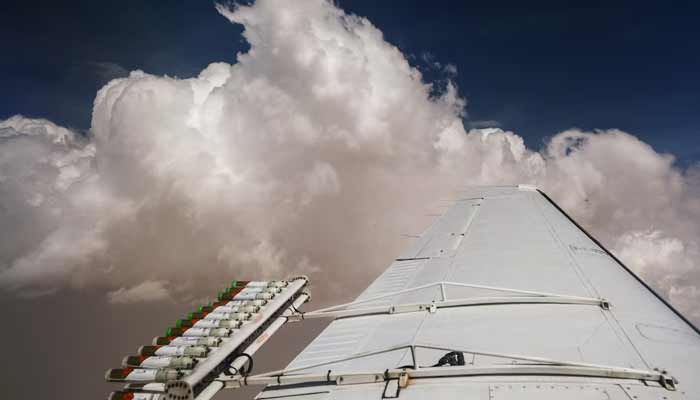
ABU DHABI: The United Arab Emirates (UAE) has launched a new research drive to increase rainfall through advanced cloud-seeding technology, offering grants of up to $1.5 million to scientists to help tackle water scarcity in the region.
The UAE’s National Centre of Meteorology (NCM) said three scientists from the United States, Germany, and Australia have been selected under the UAE Research Programme for Rain Enhancement Science. The winners were chosen from 140 proposals submitted by researchers from 48 countries.
Each recipient will receive up to $1.5 million spread over three years, with a maximum of $550,000 per year, to study environmentally friendly methods to improve artificial rain.
The selected scientists include Dr Michael Dixon from Echo Science Works in the US, Professor Linda Zou from Victoria University in Australia, and Dr Oliver Branch from the University of Hohenheim in Germany.
Their work will focus on using artificial intelligence, new cloud-seeding materials and land-based techniques to improve how clouds produce rain. UAE officials said AI will help identify the best clouds and increase efficiency.
The UAE receives very little natural rainfall and relies heavily on desalinated seawater. It already carries out hundreds of cloud-seeding flights each year.
Officials said the new research aims to support agriculture, strengthen water reserves and improve long-term water security in the country and the wider region.
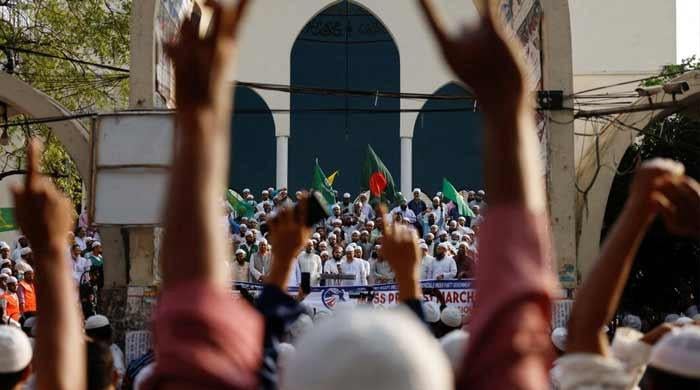
Bangladesh began official campaigning on Thursday for the hugely anticipated general elections next month, the first since the 2024 uprising ended the autocratic rule of Sheikh Hasina.
Tens of thousands of flags-waving supporters of key frontrunner Tarique Rahman of the Bangladesh Nationalist Party (BNP) crowded the streets of the northern city of Sylhet, chanting his name.
“We have liberated the country from autocratic rule,” prime ministerial hopeful Rahman, who returned to Bangladesh in December after 17 years in exile, told crowds of BNP loyalists. “Now we must establish the rights of the people.”
Rahman vowed to create jobs for “millions of unemployed youth” and support women’s economic independence.
Key rival Jamaat-e-Islami — the largest religious party in the Muslim-majority nation of 170 million — began its campaign in the capital Dhaka, after being crushed during Hasina’s 15 years in power.
Jamaat’s leader Shafiqur Rahman said he wanted to clamp down on corruption and build a nation where “people from all races, religions and communities will be treated equally”.
Among the sea of Jamaat supporters was Kakoli Akter, 36, who said it was the first election rally she had ever attended.
Although eligible to vote since 2008, she said this would be the first time she would cast a ballot, as she could finally support the party of her choice.
“We came here to pray for the party,” she said.
The South Asian nation votes on February 12 to elect 350 lawmakers, polls that will bring in new leadership after prolonged turmoil following the ouster of Hasina’s government, reshaping domestic politics and regional dynamics.
It comes against the backdrop of insecurity — including the murder last month of a student leader of the anti-Hasina protests — as well as warnings of a “flood” of online disinformation.
‘Progress of reform’
Rahman, 60, better known in Bangladesh as Tarique Zia, assumed leadership of the BNP following the death of his mother, former prime minister Khaleda Zia, who died in December at the age of 80.
Bangladesh, home to one of the world’s largest Muslim-majority populations, has a significant Sufi following, and the BNP’s Rahman followed tradition to launch his campaigns in Sylhet, home to the centuries-old shrine of Shah Jalal.
Jamaat-e-Islami began its campaign in the capital Dhaka.
Ideologically aligned with the Muslim Brotherhood, the Islamists are seeking a return to formal politics after years of bans and crackdowns.
The National Citizen Party (NCP), formed by student leaders who spearheaded the uprising, now allied with Jamaat, launched their campaign with its chief Nahid Islam urging voters to “carry forward the progress of reform”.
‘New Bangladesh’
Muhammad Yunus, the 85-year-old Nobel Peace Prize laureate, who returned from exile in August 2024 at the behest of protesters to lead a caretaker government as “chief adviser”, will step down after the polls.
Yunus said he inherited a “completely broken” political system, and championed a reform charter he argues is vital to prevent a return to authoritarian rule, with a referendum on the changes to be held on the same day as polling.
“If you cast the ‘yes’ vote, the door to building the new Bangladesh will open,” Yunus said on January 19, in a broadcast to the nation urging support for the referendum.
Earlier this month, he warned he was “concerned about the impact” a surge of disinformation could have.
“They have flooded social media with fake news, rumours and speculation,” Yunus said, blaming both “foreign media and local sources”.
Relations with neighbouring India have soured after Hasina escaped to her old ally New Delhi as protesters stormed her palace.
Hasina, 78, sentenced to death in absentia in November for crimes against humanity for the deadly crackdown on protesters in her failed bid to cling to power, remains in hiding in India.
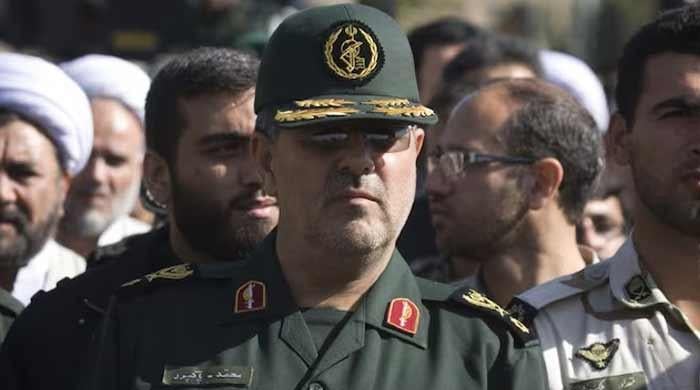
- IRGC commander warns Israel, US “to avoid any miscalculations”.
- Ready to carry out orders of supreme commander: commander.
- Pakpour warns Israel, US to learn from historical experiences.
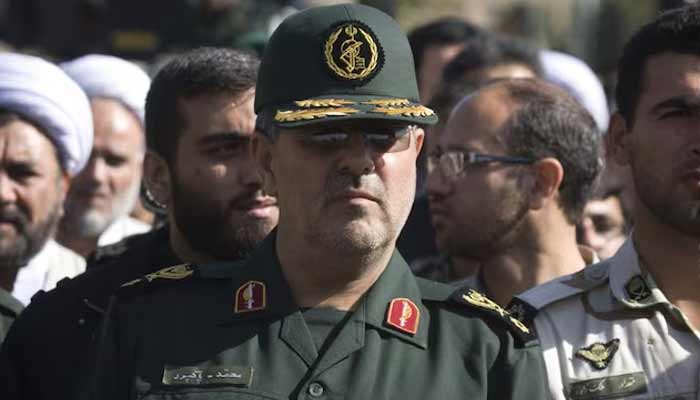
The commander of Iran’s Revolutionary Guards on Thursday warned Israel and the US against “miscalculations” in the wake of mass protests, saying the force had its “finger on the trigger”.
US President Donald Trump has repeatedly left open the option of new military action against the Islamic republic after Washington backed and joined Israel’s 12-day war in June.
A fortnight of protests starting in late December shook the clerical leadership under supreme leader Ayatollah Ali Khamenei, but the movement has petered out in the face of a crackdown that activists say has left thousands dead.
Guards commander General Mohammad Pakpour warned Israel and the United States “to avoid any miscalculations, by learning from historical experiences and what they learned in the 12-day imposed war, so that they do not face a more painful and regrettable fate”.
“The Islamic Revolutionary Guard Corps and dear Iran have their finger on the trigger, more prepared than ever, ready to carry out the orders and measures of the supreme commander-in-chief — a leader dearer than their own lives,” he said, referring to Khamenei.
His comments came in a written statement quoted by state television marking the national day in Iran to celebrate the Guards, a force whose mission is to protect the 1979 Islamic revolution from internal and external threats.
Pakpour took over as Guards commander last year after his predecessor Hossein Salami was one of several key military figures killed in an Israeli strike during the 12-day war, losses which revealed Israel’s deep intelligence penetration of the Islamic republic.
Giving their first official toll from the protests, Iranian authorities on Wednesday said 3,117 people were killed.
The statement from the Islamic republic’s foundation for martyrs and veterans sought to draw a distinction between “martyrs”, who it said were members of security forces and innocent bystanders, and what it described as “rioters” backed by the US.
Of its toll of 3,117, it said 2,427 people were martyrs.


Robert Kraft says NFL owners will ‘push like the Dickens’ to make sweeping schedule changes
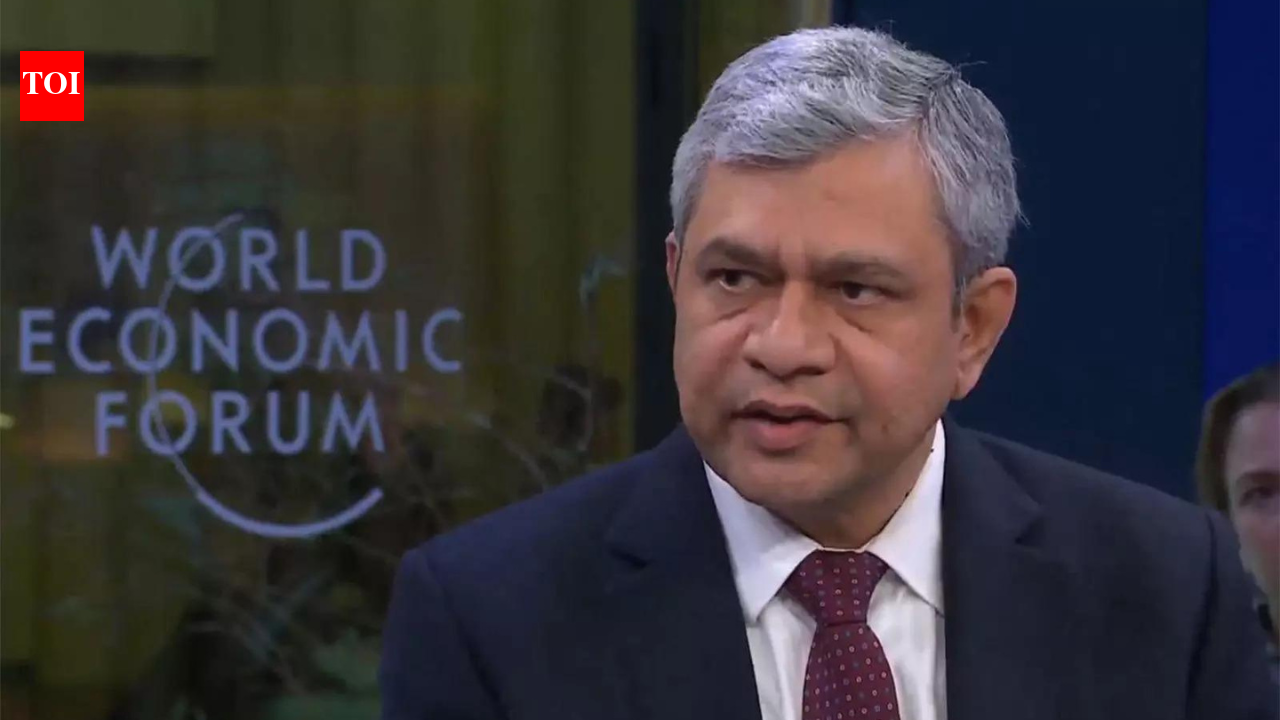
India–US trade talks: Vaishnaw sees Donald Trump’s optimism as ‘encouraging’; says India ‘deeply engaged’ – The Times of India

2026 Oscars snubs and surprises include Ariana Grande, George Clooney, Paul Mescal missing from nominees

-
 Politics6 days ago
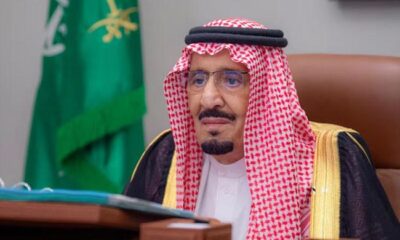
Saudi King Salman leaves hospital after medical tests
-
 Business6 days ago
Trump’s proposed ban on buying single-family homes introduces uncertainty for family offices
-
 Sports1 week ago
Pak-Australia T20 series tickets sale to begin tomorrow – SUCH TV
-

 Fashion5 days ago
Bangladesh, Nepal agree to fast-track proposed PTA
-

 Tech1 week ago
Two Thinking Machines Lab Cofounders Are Leaving to Rejoin OpenAI
-

 Tech7 days ago
Meta’s Layoffs Leave Supernatural Fitness Users in Mourning
-

 Tech5 days ago
Petlibro Offers: Cat Automatic Feeders, Water Fountains and Smart Pet Care Deals
-
 Fashion6 days ago
Whoop and Samuel Ross MBE unveil multiyear design partnership