

Business
Ever Seen A Saree Being Woven Live? This Bengaluru Area Lets You Do That

Last Updated:
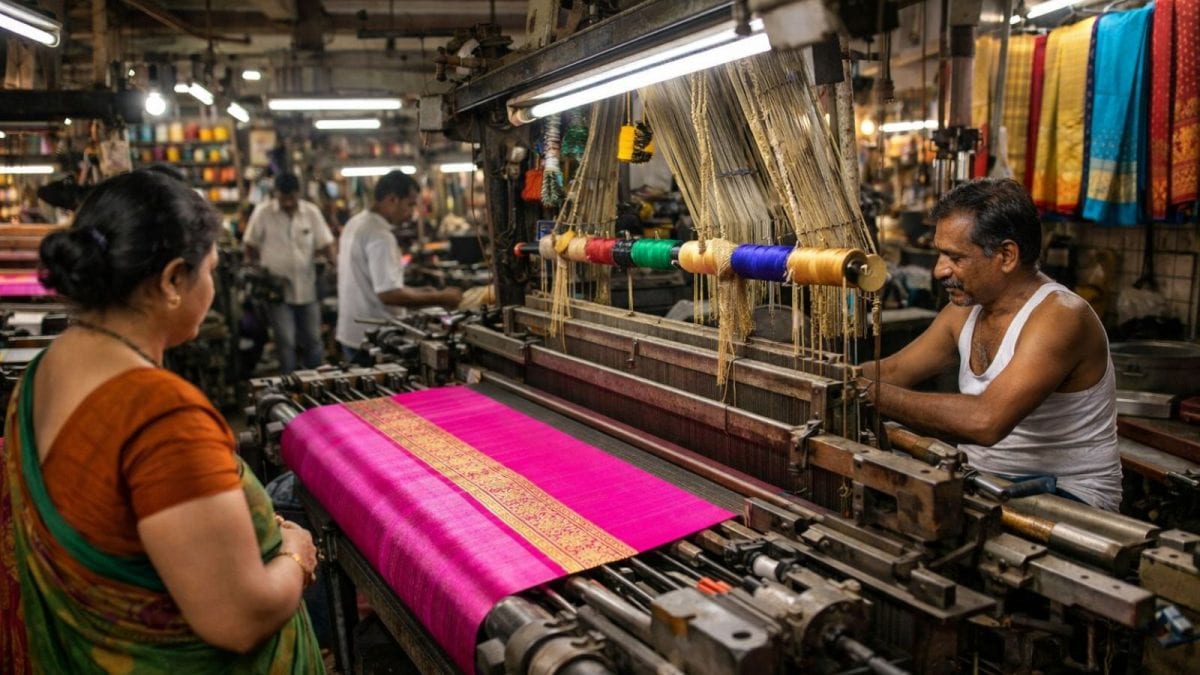
Step into one of the narrow units and you will see looms humming non-stop, spools of coloured yarn stacked against walls, workers adjusting threads with the focus of muscle memory.



For those who love sarees, Cubbonpete offers something rare, transparency. You see how your saree is made, who makes it, and how much work goes into every fold. Image: AI
In the middle of Bengaluru’s rush, between honking autos, wholesale lanes and half-hidden bylanes, there is a place where time slows down to the rhythm of clacking looms. Cubbonpete does not announce itself. You stumble into it. And suddenly, you are watching a saree come alive thread by thread.
Tucked near KR Market and Chickpet, Cubbonpete is one of the city’s oldest weaving clusters. The area is home to power looms that produce everything from everyday synthetic sarees to silk blends, cotton-silk mixes and festive fabrics.
This is not a retail street. It is a working neighbourhood that is noisy, warm, unapologetically industrial, where sarees are still made in real time.
Step into one of the narrow units and you will see looms humming non-stop, spools of coloured yarn stacked against walls, and workers adjusting threads with the focus of muscle memory. Patterns are not just designed here; they are executed live, metre by metre.
Watching A Saree Being Born
What makes Cubbonpete special is not just the price or the variety. It is the experience. Buyers can stand next to a loom and watch their saree being woven. The colours they chose roll out slowly, the border takes shape, the pallu reveals itself inch by inch.
For many, this is the first time they understand what goes into making a saree — the coordination, the patience, the precision. It changes the relationship between buyer and fabric. This is no longer just a garment pulled off a rack. It is something you saw being made.
Bulk Orders And Wholesale Culture
Cubbonpete largely works on bulk orders. Most weavers and unit owners cater to retailers, boutique owners and traders who place large quantity requests. A single design may be woven in dozens or hundreds of pieces.
This means it is not the easiest place for someone looking to buy just one saree. Walk-in retail is rare. But if you know a wholesaler, or if you are willing to place a small bulk order for weddings or functions, doors open. And once they do, the experience is worth the effort.
The range here is wide. Synthetic sarees dominate daily production, but silk blends, cotton silks and festive fabrics are also woven depending on demand. Designs are often customised colour changes, border tweaks, pallu variations, all discussed on the spot.
Prices are lower than retail stores because there is no showroom mark up. What you pay for is fabric and labour, not air conditioning and display lighting.
A Living Craft In The City’s Heart
Cubbonpete is a reminder that Bengaluru is not just a tech city. It is also a manufacturing city, a trading city, a place where traditional livelihoods still survive between flyovers and metro lines.
For those who love sarees, Cubbonpete offers something rare, transparency. You see how your saree is made, who makes it, and how much work goes into every fold.
You may not walk out with a single neatly packed saree bag. But you walk out with something else – the quiet joy of having witnessed creation, right in the heart of the city.u
January 26, 2026, 16:53 IST

Stay Ahead, Read Faster
Scan the QR code to download the News18 app and enjoy a seamless news experience anytime, anywhere.

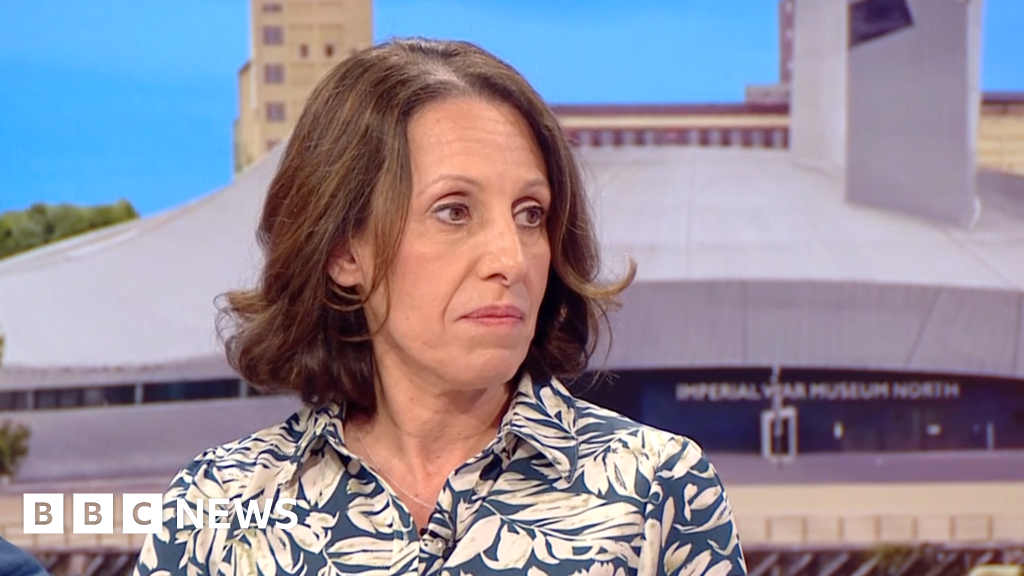
Co-op chair Debbie White said: “We thank Shirine for her leadership and for the significant contribution she has made to our Co-op, to our communities and to the co-operative movement during her tenure. The Board is grateful for her commitment and leadership, particularly during a challenging few years, and we wish her every success in the future.”

Air travel is all set to become highly expensive as the airlines are indicating at doubling the air ticket prices following a whopping increase in jet fuel rate.
The jet fuel price has rocketed to Rs417 from Rs388 per litre in Pakistan and the airlines have started to increase the airfares through enhancing fuel surcharge rates.
The airlines maintained the basic fare but added the fuel price surge into the fuel surcharge.
The one-way fare from Karachi to Islamabad and Lahore has shot up to Rs40,000 while air travel on chance seats for Islamabad and Lahore has soared by 150 percent.
Accordingly, the Pakistan International Airlines (PIA) has boosted the airfares by 10 to 100 dollars.
Domestic flights will now carry additional $10 fuel surcharge which on Canada routes extra $100 will be received as fuel charge.
Passengers on UK-bound flights to pay 75 dollars additional surcharge while 50 dollars will be received on Middle East routes.
Private airlines have gone a step ahead as they enforced charging additional 15 dollars to 150 dollars on different routes.
The airlines were under pressure after closure of many air routes with the airlines administrations are saying that extraordinary rise in airfares has become inevitable.
Earlier on Wednesday, Pakistan fuel NOTAM forced foreign airlines to tanker Jet A-1 fuel from abroad and limit uplift at Karachi and Lahore airports.
The Pakistan Airports Authority issued the order to protect local supplies amid supply disruptions.
Foreign carriers now arrive with enough fuel for their return flights while Pakistani airlines receive full requirements.
This change hit operations on March 25 when one Karachi-to-Doha flight diverted to Muscat.
The Pakistan fuel NOTAM A0147/26 took effect on March 13 and runs through March 31 2026. It targets Jinnah International Airport in Karachi and Allama Iqbal International Airport in Lahore.
Airlines follow the rule and carry maximum fuel on inbound legs. Officials confirm foreign airlines get only the minimum quantity inside Pakistan.
Pakistan fuel NOTAM creates immediate changes on the ground. Foreign airlines offload passenger baggage and cargo to stay within weight limits.
The extra fuel adds weight that reduces payload capacity on every affected flight.
According to a Notice to Airmen (NOTAM) issued by the PAA, the supply of aviation fuel at domestic airports has been significantly curtailed due to regional supply chain disruptions, advising international carriers to maximize their fuel “uplift” at foreign stations and minimize refuelling within Pakistan.
The directive has already begun to impact international flight schedules.

The government-backed bank has been accused of a series of errors, including not paying bereaved families money that was rightfully theirs.
Source link


2026 NFL draft team needs: Depth chart holes, prospect fits

China’s coal-to-chemicals: Winning the Iran war energy crisis

King Charles hopes for peace in new message as US tour hangs in balance

Sales at US apparel, clothing accessories stores up 4% YoY in Jan 2026

Justice Department Says Anthropic Can’t Be Trusted With Warfighting Systems

March Madness 2026 – How to watch in SA, start time, schedule, TV channel for NCAA championship basketball tournament

-
 Fashion1 week ago
Sales at US apparel, clothing accessories stores up 4% YoY in Jan 2026
-
 Tech1 week ago
Justice Department Says Anthropic Can’t Be Trusted With Warfighting Systems
-

 Entertainment1 week ago
Val Kilmer revived 1 year after death through AI
-
 Sports1 week ago
March Madness 2026 – How to watch in SA, start time, schedule, TV channel for NCAA championship basketball tournament
-
 Business1 week ago
Stocks and pound rise as US rate call approaches
-
 Business1 week ago
Brits cashing in jewellery as gold price hits record high
-

 Politics1 week ago
Iran strikes Tel Aviv with cluster-warhead missiles in retaliation of Larijani’s martyrdom
-

 Tech1 week ago
Meta Is Shutting Down Horizon Worlds on Meta Quest