

Politics
Millions dig out after US snowstorm; subfreezing temperatures to persist

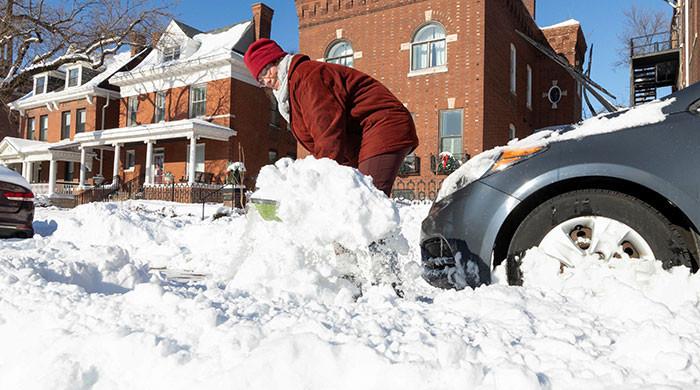
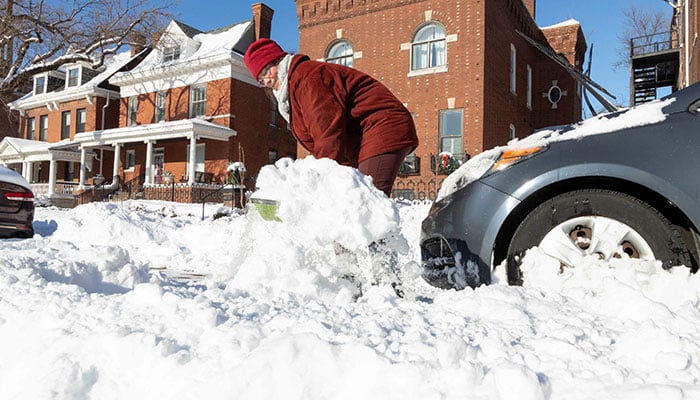
- Extreme cold grips millions as US digs out of deadly snowstorm
- Perilously cold temperatures kill 23 in US, knock out power
- Northern US to see mercury below freezing till Feb 1.
NEW YORK: Perilously cold temperatures threatened millions of Americans in the wake of a sprawling winter storm that left at least 23 people dead as it knocked out power and paralysed transportation.
A frigid, life-threatening Arctic air mass could delay recovery as municipalities from New Mexico to Maine tried to dig out following the storm, which dropped a vicious cocktail of heavy snow and wind, along with freezing rain and sleet.
Forecasters warned that much of the northern half of the country will see temperatures that are “continuously below freezing through February 1,” and “record low temperatures tonight across the South are particularly dangerous in the wake of the weekend winter storm with many still without power,” the National Weather Service said in an X post.
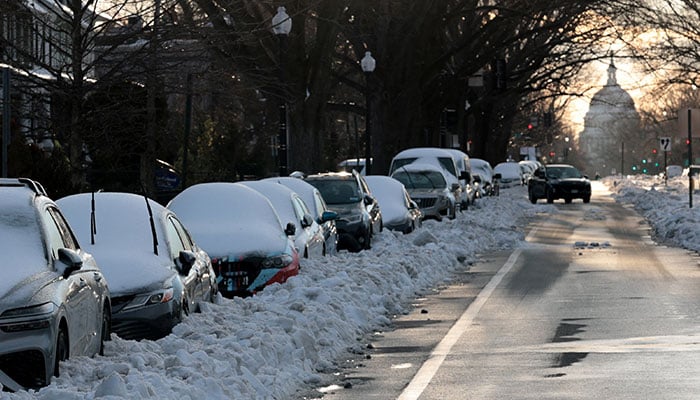
While skies began clearing in parts the country, relentless snowfall in the northeast meant parts of Connecticut saw over 22 inches (56 cm) of snow, with more than 16 inches (40.6 cm) recorded in Boston, Massachusetts.
The storm was linked to at least 23 deaths, according to a compilation of state government and local media reports, with causes including hypothermia as well as accidents related to traffic, sledding, ATVs and snowplows.
One man was found in the snow unresponsive with a shovel in his hand.
In New York City, eight more people were found dead amid plummeting temperatures, and an investigation to determine the causes was underway. It was not known if all of these fatalities were storm-related.
Electricity began blinking back on across the south but as of Monday evening well over 550,000 customers remained without it, according to the tracking site Poweroutage.com.
Tennessee, Mississippi and Louisiana — southern states unaccustomed to intense winter weather — were especially impacted.
Approximately 190 million people in the US were under some form of extreme cold alert, the National Weather Service (NWS) told AFP.
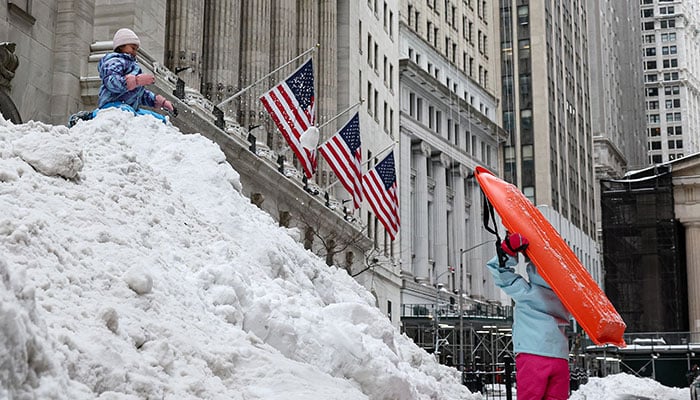
The Great Lakes region’s residents woke up to extreme temperatures that could cause frostbite on exposed skin within minutes. In parts of Minnesota and Wisconsin, the NWS reported early Monday morning temperatures as low as -23F (-30.6C), with windchills exacerbating the bite.
Over the weekend nearly half of the states in the contiguous US received at least a foot of snow (30.5 cm), and in many cases far more. The NWS said New Mexico’s Bonito Lake accumulated the highest US total over the weekend with 31 inches (78.7 cm).
Nashville Mayor Freddie O’Connell told journalists that trees were continuing to fall under the weight of encrusted ice across the Tennessee capital city —sometimes knocking out power that had already been restored.
Nashville and other municipalities across the country were establishing emergency warming shelters.
NWS meteorologist Allison Santorelli told AFP this storm recovery was particularly arduous because so many states were impacted — meaning northern states with more winter supplies were unable to share their resources with less-prepared southern regions.
“A lot of those locations don’t have the means or the resources to clean up after these events,” she said. “We’re particularly concerned about the folks in those areas that are without power right now.”
Polar vortex
At least 20 states and the capital Washington, were under states of emergency in order to deploy emergency personnel and resources.
The snowfall and biting icy pellets that pummeled cities left impassable roads along with cancelled buses, trains and flights — thousands of departures and arrivals were scrapped over the weekend.
The storm system was the result of a stretched polar vortex, an Arctic region of cold, low-pressure air that normally forms a relatively compact, circular system but sometimes morphs into a more oval shape, sending cold air pouring across North America.
Scientists say the increasing frequency of such disruptions may be linked to climate change, though the debate is not settled and natural variability plays a role.
Dave Radell, a NWS meteorologist based in New York, told AFP that the character of this storm’s snow was “very dry” and “fluffy,” meaning the wind could lash it around with ease, impeding roadway-clearing efforts and visibility.
“That makes it even more challenging,” he said.
Cold grips Texas
The state of Texas is currently under the grip of a severe cold wave, with Arctic winds, plunging temperatures and freezing precipitation continuing to disrupt daily life across major cities including Dallas, Austin and Houston. Economic and routine activities have largely slowed to a halt as winter conditions tighten their hold.
In North Texas, particularly across the Dallas–Fort Worth metroplex, the cold remains intense despite clear skies. Ice lingers on roads and surfaces, temperatures hover around the freezing mark, and the presence of black ice has made travel hazardous.

Authorities continue to warn motorists of dangerous driving conditions, especially during early morning and nighttime hours.
Central Texas, including the Austin area, is also experiencing persistent cold winds. While daytime temperatures show slight improvement, nights bring a sharp drop, creating conditions favourable for refreezing and icy surfaces. Residents have been advised to remain cautious as temperatures fluctuate near freezing levels.
In Houston and across Southeast Texas, the cold is comparatively less severe, but high humidity has amplified the chill. Rainfall followed by falling temperatures has raised concerns about ice formation, particularly overnight and during the early morning hours, adding to the region’s weather-related risks.

Meteorologists say the weather across Texas is likely to remain unstable in the coming days. Of particular concern is the period from Friday night into Saturday morning, when North and Central Texas could again see freezing rain and ice accumulation. Such conditions could further worsen road safety and disrupt travel.
In Dallas, forecasters warn of the possibility of ice returning after rainfall on Friday, while Austin faces a similar risk of freezing rain during the same timeframe. In Houston, although the threat is lower, light icing toward the weekend cannot be ruled out as colder air moves south.
State weather officials have urged residents to exercise caution, avoid non-essential travel, and closely monitor weather updates over the next several days.
Meanwhile, due to deteriorating weather conditions that began on Friday, education authorities have announced school closures through Tuesday. Given the ongoing state of the roads and the forecast for renewed icing, further extensions of these closures are increasingly likely.
— With additional input by Raja Zahid Akhtar Khanzada
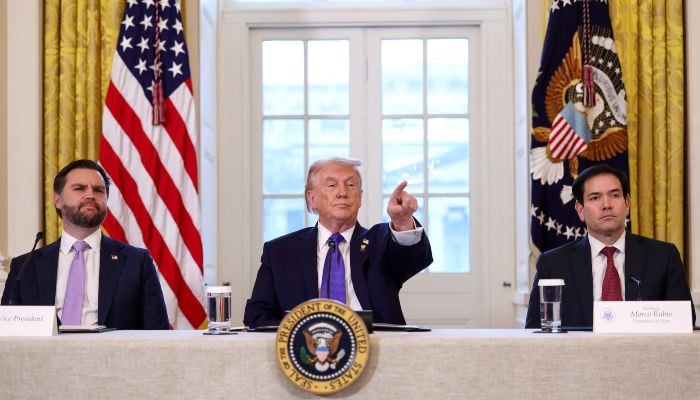
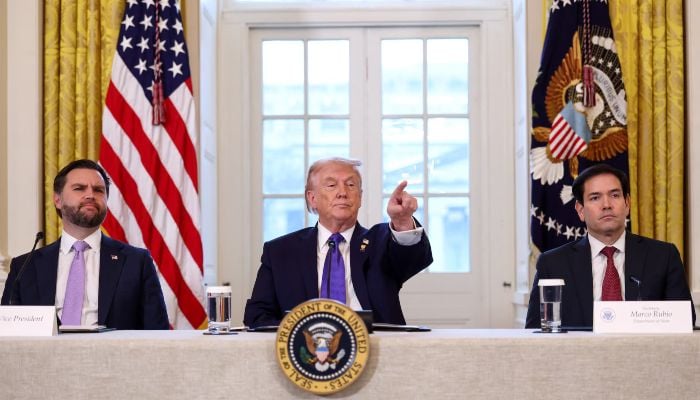
WASHINGTON: As the war in Iran threatens to imperil President Donald Trump’s legacy, the political stakes also are rising for two of his top lieutenants: Vice President JD Vance and Secretary of State Marco Rubio.
The pair, widely viewed as potential successors to Trump, have been thrust into still-developing negotiations to end the war at a moment when the Republican Party is already weighing its post-Trump future.
Vance has taken a cautious approach, reflecting his scepticism toward prolonged US military involvement, while Rubio has aligned himself closely with Trump’s hawkish stance and emerged as one of the administration’s most vocal defenders of the campaign.
Trump has said both men were involved in efforts to force Iran to accept US demands to dismantle its nuclear and ballistic missile programs and allow oil traffic to pass freely through the Strait of Hormuz.
With the next presidential election due in 2028 and term limits barring Trump from running again, the president has been putting the succession question to allies and advisers in private, asking “JD or Marco?” two people familiar with his views said.
The outcome of the US military operation now in its fifth week could shape the two men’s 2028 prospects, political analysts and Republican officials said. A swift end to the war that favours the US might bolster Rubio, who also serves as Trump’s national security adviser and could be seen as a steady hand during a crisis. A prolonged conflict could give Vance space to argue he reflected the anti-war instincts of Trump’s base without openly breaking with the president.
Trump’s own standing is also at stake. His approval rating fell in recent days to 36%, its lowest point since he returned to the White House, hit by a surge in fuel prices and widespread disapproval of the Iran war, a four-day Reuters/Ipsos poll completed last week found.
Some Republicans say they are watching closely for which senior aide Trump appears to favour as the Iran conflict unfolds. Some see signs of Trump leaning toward Rubio but note he could change his mind quickly.
“Everyone is watching the body language that Trump makes on Rubio and not seeing the same on Vance,” a Republican with close ties to the White House said.
The White House rejected the idea that Trump is signalling a preference.
“No amount of crazed media speculation about Vice President Vance and Secretary Rubio will deter this administration’s mission of fighting for the American people,” spokesman Steven Cheung said.
From Trump rivals to likely heirs
Vance, 41, a former Marine who served in Iraq, has long argued against US entanglements in foreign wars. His public comments on Iran have been limited and calibrated, and Trump has noted the two have “philosophical differences” on the conflict.
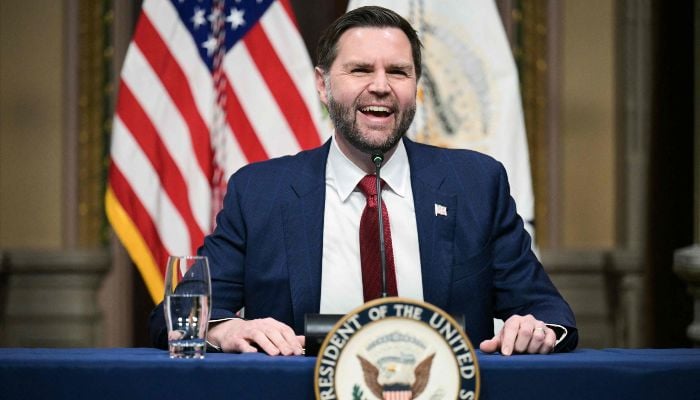
Once a self-described “never-Trumper,” Vance wrote an opinion piece in the Wall Street Journal in 2023 saying Trump’s best foreign policy was not starting any wars during his first four years in office between 2017 and 2021.
The White House has downplayed any rift between the president and vice president. Standing alongside Trump in the Oval Office earlier this month, Vance said he supported Trump’s handling of the war and agreed with him that Iran should not obtain a nuclear weapon.
Vance could take on a more direct role in negotiations if Trump’s special envoy Steve Witkoff and son-in-law Jared Kushner make sufficient progress, a person with knowledge of the matter said.
“Vice President Vance is proud to be a part of a highly effective team that, under President Trump’s bold leadership, has had incredible success in making America safer, more secure and more prosperous,” a Vance spokeswoman said.
A senior White House official, who like others in this story was granted anonymity to speak freely about a sensitive topic, said Trump tolerates ideological differences as long as aides remain loyal, adding that Vance’s sceptical views have helped inform Trump about where part of his voter base stands.
A person familiar with Vance’s views told Reuters the vice president will wait until after the November midterm elections before deciding on whether to run in 2028.
Rubio, 54, has said he will not run for president if Vance does, and sources familiar with Rubio’s views say he would be content as Vance’s running mate.
But any perceived vulnerability for Vance could encourage Rubio and other Republicans eyeing bids.
“Trump has a long memory,” said Republican strategist Ron Bonjean. “And he may call out Vance for his lack of allegiance. And if Trump remains popular with the MAGA base, that could hurt him by not getting the endorsement of the president.”
Trump has floated the idea of Vance and Rubio running together, suggesting they would be hard to beat.
“Trump doesn’t want to anoint anyone,” the senior White House official said.
A March Reuters/Ipsos poll found that 79% of Republicans have a favourable view of Vance, while 19% viewed him negatively. Some 71% had a positive view of Rubio, while 15% viewed him unfavourably.
In comparison, 79% of Republicans viewed Trump favourably and 20% unfavourably.
Rubio, whose 2016 presidential aspirations were snuffed out after a bitter confrontation with Trump, has long since set aside any frictions with the president.
State Department spokesman Tommy Pigott said Rubio “has a great relationship, both professionally and personally” with Trump’s team.
Rubio and the White House were forced into damage control after he angered some of Trump’s conservative backers when he suggested that Israel pushed the United States into the war. But in the weeks since, Trump has praised Rubio’s efforts.
Asked whether Rubio was concerned that a protracted war might damage his political future, a senior State Department official said, “He has not spent a second thinking about this.”
Differences on display
Matt Schlapp, a conservative leader who runs the Conservative Political Action Conference, said the Iran campaign will have big political consequences.
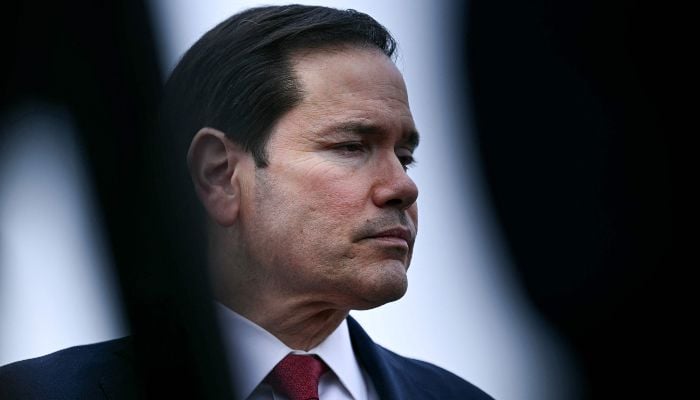
“If it is seen as successful at getting the job done…I think people will be politically rewarded for doing the right thing,” Schlapp said. “If it goes on and on and on… I think the politics are tough.”
Republicans remain broadly supportive of the US military strikes against Iran, with 75% approving compared to just 6% of Democrats and 24% of independents, Reuters/Ipsos polling showed.
At a televised Cabinet meeting on Thursday, the contrast between Rubio and Vance was on display.
Rubio gave a full-throated defence of Trump’s attack on Iran. “He’s not going to leave a danger like this in place,” the secretary of state said.
Vance was more measured, focusing on options for depriving Iran of a nuclear weapon. He closed by wishing Christians and US troops in the Gulf a blessed Holy Week and Easter.
“We continue to stand behind you,” he said to servicemembers, “and continue to support you every step of the way.”


CARACAS: Ousted Venezuelan president Nicolas Maduro and his wife, captured by US forces in a nighttime raid in January, said Saturday that they feel “steadfast” and “serene” in their first social media post from prison.
Maduro and his wife Cilia Flores have been held in a Brooklyn jail for almost three months, after American commandos snatched the pair from their compound in Caracas, and they have reportedly been without access to the internet or newspapers.
“We are well, steadfast, serene and in constant prayer,” the pair said in a message shared on Maduro’s X account, though it was unclear who made the post on their behalf.
“We have received your communications, your messages, your emails, your letters and your prayers. Every word of love, every gesture of affection, every expression of support fills our souls and strengthens us spiritually.”
A source close to the Venezuelan government told AFP that Maduro reads the Bible and is referred to as “president” by some of his fellow detainees in Brooklyn’s Metropolitan Detention Centre, a federal prison known for unsanitary conditions.
He is only allowed to communicate by phone with his family and lawyers for a maximum of 15 minutes per call, the source added.
His son, Nicolas Maduro Guerra, known as “Nicolasito,” has said in public appearances that his father is well, calm, and even exercising in prison.
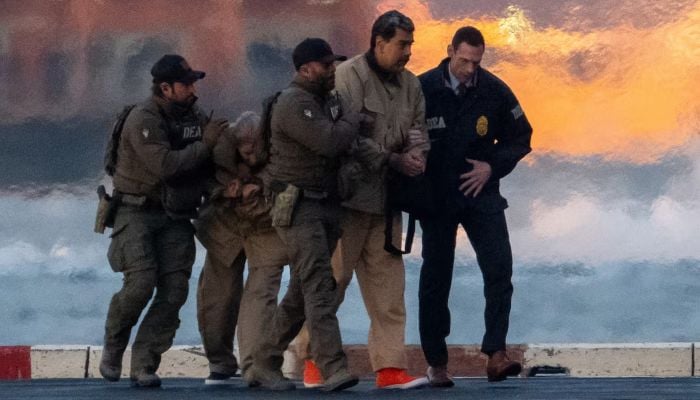
Maduro, who has declared himself a “prisoner of war,” had not spoken since being arraigned in New York on January 5.
“We feel a deep admiration for our people’s ability to remain united in difficult times, to express love, awareness, and solidarity, within Venezuela and beyond our borders,” the couple added in Saturday’s post.
During a one-hour hearing on Thursday, the judge rejected a defence motion over Maduro and his wife’s apparent inability to afford their legal bill without aid from the Venezuelan government. Neither spoke during the court appearance.
Maduro has pleaded not guilty to charges of “narco-terrorism” conspiracy, cocaine importation conspiracy, possession of machine guns and destructive devices and conspiracy to possess machine guns and destructive devices.

The January operation deposed Maduro, who had led Venezuela since 2013, forcing the oil-rich country to largely bend to US President Donald Trump’s will.
Delcy Rodriguez, who had been Maduro’s vice president since 2018, is now at the helm and grappling with leading a country saddled with the world’s largest proven oil reserves but an economy in shambles.
Since Maduro’s ouster, Rodriguez has enacted a historic amnesty law to free political prisoners jailed during his tenure and reformed oil and mining regulations in line with US demands for access to her country’s vast natural wealth.
This month, the State Department said it was restoring diplomatic ties with Venezuela in a sign of thawing relations.
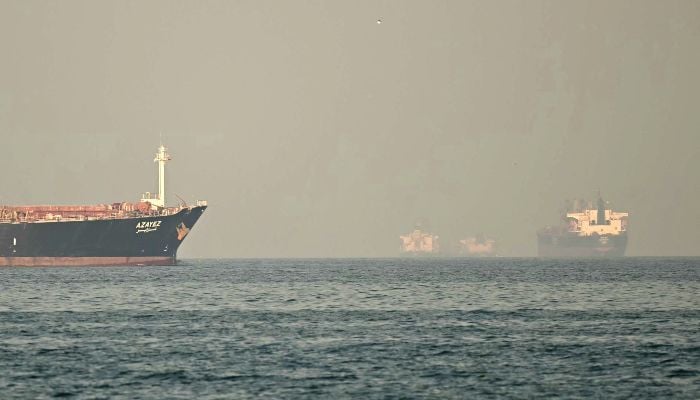
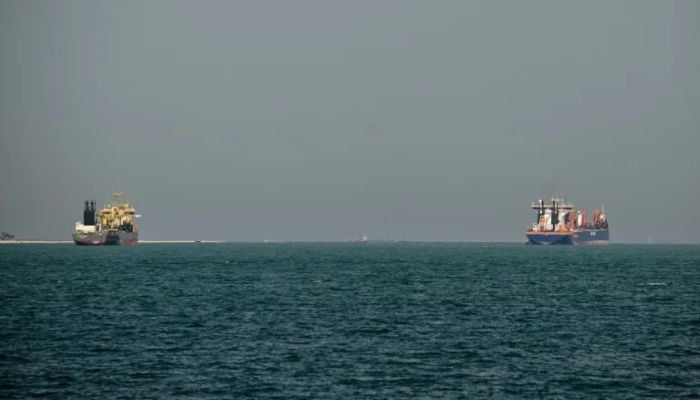
LONDON: Seafarers’ helplines say they are overwhelmed with messages from crews stuck in the Gulf by the Middle East war, desperately seeking repatriation, compensation and onboard supplies.
“Writing to urgently inform you that our vessel is currently facing a critical situation regarding provisions and one crew health conditions,” read an email from one seafarer on March 24 to the International Transport Workers’ Federation (ITF)’s Seafarer Support team.
“Immediate supply of food, drinking water, basic necessities is required to sustain the crew,” said the message to the team’s helpline.
The ITF said it had received more than 1,000 emails and messages from seafarers stuck around the Strait of Hormuz and the wider region since the war erupted with US-Israeli strikes on Iran on February 28.
Bomb strikes
Some sought to clarify what their rights are while navigating a war zone, while others sent videos of bombings striking next to their ship and asked the federation for help to get off board, according to ITF documents seen by AFP.
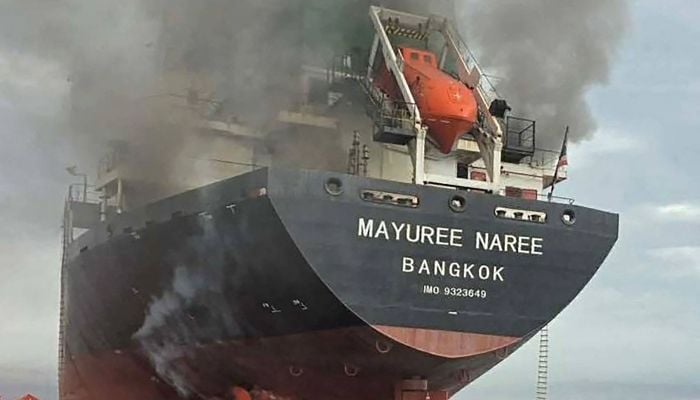
“It is an extraordinary situation, there is a lot of panic,” Mohamed Arrachedi, ITF’s Network Coordinator for the Arab World and Iran, in charge of handling requests from seafarers in the region, told AFP, describing the situation as “really shocking”.
“I get calls from seafarers at two o’clock, three o’clock in the morning. They call me the minute they have access to the internet,” Arrachedi said on Wednesday by telephone from Spain.
“One seafarer called in a panic, saying: ‘We are here bombed. We don’t want to die. Please help me, sir. Please get us from here.”
About 20,000 seafarers are currently stuck in the Gulf, according to the UN’s maritime body, known as the IMO, and at least eight seafarers or dock workers have died in incidents in the region since February 28.
All correspondence was shared with AFP on condition of anonymity, as the helpline guarantees confidentiality to seafarers.
War zone rights
The International Bargaining Forum (IBF), a global maritime labour body, has declared the area a war zone.
This normally gives seafarers exceptional rights, including repatriation at the company’s cost and double pay for those working on ships covered by IBF agreements — around 15,000 vessels worldwide, according to the ITF.
Despite this, many seafarers — especially on ships without such labour agreements — are reporting difficulties with getting repatriated.
In one email sent to the ITF on March 18, a seafarer said the ship’s operator was ignoring crews’ requests to leave, arguing that there were no flights from Iraq and refusing alternative routes.
“They are forcing us to continue to do cargo operations and STS (ship-to-ship operations) even (when) we raise our concerns about our safety and we are in war like area. They are keeping us in a position with no options,” read the email seen by AFP.
The International Seafarers’ Welfare and Assistance Network (ISWAN), another organisation operating a helpline, told AFP on Wednesday that it had seen “a 15-20% increase in calls and messages” since the start of the war, with a third relating to repatriation difficulties.
$16 a day
Another major concern is compensation.
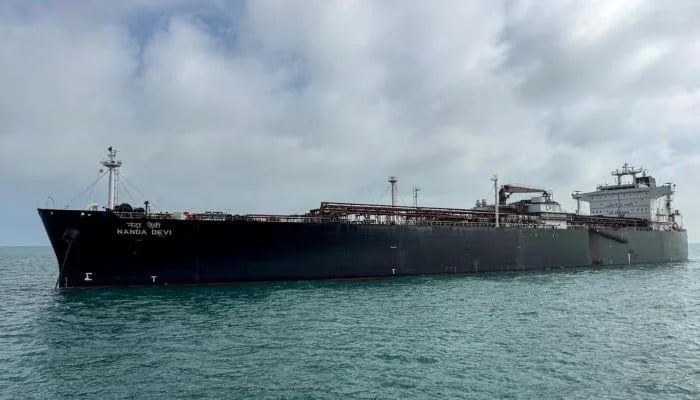
“About 50% of emails we receive concern pay,” Lucian Craciun, one of five members of ITF’s support team processing requests at the organisation’s headquarters in London, told AFP.
He said many seafarers choose to stay on board despite the dangerous conditions because they cannot afford to leave.
One email seen by AFP came from a seafarer asking to confirm whether his salary would go from $16 a day to $32 because he was in a designated war zone.
The ITF says such low salaries indicate that the shipowners do not have labour agreements in place to ensure decent pay.
Seafarers working under such arrangements are particularly at risk because their contracts often do not cover operations in war zones, and owners tend not to respond to requests from organisations such as the ITF, according to the support team.
When that happens, the ITF reaches out to the flag states and, if that does not work, to the state port authority where the vessel is located.
Arrachedi said that many such cases in the Gulf are still unresolved, with seafarers desperately awaiting responses from operators.


Taylor Swift, Olivia Rodrigo put rumours to rest after diss, legal woes

Meet Tahiti United, the soccer team that plays all of its games tomorrow
Indian Stock Markets: Stock market holidays: Dalal Street heads for holiday-shortened week amid Mahavir Jayanti, Good Friday – The Times of India

-
 Business1 week ago
Flipkart group CFO to leave co amid IPO plans – The Times of India
-

 Sports1 week ago
Rating Adidas’ 2026 World Cup away shirts: Argentina, Spain, Mexico and more
-

 Fashion1 week ago
China’s textile & apparel exports surge 17% to $50 bn in Jan-Feb 2026
-

 Sports1 week ago
American Conference Commissioner Tim Pernetti thanks Trump for Army-Navy game executive order
-

 Entertainment5 days ago
UN warns migratory freshwater fish numbers are spiralling
-

 Sports1 week ago
How to watch 2026 NCAA swimming and diving championships
-
 Business5 days ago
Property Play: Home flippers see smallest profits since the Great Recession, real estate data firm says
-

 Politics5 days ago
Afghanistan announces release of detained US citizen