

Fashion
Tiruppur poised for major export gains under India-EU FTA


With tariff disadvantages eliminated and a clearer regulatory framework in place, the India-EU FTA is likely to trigger a long-awaited structural shift in India’s textile trade dynamics. Industry stakeholders believe the pact will not only accelerate exports but also strengthen domestic manufacturing, MSMEs and employment-intensive clusters that form the backbone of India’s apparel ecosystem.
The India-EU FTA positions Tiruppur at the forefront of India’s apparel export growth by restoring tariff parity in Europe.
Industry experts say Tiruppur has a clear edge to rapidly scale apparel exports under the FTA.
Zero-duty access is expected to drive higher order volumes, fresh investments and deeper integration of Tiruppur’s MSMEs into global apparel supply chains.
Tiruppur, India’s flagship knitwear and RMG export hub, stands at the centre of this opportunity. The cluster records annual exports exceeding ₹45,000 crore (~$4.9 billion) and employs over one million workers, nearly 70 per cent of whom are women.
Long seen as a symbol of MSME-led and sustainability-driven growth, Tiruppur has consistently advocated duty-free access to the EU. Exporters now believe the FTA could help scale up shipments, modernise infrastructure and deepen the cluster’s integration into global supply chains.
R Sabhari Girish, chief sustainability officer at Sulochana Cotton Spinning Mills in Tiruppur, described the agreement as a defining moment for the sector. He said, “India-EU FTA is indeed mother of all deals. Especially for RMG it would be a breakthrough. We already have FTA with Australia, Japan, the UAE and New Zealand, but we could not generate sizeable business in these countries as these were not our traditional market. However, FTA with the UK and EU are different as we have already established a relationship in these markets. When FTA comes into force, India will have an edge over our peers, as we are self-reliant on raw materials. Our dependency on raw materials from other countries are far less and it is an ‘advantage India’ situation now.”
Despite competitors such as Bangladesh, Cambodia, Vietnam and Turkiye enjoying duty-free access to the EU, Indian exporters have managed to remain competitive. Girish noted, “Currently Bangladesh, Cambodia, Vietnam and Turkiye are enjoying duty free benefits with EU and still we can compete with them and have secured fourth place on our exports to Europe. EU’s RMG market size is expected to be around $105 billion and with FTA coming into force, we expect substantial growth on our exports to EU, where the exports is expected to grow from existing $5 billion to almost $9 billion. Unlike other FTAs, India-EU FTA benefits both EU and India, so Europe is committed to enhance its sourcing from the Indian subcontinent.”
Echoing similar optimism, N Thirukkumaran, chairman of Ess Tee Exports India Pvt Ltd in Tiruppur, said, “It is a game changer for apparels as it is under zero duty, and this will help the RMG to Europe to grow very significantly in the next 2-3 years and diversify our market share. Tiruppur, one of India’s largest sustainable and environmentally friendly apparel manufacturing clusters, stands to benefit immensely from this trade deal.”
As the FTA moves towards implementation, industry leaders believe Tiruppur’s established buyer relationships, sustainability credentials and raw-material self-reliance place it in a strong position to capitalise on the opportunity.
Fibre2Fashion News Desk (CG)












According to the March 2026 cotton production estimate report released by Vinay K Kotak, president of the Cotton Association of India (CAI), higher output is expected in Maharashtra and Andhra Pradesh, offsetting declines in Punjab and Rajasthan. Maharashtra alone accounted for an upward revision of 4 lakh bales, indicating better yields and arrivals, while northern states reported marginal reductions.
CAI has raised India’s 2025-26 cotton output estimate to 320.5 lakh bales, supported by better crop prospects in Maharashtra and Andhra Pradesh.
Consumption was also revised higher, while imports were cut.
Despite increased supply and surplus, exports remain weak, indicating comfortable domestic availability and potential pressure on prices.
Alongside higher output, CAI has raised domestic cotton consumption for 2025–26 to 315.00 lakh bales, up by 10 lakh bales from earlier estimates, signalling improved demand from the spinning and textile industry. Consumption till February 28, 2026, is estimated at 131.25 lakh bales, reflecting steady mill activity despite fluctuating yarn demand globally.
On the trade front, cotton imports are now projected at 47.00 lakh bales for the season, down from the earlier estimate of 50 lakh bales, though still higher than 41 lakh bales recorded last year. Around 36 lakh bales had already arrived at Indian ports by end-February, indicating front-loaded imports amid tight domestic availability earlier in the season.
Exports, however, remain subdued. CAI has retained its export estimate at 15 lakh bales for 2025–26, lower than 18 lakh bales in 2024–25, reflecting reduced competitiveness of Indian cotton in the global market due to relatively higher domestic prices. Shipments till end-February are estimated at 7 lakh bales.
India’s total cotton supply for the ongoing season is estimated at 428.09 lakh bales, significantly higher than 392.59 lakh bales in the previous year. This includes opening stock of 60.59 lakh bales, revised production, and imports. Availability till end-February stood at 357.55 lakh bales, indicating ample supply in the domestic market.
The higher supply is expected to translate into a larger surplus. CAI has estimated an available surplus of 113.09 lakh bales by the end of the season, compared with 78.59 lakh bales last year, which could weigh on domestic prices unless export demand improves.
Despite the increase in output and supply, closing stock estimates have been revised downward by 9.50 lakh bales to 98.09 lakh bales for September 30, 2026. However, this remains substantially higher than last year’s closing stock of 60.59 lakh bales, pointing to comfortable inventory levels.
As of February-end, total stock was estimated at 219.30 lakh bales, including 75 lakh bales held by textile mills and 144.30 lakh bales with entities such as the Cotton Corporation of India (CCI), traders, and ginners. The CAI noted that it will continue to monitor crop progress and may revise estimates further in the coming months, depending on arrivals and market conditions.
Fibre2Fashion News Desk (KUL)
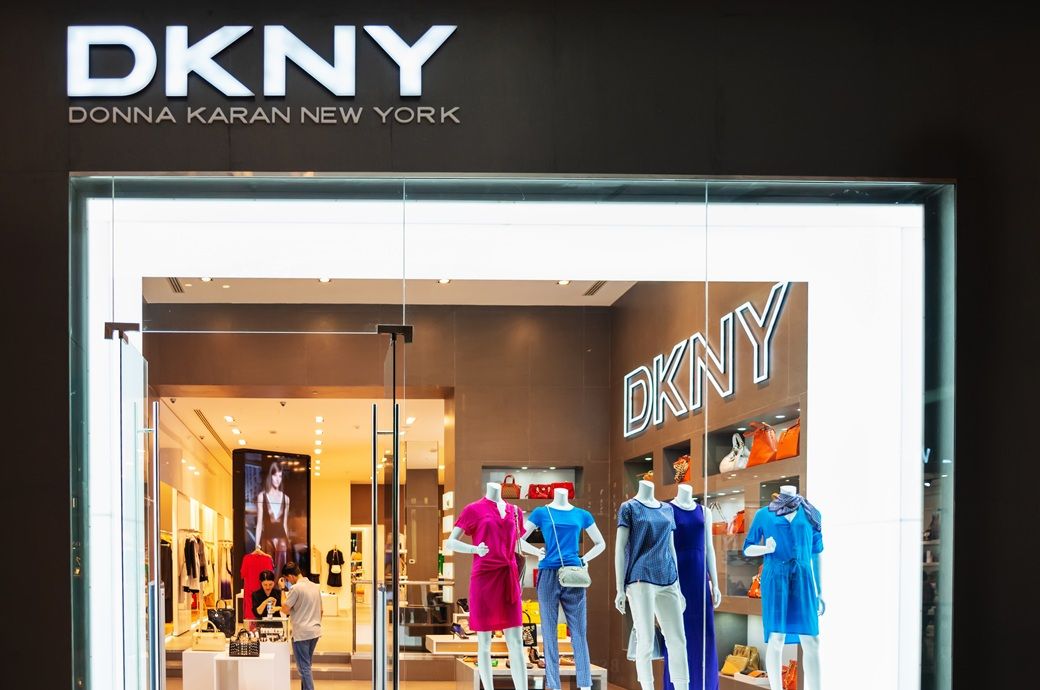
Despite the revenue drop, the company said its core owned brands recorded mid-single-digit growth, supported by stronger full-price sell-through and improving global brand relevance.
G-III Apparel Group has reported net sales of $2.96 billion in FY26, down 7 per cent YoY due to $254 million in lost PVH brand sales.
Net income fell to $67.4 million.
Owned brands posted mid-single-digit growth.
The company expects FY27 sales of about $2.71 billion amid exits from Calvin Klein and Tommy Hilfiger businesses, while focusing on cost savings and margin expansion.
Net income for FY26 fell to $67.4 million, or $1.51 per diluted share, compared with $193.6 million, or $4.20 per share, in the previous year. Results included $46.1 million in non-cash asset impairment charges and $17.5 million in bad debt expense, largely related to the bankruptcy of Saks Global, G-III said in a press release.
On an adjusted basis, non-GAAP diluted earnings per share (EPS) were $2.61, compared with $4.42 in fiscal 2025.
Meanwhile, in the fourth quarter (Q4), net sales decreased 8.1 per cent to $771.5 million from $839.5 million in the same quarter a year earlier. The company reported a net loss of $31.9 million, or $0.76 per share, in the fourth quarter, compared with net income of $48.8 million, or $1.07 per share, in the prior-year period. Quarterly results included $45 million in non-cash asset impairment charges and $17.5 million in bad debt expense linked mainly to the Saks Global bankruptcy.
Non-GAAP diluted EPS for the quarter were $0.3, compared with $1.27 in the same period last year.
G-III ended fiscal 2026 with cash and cash equivalents of $406.7 million, up from $181.4 million a year earlier. Inventories declined 3.8 per cent to $460 million. During the year, the company returned $54 million to shareholders, including $49.8 million through share repurchases and $4.2 million in dividends. To improve profitability, G-III has launched operational initiatives expected to deliver annual run-rate cost savings of $25 million by fiscal 2028.
Morris Goldfarb, G-III’s chairman and CEO said, “Fiscal 2026 was a pivotal year for G-III. The strength and global recognition of our brands, together with a disciplined operating model and strong balance sheet, enabled us to deliver solid performance despite a challenging environment. For the full year, our go forward portfolio produced strong results, led by our key owned brands, with higher quality revenue, improved full-price sell-throughs, and accelerating global relevance throughout the year. I am proud of the results our team delivered and the meaningful progress we made advancing our long-term strategy.”
Looking ahead, the company expects fiscal 2027 (FY27) net sales of around $2.71 billion, reflecting the loss of approximately $470 million in sales from Calvin Klein and Tommy Hilfiger businesses. Net income for FY27 is projected between $88 million and $92 million, translating to EPS of $2-2.1, compared with $67.4 million and $1.51 per share in FY26. For the first quarter of FY27, G-III expects net sales of about $530 million, down from $583.6 million in the same quarter last year, and forecasts a net loss of $13-18 million, or $0.3-0.4 per share.
Goldfarb added, “Looking to fiscal 2027, we are building on the momentum of our go-forward portfolio, which we expect to deliver high-single digit growth for the year, helping to offset the significant lost sales as we exit the Calvin Klein and Tommy Hilfiger businesses. We are focused on driving gross margin expansion while streamlining our cost structure to unlock productivity and profitability across the business. With over $400 million of cash on the balance sheet, we enter fiscal 2027 from a position of strength, giving us the flexibility to invest in our own business as well as strategic opportunities, while continuing to return capital to shareholders.”
Fibre2Fashion News Desk (SG)
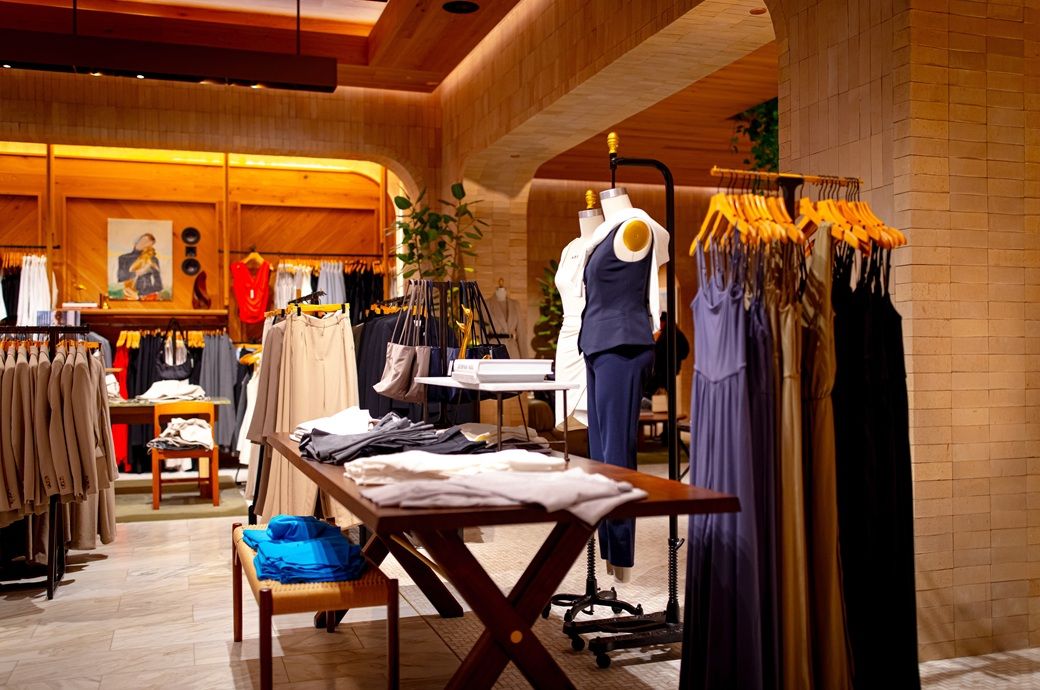
According to advance estimates released by the US Census Bureau, total retail and food services sales reached $733.5 billion in January 2026. The figure was down 0.2 per cent from December 2025 but rose 3.2 per cent compared with January 2025.
US retail trade sales in January this year were down by 0.2 per cent month on month (MoM) and up by 3 per cent year on year (YoY), according to advance estimates by the Census Bureau.
Sales at US apparel and clothing accessories increased by 4 per cent YoY in the month, while sales at furniture and home furnishing stores decreased by 3.5 per cent YoY.
Retail trade sales also declined 0.2 per cent from the previous month but increased 3 per cent on an annual basis, indicating stable consumer demand across several segments.
For the three-month period from November 2025 to January 2026, total retail sales increased 2.9 per cent compared with the same period a year earlier, showing moderate growth in consumer spending during the holiday and post-holiday season.
Among retail categories, nonstore retailers—which include e-commerce platforms—recorded the strongest growth, with sales rising 10.9 per cent YoY.
The monthly estimates are adjusted for seasonal variation and holiday and trading-day differences but are not adjusted for price changes, the Census Bureau said.
Fibre2Fashion News Desk (DS)


Tories set to force vote on scrapping fuel duty increase

CAI revises India’s 2025-26 cotton output upward to 320.5 lakh bales

Behind the band The Last Dinner Party's soaring success

Stock market crash today (March 12, 2026): Nifty50 opens below 23,600; BSE Sensex down over 900 points on continuing US-Iran war – The Times of India

Intertextile Shanghai 2026: Fringe events spotlight market trends

What time will NASA’s 600 kg satellite crash to Earth today— 14 years after launch?

-
Business6 days ago
Stock market crash today (March 12, 2026): Nifty50 opens below 23,600; BSE Sensex down over 900 points on continuing US-Iran war – The Times of India
-
 Fashion1 week ago
Intertextile Shanghai 2026: Fringe events spotlight market trends
-
 Entertainment1 week ago
What time will NASA’s 600 kg satellite crash to Earth today— 14 years after launch?
-

 Fashion1 week ago
German brand Adidas posts 13% revenue growth in 2025
-

 Fashion1 week ago
UK’s Topshop unveils Tolu Coker capsule collection
-

 Tech1 week ago
Meta Developed 4 New Chips to Power Its AI and Recommendation Systems
-
 Business1 week ago
US ignites Iran war, but Gulf Arab states pay the price | The Express Tribune
-

 Fashion1 week ago
India’s textile recycling market may reach $3.5 bn by 2030: Report