

Politics
Trump hopeful of Iran deal after Tehran warns of regional war

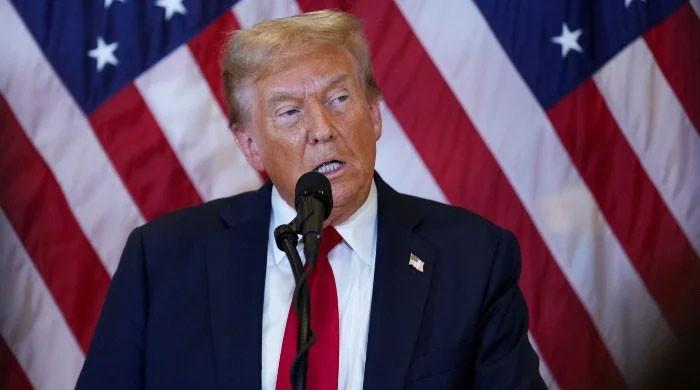
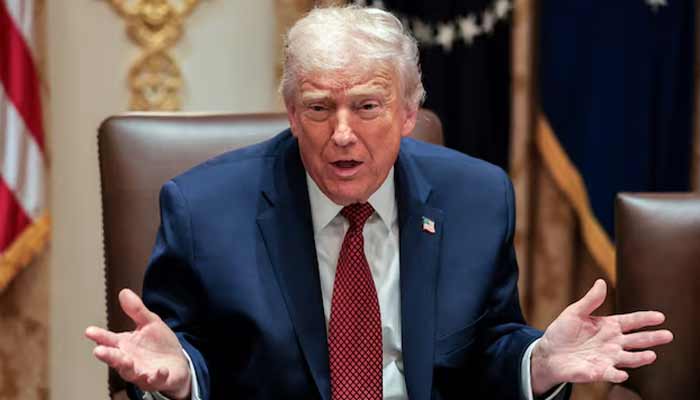
- Trump says deal possible as Iran warns of regional war.
- Khamenei warns US attack would trigger regional conflict.
- Iran frees protester on bail amid rising US tensions.
US President Donald Trump on on Sunday said he was hopeful of agreeing a deal with Iran after the country’s supreme leader warned that any US attack on the Islamic republic would trigger a regional war.
Following the Iranian authorities’ deadly response to anti-government protests that peaked last month, Trump has threatened military action and ordered the dispatch of an aircraft carrier group to the Middle East.
Iranian supreme leader Ayatollah Ali Khamenei on Sunday likened the recent protests to a “coup”, warning that a US attack would trigger a broad conflict.
“The Americans should know that if they start a war, this time it will be a regional war,” he said, telling Iranians they “should not be scared” of Trump’s rhetoric.
“They (rioters) attacked the police, government centres, IRGC centres, banks, and mosques, and burned the Koran[…] It was like a coup,” Khamenei said, adding that “the coup was suppressed”.
Asked about the Iranian leader’s warning, Trump told reporters on Sunday: “Of course he is going to say that.
“Hopefully we’ll make a deal. If we don’t make a deal, then we’ll find out whether or not he was right,” he said.
Iranian authorities nonetheless ordered the release of detained 26-year-old protester Erfan Soltani on bail, his lawyer said on Sunday, after Washington warned he was on death row and threatened an attack if any anti-government demonstrators were executed.
He was arrested in January for what Iran’s judiciary said were charges of propaganda against Iran’s Islamic system and acting against national security.
Washington had warned he was due to be executed, though Tehran said he had never been sentenced to death and that the charges against him did not carry the death penalty.
As tensions heightened between Iran and the US, Tehran’s Foreign Minister Abbas Araghchi on Sunday said he was concerned about “miscalculations” but said he believed Trump was “wise enough to make the correct decision”.
He said Iran has lost trust in the United States as a negotiating partner, adding that some countries in the region were acting as intermediaries to rebuild trust.
“So I see the possibility of another talk if the US negotiation team follows what President Trump said: to come to a fair and equitable deal to ensure that there is no nuclear weapons,” he said in an interview with CNN.
‘Terrorist’ designations
Tehran has acknowledged thousands of deaths during the protests, and on Sunday the presidency published a list of 2,986 names out of the 3,117 that authorities said were killed in the unrest.
Of the total, 131 have yet to be identified but their details will be released soon, it said in a statement.
Authorities insist most were members of the security forces and innocent bystanders, attributing the violence to “terrorist acts”.
However, the US-based Human Rights Activists News Agency (HRANA) said it has confirmed 6,713 deaths, mostly protesters.
The response prompted the European Union to list the Islamic Revolutionary Guard Corps (IRGC) as a terrorist organisation, with Iranian lawmakers retaliating on Sunday by slapping the same designation on European armies.
Lawmakers wore the green uniform of the Guards in a display of solidarity at the legislative session, where they chanted “Death to America”, “Death to Israel” and “Shame on you, Europe”, state television footage showed.
It remained unclear what immediate impact the decision would have.
The step matched similar classifications enacted by the United States, Canada and Australia.
Threats and dialogue
Firouzeh, a 43-year-old homemaker who declined to give her full name, said the recent tensions had left her “very worried and scared”.
“Lately, all I do is watch the news until I fall asleep. Sometimes I wake up in the middle of the night to check the updates,” she said.
IRGC official Ahmad Vahidi was quoted by the Mehr news agency as saying “enemies” sought to create a “war atmosphere”.
But Ali Larijani, head of Iran’s Supreme National Security Council, said on Saturday: “Contrary to the hype of the contrived media war, structural arrangements for negotiations are progressing.”
Trump also confirmed that dialogue was taking place, but without withdrawing his earlier threats, adding “we’ll see what happens”.
The US president previously said he believed Iran would make a deal over its nuclear and missile programmes rather than face military action.
Tehran, meanwhile, has said it is ready for nuclear talks if its missile and defence capabilities are not on the agenda.
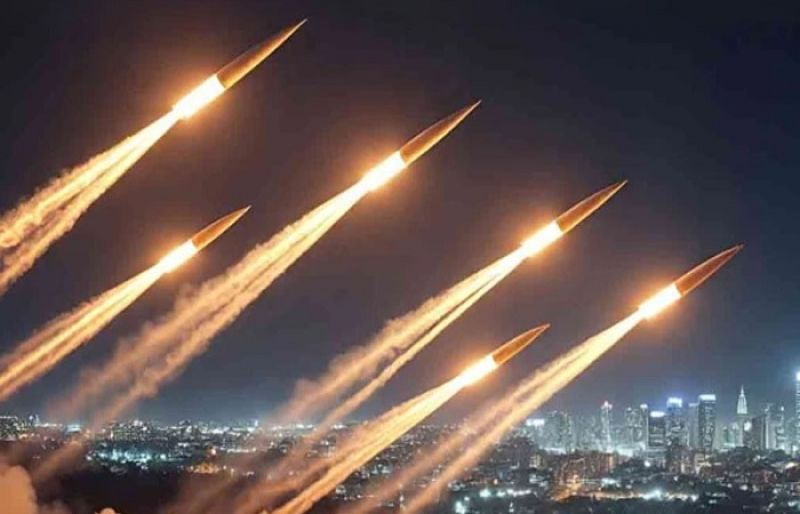

In a fresh wave of retaliatory strikes, the Islamic Revolution Guards Corps (IRGC) targeted the Israeli regime’s “secure” intelligence facilities in Tel Aviv.
The IRGC’s Public Relations Department said in a statement on Tuesday that it had carried out the 79th wave of its ongoing retaliatory Operation True Promise 4 against the Israeli and American targets.
Deploying powerful Kheybar Shekan, Emad, and Sejjil missiles alongside IRGC Aerospace Force kamikaze drones, the operation successfully breached the regime’s multi-layered air defense systems, the statement said.
The missiles, it stated, targeted Israel’s intelligence facilities in northern and central Tel Aviv, as well as military commercial and support centers in Ramat Gan and the Negev.
The missiles also hit Israel’s southern military logistics and command headquarters in Beersheba.
The missile strikes triggered widespread panic across Israel and forced the suspension of a Knesset (parliament) session on Tuesday.
“Plumes of thick smoke and fire engulfing the Israeli-occupied territories, while forcing over two million people into shelters, serves as undeniable evidence of Iran’s advanced missile and drone capabilities.”
Iran’s advanced missiles have once again demonstrated that the enemies’ “multi-layered defenses have been rendered ineffective.”
The IRGC further said that Israel’s systematic censorship and the Pentagon’s blackout on images of Iran’s precision strikes against US assets in the region, “expose the profound panic” of the two enemies and their “desperate attempts to conceal and manipulate the truth.'”
Iranian armed forces have been carrying out retaliatory attacks on US military assets in regional countries and on targets in the Israeli-occupied territories since Tel Aviv and Washington launched their joint military aggression against the Islamic republic on February 28.
In the last 25 days, Iranian Armed Forces have delivered a series of devastating strikes on enemy targets, effectively paralyzing the US air defense systems across the region.
- Family of US detainee urged Afghan leader to release him for Eid.
- Afghan top court deems detention sufficient, orders release.
- Coyle, 64, arrested by Afghan authorities in January 2025.
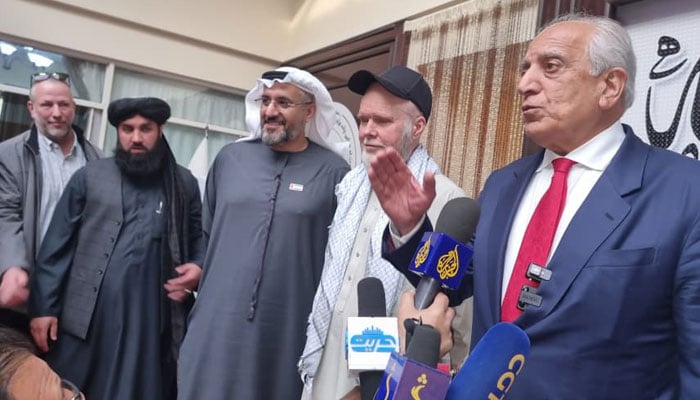
KABUL: Afghanistan’s Taliban government announced on Tuesday that it was freeing a US national who had been detained for more than a year.
The foreign ministry said the family of linguist and researcher Dennis Coyle had written to the supreme leader of Afghanistan, requesting his release for Eid.
“The Supreme Court of the Islamic Emirate deemed his period of detention sufficient and decided on his release,” a statement read.
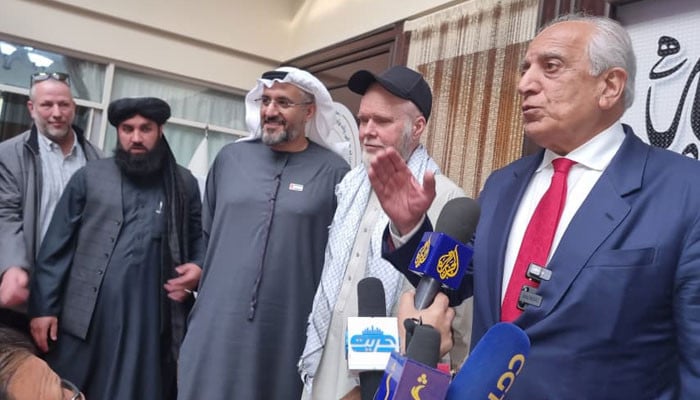
The announcement came after a meeting of Foreign Minister Amir Khan Muttaqi, US former special envoy to Afghanistan Zalmay Khalilzad, the UAE ambassador to Kabul Saif Mohammed Al-Ketbi, and a member of Coyle’s family.
The UAE facilitated the release, the ministry said, adding that Coyle had been reunited with his family in Kabul on Tuesday.
Coyle, 64, was arrested by the Afghan authorities in January 2025, according to the Foley Foundation, which advocates for the release of Americans taken hostage or arbitrarily detained abroad.
A website set up by his family, freedenniscoyle.com, said he was “legally working to support Afghan communities as an academic researcher” when he was detained.
They said he had been held in “near-solitary conditions, requiring permission even to use the bathroom, and without access to adequate medical care”.
Coyle first travelled to Afghanistan in the early 2000s “to survey Afghanistan’s rich linguistic diversity and help Afghan communities develop resources in their own languages”, they added.
“Throughout his years of service, Dennis maintained a home in Kabul and built deep, meaningful relationships with the Afghan people,” the website read.
“Those who know him speak with profound appreciation for both the man and his work. Dennis has always embraced Afghan culture with genuine warmth – sharing cups of traditional green tea, enjoying dried fruit snacks, and engaging in the kind of heartfelt conversations that bridge cultures.
“His love for the Afghan people isn’t just professional; it’s personal and deeply felt.”
Earlier this month, Secretary of State Marco Rubio said the United States had formally placed Afghanistan on its list of countries engaged in “wrongful detentions”.
The Afghan authorities called that “regrettable” and pointed to talks between the two sides and previous releases with mediators from Qatar.
In 2025, five American citizens were released in what the Taliban authorities said was a “goodwill gesture”.
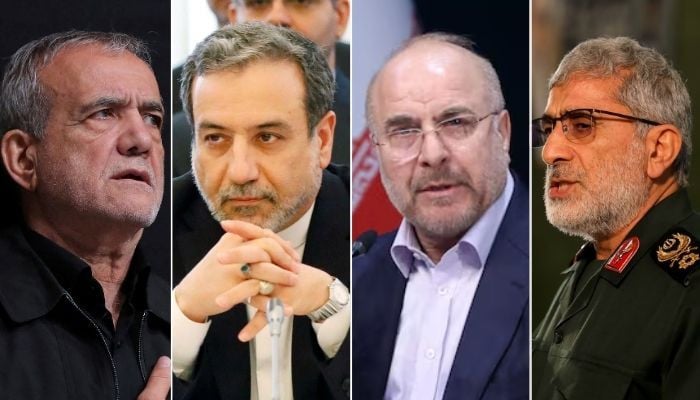
He is, according to President Donald Trump, a “top person” in the Iranian system who is “most respected” and is in an unenviable position.
But who is the senior figure talking with the United States on the future of Iran after over three weeks of the Israeli-US war against the Islamic republic?
The individual, said Trump, is not supreme leader Mojtaba Khamenei, who succeeded his father, Ali Khamenei, after the killing of the ex-number one at the start of the war on February 28.
After the killing of national security chief Ali Larijani in an Israeli strike last week, attention has focused on parliament speaker Mohammad Bagher Ghalibaf, who has survived the war so far.
But Trump gave no names, saying: “I don’t want him to be killed.”
Here are five possible figures.
Parliament speaker Mohammad Bagher Ghalibaf
Ghalibaf has been pinpointed by several analysts as the de-facto wartime leader of Iran following the assassination of Khamenei and Larijani and the failure of Mojtaba Khamenei to make any public appearance.
During three decades at the centre of the Iranian system he has held posts straddling civilian and military life, as commander of the aerospace forces of the Revolutionary Guards, Tehran police chief, Tehran mayor and now parliament speaker.
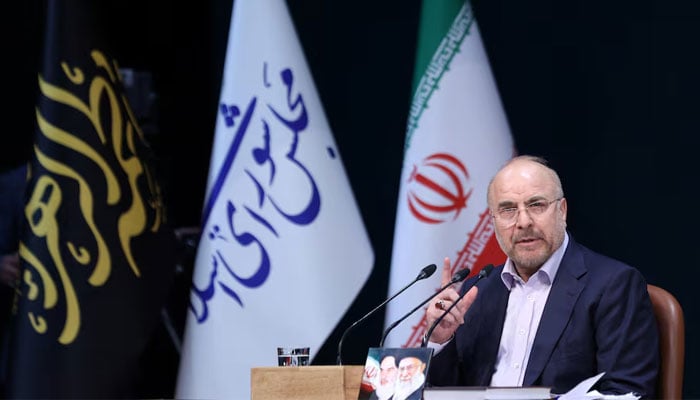
Regarded as deeply ambitious, he stood for president on three occasions but was never successful. After a report in Israeli media said he was the interlocutor of the US, he posted on X that “no negotiations have been held with the US” and denounced “fakenews”.
President Masoud Pezeshkian
President since 2024 after an election held following the death of former president Ebrahim Raisi in a helicopter crash, Pezeshkian is seen as belonging to the more moderate wing of politics in the Islamic republic.
However, his position as president in no way makes him Iran’s number one, with the supreme leader having the final say on all key matters, although how the power structures work in the post-Ali Khamenei era remains unclear.
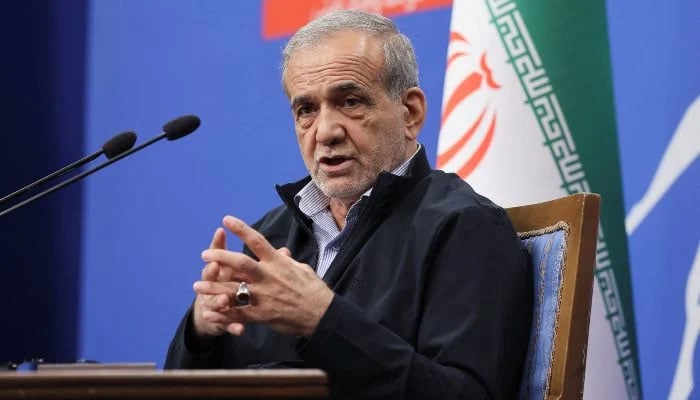
Seeking to promote himself as an ordinary man of the people, Pezeshkian took to the streets earlier this month for a mass pro-government rally in favour of the Palestinian cause, taking selfies with well-wishers. Larijani also took part in the same event, only to be killed days later.
Foreign Minister Abbas Araghchi
A veteran diplomat, Araghchi has held the post since 2024 following the death of former foreign minister Hossein Amir Abdollahian in the same helicopter crash that killed Raisi.
He acted as Iran’s representative in talks last month with US envoys Steve Witkoff and Jared Kushner in Oman that were mediated by the Gulf sultanate and failed to stop the march to war.
The New York Times said Tuesday, citing US and Iranian officials, that Araghchi and Witkoff had “direct communication” in recent days, which, according to Iranian officials, amounted to “essentially probes on how to de-escalate the conflict”.
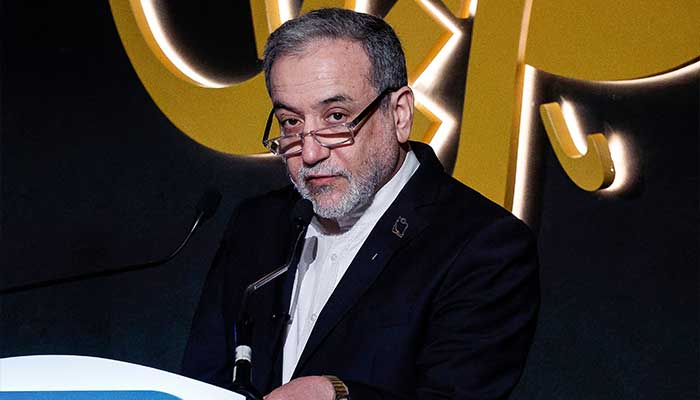
Araghchi, who holds a doctorate in political thought from the University of Kent in England, has vigorously defended Iran’s position in TV interviews including with American media. But his position as foreign minister seems unlikely to equate to that of a “top person”.
Revolutionary Guards Commander-in-Chief Ahmad Vahidi
A former interior and defence minister, Vahidi is the third commander-in-chief of Iran’s ideological army in less than a year after his predecessor Mohammad Pakpour was killed on the first day of the war and Hossein Salami was killed during Israel’s 12-day war against Iran in June 2025.
Possibly for this reason, Vahidi has kept a very low profile in this war, making no public appearance.
Only one statement has been issued in his name as commander on March 19, expressing his condolences for the killing of the commander of the Guards’ Basij militia, Gholamreza Soleimani, in an airstrike.
Quds force commander Esmail Ghaani
Ghaani became commander of the force responsible for the external operations of the Revolutionary Guards after the killing of Qassem Soleimani in a US strike in Iraq in 2020.
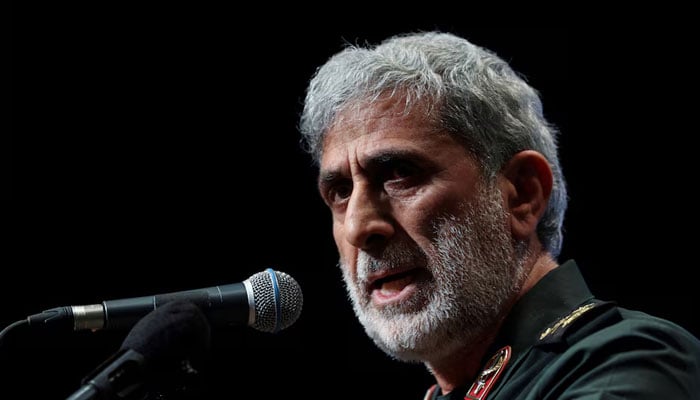
Ghaani was reportedly killed in the June 2025 war, but then later re-emerged in public. Intense speculation has since surrounded his whereabouts and standing, amid reports he has come under pressure due to alleged intelligence lapses, including the 2024 killing in Lebanon by Israel of Hezbollah chief Hassan Nasrallah.


Ole Miss to launch center devoted to risks, effects of gambling

War economy fuels $252 bn technical textile boom amid cost surges

Op. True Promise 4: Iranian missiles rain down on Israel’s intelligence hubs in new wave

-
 Entertainment1 week ago
Strategic oil stocks to be released ‘immediately’ in Asia and Oceania: IEA
-
 Tech7 days ago
Justice Department Says Anthropic Can’t Be Trusted With Warfighting Systems
-

 Sports1 week ago
Men’s March Madness 2026 bracket: Get to know all 68 teams
-
 Business1 week ago
Gas supply crunch a worry for AC makers ahead of peak season – The Times of India
-

 Tech1 week ago
Early Deals From the Amazon Spring Sale That Passed Our BS Test
-

 Sports6 days ago
March Madness 2026 – How to watch in SA, start time, schedule, TV channel for NCAA championship basketball tournament
-

 Fashion1 week ago
Trump signs order to combat fraudulent ‘Made in America’ labels
-
 Business1 week ago
Stocks To Watch: Tata Motors, IndiGo, Jindal Stainless, GMR Airports, Hindalco, And Others