

Politics
Xi calls for ‘mutual respect’ with Trump, hails ties with Putin

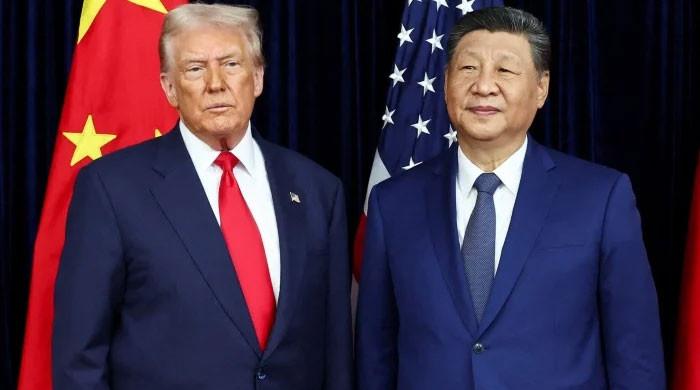
- Xi urges peaceful coexistence and win-win cooperation with US.
- Trump says US-China relationship is “extremely good” after call.
- Trump looks forward to planned trip to China, discusses trade, Iran.
Chinese leader Xi Jinping called Wednesday for “mutual respect” in strengthening relations with the United States, warning President Donald Trump in a phone call to use “caution” when selling arms to Taiwan, Beijing’s state media reported.
Xi expressed the hope that bilateral issues — amongst which trade figures highly — could be resolved amicably between the world’s two largest economies.
“By tackling issues one by one and continuously building mutual trust, we can forge a right way for the two countries to get along,” Xi said, according to state broadcaster CCTV.
“Let us make 2026 a year in which China and the United States, as two major countries, move toward mutual respect, peaceful coexistence, and win-win cooperation,” he added.
Trump, in a post on his Truth Social platform following what he called an “excellent” call, said ties between the two countries were “extremely good”.
“The relationship with China, and my personal relationship with President Xi, is an extremely good one, and we both realise how important it is to keep it that way,” Trump said.
The president said he and Xi discussed trade, Taiwan, the Russian war against Ukraine, and Iran, as well as a planned trip to China, which he said “I very much look forward to”.
On Taiwan, however, Xi warned Washington to exercise caution in arms sales to the island.
“The Taiwan question is the most important issue in China-US relations… The US must handle arms sales to Taiwan with caution,” Xi said, according to state broadcaster CCTV.
The United States approved $11 billion-worth of arms to Taiwan in December, Taipei said.
Putin’s ‘dear friend’
Speaking by video call several hours earlier, Xi and Putin hailed the strengthening of Chinese-Russian ties.
The two countries have sought to present a united front against the West, with ties deepening since Moscow´s 2022 invasion of Ukraine.
A Kremlin aide said the Xi-Putin call was “friendly and trusting” and lasted nearly an hour and a half.
Moscow has increasingly relied on China throughout the Ukraine conflict to keep its economy afloat, faced with crippling Western sanctions.
“Since the beginning of the year, the international situation has become increasingly turbulent,” Xi told Putin, calling for “deeper” Chinese-Russian coordination, according to state TV.
Addressing Xi as his “dear friend”, Putin voiced a similar message, in a video broadcast on Russian state TV.
The Kremlin said Putin had accepted invitations to visit China in the first half of 2026 and attend the APEC regional summit hosted by Xi in November.
Xi also reiterated his commitment to the international system with the United Nations at its core, after Trump in January unveiled plans for a “Board of Peace” that critics see as an attempt to rival the UN.
The calls took place as Russian, Ukrainian and US negotiators met in Abu Dhabi for a new round of talks on ending the almost four-year war, which has turned into Europe’s worst conflict since World War II.
Putin and Xi discussed their “opinions” on the United States, views that, according to the Kremlin, “practically matched” each other.
And “special attention was given to the tense situation in Iran”, said Kremlin aide Yuri Ushakov.
The calls follow a series of meetings between Xi and various leaders in recent months, as he consolidates diplomatic support in the face of an increasingly unpredictable United States.
Politics
US-Iran mediation: Politicians castigate India’s Jaishankar for spiteful remarks on Pakistan
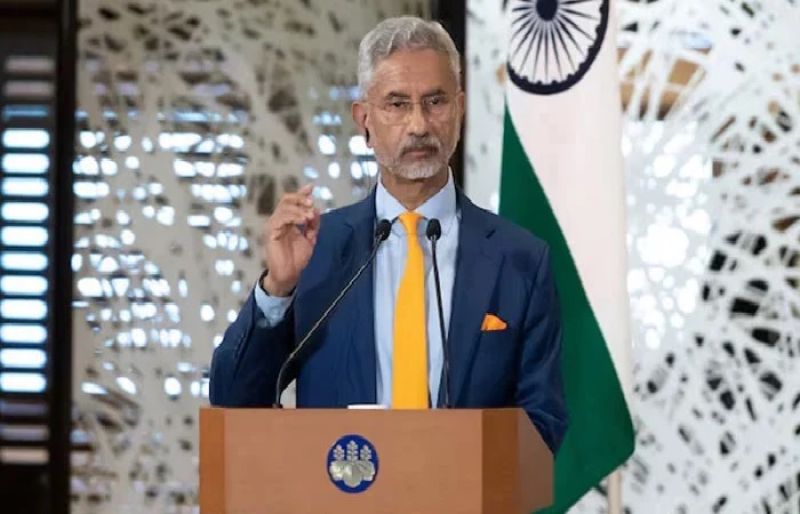
Indian External Minister for Foreign Minister Subrahmanyam Jaishankar came under heavy criticism from politicians for issuing spiteful remarks about Pakistan over the latter’s mediation role in the ongoing US-Israel war against Iran.
During an all-party meeting in India, Jaishankar said that India does not view itself as a “dalaal” (broker) like Pakistan, dismissing Pakistan’s efforts as a mediator between Iran and the US, The News reported on Thursday.
“There is nothing new in Pakistan’s mediation efforts, as that country has been ‘used’ by the US since 1981,” Jaishankar said during the all-party meeting convened by the government to discuss the ongoing West Asia crisis.
The development comes days after reports suggested that Pakistan is positioning itself as a key mediator to help broker an end to the US-Israel war against Iran through active back-channel diplomacy.
According to international media reports, Chief of Army Staff and Chief of Defence Forces Field Marshal Asim Munir recently held a telephonic conversation with US President Donald Trump, with the White House also confirming the contact. Senior Pakistani officials have reportedly been facilitating communication between Tehran and key US interlocutors, including Steve Witkoff and Jared Kushner.
Reports also suggest that Islamabad is being considered as a potential venue for a high-level meeting between the United States and Iran later this week, with US Vice President JD Vance expected to attend if the proposal materialises.
Castigating the Indian foreign minister, Defence Minister Khawaja Asif said that Jaishankar thought of himself as “a hi-fi dalal”, adding that the remarks “reflect personal frustration”.
Meanwhile, Murtaza Solangi — who serves as President Asif Ali Zardari’s spokesperson — strongly condemned the remarks and said it seems Modi’s “Dalal, Jaishankar and his cabal have lost all their marbles after May War last year”.
“He [Jaishankar] seems to be infected with a self-destructive virus besides a diplomatic dementia losing everything he had learnt in the diplomatic school,” he wrote on X.
“Fact is that he is a Dalal of Modi who is a Dalal of Netanyahu,” he said, adding that Jaishankar’s mission to “isolate Pakistan” had ended up isolating India instead.
Separately, former caretaker foreign minister Jalil Abbas Jilani said that the use of such language by the Indian external affairs minister “reflects a sick mindset”.
“Reducing diplomacy to name-calling may serve domestic politics — but it does little for peace,” he wrote on X.
The former Sindh governor, Imran Ismail, said that the comment was “strange coming from someone whose foreign policy often looks like it’s constantly for hire”.
“India is actually selling their independence to the highest bidder. Do you know what [it is] called?” he added.
Former power minister Khurram Dastgir Khan condemned the “reprehensible” language used by Jaishankar, saying: “Pakistan was the nemesis to Hindutva hubris in May 2025 and remains so.”
‘Compromised’
Indian Prime Minister Narendra Modi’s government came under fire over what the opposition described as the country’s isolation after siding with Israel ahead of the war.
Terming Modi and his foreign policy “compromised”, Leader of Opposition Rahul Gandhi has termed Modi and his foreign policy “compromised”, objecting to the PM’s references to the Covid pandemic when he spoke about the West Asia crisis in his speeches in Parliament this week.
“Modi ji said Covid-like time is coming. He has forgotten what had happened then, how many people had died, and what kind of tragedies had unfolded,” he said.
Asked about reports of Pakistan mediating US-Iran talks to end the ongoing war, Gandhi said: “Our foreign policy is PM Modi’s personal foreign policy. You can see the results of this; everybody considers this a universal joke.”
“I can give it to you in writing; PM will do what America and Israel say. He will not work in the interest of India and its farmers; he will do as America and Israel say.”
- Witness credibility looms large in the case.
- Two of three trial convictions have been overturned.
- Cocaine importation conspiracy among Maduro’s charges.
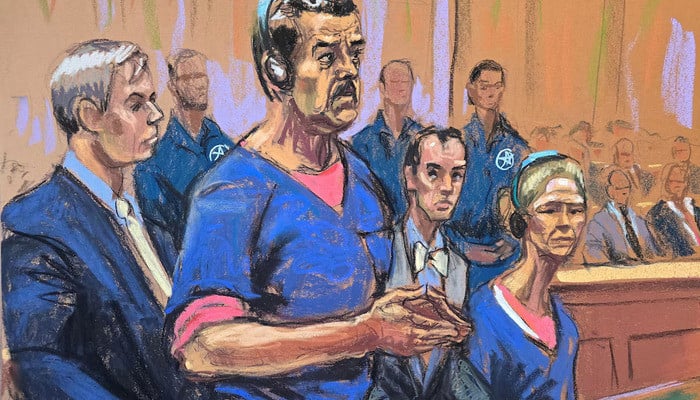
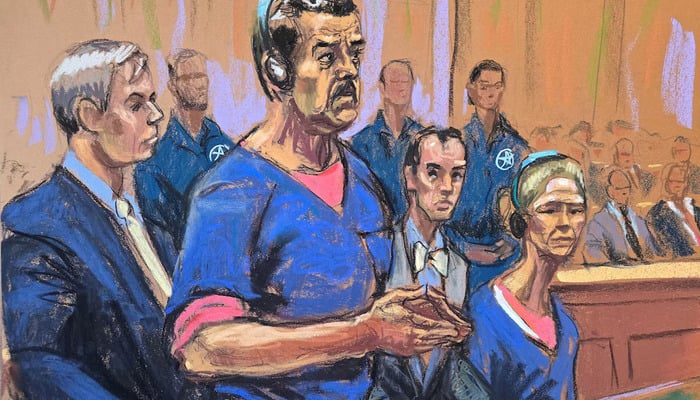
Ousted Venezuelan President Nicolás Maduro returns to a US court on Thursday on criminal charges including narcoterrorism, a statute that has rarely been tested at trial and has a limited record of success.
Maduro, 63, led Venezuela from 2013 through his capture in Caracas by US special forces on January 3. He pleaded not guilty on January 5 to all US charges against him.
The 2006 statute at issue, enacted to target drug trafficking tied to activities the United States considers terrorism, has produced just four trial convictions, a Reuters review of federal court records shows — and two were later overturned over issues stemming from witness credibility.
The mixed record highlights what could be a central challenge for prosecutors in the Maduro case: persuading jurors that evidence from cooperating insiders credibly establishes a knowing link between alleged drug crimes and terrorism.
“The lesson of these two cases is not that the narcoterrorism statute is unworkable,” said Alamdar Hamdani, a partner at law firm Bracewell and former US Attorney in Houston.
“It is that the statute’s most demanding element — proving the defendant’s knowledge of the terrorism nexus — requires a quality of evidence and a standard of prosecutorial diligence that leaves no room for institutional gaps, name-spelling errors, or uncritical acceptance of what your witnesses tell you,” he said.
Prosecutors have yet to disclose who will testify against Maduro. But one former Venezuelan general indicted alongside Maduro has told Reuters he is willing to cooperate.
Maduro accused of helping Colombian rebels
Congress created the narcoterrorism statute 20 years ago to target drug traffickers who finance activities the United States considers terrorism. Since then, 83 people, including Maduro, have been charged with violating it. Thirty-one pleaded guilty to narcoterrorism or lesser charges, eight are awaiting trial, and dozens are not in US custody, according to the review.
The conviction reversals do not affect Maduro’s case, and defendants in those cases faced additional charges that were not overturned. Maduro also faces three other counts, including cocaine importation conspiracy.
Maduro, a socialist, is accused of leading a conspiracy in which officials in his government helped move cocaine through Venezuela in collaboration with traffickers including the Revolutionary Armed Forces of Colombia (FARC), which the US labeled a terrorist organisation from 1997 to 2021. Maduro and his fellow indicted officials have always denied wrongdoing, saying the US charges are part of an imperialist conspiracy to harm Venezuela.
His lawyer, Barry Pollack, did not respond to requests for comment about the narcoterrorism law’s trial record or possible witnesses against Maduro.
A spokesman for the Manhattan US Attorney’s office declined to comment on the same subjects.
Law defines terrorism broadly
Narcoterrorism carries a 20-year mandatory minimum sentence, twice the minimum penalty for ordinary drug trafficking. Both can result in life imprisonment.
The narcoterrorism law defines terrorism as premeditated, politically motivated violence against non-combatants.
“If you take the legal definition of terrorism and terrorist activity, you can paint a pretty broad brush with the kind of activity we’re talking about,” said Shane Stansbury, a professor at Duke University School of Law and former federal prosecutor.
To convict Maduro, prosecutors must show that he knew the drug trafficking he allegedly facilitated resulted in a financial benefit for a group that engaged in activities the United States considered terrorism, even if he had other aims.
“It doesn’t have to be the motivation,” said Artie McConnell, a former federal prosecutor and current partner at law firm BakerHostetler.
In the first narcoterrorism trial in 2008, an Afghan man with alleged ties to the Taliban was convicted of helping a Drug Enforcement Administration informant buy opium and heroin. But in 2021, a judge threw out the narcoterrorism count after an appeals court ruled his lawyer failed to adequately challenge the only witness tying him to the Taliban.
In another case, a jury deadlocked in the 2011 trial of an accused Afghan trafficker. He was convicted at a second trial in 2012, but the narcoterrorism count was thrown out in 2015 after prosecutors acknowledged that a US government agency considered the cooperating witness who linked him to the Taliban a “fabricator.”
The 2015 narcoterrorism trial conviction of a Colombian man for trying to ship cocaine for the FARC and attempting to buy weapons for the group has been upheld.
A fourth narcoterrorism trial resulted in a guilty verdict earlier this week.
Case could rely on cooperating witnesses
Legal experts say the government’s case against Maduro could include testimony from two former Venezuelan generals indicted alongside him in 2020: Cliver Alcalá and Hugo Carvajal. Both have pleaded guilty to charges linked to their dealings with the FARC, but neither agreed to cooperate at the time of their pleas.
In a telephone interview from federal prison in Cumberland, Maryland, Alcalá said he was willing to cooperate. But he said prosecutors had previously insisted that he admit to involvement in drug trafficking, which he denies, as a condition for cooperation.
“I cannot, in order to reduce my sentence, declare myself to be a drug trafficker when I am not,” he said.
Alcalá retired from Venezuela’s military shortly after Maduro took office in 2013. He later became an outspoken critic of Maduro’s government.
Asked whether the charges against Maduro were true, Alcalá said he thought there was “some basis” and said he believed Maduro had ties to a drug trafficker jailed in Caracas. He did not offer specifics.
Alcalá, 64, is serving a nearly 22-year prison sentence after pleading guilty in 2023 to providing material support to the FARC. In court, he admitted supplying the group with weapons — which he says he did under orders from former Venezuelan President Hugo Chavez — but denied helping traffickers move cocaine.
Carvajal’s sentencing is scheduled for April 16. His lawyer declined to comment on whether he would cooperate with prosecutors.
- Bus overturned, sank nearly 30 feet into the river, say police.
- Officials fear more passengers may still be missing from river.
- Accidents claim hundreds of lives annually in Bangladesh.
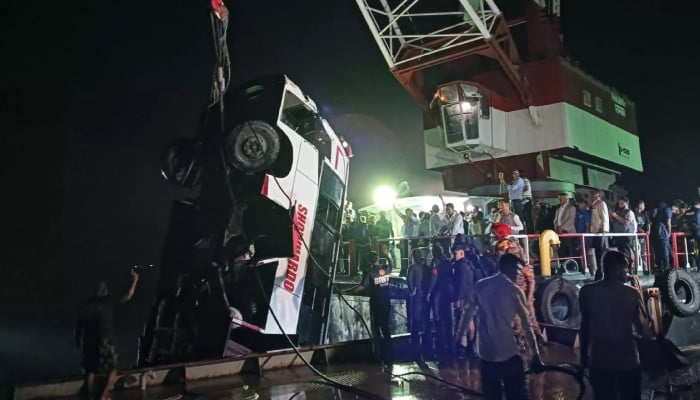
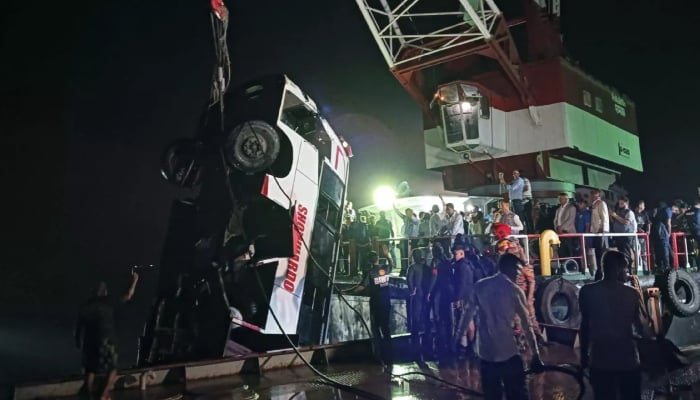
DHAKA: At least 24 people died after a passenger bus carrying around 40 passengers plunged into the Padma River while attempting to board a ferry in Bangladesh, officials said on Thursday.
The accident occurred on Wednesday when the bus lost control approaching a ferry at Daulatdia in Rajbari district, about 100 km (62 miles) from Dhaka.
The bus overturned and sank nearly 30 feet into the river, according to police, the Fire Service, and Civil Defence.
Rescuers recovered 22 bodies from inside the submerged bus, including six men, 11 women, and five children, Fire Service official Talha Bin Zasim said.
Twenty-four people have been confirmed dead so far, including two women who died after being rescued, he said.
Four fire service units and 10 divers were leading the search and rescue efforts, supported by the army, police, coast guard, and local authorities.
Officials fear more passengers may still be missing. Hundreds of people die each year in road and ferry accidents in Bangladesh.


MLB faces a historic shift as potential lockout, media rights and other league changes loom

Amazon’s Spring Sale Is So-So, but Cadence Capsules Are a Bright Spot

Lahore Qalandars crush Hyderabad Kingsmen in PSL 11 opener – SUCH TV

-

 Fashion1 week ago
Sales at US apparel, clothing accessories stores up 4% YoY in Jan 2026
-
 Tech1 week ago
Justice Department Says Anthropic Can’t Be Trusted With Warfighting Systems
-

 Fashion1 week ago
Spain’s Inditex FY25 sales rise 3.2% to $46.28 bn amid strong demand
-
 Politics1 week ago
Iran strikes Tel Aviv with cluster-warhead missiles in retaliation of Larijani’s martyrdom
-

 Sports1 week ago
March Madness 2026 – How to watch in SA, start time, schedule, TV channel for NCAA championship basketball tournament
-
 Entertainment1 week ago
Val Kilmer revived 1 year after death through AI
-

 Entertainment1 week ago
With few new leads 45 days after Nancy Guthrie’s disappearance, investigation “becomes much harder,” expert says
-
 Business1 week ago
Brits cashing in jewellery as gold price hits record high