Connect with us

Business

High-Level Panel On Banking Reforms Soon? Here’s What FM Nirmala Sitharaman Says

Published

on

High-Level Panel On Banking Reforms Soon? Here’s What FM Nirmala Sitharaman Says

Last Updated:

When asked whether the panel would recommend mergers among public sector banks, the finance minister cautions against narrowing the scope of the exercise.

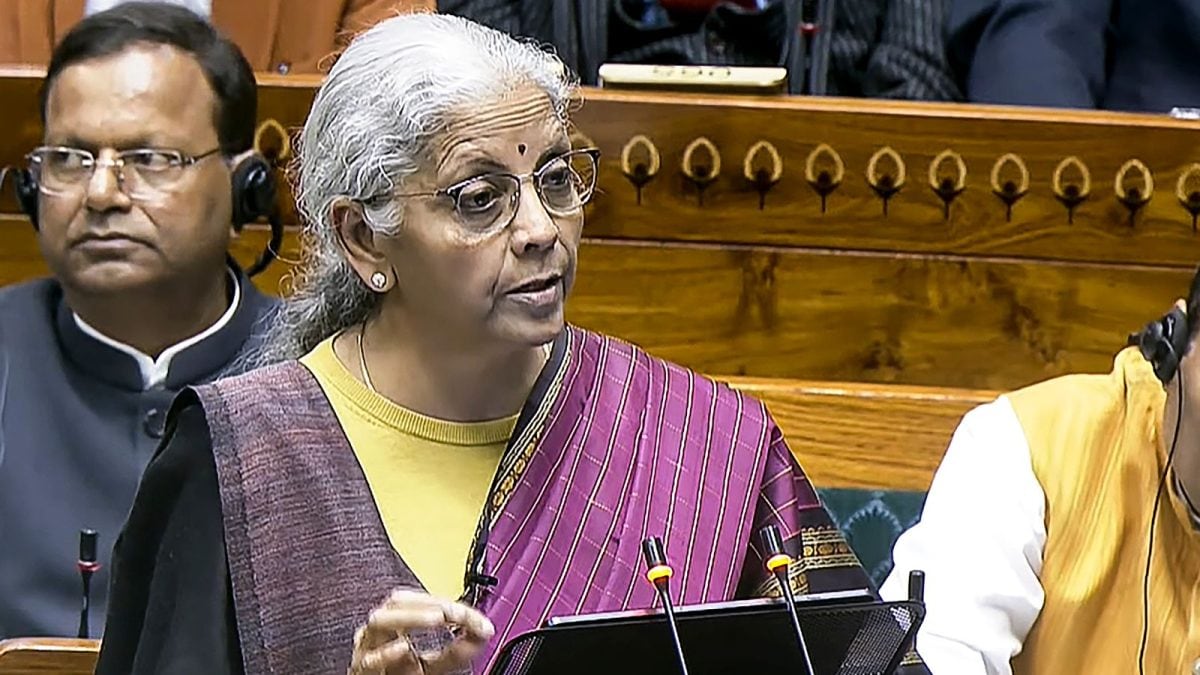
Union Finance Minister Nirmala Sitharaman presents Union Budget 2026-27. (File Photo)

Union Finance Minister Nirmala Sitharaman presents Union Budget 2026-27. (File Photo)

The government will soon set up a high-level committee to review India’s banking sector and chart out reforms needed to create large, globally competitive lenders capable of financing a developed India, Finance Minister Nirmala Sitharaman has said.

In an interview with PTI Videos, Sitharaman said the proposed panel will focus on preparing the banking system to meet the funding needs of Viksit Bharat. “We want the committee to tell us what kind of things we need to do so that banking is made available for funding Viksit Bharat,” she said.

When asked whether the panel would recommend mergers among public sector banks, the finance minister cautioned against narrowing the scope of the exercise. “It is for India’s banking sector to be made big enough, big enough in the sense, made or primed to take care of Viksit Bharat funding. You have to reach Viksit Bharat destination…it needs money, it needs financing, it needs credit, it needs banking facility to reach the common man,” she said.

On the timeline for setting up the committee, Sitharaman said the government would move quickly. “We will do it at the earliest,” she noted.

The proposal was formally announced in the Union Budget on February 1. “I propose setting up a ‘High Level Committee on Banking for Viksit Bharat’ to comprehensively review the sector and align it with India’s next phase of growth, while safeguarding financial stability, inclusion and consumer protection,” she had said in her Budget speech.

As part of broader efforts to achieve scale and efficiency in public sector non-banking financial companies (NBFCs), the Budget also proposed restructuring of Power Finance Corporation (PFC) and Rural Electrification Corporation (REC). Responding to questions on whether a merger between the two is likely, Sitharaman said, “A lot of work has happened in the ministry concerned. They have come up with this expectation. Let’s see how they play it out.”

REC is already a subsidiary of PFC. In March 2019, PFC acquired a 52.63 per cent stake in REC from the government for about Rs 14,500 crore, gaining management control. Both entities are Navratna central public sector enterprises and play a crucial role in financing power generation, transmission and distribution projects.

Last week, the PFC board gave in-principle approval for the merger of REC with itself, following the Budget announcement. The government has positioned this move as part of a larger consolidation strategy in the financial sector, even as the proposed high-level committee prepares to take a comprehensive look at banking reforms needed for India’s next phase of growth.

Click here to add News18 as your preferred news source on Google.

Follow News18 on Google. Join the fun, play games on News18. Stay updated with all the latest business news, including market trends, stock updates, tax, IPO, banking finance, real estate, savings and investments. To Get in-depth analysis, expert opinions, and real-time updates. Also Download the News18 App to stay updated.
Disclaimer: Comments reflect users’ views, not News18’s. Please keep discussions respectful and constructive. Abusive, defamatory, or illegal comments will be removed. News18 may disable any comment at its discretion. By posting, you agree to our Terms of Use and Privacy Policy.

Read More


Source link

Continue Reading
Click to comment

Leave a Reply

Your email address will not be published. Required fields are marked *

Business

Airlines halt Puerto Vallarta flights after violence following Mexican cartel leader’s killing

Published

on

Airlines halt Puerto Vallarta flights after violence following Mexican cartel leader’s killing


Smoke billows from burning vehicles amid a wave of violence, with torched vehicles and gunmen blocking highways in more than half a dozen states, following a military operation in which a government source said Mexican drug lord Nemesio Oseguera, known as “El Mencho,” was killed, in Puerto Vallarta, Jalisco, Mexico, February 22, 2026, in this screen grab obtained from a social media video.

Stringer | Reuters

U.S. and Canadian airlines halted flights to Puerto Vallarta and Guadalajara in Mexico after violence broke out in the country in the wake of the Mexican army’s killing of a cartel leader.

The U.S. State Department on Sunday told U.S. citizens to shelter in place, citing “ongoing security operations and related road blockages and criminal activity.”

Air Canada, American Airlines, Delta Air Lines, Southwest Airlines, United Airlines and others canceled flights to Puerto Vallarta, a popular tourist destination on Mexico’s Pacific coast, and to Guadalajara, which is also in the Jalisco state. Airlines waived change fees for affected travelers.

Flights to other major airports in the country, like Mexico City and Cancun, weren’t impacted by the unrest.

Stranded passengers line up at Guadalajara Airport in Tlajomulco, Jalisco, Mexico, on February 23, 2026, to claim compensation for flights that were canceled or postponed the previous day.

Ulises Ruiz | Afp | Getty Images

Several Mexican states also canceled school on Monday after the country’s army killed Nemesio Rubén Oseguera Cervantes. Known as “El Mencho,” he led one of fastest-growing criminal networks in Mexico, notorious for trafficking fentanyl, methamphetamine and cocaine to the United States and staging brazen attacks against government officials who challenged it, The Associated Press reported.

He was killed during a shoot-out in his home state of Jalisco, AP said.

Airlines routinely suspend service due to unrest and infrastructure problems to avoid having passengers, crews and aircraft stranded.

Read more CNBC airline news


Source link

Continue Reading

Business

EDF pledges £15bn UK investment as falling energy prices hit profits

Published

on

EDF pledges £15bn UK investment as falling energy prices hit profits


French energy giant EDF saw its UK profits decline last year, attributed to a combination of falling energy prices and a significant outage at one of its nuclear power stations.

Despite this setback, the company has announced plans for a substantial £15 billion investment in the country over the next three years.

The energy firm reported a 12 per cent decrease in nuclear output from its five operational power stations during the period.

While its Sizewell B facility in Suffolk and Torness in Scotland performed strongly, the overall output was significantly impacted by an extended outage at the Hartlepool power station.

The Teesside-based station, which began generating power 43 years ago and supplies electricity to approximately two million homes, experienced a prolonged shutdown.

Despite these operational challenges, Hartlepool recently secured a one-year extension to its operational lifespan, now expected to generate electricity until March 2028.

This extended downtime, primarily due to issues affecting one of its two reactor systems, was identified as the main driver for EDF‘s overall decline in nuclear generation last year.

Sizewell C has reached financial close, indicating that funding has been completed for the project (Chris Radburn/PA) (PA Archive)

Furthermore, a decline in earnings was also down to the prices it charges for nuclear power being lower than in 2024.

It is understood that average prices were down by approximately 20 per cent.

Energy prices in the UK have been gradually coming down after spiking in the aftermath of Russia’s invasion of Ukraine in 2022.

EDF said that in its UK business, earnings before interest, tax, depreciation and amortisation (EBITDA) were £1.9 billion for 2025, down about a third from £2.9 billion in 2024.

EDF’s nuclear fleet provided about 12 per cent of the UK’s total power demand last year – which it says makes it Britain’s biggest generator of zero carbon electricity.

The company said it invested more than £5 billion in Britain over 2025, 30 per cent more than the year before.

EDF said nuclear output from its five active power stations decreased by 12 per cent last year

EDF said nuclear output from its five active power stations decreased by 12 per cent last year (PA Media)

Over the next three years, it plans to plug a further £15 billion into the UK across its different businesses – which also incorporates wind and solar power generation.

A large portion of the funding will go towards the development of the Hinkley Point C power plant which is being built in Somerset.

EDF is separately an investor in the major Sizewell C project in Suffolk, which is backed by the Government.

The two developments are expected to provide low carbon electricity to meet 14% of UK demand and power around 12 million homes.

Simone Rossi, chief executive of EDF in the UK, said: “EDF is continuing to invest heavily in powering, supplying and building an electric Britain.

“Our UK strategy is to deliver a long-term nuclear and renewables generation business, and to meet the evolving needs of our customers as more and more transition away from fossil fuels to using cleaner, more secure and affordable electricity.”


Source link

Continue Reading

Business

FM Sitharaman rules out roadmap for PSU bank mergers, panel to review sector reforms – The Times of India

Published

on

FM Sitharaman rules out roadmap for PSU bank mergers, panel to review sector reforms – The Times of India


The government currently has no roadmap for mergers among public sector banks, Finance Minister Nirmala Sitharaman said, indicating that consolidation is not under active consideration even as a new banking reform panel is set to review the sector’s future.“I am not familiar with any roadmap…there isn’t one,” Sitharaman said in a media briefing after her post-Budget customary address to the Board of the Reserve Bank of India, PTI reported.She clarified that bank consolidation was neither discussed during Budget preparations nor raised in recent deliberations, though the proposed High-Level Committee on Banking for Viksit Bharat will examine all aspects related to strengthening the banking ecosystem.“Bank consolidation was not a subject here, nor was it a subject before the Budget, but the Committee, which is now being appointed, once the terms of reference are given, they will look into every aspect of how to strengthen Indian banking,” she said.In the Union Budget 2026-27, Sitharaman proposed setting up a ‘High Level Committee on Banking for Viksit Bharat’ to comprehensively review India’s banking sector and align it with the country’s growth goals while safeguarding financial stability, inclusion and consumer protection.“I propose setting up a ‘High Level Committee on Banking for Viksit Bharat’ to comprehensively review the sector and align it with India’s next phase of growth, while safeguarding financial stability, inclusion and consumer protection,” she had said in the Budget speech on February 1.The committee is expected to draw up a blueprint aimed at creating mega lenders capable of meeting the financing needs of a developed India.As part of broader financial sector reforms, the Budget also proposed restructuring Power Finance Corporation (PFC) and Rural Electrification Corporation (REC) to achieve scale and improve efficiency in public sector NBFCs. REC is a subsidiary of state-owned power sector lender PFC, and both institutions play a key role in financing power generation, transmission and distribution projects.In March 2019, PFC completed the acquisition of a majority stake in REC Ltd by transferring Rs 14,500 crore to the government. PFC acquired 103.94 crore shares, representing a 52.63 per cent stake, along with management control, at Rs 139.50 per share following approval from the Cabinet Committee on Economic Affairs.Commenting on the banking sector’s health, RBI Governor Sanjay Malhotra said banks are adequately capitalised and capable of sustaining credit growth for the next four to five years, supporting the economy’s financing needs.He added that deposit growth is now keeping pace with credit expansion.On moderation in net foreign direct investment (FDI), Malhotra said gross FDI inflows have continued to rise.Last year, he said, “It increased by about 14-15 per cent. Even this year, gross FDI has increased, and the growth rate is also high. It’s because of repatriations of those people who had done earlier FDI. It has gone out. The net (FDI) has decreased”.Similarly, he said Indian companies are increasingly investing overseas as domestic economic measures have strengthened confidence, which has also contributed to lower net FDI levels.


Source link

Continue Reading

Trending