

Business
Cheaper tequila and canned cocktails were the only bright spots for booze during a rough 2025


Various cans of alcoholic ready-to-drink beverages, including Captain Morgan’s rum and cola; Bacardi’s mango mojito; Archers’ schnapps and lemonade; Malibu’s pineapple and piña colada cocktails; and Gordon’s gin and tonic cocktails, are displayed for sale in a supermarket on Jan. 10, 2024.
John Keeble | Getty Images
The U.S. alcohol industry had another sobering year in 2025.
Spirits supplier revenue fell 2.2% to $36.4 billion for the year, according to new data by industry trade group the Distilled Spirits Council of the United States, or Discus. The decline came as economic pressure and weaker consumer confidence weighed on discretionary spending.
“While total U.S. spirits sales edged down 2.2% in 2025, the spirits industry remains resilient,” said Chris Swonger, Discus CEO and president, in a statement.
Overall volumes for the year rose 1.9% to 318.1 million 9-liter cases, indicating growing demand. But the revenue decline suggests that while Americans are still drinking, they are also trading down — opting for lower-priced spirits and pulling back on premium purchases.
Nearly every major spirits category posted revenue declines. Vodka sales fell 3% to $7 billion. Sales of tequila and mezcal — the industry’s fastest-growing segment for several years now — slipped 4.1% to $6.4 billion. American whiskey and cordials revenue dipped 0.9% and 3.2%, respectively.
The exception was in convenience and value.
Last call for optimism
Sales of premixed cocktails, including spirits–based ready-to-drink beverages, surged over 16% compared to the year prior, reaching $3.8 billion. The category, known as RTD, has more than doubled its market share since 2021 as consumers gravitate toward a lower price point.
Within tequila, the shift has also been toward more affordable bottles, as macro headwinds make consumers rethink splurges on premium brands. Volume in the lowest tequila/mezcal price point the trade group tracks grew 6.5% in 2025, along with a 2.8% climb in the next tier higher. Volume for whiskey, vodka, rum and gin all fell at those price points.
As consumers move toward more-affordable spirits, companies like Diageo and Brown-Forman may be best positioned, as they have the most exposure to lower-priced tequila and the fast-growing RTD category. Diageo owns Casamigos tequila and has built out a sizable portfolio of spirit-based RTDs, while Brown-Forman controls key mixed-price tequila brands like El Jimador.
On the other hand, beer-heavy players like AB InBev and Molson Coors have minimal tequila exposure, although they have been expanding their RTD portfolios. Modelo and Corona owner Constellation Brands is in a unique position with both beer and tequila exposure, but a smaller RTD footprint.
Overall, the beverage alcohol market has softened after years of pandemic-fueled growth, and Discus’ new data reinforces that normalization is now turning into contraction.
“The companies that have started to report are posting weak numbers but no worse than expected,” said Trevor Stirling, Bernstein European and American beverages analyst. “The rate of decline is not getting worse, might be slowing and one can dream of a return to volume growth.”
Lingering trade tensions
Distillers have also been navigating headwinds abroad. American spirits exports fell 9% year over year in the second quarter of 2025, amid lingering trade tensions and the removal of U.S. products from many Canadian retail shelves following President Donald Trump‘s tariff hikes on the U.S. neighbor last year.
Industry leaders say tariff uncertainty is making it difficult to plan long term.
“The unpredictability surrounding global trade issues continues to weigh heavily on the U.S. spirits sector,” Swonger said. “Reinstating zero-for-zero tariffs on distilled spirits must be a priority to get our American distillers back on a path to growth and prosperity.”
Despite the revenue pullback, spirits actually maintained its market share lead of the total beverage alcohol market at 42.4%, compared to beer and wine at 41.8% and 15.7%, respectively.
Still, the message from 2025 is clear: Consumers are drinking less, but those who are still drinking are being more selective. In a tougher economic environment, cheaper tequila and canned cocktails are winning out over premium bottles behind the bar.






Pets at Home investors will be hoping the retailer’s new boss can lay out a strategy to return it to profit growth despite a challenging consumer backdrop.
Shares in the company currently sit close to its lowest level for almost seven years following a recent downturn in the group’s retail arm.
The dip in the group’s performance contributed to the departure of previous chief executive Lyssa McGowan late last year.
In March, former Waitrose boss James Bailey took the reins in a bid to drive a turnaround in performance.
Shareholders will be hoping the new boss can show early signs of improvement and a long-term strategy to drive growth in Pets at Home’s update on Wednesday May 27.
The pet products retailer and vet chain is expected to report an underlying pre-tax profit of around £93 million for the year to March, according to analysts.
It would represent a roughly 30% fall from last year, after the company came under pressure from weak demand for discretionary products.
Analysts have said investors will be looking at early trading in the current financial year to see how consumer spending is holding up.
AJ Bell’s investment director Russ Mould said: “Pets at Home could badly do with some renewed pep.
“Under executive chair Ian Burke, who has returned to a non-executive role after leading the business on an interim basis, Pets at Home laid out a plan to fix a retail business which has been badly affected by a reduction in discretionary spend on toys and treats for Britons’ furry and feathered friends.
“The country may have a reputation for loving their animal companions but in an environment where households are having to watch their pennies, these nice-to-have items were off the list.”
The group has also seen sales of pet food and similar products face fierce pricing competition from non-specialist retailers, such as supermarkets.
It has since cut prices among around 1,000 products in order to help drive activity, with cash-strapped shoppers looking for value.
Data from the Office for National Statistics (ONS) showed that UK retail sales volumes dropped to an 11-month low in April, with a 1.3% fall for the month.
Pets at Home is predicted to report revenues of £1.47 billion for the past year, just marginally lower than £1.482 billion reported last year.
Business
India’s fuel demand growth may slow sharply in H2 2026 amid price hikes, austerity push: Report

India’s transportation fuel demand growth is expected to slow sharply in the second half of 2026 as higher fuel prices, government-led conservation measures and a weakening rupee weigh on mobility and consumption trends, according to a report.The report by Kpler’s lead analyst (modelling), Elif Binici, revised down India’s 2026 refined products demand growth forecast by around 77,000 barrels per day (kbd), or 39 per cent, to nearly 78 kbd from an earlier estimate of 128 kbd.As per news agency PTI, the downgrade reflects weaker expected growth in petrol and diesel demand due to elevated fuel costs, softer mobility trends and official efforts to conserve fuel amid the ongoing West Asia crisis.Petrol and diesel prices have been increased by around Rs 5 per litre in three instalments since May 15, after oil marketing companies passed on part of the burden of soaring global crude oil prices to consumers.
Petrol demand faces steepest downside risk
The report said petrol demand is likely to see the sharpest slowdown, with projected growth revised down by 25 kbd, from 63 kbd to 38 kbd.Petrol consumption is now estimated at 1,010 kbd, compared to the earlier estimate of 1,035 kbd.According to the report, weaker commuting activity, slower discretionary travel and government fuel-saving campaigns are expected to curb fuel consumption.Annual diesel demand growth was also cut by around 20 kbd, while jet fuel demand growth was nearly halved to about 6 kbd from 11 kbd earlier due to expectations of reduced air travel and tighter spending patterns.“The revisions primarily reflect weaker expected growth in gasoline and diesel demand as higher costs, weaker mobility trends, and recent government-led fuel conservation efforts increasingly feed into domestic transportation activity,” the report said, as quoted by PTI.
Rupee weakness, crude surge add pressure
The report noted that India’s macroeconomic environment has deteriorated since the escalation of the US-Iran conflict, with rising crude import costs, refinery expenses and rupee depreciation increasing inflationary pressure.The rupee has weakened by around 6 per cent since the conflict began and nearly 10 per cent over the past year. Foreign exchange reserves have also reportedly declined by about 4.3 per cent since late February as authorities attempted to stabilise the currency and contain imported inflation.The report said the current average petrol price of around Rs 103 per litre remains well below the estimated breakeven level of nearly Rs 125 per litre.Diesel prices near Rs 94 per litre are also below the estimated breakeven range of Rs 115-120 per litre.Before the recent price revisions, state-run fuel retailers were reportedly losing nearly Rs 1,000 crore daily because rising crude procurement costs and currency weakness outpaced retail fuel prices.“The key issue is the inability of state-run retailers to pass through rising import costs quickly enough to restore profitability,” the report said.
Russian crude continues to support supply security
The report added that India’s dependence on discounted Russian crude imports, estimated at around 1.9-2 million barrels per day, continues to provide stability to the domestic fuel market amid geopolitical uncertainty in West Asia.Policymakers now appear to be prioritising macroeconomic stability, inflation management, foreign exchange preservation and fuel supply security over near-term fuel demand growth.The report warned that unless crude prices ease significantly, the rupee stabilises or additional fiscal support measures are introduced, further fuel price hikes and stricter fuel-conservation measures may become difficult to avoid.
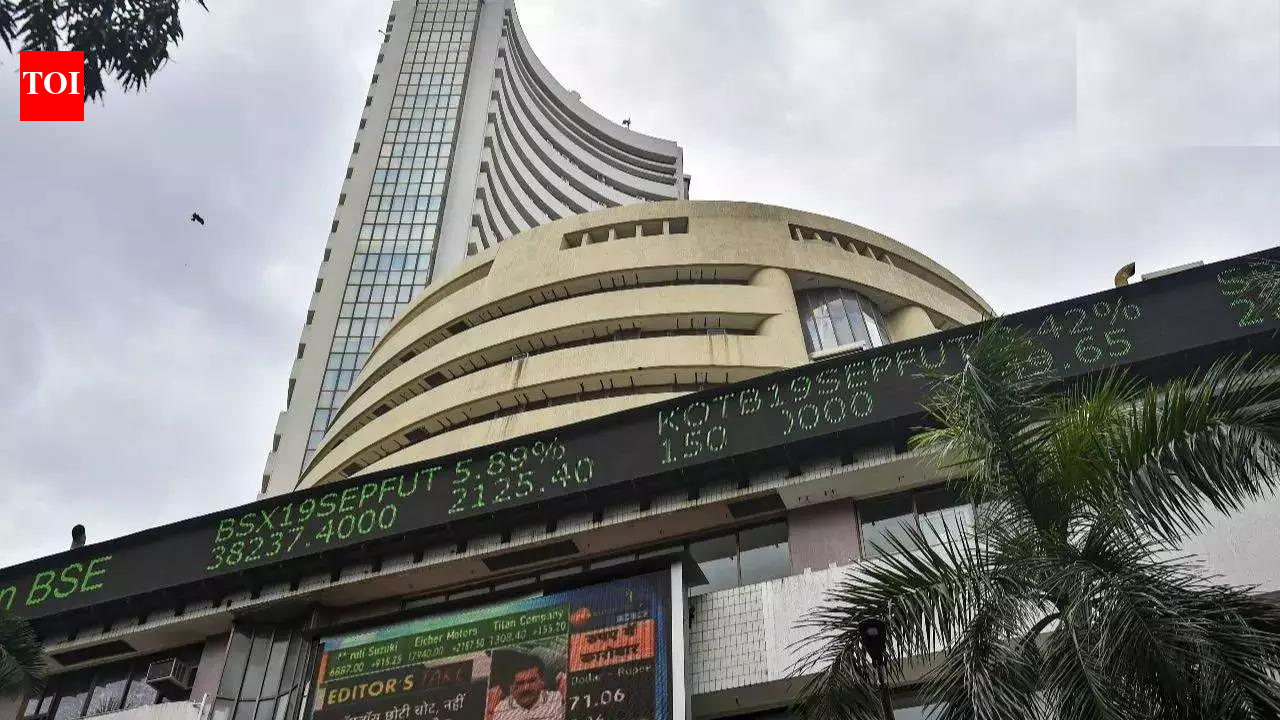
The combined market valuation of six of India’s top-10 most valued companies rose by Rs 74,111.57 crore last week, with Reliance Industries emerging as the biggest gainer. The rally came during a volatile trading week in which the BSE Sensex advanced 177.36 points, or 0.23%.According to news agency ANI, Reliance Industries added Rs 24,696.89 crore to its valuation, taking its total market capitalisation to Rs 18,33,117.70 crore.Tata Consultancy Services saw its valuation jump by Rs 19,338.68 crore to Rs 8,38,401.33 crore, while ICICI Bank added Rs 14,515.93 crore to reach a market capitalisation of Rs 9,06,901.32 crore.The valuation of Life Insurance Corporation of India climbed Rs 9,076.37 crore to Rs 5,14,443.69 crore.Meanwhile, Bajaj Finance gained Rs 3,797.83 crore, taking its valuation to Rs 5,70,515.57 crore, while Larsen & Toubro added Rs 2,685.87 crore to Rs 5,40,228.21 crore.
Airtel, HUL among laggards
On the losing side, Bharti Airtel witnessed the sharpest erosion in market value, losing Rs 20,229.67 crore to settle at Rs 11,40,295.49 crore.The market valuation of Hindustan Unilever declined by Rs 16,212.18 crore to Rs 5,17,380 crore, while State Bank of India lost Rs 12,784.4 crore in valuation to Rs 8,76,077.92 crore.HDFC Bank also saw its market capitalisation dip by Rs 2,094.35 crore to Rs 11,79,974.90 crore.Reliance Industries retained its position as India’s most valued company, followed by HDFC Bank, Bharti Airtel, ICICI Bank, State Bank of India, TCS, Bajaj Finance, Larsen & Toubro, Hindustan Unilever and LIC.
Markets end volatile week with modest gains
Ajit Mishra, SVP, research at Religare Broking Ltd, said markets ended the week with marginal gains amid a “highly volatile and range-bound trading environment”.“Benchmark indices witnessed sharp intraday swings throughout the week, driven by persistent rupee weakness, mixed global cues, sectoral rotation, and continued uncertainty around inflation and interest rates,” he said, as quoted by ANI.Benchmark indices recovered on Friday, with the Sensex closing 231.99 points higher at 75,415.35 and the NSE Nifty rising 64.60 points to settle at 23,719.30.Analysts cited optimism surrounding possible progress in US-Iran peace negotiations and easing Middle East tensions as factors supporting market sentiment.Vinod Nair, head of research at Geojit Investments, was quoted by news agency PTI as saying that domestic markets traded with a “mild positive bias” due to buying at lower levels and constructive global cues.“Globally, the AI investment theme remained the primary driver, while domestically, financial stocks led the gains,” he said.Brent crude prices climbed 2.3% to $104.7 per barrel, while foreign institutional investors (FIIs) sold equities worth Rs 1,891.21 crore in the previous session.


What we know about the proposed US-Iran deal

Prince George set to reconnect with cousin in unexpected twist

Queen Elizabeth II heartbreaking final message for Prince Philip emerges

-

 Entertainment1 week ago
Where Pete Davidson, Elsie Hewitt stand after breakup: Details revealed
-

 Politics1 week ago
Rising diesel costs from Iran war strain US school budgets
-

 Entertainment1 week ago
Drake drops highly anticipated "Iceman" album, plus two surprise albums
-

 Tech1 week ago
Greg Brockman Officially Takes Control of OpenAI’s Products in Latest Shakeup
-

 Tech1 week ago
Why Is Your Grill So Dumb? The Best Grills Set Temp Like an Oven
-

 Tech1 week ago
This Solar-Powered Smart Sprinkler Keeps My Lawn Watered Without Any Power Cables
-

 Fashion1 week ago
RMG trade bodies seek policy support from Bangladesh PM
-
 Business1 week ago
Oil price gains and Westminster worry sink stocks