

Politics
‘Flood’ of disinformation ahead of Bangladesh election

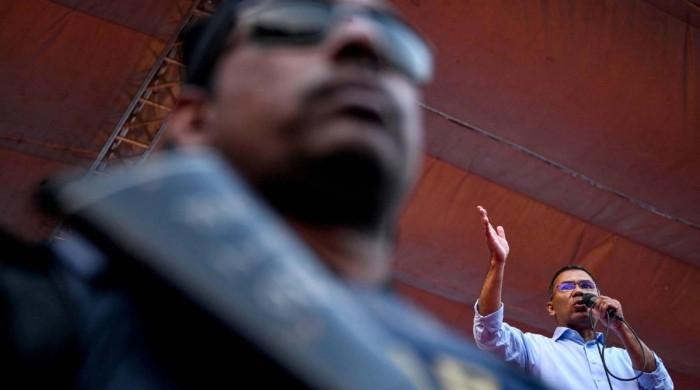
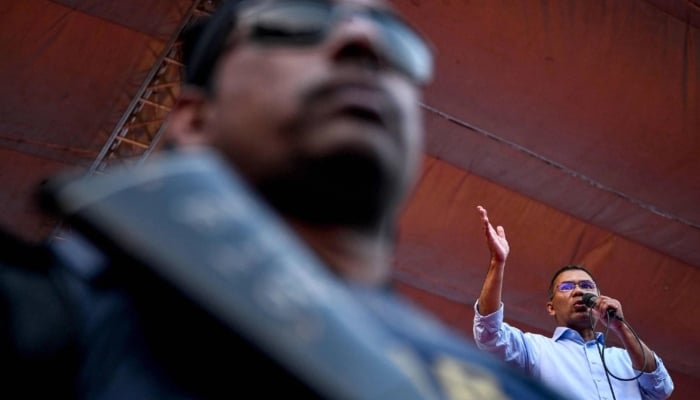
Voters in Bangladesh elect a new government on February 12, but analysts warn their choice is threatened by a coordinated surge of disinformation, much of which originates from neighbouring India.
The Muslim-majority nation of around 170 million people is preparing for its first election since a 2024 student-led uprising toppled Sheikh Hasina — who fled to neighbouring India, where she has been hosted since by the Hindu-nationalist government.
Authorities say the scale of online manipulation — including sophisticated AI-generated images — has become so severe that a special unit has been created to curb false content.
Interim leader and Nobel Peace Prize winner Muhammad Yunus said in January that there had been a “flood of misinformation surrounding the elections” when he called UN rights chief Volker Turk seeking help.
“It is coming from both foreign media and local sources,” he said.
Much of that centres around claims of attacks against Bangladesh’s minorities — around 10% of Bangladesh’s population is non-Muslim, most of them Hindu.
That has seen a mass posting of claims online that Hindus are under attack, using the hashtag “Hindu genocide”.
According to police figures released in January, out of 645 incidents involving members of minority groups in 2025 — only 12% were classified as having a sectarian motive.
‘Coordinated Indian disinformation’
The US-based Centre for the Study of Organised Hate said it had tracked more than 700,000 posts — generated by more than 170,000 accounts on X, that made claims of a “Hindu genocide” between August 2024 and January 2026.
“We have tracked coordinated Indian disinformation online, falsely alleging large-scale violence against Hindus in Bangladesh,” said Raqib Naik, head of the think tank.
“More than 90% of this content originated from India, with the remainder linked to associated Hindu nationalist networks in the UK, US, and Canada,” he told AFP.
Examples debunked by AFP Fact Check, some of them shared tens of thousands of times, include an AI-created video of a woman who had lost her arm, appealing not to vote for the Bangladesh Nationalist Party (BNP), seen by many as a frontrunner.
In another computer-generated video, a Hindu woman alleges that people who follow the same religion have been told to vote for Jamaat-e-Islami, or they will be exiled to India.
Of the hundreds of AI-generated videos documented by AFP Fact Check teams on social media platforms — YouTube, Facebook, TikTok and Instagram — few are marked with an AI disclaimer.
The surge has also come after years of repression under Hasina, when opposition was crushed and outspoken voices silenced.
“We are noticing a huge amount of fake information compared to other times,” said Miraj Ahmed Chowdhury, head of the Dhaka-based research organisation Digitally Right, saying free AI tools made creating sophisticated fakes easier.
In another AI-generated video, Bangladeshis appear to praise Hasina — now a fugitive who was sentenced to death in absentia for crimes against humanity.
In India, social media outrage by Hindu fundamentalists about the lone Bangladeshi cricket player in India’s domestic IPL league resulted in his club cancelling his contract — a furore that escalated to Bangladesh’s national team pulling out of this month’s T20 World Cup in India.
But while analysts say much of the disinformation originates from India, there is no evidence that the large-scale media posts were organised by the government.
New Delhi’s foreign ministry says they have recorded a “disturbing pattern of recurring attacks on minorities” by “extremists in Bangladesh”, but also emphasise they have “consistently reiterated our position in favour of free, fair, inclusive and credible elections”.
‘Big threat’
Bangladesh Election Commission spokesman Md Ruhul Amin Mallik said they were working with Facebook’s parent company, Meta, and set up a unit to monitor social media posts — but coping with the sheer volume online is a never-ending task.
“If our team detects any content as harmful and misleading, we instantly announce it as fake information,” Mallik said.
Election expert Jasmine Tuli, a former election commission official, said that AI-generated images carried an extra risk for Bangladesh.
More than 80% of urban households have at least one smartphone, and nearly 70% of rural areas, according to government statistics — but many people are still relatively new to the technology.
“It is a big threat for a country like Bangladesh, since people don’t have much awareness to check the information,” Tuli said.
“Due to AI-generated fake visuals, voters get misguided in their decision.”
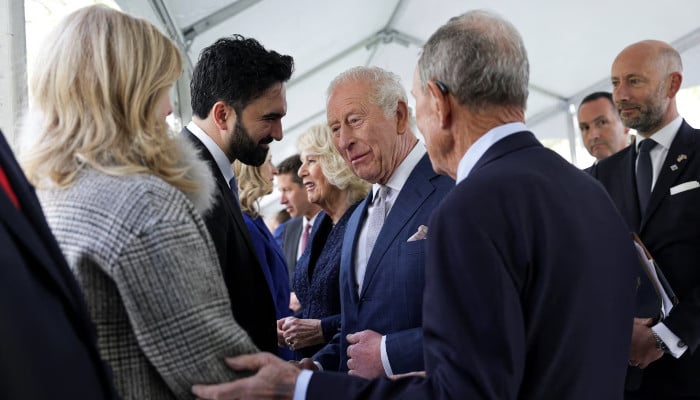
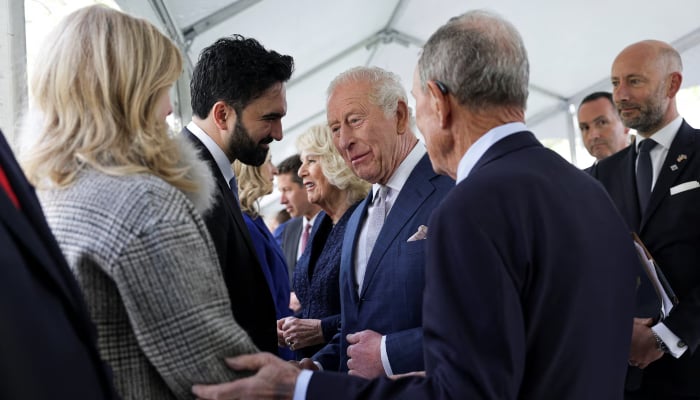
New York City Mayor Zohran Mamdani said on Wednesday he encourages Britain’s King Charles to return the Koh-e-Noor Diamond, with his comments coming during the British monarch’s ongoing US visit.
“If I were to speak to the king separately from that, I would probably encourage him to return the Koh-e-Noor Diamond,” Mamdani, who is Indian American, said when asked at a press conference hours before a ceremony that commemorated victims of the deadly September 11, 2001, attacks.
Later in the day, the king spoke with Mamdani at the ceremony. Buckingham Palace declined to comment. Mamdani’s office did not respond to a request to comment on whether Mamdani brought up the issue with the king.
India has previously repeatedly demanded that Britain return the 105-carat diamond.
Britain’s then colonial governor-general of India arranged for the huge diamond to be presented to Queen Victoria in 1850 after the East India Company had annexed the region of Punjab in 1849 and taken the diamond from a deposed Indian leader.
Charles on Wednesday commemorated victims of the September 11, 2001, attack on New York City, laying a floral bouquet at the memorial where the World Trade Centre’s twin towers once stood.
India received independence from British rule in 1947. The British colonisation of India and the widespread atrocities committed against people during that period remain sensitive issues in the country.
India has previously said the diamond was a “valued piece of art with strong roots in our nation’s history.” The diamond’s possession by the British is seen by many Indians as a symbol of colonial atrocities during British rule.
The diamond has been previously owned by India’s Mughal emperors, shahs of Iran, emirs of Afghanistan, and Sikh maharajas, according to the Historic Royal Palaces charity.
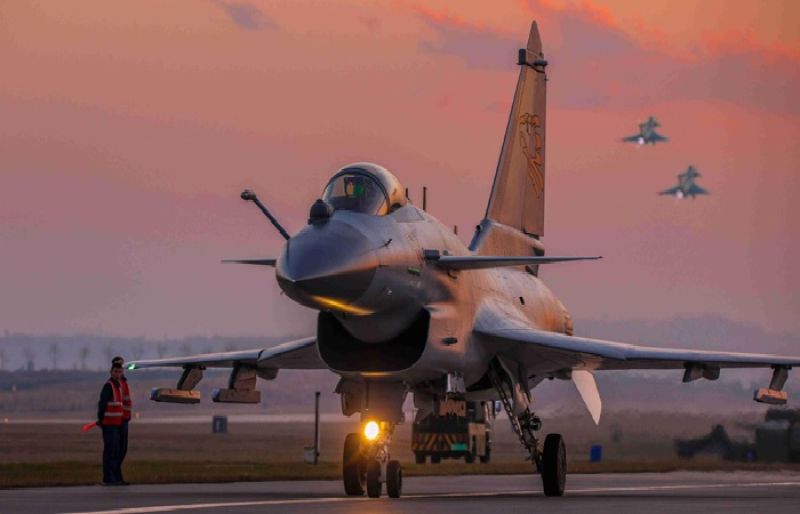
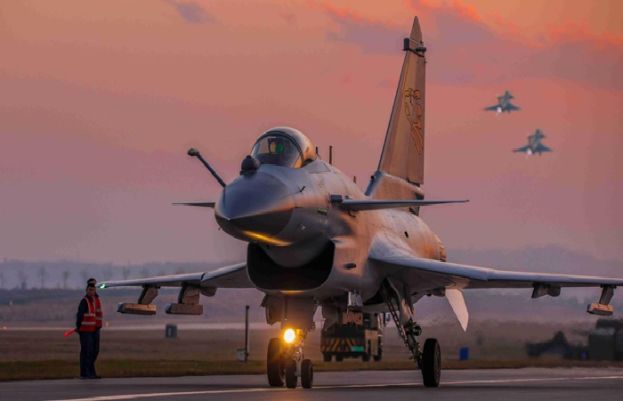
China’s AVIC Chengdu Aircraft Corporation, the maker of J-10C aircraft used by Pakistan to down India’s French-made planes in May last year, has reported a significant surge in profits, according a report by Bloomberg.
Revenue increased by 15.8% to 75.4 billion yuan ($11 billion) in 2025, with profit up 6.5% to 3.4 billion yuan in 2025, the publication cited the jetmaker as saying in a statement.
The numbers are the highest-ever for the company, Bloomberg reported, adding that Chengdu’s first-quarter sales rose almost 80% on year.
The Pakistan Air Force (PAF) inducted J-10C in March 2022, in a major boost to the country’s military capabilities to defend airspace.
At the time, the government said that the fighter jet could carry more advanced, fourth-generation air-to-air missiles, including the short-range PL-10 and the beyond-visual-range PL-15.
The fighter jet saw its first combat use in May 2025 when India launched an unprovoked attack on Pakistan on May 6, following an attack on tourists in the Indian Illegally Occupied Jammu and Kashmir.
Pakistan, during the 87-hour conflict, downed seven Indian fighter jets, including French-made Rafale, and dozens of drones.
The four-day war saw Pakistan successfully employing the Chinese-made HQ-9 air-defence system, PL-15 air-to-air missiles, and J-10C fighter aircraft, credited with downing multiple Indian aircraft.
The PAF also used its JF-17 Thunder jets to destroy India’s S-400 air defence system in Adampur by using hypersonic missiles.
The war between the two nuclear-armed nations ended on May 10 with a ceasefire agreement brokered by the US.
Months after the conflict, Inter-Services Public Relations (ISPR) Director-General (DG) Lieutenant General Ahmed Sharif Chaudhry praised the performance of Chinese-made weapons, saying they performed “exceptionally well. “Of course, lately, recent Chinese platforms, they’ve demonstrated exceptionally well,” Lt Gen Chaudhry said in an interview in October last year.
In November last year, a report presented to the United States Congress acknowledged Pakistan’s “military success over India” in the war.
The US-China Economic and Security Review Commission report — reviewing US-China security and foreign affairs — stated that Pakistan employed advanced Chinese weaponry to enhance its military edge over India.
- Revenue up by 15.8% to 75.4 billion yuan in 2025: report.
- Company’s profits up by 6.5% to 3.4 billion yuan in 2025.
- Chengdu sales in first-quarter rose almost 80% on year.
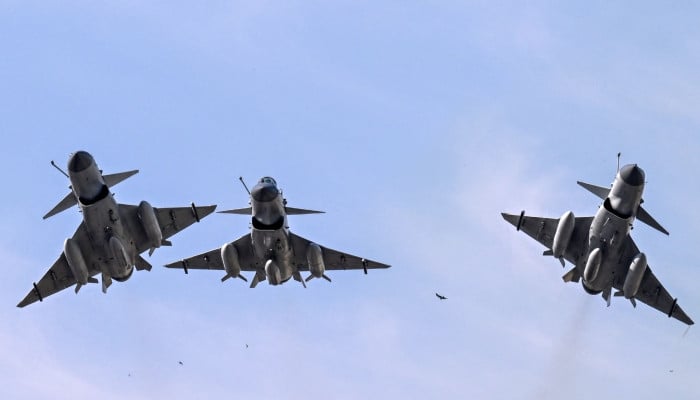
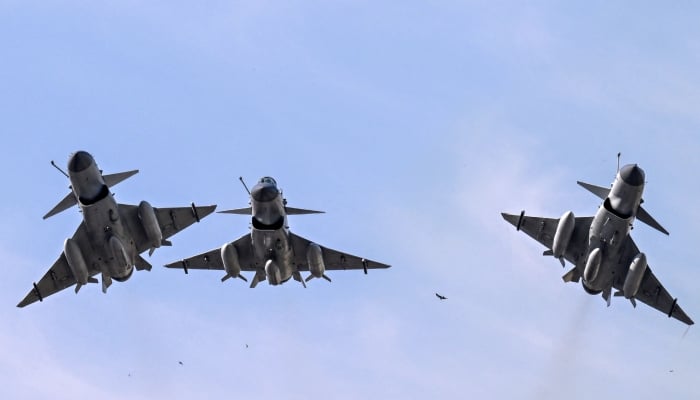
China’s AVIC Chengdu Aircraft Corporation, the maker of J-10C aircraft used by Pakistan to down India’s French-made planes in May last year, has reported a significant surge in profits, according a report by Bloomberg.
Revenue increased by 15.8% to 75.4 billion yuan ($11 billion) in 2025, with profit up 6.5% to 3.4 billion yuan in 2025, the publication cited the jetmaker as saying in a statement.
The numbers are the highest-ever for the company, Bloomberg reported, adding that Chengdu’s first-quarter sales rose almost 80% on year.
The Pakistan Air Force (PAF) inducted J-10C in March 2022, in a major boost to the country’s military capabilities to defend airspace.
At the time, the government said that the fighter jet could carry more advanced, fourth-generation air-to-air missiles, including the short-range PL-10 and the beyond-visual-range PL-15.
The fighter jet saw its first combat use in May 2025 when India launched an unprovoked attack on Pakistan on May 6, following an attack on tourists in the Indian Illegally Occupied Jammu and Kashmir.
Pakistan, during the 87-hour conflict, downed seven Indian fighter jets, including French-made Rafale, and dozens of drones.
The four-day war saw Pakistan successfully employing the Chinese-made HQ-9 air-defence system, PL-15 air-to-air missiles, and J-10C fighter aircraft, credited with downing multiple Indian aircraft.
The PAF also used its JF-17 Thunder jets to destroy India’s S-400 air defence system in Adampur by using hypersonic missiles.
The war between the two nuclear-armed nations ended on May 10 with a ceasefire agreement brokered by the US.
Months after the conflict, Inter-Services Public Relations (ISPR) Director-General (DG) Lieutenant General Ahmed Sharif Chaudhry praised the performance of Chinese-made weapons, saying they performed “exceptionally well,” The News reported, citing Bloomberg.
“Of course, lately, recent Chinese platforms, they’ve demonstrated exceptionally well,” Lt Gen Chaudhry said in an interview in October last year.
In November last year, a report presented to the United States Congress acknowledged Pakistan’s “military success over India” in the war.
The US-China Economic and Security Review Commission report — reviewing US-China security and foreign affairs — stated that Pakistan employed advanced Chinese weaponry to enhance its military edge over India.


Trützschler to showcase advanced textile tech at ITM 2026 in Istanbul

Gold, silver price prediction: Will gold head down to Rs 1.40 lakh/10 grams & silver hit Rs 2.20 lakh/kg? – The Times of India

US top commander to brief Trump on new military options against Iran, says report

-

 Politics1 week ago
UK’s Starmer seeks to deflect blame over Mandelson appointment
-
 Business1 week ago
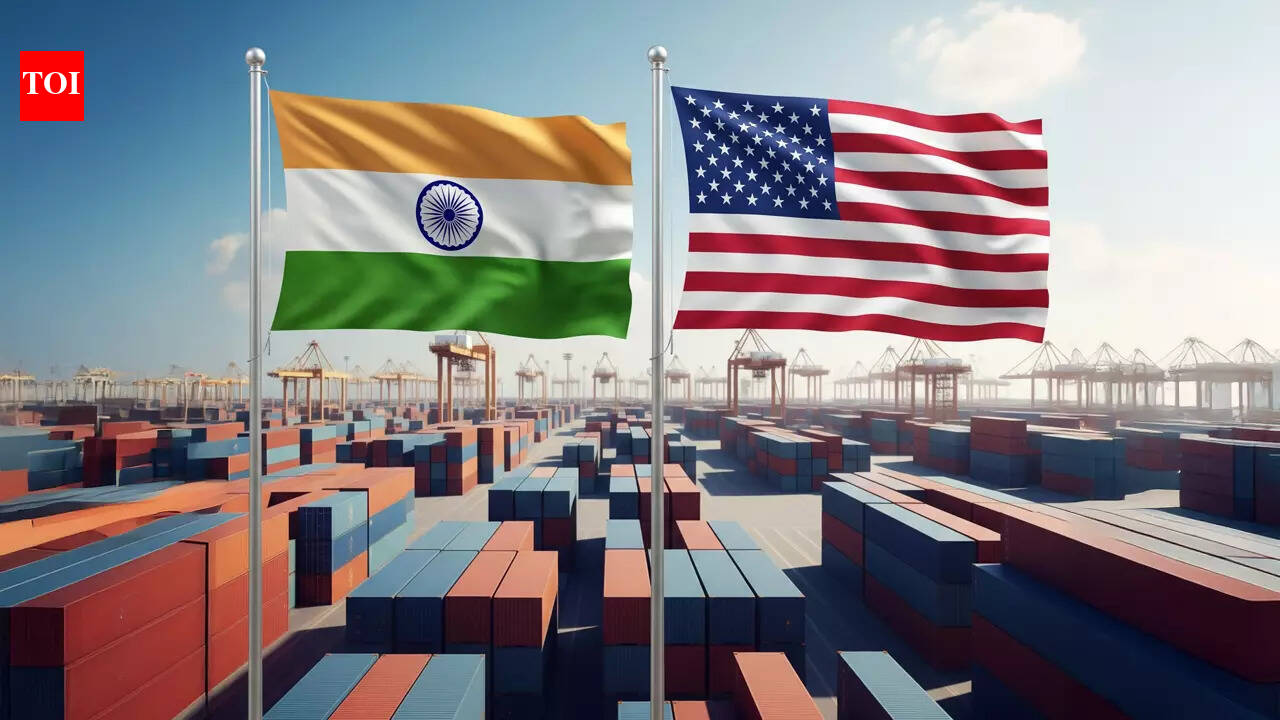
Us-India Trade Talks: US–India trade deal: Where do talks stand & what to expect – explained – The Times of India
-

 Fashion1 week ago
Global energy growth slows to 1.3% in 2025: Report
-
 Business1 week ago
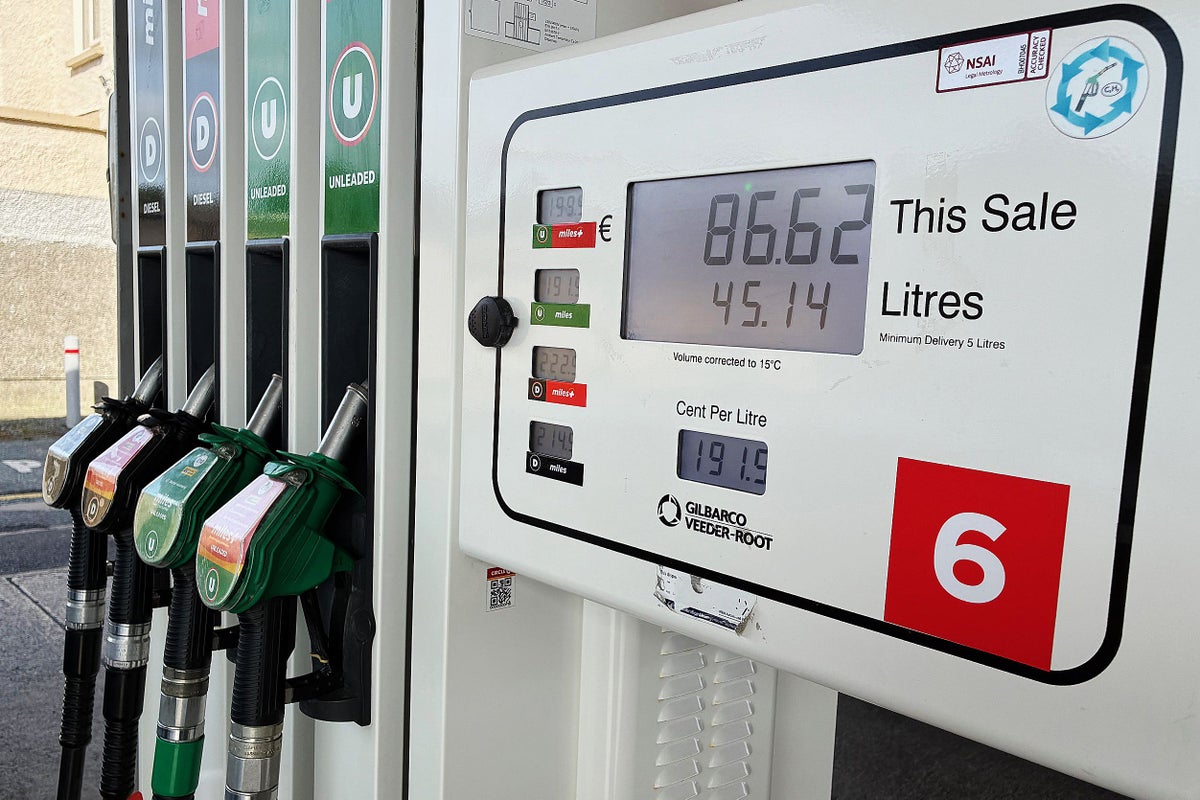
UK inflation accelerates after Iran war drives sharp rise in fuel prices
-

 Tech1 week ago
Nation states responsible for ‘nationally significant’ cyber attacks against UK, says NCSC chief | Computer Weekly
-

 Tech1 week ago
Microsoft faces court battle in £2bn Windows Server class action | Computer Weekly
-

 Tech1 week ago
How to Watch the Lyrids Meteor Shower at Its Peak
-

 Sports1 week ago
PSL 11: Hyderabad Kingsmen opt to field after winning toss against Multan Sultans