

Business
Autonomy is not intelligence: why the future of unmanned systems must remain human


Quantum Systems is a Business Reporter client
In the midst of Russia’s war against Ukraine, one idea has gained remarkable traction: that fully autonomous drones represent the future of defence. Fewer humans, more machines, faster outcomes. Autonomy, in this narrative, is treated as a proxy for progress and often even for intelligence.
This is a dangerous misconception.
Ukraine’s ongoing resistance against Russia has shown the world, in the starkest possible terms, how profoundly modern warfare has changed. Large, expensive and slow-to-adapt systems are no longer the decisive factor. Instead, smaller, software-defined unmanned systems dominate the battlefield because they are fast to adapt, cost-efficient and integrated into a broader information ecosystem.
What we’ve learned from Ukraine is that what matters most is not whether a system can operate without human input for as long as possible. What matters is whether it can help humans see, understand and decide faster than their opponent.
The reality of the modern battlefield
Nowhere else has it become so clear how unforgiving real-world conditions are for technology. Systems operate in contested and unpredictable environments. GPS signals disappear. Communications are disrupted. Data is incomplete, outdated or contradictory. These are no longer edge cases; they are the baseline.
Fully autonomous systems may perform impressively in controlled settings, but in reality, when circumstances shift unexpectedly, the risk of failure increases sharply. Intelligence is not about operating in a vacuum but handling ambiguity, context and uncertainty – areas where humans remain essential.
This is why autonomy is so often mistaken for intelligence. We assume that removing humans from the loop automatically makes a system more advanced. In reality, it often removes the very element that allows systems to cope with complexity.
What AI is actually good at
Artificial intelligence has become indispensable in modern unmanned systems, not because it replaces human judgment but because it addresses a very practical problem: cognitive overload.
Modern conflicts generate enormous amounts of information: video feeds, sensor data, maps, alerts and signals arriving simultaneously. No human can process all of this in real time. AI excels at filtering noise, prioritising relevant signals, detecting patterns and preparing information for decision-makers.
In this sense, AI’s most meaningful role today is supportive. It shortens the path from observation to understanding, reduces the likelihood of human error in high-pressure situations and enables faster, better-informed decisions. The final responsibility, however, remains in human hands.
Meaningful human control is not a brake on innovation
New technologies are transforming warfare while raising uncomfortable moral questions. Who is responsible when machines make life-or-death decisions? How do we ensure compliance with international law? How do democratic societies compete with adversaries who ignore ethical limits altogether?
The answer cannot be to stand still. Speed matters, and those who disregard rules will not pause for ethical debate. Equally, the response of democratic societies cannot be to abdicate responsibility.
Meaningful human control remains crucial. This does not mean humans must manually operate every function – automation handles speed, repetition and data processing. Humans provide context, judgment and ethical responsibility when needed, especially in complex or ambiguous situations. We must continue to invest and drive innovation – maintaining a technological edge means that this moral imperative can remain our strength, not a disadvantage on the battlefield.
Autonomy in weapons systems is not new – from automated air defence systems to fire-and-forget missiles. What AI does is accelerate and expand existing forms of automation. The decisive factor is therefore not whether autonomy exists, but how, under what rules and with what transparency oversight is ensured when systems encounter ambiguous circumstances.
Regulation must keep pace with reality
Regulation in defence technology is essential. Clear red lines must be drawn where ethics, responsible use and international law are concerned. At the same time, regulatory frameworks must be fast and adaptive enough to reflect today’s security realities.
Throughout Europe, clearer and more agile rules are needed to enable responsible innovation rather than stifling it. If regulation lags too far behind technological and geopolitical developments, democratic states risk losing the ability to protect their people, their sovereignty and their values.
This debate matters not only for Ukraine, but for Europe’s own security – from the Baltic states sitting on NATO’s Eastern flank to critical infrastructure protection at home.
The future will be unmanned – but not unhuman
Some argue that AI will inevitably make wars faster and more dangerous. The truth is more nuanced. AI can also reduce mistakes, improve situational awareness and help protect lives, if used responsibly.
Progress will not be defined by removing humans completely from the equation. It will be defined by how well systems support people under pressure, how transparently they communicate their limits and how firmly responsibility remains with human decision-makers.
The future of defence will indeed be increasingly unmanned. But intelligence is not measured by autonomy alone. And if we get this wrong, we risk building systems that are fast, but blind – powerful, but clueless in complex situations.
For democratic societies, that is a risk we cannot afford.

Hyderabad: Pharma player Hetero on Friday said it has rolled out exports of its generic semaglutide injection portfolio as part of a multi-year plan to widen access to treatments for type 2 diabetes and obesity in more than 75 countries.The Hyderabad-based pharmaceutical company said initial rollouts are under way in Africa, Asia and the Middle East, with additional launches planned in other markets subject to regulatory approvals.The injectable therapies will be sold under the brand names Truglyx, Rolmodl and Moto G. Semaglutide belongs to the GLP-1 class of medicines, which are used in diabetes care and weight management.Hetero said the export launch is part of its broader strategy to improve access to advanced cardio-metabolic therapies, particularly in emerging markets.The company said the products will be offered in multi-dose disposable pen devices designed in line with innovator formats and will be available in several strengths, including 0.25 mg, 0.5 mg, 1 mg, 2 mg, 1.7 mg and 2.4 mg, allowing dosing flexibility for both diabetes and obesity treatment.Hetero said it is also awaiting approval from India’s Central Drugs Standard Control Organisation (CDSCO) after completing clinical trials in type 2 diabetes and obesity and plans an India launch after regulatory clearance.Hetero managing director Dr Vamsi Krishna Bandi said the company aims to provide high-quality, affordable generic semaglutide through a single global product platform backed by its manufacturing and development capabilities.He said Hetero would use its commercial networks across Asia, the Middle East, Africa and Latin America to support supply and access. The Hyderabad-headquartered Hetero operates in more than 145 countries and employs over 30,000 people.
Business
India-US trade deal update: Piyush Goyal meets USTR Jamieson Greer, discusses next steps in BTA talks – The Times of India
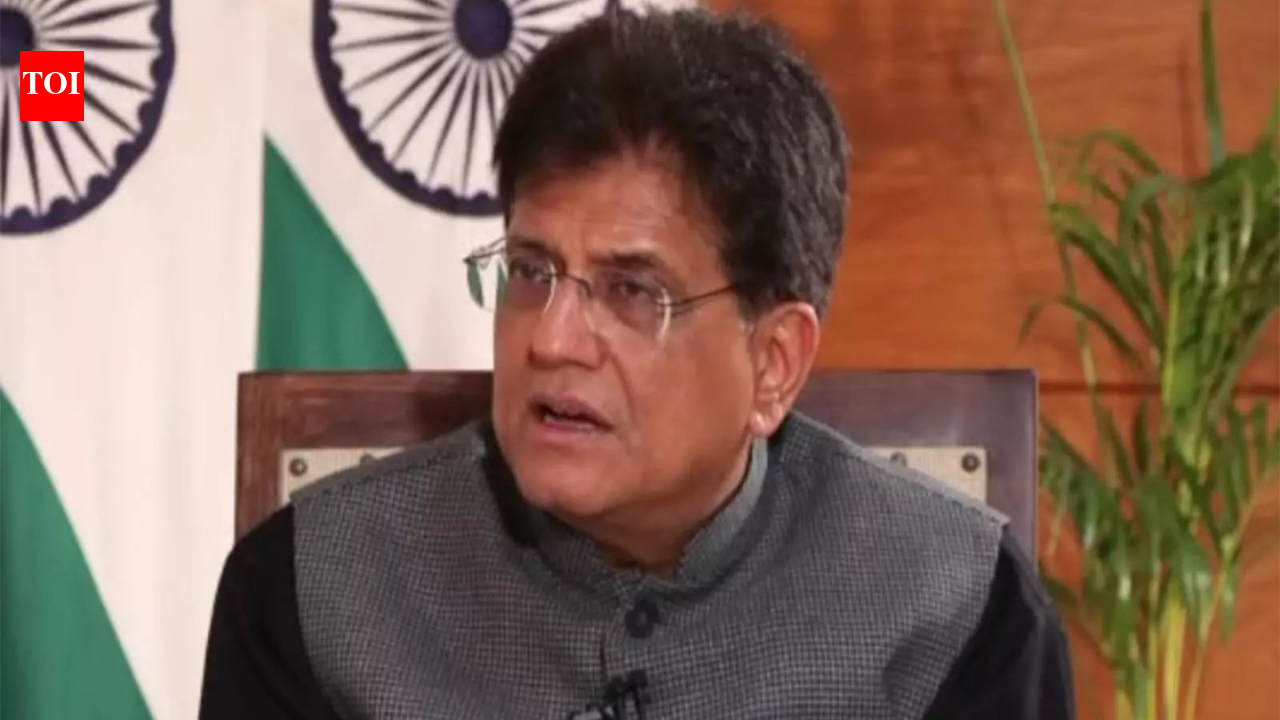
Commerce and industry minister Piyush Goyal on Friday met US Trade Representative Jamieson Greer and reviewed the next steps in negotiations for the proposed India-US bilateral trade agreement (BTA).The meeting took place on the sidelines of the 14th ministerial conference (MC14) of the World Trade Organisation in Yaounde, Cameroon, where both sides also exchanged views on issues related to the WTO agenda.“Had a very productive discussion with @USTradeRep Jamieson Greer on the sidelines of the WTO Ministerial Conference. Exchanged views on the #WTOMC14 agenda, next steps in the India-US BTA negotiations and explored ways to further deepen our economic cooperation and bilateral trade ties,” Goyal said in a social media post.The development comes amid ongoing efforts by both countries to finalise an interim trade pact. Last month, India and the US announced that they had finalised a framework for the first phase of the agreement, though it is yet to be signed.The two sides had earlier announced a trade deal on February 2, followed by a joint statement on February 7 outlining the contours of the agreement.As part of the framework, the US had agreed to reduce tariffs on Indian goods to 18%. However, the tariff structure has since undergone changes after the US Supreme Court struck down sweeping tariffs imposed under earlier measures.Following the ruling, US President Donald Trump introduced a 10% tariff on all countries for a period of 150 days starting February 24.In view of these developments, a planned meeting between chief negotiators of India and the US — aimed at finalising the legal text of the agreement — has been postponed. The pact was earlier expected to be signed this month.An official had earlier said that the interim trade agreement would be signed once the new global tariff framework of the US is fully in place.

When you think of an investor, what kind of person comes to mind? What are their interests, their job? Are they an older man wearing a pin-striped suit and a bowler hat?
It might surprise you that the average investor age in the UK is 49 years old – down from 55 years old over the last five years.
And with more than 13 million DIY investor accounts in the UK, it’s likely that the average investor looks more like one of your mates than someone out of The Wolf of Wall Street.
The UK is historically quite wary of investing, and it’s been something that the financial industry and governments have been trying to tackle for years.
We’re starting to see the fruits of these efforts trickle through; latest Boring Money data reveals that DIY investing accounts grew over 19 per cent in the last year. Roughly one-third of the population now invests, up from about a quarter in 2020, and it’s becoming more mainstream by the day.
Start small, stay consistent – let the market do the work
It’s a common misconception that you need to have a lot of money to be an investor. The median amount invested by DIY investors is around £15,000, but you can start with as little as £1.
Neither does it have to be done in one big hit. Lots of providers allow you to set up regular investing – often £25 a month minimum, but a few let you regularly invest less.
Setting up these direct debits can also be a good idea – you drip feed into markets and average out the price which you buy at, so smoothing out any ups and downs along the way.
And you don’t have to be a maths genius or obsessively checking the markets – there are plenty of tools and account types that can do this for you.
Get a free fractional share worth up to £100.
Capital at risk.
Terms and conditions apply.
ADVERTISEMENT

Get a free fractional share worth up to £100.
Capital at risk.
Terms and conditions apply.
ADVERTISEMENT

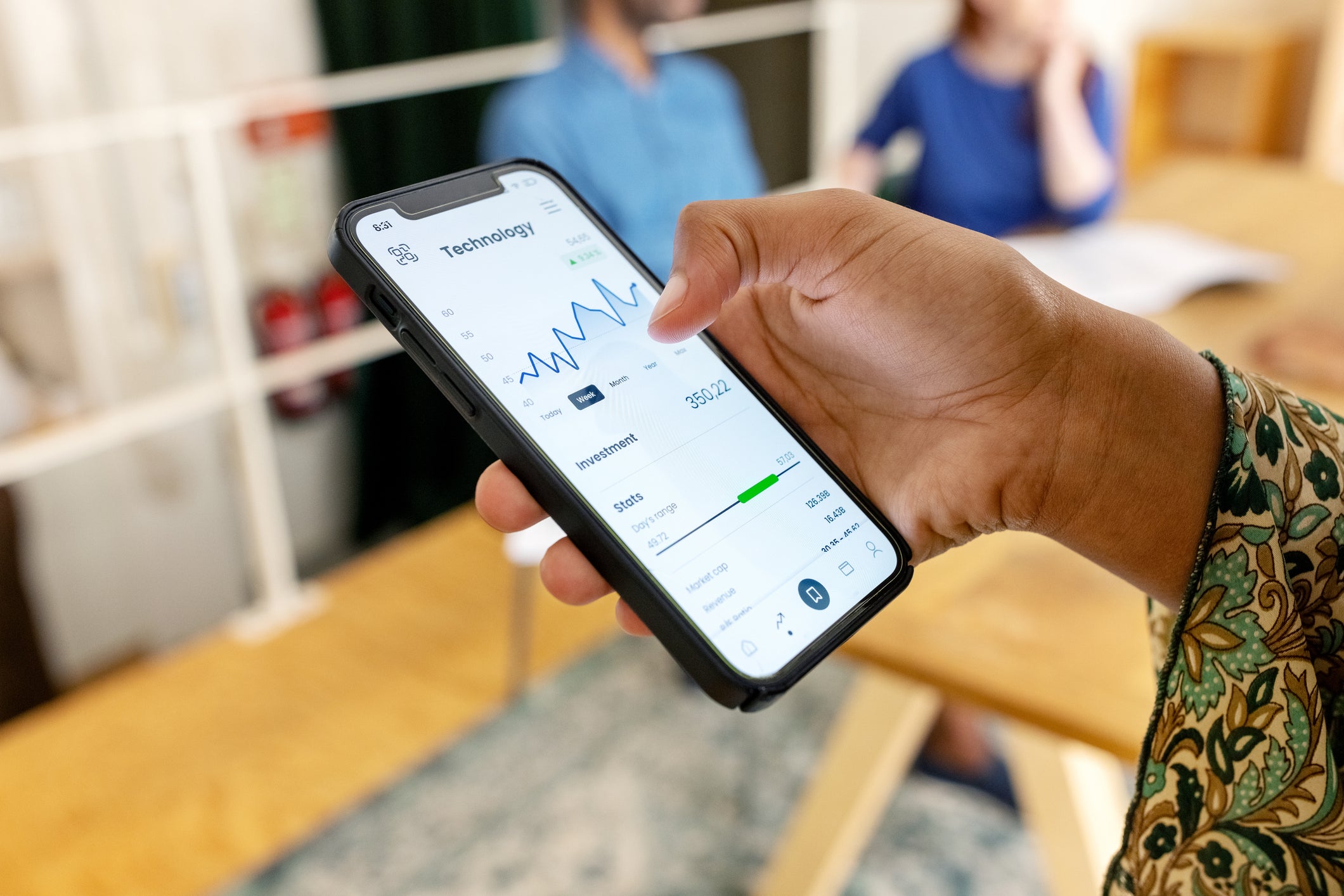
Robo-advisors are automated, algorithm-driven financial planning and investment services requiring little to no human supervision. A typical robo-advisor asks questions about your financial situation and future goals when you set up the account, then will match you to one of their ready-made portfolios and automatically invest for you.
Find your investment “playlist”
If you don’t want to go down the robo-route, but aren’t sure which to pick, you can take a look at some of last year’s best-selling funds for inspiration. These four funds below appeared on multiple investment platforms’ best-selling lists every month in 2025.
They are all low-cost global collections of shares which are well diversified. Think of them like an investment playlist curated for you to serve up a bundle of shares in one easy-to-buy package.
The idea is that you can buy one product which is very broadly spread around lots of different companies which minimises the risk of any one thing going horribly wrong.
Fidelity Index World: a very cheap way to buy about 1,300 of the world’s largest companies in one go, pre-wrapped into one single investment product which costs about £1.20 a year for every £1,000 invested here.
HSBC FTSE All-World Index: a similar global option with over 3,000 companies and emerging markets too, so you get exposure to India, China and Brazil too, for example. Good if you don’t want too much exposure to the US.
Vanguard FTSE Global All Cap Index: a very diversified option. It has shares in about 7,000–8,000 companies with a small proportion in smaller companies, about 10 per cent in emerging markets, and slightly less in the US than some peers – a bit pricier than some trackers but still really good value – about £2.30 a year for every £1,000 invested here.
Vanguard LifeStrategy 100% Equity: one with a heavier British weighting – about 20 to 25 per cent invested in the UK.
Starting from scratch
If you’re a total beginner and want one of these global options to get started, you could compare platforms which will let you buy funds and won’t cost a lot for a small amount. Hargreaves Lansdown and AJ Bell are good options if you have small balances and want to buy a fund like the above. Or you can open an ISA with Vanguard and pop one of their ready-made ‘LifeStrategy’ funds into it.
If you prefer to buy and sell shares or exchange traded funds then Trading 212 and Freetrade are good low-cost ISA providers for smaller balances.
Investing has never been easier.
The average investor age is dropping, the amount you need to invest is low, and people are investing less, but more regularly. There are plenty of different platforms, things to invest in and ways to invest.
People talk about “time in the market, not timing the market” – that means if you’re in it for the long-haul, and can afford to invest small amounts regularly, you’ll be in a great place further down the line. The most important thing is to just get started and build up over time.
When investing, your capital is at risk and you may get back less than invested. Past performance doesn’t guarantee future results.

Hetero rolls out generic semaglutide exports to over 75 countries – The Times of India

Saudi Arabia, Ukraine sign air defence deal: officials

China rolls out tariff cuts on Congo imports from April 1

-

 Entertainment1 week ago
Val Kilmer revived 1 year after death through AI
-

 Fashion6 days ago
China’s textile & apparel exports surge 17% to $50 bn in Jan-Feb 2026
-
 Business1 week ago
Video: The Effects of High Oil Prices
-
 Business7 days ago
Flipkart group CFO to leave co amid IPO plans – The Times of India
-

 Sports7 days ago
Rating Adidas’ 2026 World Cup away shirts: Argentina, Spain, Mexico and more
-
Tech1 week ago
The Corsair 4000D RS PC Case Keeps Your System Cool
-

 Sports7 days ago
American Conference Commissioner Tim Pernetti thanks Trump for Army-Navy game executive order
-

 Fashion1 week ago
The hidden $1.62 war tax now embedded in every garment you source