

Tech
Urban digital twins – missing pieces and emerging divides | Computer Weekly


Digital twins – virtual representations of environments and dynamics of interest – can address a wide range of decision-making needs and opportunities, and expectations for the technology and related applications are high.
A study from Fortune Business Insights projects the market to grow from $24bn in 2025 to more than $250bn in 2032. Digital twins can support research, planning and operations across a wide range of application areas, such as biological systems, machines and infrastructures, industrial operations, communities and cities, and even simulations of global and geopolitical dynamics. Recent discussions have centred on their use for robotics and robotics management.
The versatility of digital twins is substantial, but hurdles exist that prevent them from reaching their full potential. Some dynamics are not fully captured, while other dynamics are difficult to address comprehensively. In some cases, artificial intelligence (AI) can reduce existing limitations, but use of AI can create its own problematic issues.
Injecting human behaviour
Machines and equipment can be modelled according to physical formulas and accumulated sensor data that capture real-time and real-world behaviour. The same is true for electricity and water networks, for example. These systems are complicated but can be modelled in theory.
Complicated systems behave in predictable ways. Complex systems, in contrast, will behave differently each time, in part because of human behaviour that can change according to many influences. Most digital twins tend to omit human behaviour, while others treat human behaviour as predictable placeholders – in a way, they mechanise human behaviour. But human behaviour and interactions are of crucial importance in simulating dynamics for digital twins for cities and urban environments – after all, that’s what cities and communities are ultimately created for.
Farzin Lotfi-Jam, assistant professor at Cornell University’s College of Architecture, studies the use of technologies to govern cities. He is the director of Cornell University’s Realtime Urbanism Lab, which “investigates the impacts of new technologies that virtualise cities and populations”.
He says: “The global proliferation of urban digital twin models compels a research agenda that investigates the intertwined social, political and technical dimensions of their development, from design to use in planning and governance. In each of these digital twinning concepts is a concept of what a city is. I noticed, looking at all of these, that there’s no people anywhere in any of these concepts.”
A research field far removed from Lotfi-Jam interests could potentially add guidance in populating digital twins for cities. Tianyi Peng, assistant professor in the decision, risk and operations division at Columbia Business School, is looking at the use of AI for decision making. His research looks at what can be used to generate AI agents that mimic human behaviour, such as that in the context of market decisions like shopping preferences and reactions to product stimuli.
The current use of digital twins for urban environments is limited for the lack of realistic representations of humans and their actions and interactions. It is easy to see how the study of individual behaviour and the simulation of group interactions will find use in city digital twins over time.
Peng’s colleague Olivier Toubia, professor of business at Columbia Business School, who is investigating interactions between AI-generated behaviour and how these interactions affect collective behaviour, “combines methods from social sciences and data science to study human processes such as motivation, choice, and creativity”.
Meanwhile, Lydia Chilton, associate professor of computer science at Columbia University School of Engineering & Applied Sciences, is contributing research into how AI agents in simulated environments can mimic unique behaviours of human interactions that can be unpredictable.
Providing comprehensive data
Mutualistic technologies offer ways looks at the wider set of technologies that interact with each other with impact on digital twins and robotics. The emerging network of mutualistic technologies features AI and sensors as the glue that creates positive feedback loops between these technologies. Data is needed to create realistic representations and relevant interactions between virtual and real world. Many times, real-world data can be difficult or expensive to extract though. Then synthetic data can find use. Synesthetic data can come from simulations in digital twins or from AI-based applications.
Commercial relevance of capturing comprehensive data is substantial, particularly for digital twins for urban environments where data from many interdependent networks require inclusion to realistically mirror activities and interactions of systems in cities. Road networks affect traffic patterns and public transportation impacts how people move through cities and therefore where businesses spring up.
Electricity networks, gas distribution, water and sewage lines crisscross urban maps and affect what neighbourhoods might lose power first during outages or which areas are prone to flooding. And flooding can affect power outages, which then can affect public transportation’s reliability, and so on. A very comprehensive view of urban activities is required to visualise interdependencies.
One of the general hurdles to effective and efficient city management are the silos in which urban networks and services operate. Data cannot easily connect; platform and format issues prevent seamless interfacing between systems, thereby posing genuine hurdles to all-encompassing digital twins that can truly capture and reflect the operational, commercial and social ongoings within cities. Therefore, a first step to creating genuinely beneficial urban digital twins often is a rather mundane, administrative step. Collaboration between administrations and agencies is key and the need for compatible data is crucial.
The city of San Diego’s managers realised the importance of such collaboration and created a partnership between the San Diego Association of Governments; the San Diego Regional Economic Development Corporation; San Diego State University; University of California, San Diego; and industrial partners. Interconnected dynamics and challenges in urban environments require connected, relatable data and digital twins that can represent resulting complexities – the collaboration of city administrations and network users is the first step.
Cautioning against developing communal divides
Digital twins will transform the way we plan, design, operate and maintain equipment, networks and urban environments. AI will accelerate their development, improve their performance and enhance their usability. But on the road to ubiquitous use, hurdles and issues need overcoming – some considerations generally associated with virtualisation technologies and use, others relate to AI, which currently is experiencing almost unchecked excitement and investment.
The Brookings Institution recently highlighted the emerging industrial and geographic unevenness of implementing and leveraging AI. The diffusion of AI will occur on different timelines in various industrial sectors. Spending on AI will depend on productivity and economic growth that companies and industries will expect or experience. Available investment capital and shareholder agreement will also play a role.
While it is natural that technology-related companies and finance, logistics and manufacturers firms already foresee substantial changes to their operations, agriculture, mining, personal services (including some aspects of healthcare) and many government services will see less immediate application opportunities. AI’s use for digital twins of cities will therefore initially create uneven representation in various sectors of urban planning and management.
Existing disparities between countries and regions will create geographical unevenness in the use of AI, and therefore in the adoption and diffusion of AI-empowered digital twins. Research by the Brookings Institution states: “Artificial intelligence is transforming the US economy, yet regional disparities in talent development, research capacity and enterprise adoption are stark and not yet fully understood.”
The digital divide emerged as a major concern at the end of the 1990s. Although the effects did not pan out as dramatic as some observers initially warned, the Covid pandemic from 2020 and following years highlighted unevenness in the way individuals, regions and entire countries were able to move personal and commercial activities online. Geographical laggards could develop in which AI implementation is slow, leaving other regions to charge ahead.
The report continues: “Such gaps and deficits may result in unrealised opportunities for productivity growth across disparate industries, and limit discovery and dissemination of the full range of AI use cases. For that matter, disparities in AI readiness may leave some communities to fall behind or slump into ‘development traps’. Imbalances in AI talent, innovation infrastructure and business adoption very well could decide which people and places will prosper in the future – and which will not.”
Internationally, such gaps can lead to “geo-algorithmic inequality”. Digital twins that replicate commercial activities, urban environments, entire ecosystems and eventually even economies as a whole will support the development of climate-resilience strategies, affect investment flows and establish the foundation for regional development plans in developed countries and metropolises.
“By contrast, much of Africa, the Caribbean and parts of Southeast Asia remain invisible in major digital twin ecosystems,” says the report. Data availability is spotty, often non-existent. Therefore, “decisions around infrastructure aid, disaster prevention or carbon offsetting are made with incomplete information – or without them in mind at all”.
Thinking globally, acting locally
The impact on these regions can be dramatic. Geo-algorithmic inequality results in “the uneven inclusion of countries and communities in the simulations that shape global policy, investment, and resilience planning”, according to Brookings Institution.
The effect can cascade towards digital twins that attempt to simulate the global ecosystem. In such virtualisations of the entire planet, structural bias can encode misrepresentations in digital twins and therefore distort resulting applications.
Potential approaches to alleviate such concerns exist. The Gaia-X initiative is looking to establish digital sovereignty by establishing “an ecosystem, whereby data is shared and made available in a trustworthy environment”. And the World Avatar effort is working on an “ecosystem of tools and services that can be used to create an individual digital twin, or network of connected digital twins, to provide a platform of data and model interoperability”.
Data silos of networks or country initiatives can then easily connect to each other. Although laudable, a concerted policy framework is needed to create incentives for corporations and organisations to buy into and fully embrace such efforts.
Martin Schwirn is the author of Small data, big disruptions: How to spot signals of change and manage uncertainty (ISBN 9781632651921) on foresight and horizon scanning. He is a strategy and innovation consultant for Global 2000 companies.

In-orbit hosting services provider SpaceLocker is claiming to have reached a milestone in its history by transitioning into the ranks of satellite operators and towards a gateway to space through Out of the Box, a shared satellite model offering a direct response to both economic and environmental challenges.
SpaceLocker was founded in 2022 with the aim of becoming a global reference for access to orbit.
In the long term, the company aims to operate across multiple orbital regimes, scale its mission cadence and open space to a new generation of users.
Rather than multiplying dedicated satellites, the French orbital hosting firm said it was maximising existing capacity by hosting multiple missions on a single platform. This approach, it believes, not only reduces costs, but also helps limit space debris and decrease total mass launched into orbit.
The new phase for SpaceLocker comes a year after its first in-orbit mission, and Out of the Box is its first fully owned and operated satellite. At the core of the new service is a patented “universal space port” technology, comparable to a USB port for satellites. Plug-and-play and payload-agnostic, it is designed to transform satellites into shared infrastructures capable of hosting multiple payloads simultaneously.
Offering more detail on this transition from dedicated satellites to a “space cloud”, the company said that until now, sending technology to orbit required designing or procuring an entire satellite – a long, costly and inflexible process that has remained largely unchanged for decades. In addition, it argued that currently, nearly one in five space missions is dedicated to technology demonstration, yet these opportunities remain complex and expensive to execute. By simplifying access to orbit, SpaceLocker said it was positioning itself as a key enabler of space innovation.
“We want to do for space what cloud computing did for IT: shift from ownership to shared infrastructure,” said SpaceLocker CEO and co-founder Théophile Lagraulet. “In the future, sending an instrument to orbit won’t require building a satellite. Access to space can become a standardised service.”
With Out of the Box, SpaceLocker says it has reached a key inflection point – becoming a satellite operator and building its own mission portfolio, demonstrating rapid execution in a sector known for long development cycles.
It is deploying a 16U CubeSat (~20kg) carrying five European customers – making access to space possible without building a dedicated satellite. Customers develop their payloads independently and integrate them into a standardised “container” using the company’s universal space port. SpaceLocker then manages the full orbital stack, from integration to operations.
The company claims that such a model reduces costs “dramatically”, up to three times cheaper than traditional missions, while cutting time-to-orbit in half. It also significantly lowers environmental impact through resource sharing, and helps limit space debris and decrease total mass launched into orbit.
The Out of the Box mission carries five payloads from across the European ecosystem, showcasing the diversity of next-generation space applications. Among the customers onboard, the Out of the Box mission brings together four European players.
EDGX, which develops technologies that enable compute in orbit, will demonstrate edge computing capabilities, enabling satellites to process data onboard and reduce reliance on ground infrastructure. Fédération Open Space Makers will fly FOSM-1, a payload dedicated to amateur radio and open communication experiments, supported by CNES. Solar MEMS will operate a high-precision star tracker for satellite orientation, while Arcsec will test two advanced star trackers to demonstrate high-performance attitude determination for small satellites.

I’ve been trying to become fluent in Spanish for the last decade. After spending most of my adult life surrounded by multilinguals, I often feel like I’m playing an impossible game of catch-up. Like everyone else, I’ve tried to become regimented with practicing on an in-phone app like Duolingo, which attempts to ‘game-ify’ language learning, but mostly ends up with a sad and sick-looking green bird icon guilting me to practice every time I open up my phone.
Babbel aims to help people actually learn the language through practical conversation and grammar, using proven pedagogical methods and speech recognition technology. Each lesson is short, with 10 to 15 minute lessons developed by a team of over 150 linguists. Instead of learning the same simple phrases in ad-ridden games on an endless loop, take charge of your language learning this year and make that commitment a reality. No more excuses—we’ve got a Babbel promo code and a Babbel coupon to help you hit your goals. Maybe you’ll be fluent by your next vacation (or at least able to order a chopped cheese with confidence at the bodega).
Unlock Your Babbel Promo Code and Save Big in April 2026
Not only is Babbel a helpful interactive app to simplify language learning, but it also has holistic services to help introduce the language to every part of your life. These are things like Babbel videos, which do a deep dive into what makes a language so fascinating, Babbel podcasts, which are led by Babbel experts who take an inside look at local culture and break down language secrets, and Babbel magazine, which highlights stories from around the world so you can better understand the history, culture, and people from the language you’re learning (and maybe will inspire you to take a trip to practice that language IRL!).
Make sure you check back often to find the latest Babbel promo code for sitewide savings. There are often discounts on the subscription tiers, which range from three month plans to annual memberships. Plus, springtime is usually when there are significant Babbel discounts for new users. And, if you sign up for the Babbel newsletter, you can receive a link for a Babbel coupon in your inbox.
Save 60% on 6-Month Plans With the Healthcare Workers Discount
As stated, knowing another language is an invaluable life skill, and a skill that is immeasurably valuable to healthcare workers, who may be able to more easily give lifesaving care. Healthcare professionals and nurses get a Babbel discount of 60% off a six-month Babbel subscription. To claim the Babbel discount, users just need to verify their medical credentials via ID.me.
Claim Your 60% Military Discount on 6-Month Subscriptions
This Babbel discount also applies to active duty military, veterans, and their families, who are also eligible for 60% off six-month Babbel subscriptions. This Babbel military coupon is valid for National Guard, reserve members, and immediate family members of service personnel, and all you need to do is verify your status at ID.me.
Snag a 60% Teacher Discount on Your Next 6 Months
Babbel is also extending the 60% discount to the real unsung heroes, teachers. Knowing more than one language is an invaluable tool for educators to be able to talk more effectively to parents or guardians, as well as to more deeply understand their students’ cultural identities. Educators and teachers, like K-12 teachers, university professors, and other educational staff members, are eligible for 60% off a six-month Babbel subscription. And like the others, you just need to verify credentials through ID.me.
Grab Top Lifetime Subscription Deals and Save in April 2026
Everyone knows that learning a language is a lifetime process, and Babbel wants to make it even easier for you to commit to it. If you pay once, you’ll get access to all available Babbel languages forever with Lifetime deals. You’ll just need to look for the “Lifetime Subscription” Babbel promos that could potentially save you hundreds of dollars over several years. Be sure to check back often, as these rotating deals often pop up during major holiday sales. While the upfront cost is higher, you’ll get access to all 14 available languages with this Babbel promo code lifetime subscription deal.
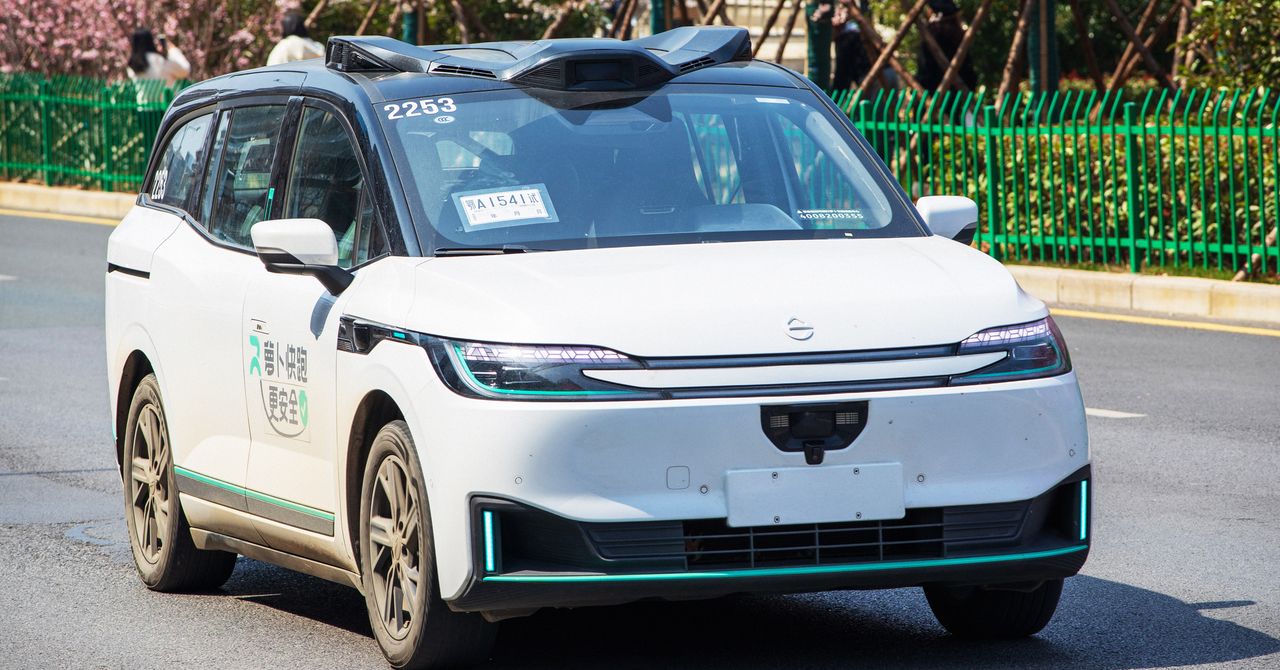
An unknown technical problem caused a number of robotaxis owned by the Chinese tech giant Baidu to freeze on Tuesday in the middle of traffic, trapping some passengers in the vehicles for more than an hour.
In Wuhan, a city in central China where Baidu has deployed hundreds of its Apollo Go self-driving taxis, people on Chinese social media reported witnessing the cars suddenly malfunction and stop operating. Photos and videos shared online show the Baidu cars halted on busy highways, often in the fast lane.
A college student in Wuhan tells WIRED that she was stuck in a Baidu robotaxi with two friends for about 90 minutes on Tuesday. (She asked to be only identified with her last name, He, to protect her privacy.) The student says the car malfunctioned and stopped four or five times during the trip before it eventually parked in front of an intersection in eastern Wuhan. Luckily, it was not a busy road, and the group was not in immediate danger. The screen display in the car asked the passengers to remain in the car with seatbelt on and wait for a company representative to come “in five minutes,” according to a photo He shared with WIRED.
He says it took about 30 minutes to reach a Baidu customer representative on the phone. “They kept saying it would be reported to their superior. But they didn’t explain what caused [the outage] or let us know how long we needed to wait for the staff to come,” He says. But no one ever came, and after another hour of waiting, the three passengers decided to just get out and go home by themselves (the doors weren’t locked).
On Chinese social media, other passengers also complained about being unable to reach Baidu’s customer support. “I tried every way I could think of to call for help using the options the app showed, but the phone line wouldn’t go through, and when I pressed the SOS button it told me it was unavailable. So then what exactly is the SOS for?” wrote one person in a post on RedNote alongside a video showing the button not working. She said she had to force the door to open and get out of the car as traffic halted to a complete stop behind her robotaxi. “Apollo Go, you really owe me an apology,” she wrote.
Baidu didn’t immediately respond to a request for comment. Local police in Wuhan issued a statement around midnight in China that said the situation was “likely caused by a system malfunction,” but the incident is still under investigation. No one was injured and all passengers have exited the vehicles, the police added. It’s unclear how many of Baidu’s robotaxis may have been impacted.
One dash cam recording posted to RedNote shows a car passing 16 Apollo Go vehicles parked on the road in the span of 90 minutes. On several occasions, the video shows the driver narrowly avoiding hitting the robotaxis by braking or changing lanes at the last minute.
Others were apparently not as fortunate. In another RedNote post, a man claimed he crashed into one of the malfunctioning Baidu vehicles. The man wrote in the caption that he was driving over 40 mph on a highway when the car in front of him suddenly changed lanes to avoid the stopped robotaxi. He couldn’t react fast enough and ended up running into the self-driving car. Photos of the man’s orange SUV being towed away show that the car’s front-right fender was completely torn off, and other parts appeared to have sustained major damage.


EU clears $6.5 bn Italy renewable hydrogen support scheme

Apparel retailer Uniqlo signs landmark deal with Los Angeles Dodgers

Visa launches new AI tools to manage the charge dispute process

-

 Politics1 week ago
Afghanistan announces release of detained US citizen
-

 Tech1 week ago
Can a Home Appliance Fix the Problem of Soft-Plastic Waste?
-

 Sports1 week ago
Broadcast industry CEO says consolidation is ‘essential’ to compete for NFL soaring media rights prices
-
 Business1 week ago
Property Play: Home flippers see smallest profits since the Great Recession, real estate data firm says
-

 Entertainment1 week ago
UN warns migratory freshwater fish numbers are spiralling
-
 Business1 week ago
Gold prices soar in Pakistan – SUCH TV
-

 Fashion1 week ago
ICE cotton slips on weaker crude, profit booking
-
 Business1 week ago
More women are entering wealth management, but few are in advisory roles, study finds