

Politics
Bangladesh PM-to-be Rahman thanks those who ‘sacrificed for democracy’

- JI vows to serve as “vigilant, principled, peaceful opposition”.
- BNP alliance won 212 seats, followed by JI’s 77.
- European Union declares Friday elections “credible”.
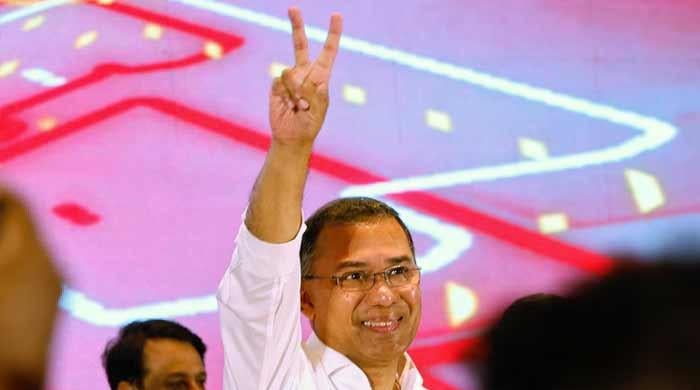
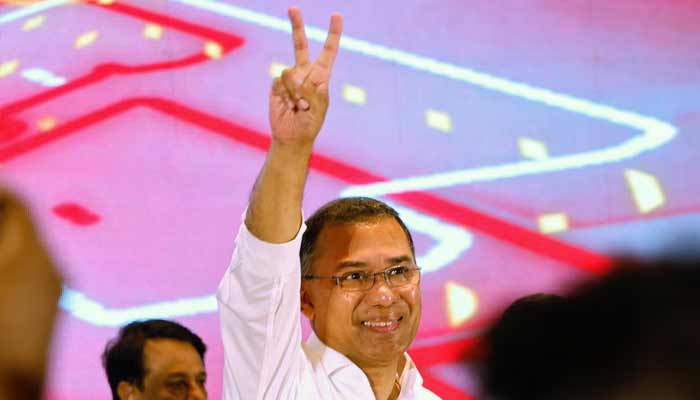
Bangladesh’s prime minister-in-waiting Tarique Rahman on Saturday dedicated his landslide election win to those who “sacrificed for democracy”, calling for unity after the first polls since a deadly 2024 uprising.
Bangladesh Nationalist Party (BNP) chief Rahman, 60, the scion of one of the most powerful political dynasties, is set to lead the South Asian nation of 170 million people after sweeping elections on Thursday.
“This victory belongs to Bangladesh, belongs to democracy,” he said, in his first speech since the vote. “This victory belongs to people who aspire to and have sacrificed for democracy.”
He will take over from an interim government that has steered Bangladesh since the student-led uprising ended the iron-fisted rule of Sheikh Hasina in August 2024.
The success of BNP chief Rahman marks a remarkable turnaround for a man who only returned to Bangladesh in December after 17 years in exile in Britain, far from Dhaka’s political storms.
The BNP alliance won 212 seats, compared with 77 for the Jamaat-e-Islami-led alliance, according to the Electoral Commission.
‘Remain united’
Jamaat chief Shafiqur Rahman, 67, had initially alleged “inconsistencies and fabrications” in the vote, but earlier on Saturday, he conceded.
He said he would “serve as a vigilant, principled, and peaceful opposition”.
He noted that his Islamist party — which had been crushed under Hasina — had quadrupled its seats in parliament from its previous best, calling it “a foundation” for the future.
Hasina’s Awami League party was barred from taking part. Hasina, 78, who was sentenced to death in absentia for crimes against humanity, issued a statement from hiding in India decrying an “illegal and unconstitutional election”.
BNP chief Rahman called for all to work together after a tumultuous political period.
“Our paths and opinions may differ, but in the interest of the country, we must remain united,” Rahman said.
‘Freedom-loving’
His father, president Ziaur Rahman, was assassinated in 1981, while his mother, Khaleda Zia, served three terms as prime minister and dominated national politics for decades.
“The freedom-loving, pro-democracy people of the country have once again brought victory to the Bangladesh Nationalist Party,” he added, in an initial speech in English, before switching to Bangla.
Retiring interim leader, Nobel laureate Muhammad Yunus, earlier on Saturday said Rahman “would help guide the country toward stability, inclusiveness, and development”.
The US embassy congratulated Rahman and the BNP for a “historic victory”, while neighbouring India praised his “decisive win”, a notable shift after deeply strained ties.
China and Pakistan, which both grew closer to Bangladesh since the 2024 uprising and the souring of ties with India, where Hasina has sheltered since her ouster, also congratulated the BNP.
International election observers said the polls had been a success, with the European Union saying on Saturday they had been “credible”.
The Election Commission said turnout was 59% across 299 constituencies out of 300 in which voting took place.
Only seven women were elected, although a further 50 seats in parliament reserved for women will be named from party lists.
Voters on Thursday also endorsed proposals in a referendum for a sweeping democratic reform charter backed by Yunus, to overhaul what he called a “completely broken” system of government and to prevent a return to one-party rule.
Those include prime ministerial term limits, a new upper house of parliament, stronger presidential powers and greater judicial independence.
But Rahman said the new government he will lead faces daunting challenges.
“We are about to begin our journey in a situation marked by a fragile economy left behind by an authoritarian regime, weakening constitutional and structural institutions, and destroying law and order,” he said.


Tensions in the Middle East have disrupted the delivery of imported goods from Dubai, leading to an increase in prices of computers, laptops and related spare parts in local markets.
Supply delays have pushed up costs for consumers, while repair work has also become more expensive, affecting citizens relying on electronic devices.
Traders cited shipment disruptions as a key factor behind the rising prices.
Politics
Israeli journalist admits reporting rescue of US airman as Trump threatens jail over ‘leak’
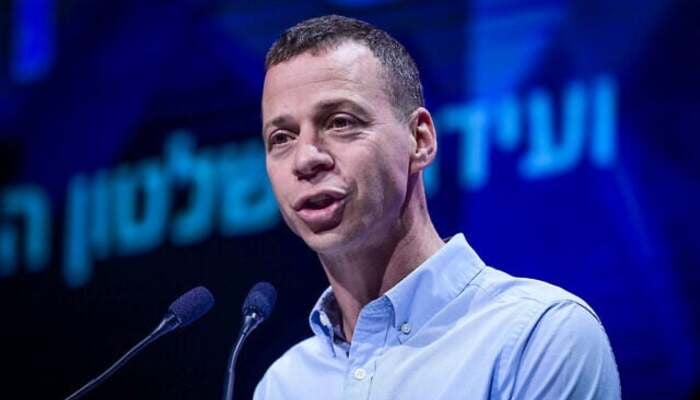
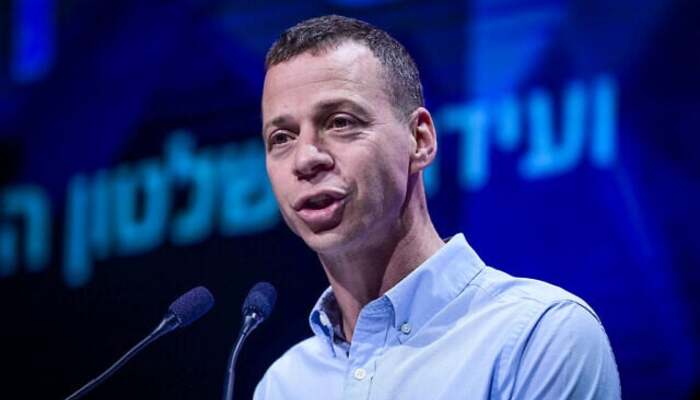
Israeli journalist Amit Segal has admitted he was the first to report that a US airman in Iran had been rescued, in a rare public confession that comes as US President Donald Trump threatens to force the reporter behind the disclosure to reveal their source or face jail.
According to Newsweek, Segal confirmed that he broke the story based on information from his sources, but said he would not reveal who provided it.
“I will safeguard my sources at all costs,” Segal said, highlighting the pressure journalists can face when reporting on sensitive military developments.
The report emerged in the aftermath of a high-stakes US military operation after an F-15E Strike Eagle was shot down over southwestern Iran on April 3. One of the two officers onboard was rescued soon after the crash, while efforts to recover the second continued for two days, fuelling concern in military and diplomatic circles.
Against that backdrop, Trump on Monday sharply escalated his criticism of the press, saying he would demand that the journalist who first reported the rescue identify how they obtained the information.
Trump said the disclosure had endangered the ongoing mission to recover the second airman, although that officer was later also rescued safely.
“We didn’t talk about the first one for an hour. Then somebody leaked something, which, we will hopefully find that leaker. We’re looking very hard to find that leaker,” Trump told a White House press conference.
“We’re going to go to the media company that released it, and we’re going to say, ‘National security, give it up or go to jail'”.
It was not immediately clear which specific media outlet or reporter Trump was referring to. Multiple news organisations, including The New York Times, CBS News and Axios, reported within a short span that one of the two airmen had been recovered by US rescue forces after the fighter jet was brought down over Iran on Friday.
The White House did not immediately respond when asked which journalist Trump was threatening.
Trump’s remarks marked a significant intensification of his administration’s attacks on the media.
In recent weeks, he has privately complained to aides that coverage of the US-Israeli war on Iran has been overly negative, while he and his allies have also publicly criticised several news organisations over their reporting on the conflict.
The pressure on broadcasters has also grown. Last month, Federal Communications Commission Chairman Brendan Carr wrote on X that broadcasters airing “fake news” had an opportunity to “correct course before their licence renewals come up”.
His post was accompanied by a screenshot of a Truth Social post by Trump, in which the president claimed that “Lowlife ‘Papers’ and Media actually want us to lose the War.”
- Afghan victims were not taking part in hostilities, says officer.
- “Victims shot by accused or by subordinates acting on his orders.”
- Smith to be charged with five counts of war crime — murder.
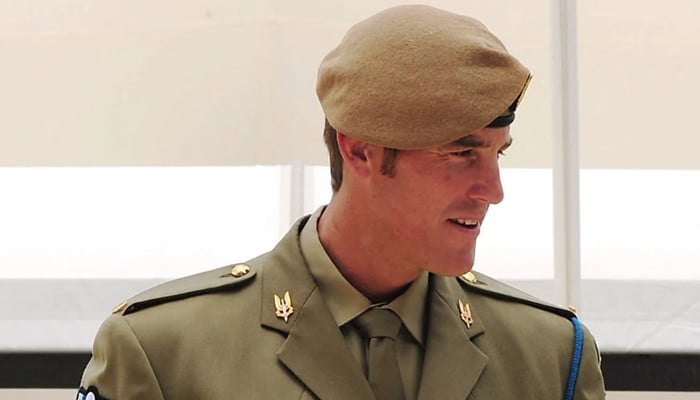
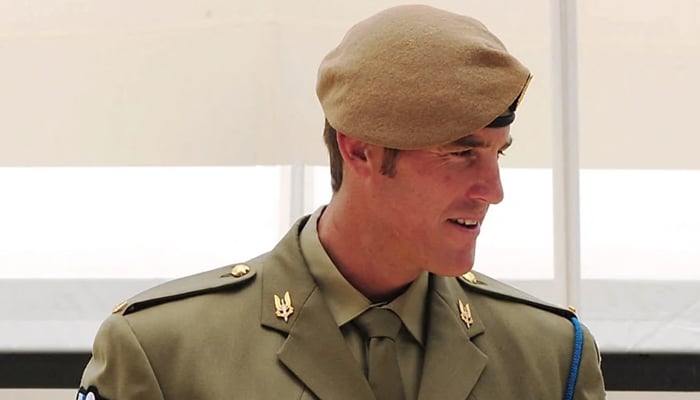
One of Australia’s most decorated soldiers was arrested on Tuesday for allegedly murdering unarmed prisoners while serving in Afghanistan, police and local media said following a sweeping war crimes probe.
The Australian Federal Police said they arrested a 47-year-old former Australian soldier, who was widely named in local media as Victoria Cross recipient Ben Roberts-Smith.
Federal police commissioner Krissy Barrett said the soldier had been linked to a string of murders while serving in Afghanistan between 2009 and 2012.
“The victims were not taking part in hostilities at the time of their alleged murder in Afghanistan,” she told reporters.
“It will be alleged the victims were shot by the accused, or shot by subordinate members acting on the orders of the accused.”
He would be charged with five counts of “war crime — murder”, she said.
A former member of the Special Air Service Regiment, Roberts-Smith was once lauded as Australia’s most distinguished living war hero.
But his reputation took a major hit in 2018, when a series of newspaper reports first linked him to the murder of unarmed Afghan prisoners by Australian troops.
Those reports would eventually trigger an ongoing police investigation into alleged war crimes carried out by Australian soldiers.
Roberts-Smith has maintained his innocence throughout, launching a multi-million-dollar legal suit against the newspapers that first reported on the allegations.
War crime allegations
Roberts-Smith won the Victoria Cross — Australia’s highest military honour — for “conspicuous gallantry” in Afghanistan while on the hunt for a senior Taliban commander.
He met Queen Elizabeth II and his image was hung in the hallowed halls of the Australian War Memorial in Canberra.
But after painstaking reporting, The Age and The Sydney Morning Herald alleged his public persona masked a pattern of criminal and immoral behaviour.
The papers alleged Roberts-Smith had kicked an unarmed Afghan civilian off a cliff and ordered subordinates to shoot him.
He was also said to have taken part in the machine-gunning of a man with a prosthetic leg, later using the limb as a drinking vessel with comrades.
Australia deployed 39,000 troops to Afghanistan over two decades as part of US and Nato-led operations against the Taliban and other militant groups.
As Australian veterans returned home, their actions have come into sharp legal focus.
A 2020 military investigation found special forces personnel “unlawfully killed” 39 Afghan civilians and prisoners, revealing allegations of summary executions, body count competitions and torture by Australian forces.
Under growing pressure, the government appointed a special investigator to probe whether current and former soldiers should face criminal charges.


Blake Lively, Justin Baldoni refuse to settle legal battle amid chaos

Relive the best moments of March Madness through the lenses

India’s exports face reset as EU links trade to carbon metrics: EY

-
Uncategorized1 week ago
[CinePlex360] Please moderate: “Further tariff
-
Uncategorized5 days ago
[CinePlex360] Please moderate: “Trump signals p
-

 Tech4 days ago
Our Favorite iPad Is $50 Off
-

 Entertainment4 days ago
Joe Jonas shares candid glimpse into parenthood with Sophie Turner
-

 Fashion6 days ago
China’s Anta Sports posts record $11.62 bn revenue in 2025
-

 Politics4 days ago
Iran can sustain Strait of Hormuz closure for years, will cut US military logistics: Official
-
 Business6 days ago
UPI transactions hit record Rs 29.53 lakh crore in March; volumes cross 22.6 billion – The Times of India
-

 Sports4 days ago
UConn Final Four run could trigger a $50M furniture giveaway for Massachusetts-based Jordan’s Furniture