

Fashion
India’s Vipul Organics Q3 revenue jumps 16.92% QoQ to reach $5 mn

The profit after tax (PAT) for the quarter came in at ₹185.55 lakh (~$204,700), up 27.89 per cent YoY. On a QoQ basis, PAT grew 2.33 per cent from ₹181.32 lakh reported in the previous quarter.
Vipul Organics has posted revenue of ₹4,637.57 lakh (~$5.11 million) in Q3 FY26, up 11.65 per cent year on year and 16.92 per cent quarter on quarter.
PAT rose 27.89 per cent YoY to ₹185.55 lakh (~$204,700).
For nine months, revenue grew 3.82 per cent while PAT jumped 35.17 per cent.
Management expects capex benefits and stronger order flow ahead.
On a standalone and consolidated basis, Q3 FY26 profit before tax (PBT) stood at ₹252.2 lakh and ₹251.94 lakh respectively, compared to ₹182.94 lakh and ₹182.79 lakh in the corresponding quarter of FY25. Earnings per share (EPS) for the quarter was ₹1.1, Vipul Organics said in a press release.
For the nine months (9M) period, total revenue reached ₹12,372.74 lakh, reflecting a 3.82 per cent rise from ₹11,916.75 lakh recorded in the same period of the previous year. PAT for the nine-month period increased significantly by 35.17 per cent to ₹493.76 lakh, compared to ₹365.28 lakh in the nine months in FY25.
During the 9M period, standalone PBT stood at ₹653.29 lakh against ₹518 lakh a year earlier. Consolidated PAT was ₹492.86 lakh, up from ₹364.33 lakh in the corresponding period last year. EPS for 9M improved to ₹2.92 on a standalone basis, compared to ₹2.26 in the previous year.
Commenting on the results, Vipul Shah, managing director, Vipul Organics Limited, said: “We have seen an improvement in our topline in this quarter. With our Capex almost done, we expect the benefits to kick in from the coming quarters. Our water membrane division has also shown traction, and we are hopeful of order flow in the coming fiscal. With Macroeconomic indicators showing improvement, your company is fully positioned to take advantage of the existing and newer business opportunities. We are also geared towards taking advantage of AI for improved operational performance and predictive analysis of product demand.”
Fibre2Fashion News Desk (SG)











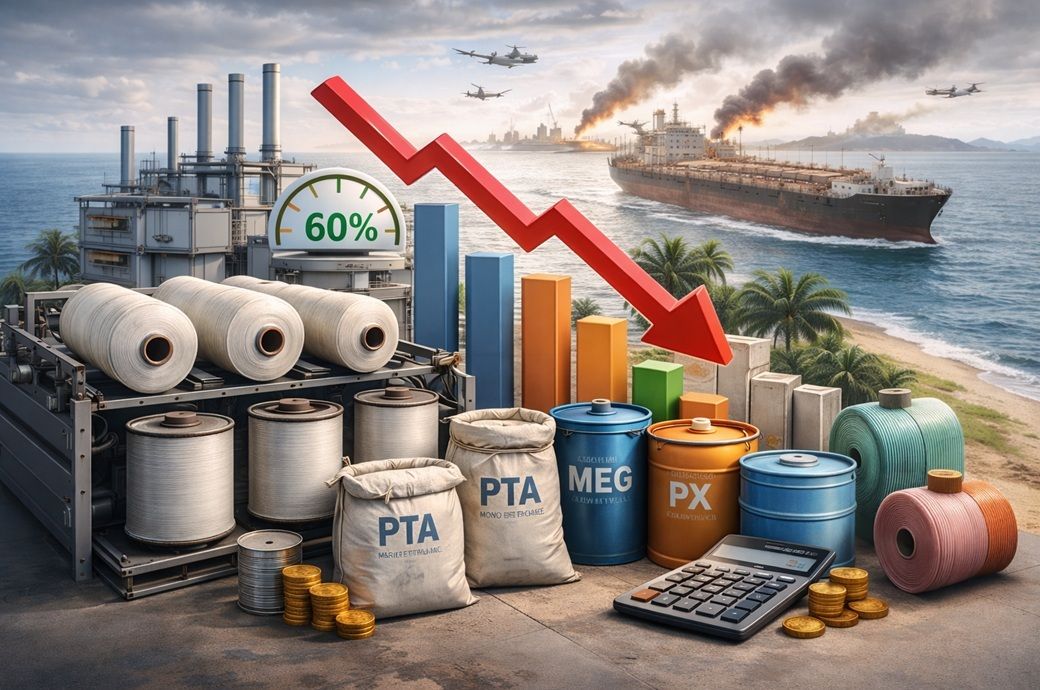
India**;s partially oriented yarn (POY) manufacturing sector has significantly scaled back production, with plant utilisation rates falling to approximately ** per cent of installed capacity. The pullback is not demand-led; rather, it is a direct consequence of extraordinary inflationary pressure in petrochemical feedstocks, compounded by supply chain uncertainty stemming from ongoing geopolitical tensions across West Asia.
Within the first week of March ****, prices of the three core inputs for POY production purified terephthalic acid (PTA), monoethylene glycol (MEG), and paraxylene (PX) rose sharply and simultaneously, catching yarn producers with limited room to adjust. The aggregate cost of the raw material basket climbed by an estimated ** to ** percent in under a month, an extraordinary pace of inflation by any historical measure in this sector.
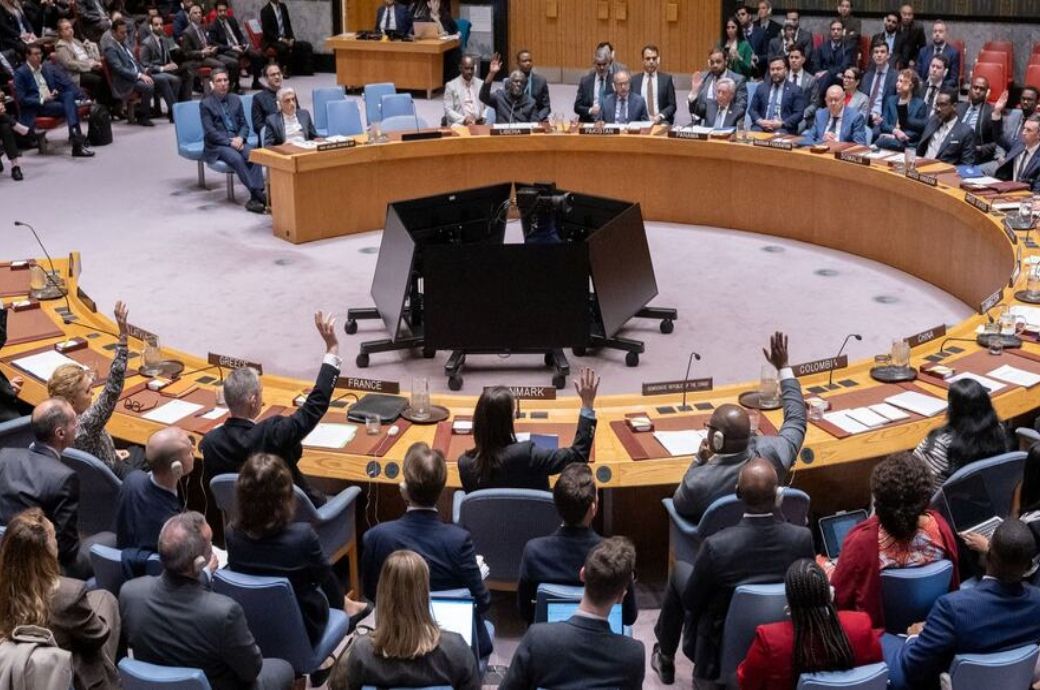
The vote followed multiple rounds of negotiations.
The UN Security Council has rejected a draft resolution submitted by several Gulf states that would have strongly encouraged countries to coordinate defensive efforts and deter attempts to interfere with navigation through the Strait of Hormuz.
By a vote of 11 in favour to two against (China, Russia), with two abstentions, a draft resolution submitted by several Gulf states could not be adopted.
Abdullatif bin Rashid Alzayani, Minister for Foreign Affairs of Bahrain and Council President for April, presided over the meeting. “We [member states of the Gulf Cooperation Council] declare loudly and unequivocally before this Council, which is charged with the maintenance of international peace and security, that [Iran] has no right to close this waterway to international navigation,” he said.
He cautioned that if the Council permits the Strait of Hormuz to remain closed today, “such a scenario would inevitably be replicated in other straits and waterways, thereby transforming the world into a jungle where force, arrogance and hegemony prevail”.
However, by a vote of 11 in favour to two against (China, Russia), with two abstentions (Colombia, Pakistan), the draft resolution could not be adopted.
The Chinese representative said that the proposed draft “failed to capture the root causes and the full picture of the conflict in a comprehensive and balanced manner”. Noting that it contained one-sided condemnations, he stressed that “this war should never have happened” and called on the United States and Israel to cease what he described as illegal military actions.
He also called on Iran to stop its attacks and noted that his delegation is currently working alongside Moscow on an alternative resolution to address the situation, according to a UN press release.
Beijing and Moscow announced plans to introduce an alternative text soon. “Our draft will be concise, equitable and balanced,” said the Russian representative.
“The objective of this draft is obvious,” stated Iran’s representative, as it seeks to “punish the victim for defending its sovereignty and vital national interests in the Persian Gulf and the Strait of Hormuz while providing political and legal cover for further unlawful acts by the aggressors”.
Fibre2Fashion News Desk (DS)


India’s POY output cut to 60% as rising costs hit producers hard

Bryson DeChambeau adds 3D-printed club to bag for Masters

This AI Button Wearable From Ex-Apple Engineers Looks Like an iPod Shuffle

-
Uncategorized7 days ago
[CinePlex360] Please moderate: “Trump signals p
-
 Business7 days ago
Jaguar Land Rover sees sales recover after cyber attack
-

 Entertainment6 days ago
Joe Jonas shares candid glimpse into parenthood with Sophie Turner
-

 Tech6 days ago
Our Favorite iPad Is $50 Off
-
 Fashion1 week ago
China’s Anta Sports posts record $11.62 bn revenue in 2025
-

 Politics6 days ago
Iran can sustain Strait of Hormuz closure for years, will cut US military logistics: Official
-

 Sports5 days ago
UConn Final Four run could trigger a $50M furniture giveaway for Massachusetts-based Jordan’s Furniture
-
 Business6 days ago
Video: Why Is the Labor Market Stuck?