

Politics
It will be hard to make deal with Iran, says US secretary of state

- Iran seeks sanctions relief in exchange for nuclear curbs.
- US deploys warships, prepares for possible military campaign.
- IAEA demands Iran account for missing enriched uranium.
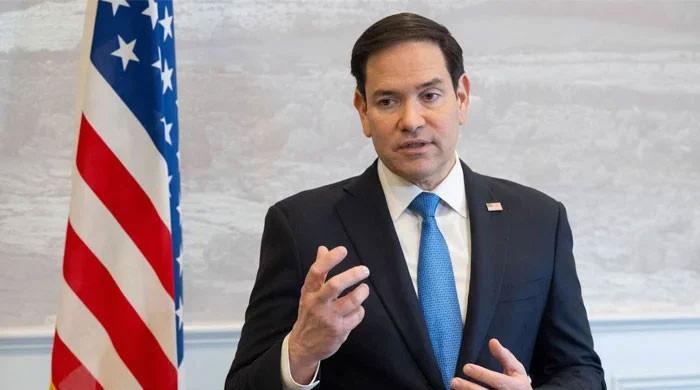
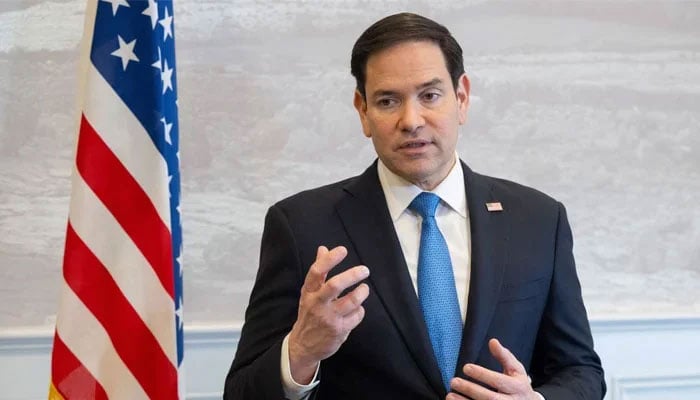
BUDAPEST: A day before Washington–Tehran nuclear talks in Geneva, US Secretary of State Marco Rubio has said that making a deal with Iran will be difficult.
The US secretary of state made the remarks during his visit to the Hungarian capital Budapest on Monday.
He said: “I think that there’s an opportunity here to diplomatically reach an agreement that addresses the things we’re concerned about. We’ll be very open and welcoming to that. But I don’t want to overstate it either.”
“It’s going to be hard. It’s been very difficult for anyone to do real deals with Iran, because we’re dealing with … who are making theological decisions, not geopolitical ones,” Rubio said:
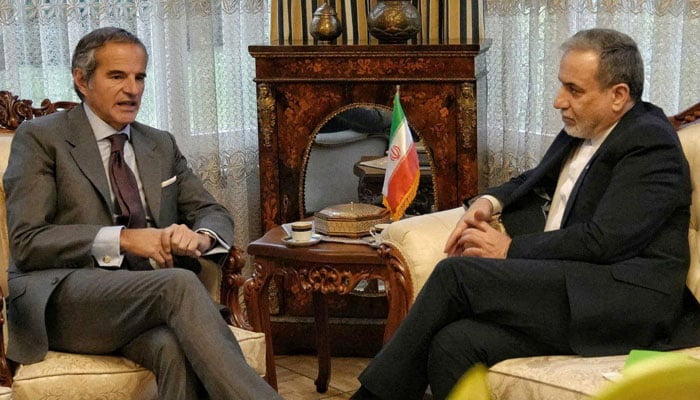
Meanwhile, Iran’s foreign minister met with the UN nuclear watchdog chief today.
The development came as Washington, which joined Israel in a wave of air strikes on Iran in June, has ordered a second aircraft carrier strike group to the Middle East in the latest standoff with Tehran, in addition to other US warships and aircraft that have already been deployed.
Adding to the tension, Iran began a military drill on Monday in the Strait of Hormuz, a vital international waterway and oil export route from Gulf Arab states, who have been appealing for diplomacy to end the dispute.
The US and Iran renewed negotiations earlier this month hoping to tackle their dispute over Tehran’s nuclear program, which Washington, other Western states and Israel all believe is aimed at building nuclear arms. Tehran denies this.
Scope of talks expands to missile stockpile
However, Washington has sought to expand the scope of talks to non-nuclear issues such as Iran’s missile stockpile. Tehran says it is only willing to discuss curbs on its nuclear programme in exchange for sanctions relief and won’t accept zero uranium enrichment. It says its missile capabilities are off the table.
Iran’s Foreign Minister Abbas Araqchi said he was in Geneva to “achieve a fair and equitable deal”.
“What is not on the table: submission before threats,” Araqchi said on X.
Iran has repeatedly threatened to close the Strait of Hormuz in retaliation against any attack, which would choke a fifth of global oil flows and send crude prices sharply higher.
The waterway connects the biggest Gulf oil producers, such as Saudi Arabia, Iran, Iraq and the United Arab Emirates, with the Gulf of Oman and the Arabian Sea.
Iran’s Revolutionary Guards have conducted a drill named “Smart Control of the Strait of Hormuz”, to test the readiness of the guards’ naval units to protect the waterway, the semi-official Tasnim news agency said on Monday.
“Intelligently utilising the geopolitical advantages of the Islamic Republic in the Persian Gulf and the Sea of Oman are among the main objectives of this exercise,” Tasnim said.
Iran’s civil defence organisation held a chemical defence drill in the Pars Special Economic Energy Zone on Monday to strengthen preparedness for potential chemical incidents in the energy hub located in southern Iran.
Deputy Foreign Minister Majid Takht-Ravanchi on Sunday signalled Iran’s readiness to compromise on its nuclear programme in return for sanctions relief, telling the BBC that the ball was “in America’s court to prove that they want to do a deal.”
Prior to the US joining Israel in striking Iranian nuclear sites in June, Iran-US nuclear talks had stalled over Washington’s demand that Tehran forgo enrichment on its soil, which the US views as a pathway to an Iranian nuclear weapon.
Iran says its nuclear programme is solely for civilian purposes and is ready to assuage concerns regarding nuclear weapons by “building trust that enrichment is and will stay for peaceful purposes.”
Iran’s Foreign Ministry said Araqchi had discussed cooperation with the International Atomic Energy Agency, as well as Tehran’s technical point of view regarding nuclear talks with the US during his meeting with IAEA head Rafael Grossi.
IAEA seeks clarity on enriched uranium
The IAEA has been calling on Iran for months to say what happened to its stockpile of 440 kg (970 pounds) of highly enriched uranium following Israeli-US strikes and let inspections fully resume, including in three key sites that were bombed in June last year: Natanz, Fordow and Isfahan.
Israeli Prime Minister Benjamin Netanyahu said on Sunday he told US President Donald Trump last week that any US deal with Iran must include the dismantling of Iran’s nuclear infrastructure, not just stopping the enrichment process.
Netanyahu said he is sceptical of a deal but it must include enriched material leaving Iran. “There shall be no enrichment capability – not stopping the enrichment process, but dismantling the equipment and the infrastructure that allows you to enrich in the first place,” he said.
- Afghan victims were not taking part in hostilities, says officer.
- “Victims shot by accused or by subordinates acting on his orders.”
- Smith to be charged with five counts of war crime — murder.
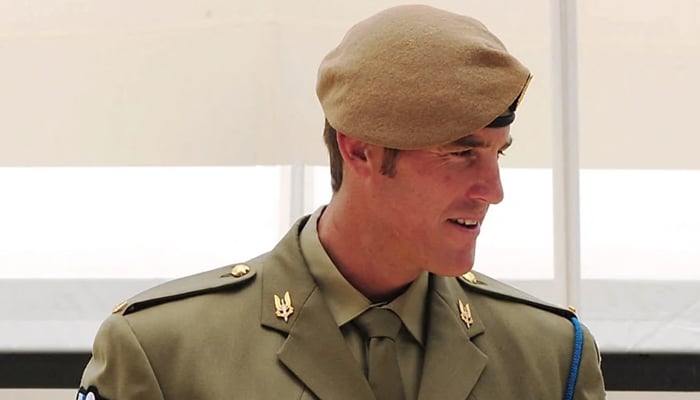
One of Australia’s most decorated soldiers was arrested on Tuesday for allegedly murdering unarmed prisoners while serving in Afghanistan, police and local media said following a sweeping war crimes probe.
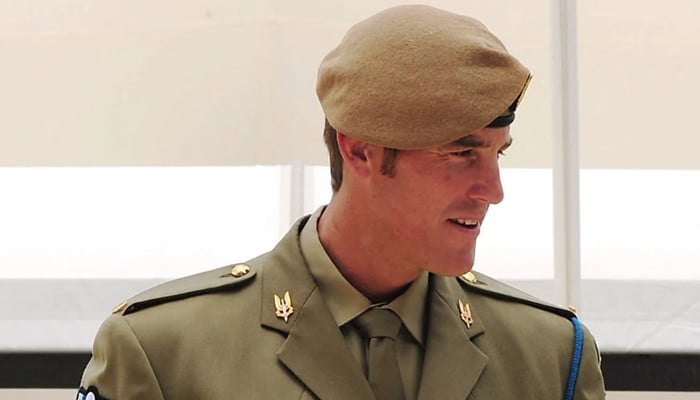
The Australian Federal Police said they arrested a 47-year-old former Australian soldier, who was widely named in local media as Victoria Cross recipient Ben Roberts-Smith.
Federal police commissioner Krissy Barrett said the soldier had been linked to a string of murders while serving in Afghanistan between 2009 and 2012.
“The victims were not taking part in hostilities at the time of their alleged murder in Afghanistan,” she told reporters.
“It will be alleged the victims were shot by the accused, or shot by subordinate members acting on the orders of the accused.”
He would be charged with five counts of “war crime — murder”, she said.
A former member of the Special Air Service Regiment, Roberts-Smith was once lauded as Australia’s most distinguished living war hero.
But his reputation took a major hit in 2018, when a series of newspaper reports first linked him to the murder of unarmed Afghan prisoners by Australian troops.
Those reports would eventually trigger an ongoing police investigation into alleged war crimes carried out by Australian soldiers.
Roberts-Smith has maintained his innocence throughout, launching a multi-million-dollar legal suit against the newspapers that first reported on the allegations.
War crime allegations
Roberts-Smith won the Victoria Cross — Australia’s highest military honour — for “conspicuous gallantry” in Afghanistan while on the hunt for a senior Taliban commander.
He met Queen Elizabeth II and his image was hung in the hallowed halls of the Australian War Memorial in Canberra.
But after painstaking reporting, The Age and The Sydney Morning Herald alleged his public persona masked a pattern of criminal and immoral behaviour.
The papers alleged Roberts-Smith had kicked an unarmed Afghan civilian off a cliff and ordered subordinates to shoot him.
He was also said to have taken part in the machine-gunning of a man with a prosthetic leg, later using the limb as a drinking vessel with comrades.
Australia deployed 39,000 troops to Afghanistan over two decades as part of US and Nato-led operations against the Taliban and other militant groups.
As Australian veterans returned home, their actions have come into sharp legal focus.
A 2020 military investigation found special forces personnel “unlawfully killed” 39 Afghan civilians and prisoners, revealing allegations of summary executions, body count competitions and torture by Australian forces.
Under growing pressure, the government appointed a special investigator to probe whether current and former soldiers should face criminal charges.
The war in the Middle East will lead to higher inflation and slower global growth, the head of the International Monetary Fund (IMF) told Reuters on Monday, ahead of a forecast for the world economy planned by the global lender for next week.
The war has triggered the worst-ever disruption in global energy supply, with millions of barrels of oil production shuttered due to Iran’s effective blockage of the Strait of Hormuz, crucial for shipping one-fifth of the world’s oil and gas.
Even if the conflict is swiftly resolved, the IMF is set to reduce its forecast for economic growth and bump up its outlook for inflation, Kristalina Georgieva, managing director of the IMF, said.
The war is expected to dominate discussions among finance officials from around the world at next week’s spring meetings of the IMF and World Bank in Washington.
The Fund is expected to release a range of scenarios in its upcoming World Economic Outlook due on April 14.
It signalled a possible downgrade in a March 30 blog post, citing the asymmetric shock of the war and tighter financial conditions. Without the war, Georgieva said the IMF had expected a small upgrade in its projection for global growth of 3.3% in 2026 and 3.2% in 2027 as economies continue to recover from the pandemic.
“Instead, all roads now lead to higher prices and slower growth,” said Georgieva, who will preview the spring meetings in a speech on Thursday. World Bank President Ajay Banga will present his view at an Atlantic Council event on Tuesday.
“We are in a world of elevated uncertainty,” the IMF chief said, citing geopolitical tensions, technological advancements, climate shocks and demographic shifts. “All of this means that after we recover from this shock, we need to keep our eyes open for the next one.”
The war has shrunk global oil supply by 13%, Georgieva said, with the impact rippling through oil and gas shipments and into related supply chains such as helium and fertilisers.
Even a rapid end to hostilities and a fairly rapid recovery will result in a “relatively small” downward revision of the growth forecast and an upward revision of its inflation forecast, she said. If the war is protracted, the effect on inflation and growth will be greater.
Poor countries will be hit harder
Poor, vulnerable countries with no energy reserves will be hardest hit, Georgieva added, noting that many countries had little to no fiscal space to help their populations weather the price increases caused by the war, which in turn also increased the prospects of social unrest.
Georgieva said some countries had already asked for funding help, but did not name them. She said the IMF could augment some existing lending programs to meet countries’ needs. Eighty-five percent of the IMF’s members are energy importers.
Broad energy subsidies were not the answer, she said, urging policymakers to avoid government payments that could further inflame inflationary pressures.
The impact has been asymmetric, hitting energy-importing countries hardest, but even energy exporters such as Qatar are feeling the effect from Iranian strikes against their production facilities.
Qatar expects it will take three to five years to restore 17% of its natural gas production because of the damage, Georgieva said, while the International Energy Agency has reported 72 energy facilities have been damaged in the war, one-third of which have suffered significant damage.
“Even if the war is to stop today, there would be a lingering negative impact to the rest of the world,” she said.
Food security a concern
After the US and Israel attacked on February 28, Iran effectively closed the Strait of Hormuz, sending the price of crude oil and liquefied natural gas sharply higher.
The international Brent crude benchmark settled near $110 on Monday, with cash benchmarks sourced to the Middle East at a substantial premium to that price.
The heads of the IMF, IEA and World Bank said last week they would form a coordinated effort to assess the energy and economic effects of the war.
Georgieva said the IMF was also engaging with the United Nations’ World Food Programme and Food and Agriculture Organisation on food security.
The World Food Programme said in mid-March that millions of people will face acute hunger if the war continues into June. Georgieva said the IMF did not see a food crisis yet, but that could happen if the delivery of fertilisers were impaired.
- Iran rejects demands permanent end to conflict via Pakistan.
- Iran’s response includes lifting sanctions, safe passage in Hormuz.
- Trump threatens severe action if Iran does not agree to deal.
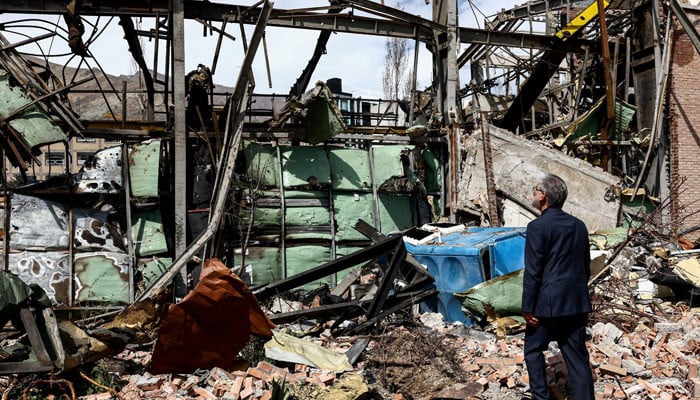
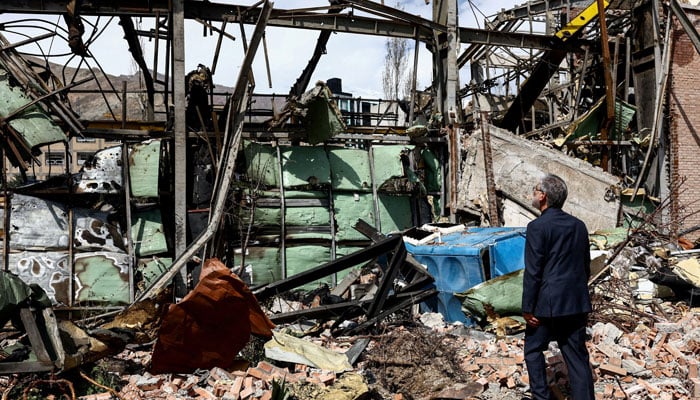
Iran said on Monday it wanted a lasting end to the war with the US and Israel, and pushed back against pressure to swiftly reopen the Strait of Hormuz under a temporary ceasefire as the Americans and the Iranians weighed a framework plan to cease their five‑week-old conflict.
Iran conveyed its response to the US proposal for ending the war to Pakistan, rejecting a ceasefire and emphasising the necessity of a permanent end to the war, the official IRNA news agency said on Monday.
The Iranian response consisted of 10 clauses, including an end to conflicts in the region, a protocol for safe passage through the Strait of Hormuz, lifting of sanctions, and reconstruction, the agency added.
President Donald Trump, who has threatened to rain “hell” on Tehran if it did not make a deal by 8pm EDT Tuesday (midnight GMT) to open the vital route for global energy supplies, rejected the Iranian proposal on Monday and said his deadline was final.
“They made a proposal, and it’s a significant proposal. It’s a significant step. It’s not good enough,” Trump told reporters at an annual White House Easter event, referring to Iran.
Iran responded to US and Israeli attacks in February by effectively closing Hormuz, a conduit for about a fifth of the world’s oil and natural gas supply. The waterway’s stranglehold on the global economy has proved a powerful Iranian bargaining chip and on Monday it showed reluctance to relinquish it too easily.
The Pakistani-brokered framework for ending the war emerged from intense overnight contacts and proposes an immediate ceasefire, followed by talks on a broader peace settlement to be concluded within 15 to 20 days, a source aware of the proposals said on Monday.
Chief of Army Staff (COAS) and Chief of Defence Forces (CDF), Field Marshal Asim Munir, was in contact “all night long” with US Vice President JD Vance, special envoy Steve Witkoff and Iranian Foreign Minister Abbas Araqchi, the source said.
Iran’s foreign ministry spokesperson Esmaeil Baghaei said on Monday that Tehran’s demands “should not be interpreted as a sign of compromise, but rather as a reflection of its confidence in defending its positions.” He added that earlier US demands, such as a 15-point plan, were rejected as “excessive”.
Ceasefire proposal ‘one of many ideas’
“This is one of many ideas, and (Trump) has not signed off on it. Operation Epic Fury continues,” White House official told Reuters, referring to the US name for the operation against Iran.
Brent crude futures LCOc1 were up 0.5% to $109.60 a barrel at 1545 GMT.
In a post laden with expletives on his Truth Social platform on Sunday, Trump threatened further strikes on Iranian energy and transport infrastructure if Iran failed to make a deal and reopen the Strait by Tuesday.
Anwar Gargash, an adviser to the president of the United Arab Emirates, said any settlement must guarantee access through Hormuz. He warned that a deal that failed to rein in Iran’s nuclear programme and its missiles and drones would pave the way for “a more dangerous, more volatile Middle East”.
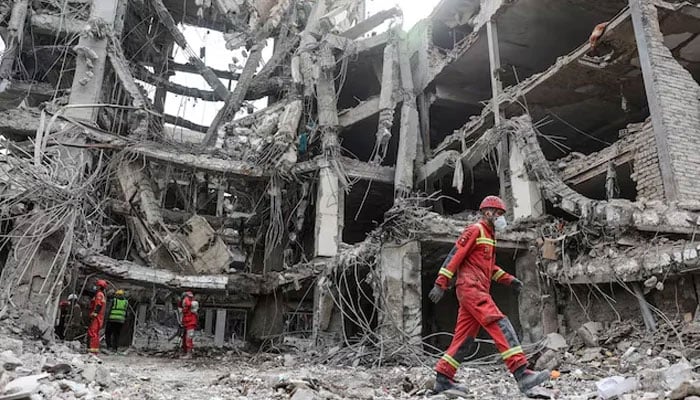
Fresh aerial strikes were reported across the region on Monday, more than five weeks since the US and Israel began pounding Iran in a war that has killed thousands and damaged economies by sending oil prices surging.
Iranian state media said the Revolutionary Guards’ intelligence chief, Majid Khademi, has died. Israel on Monday claimed responsibility for his death.
A US-Israeli attack hit the data centre at Sharif University of Technology in Tehran, damaging infrastructure underpinning the country’s national artificial intelligence platform and thousands of other services, Fars News Agency said on Sunday.
Iran continues to fight back
Iranian weekend strikes on petrochemical facilities and an Israeli-linked vessel in Kuwait, Bahrain and the UAE underscored the country’s ability to fight back despite Trump’s repeated claims to have knocked out its missile and drone capabilities.
Israel saw a heavy day of rocket volleys on Monday, with the sounds of sirens and missile interception booms ringing out across the country throughout the day.
Israel’s military told Reuters there had been 20 missile launches from Lebanon and five from Iran during the day. Several of the attacks resulted in impacts, although it was unclear whether it was from falling missile debris or direct strikes.
A missile hit Haifa overnight, tearing a building apart and killing four under the rubble, taking the death toll in Israel to 23, according to Israel’s ambulance service.
Yemen’s Iran-aligned Houthis said on Monday that they also carried out missile and drones attack against Israel.
About 3,540 people have been killed in Iran in the war, including at least 244 children, said US-based rights group HRANA.
Israel has also invaded southern Lebanon and struck Beirut in a fight against Iran-backed Hezbollah that has become the most violent spillover of the war on Iran.
Lebanon’s heavy casualties include 1,461 killed, including at least 124 children, Lebanese authorities say.
Thirteen US service members have died and hundreds of others have been wounded.


How Dusty May and Michigan turned a team of transfers into a national champion

India’s major ports handle record 915 MT cargo in FY 2025-26

Turkiye’s apparel exports ease 2.8% in Jan-Feb 2026

-
Uncategorized4 days ago
[CinePlex360] Please moderate: “Trump signals p
-
Uncategorized1 week ago
[CinePlex360] Please moderate: “Further tariff
-

 Tech3 days ago
Our Favorite iPad Is $50 Off
-

 Entertainment3 days ago
Joe Jonas shares candid glimpse into parenthood with Sophie Turner
-

 Fashion6 days ago
China’s Anta Sports posts record $11.62 bn revenue in 2025
-
 Politics1 week ago
Trump considers asking Arab allies to help to pay for Iran war
-
 Business6 days ago
UPI transactions hit record Rs 29.53 lakh crore in March; volumes cross 22.6 billion – The Times of India
-
 Sports1 week ago
Fakhar Zaman denies ball-tampering charge in PSL match | The Express Tribune