

Politics
Bangladesh’s Yunus announces resignation, end of interim govt

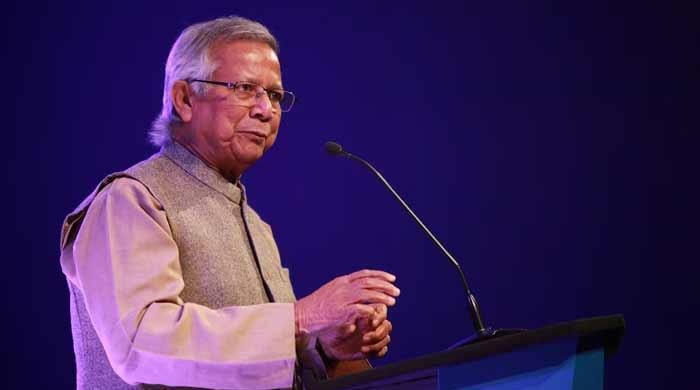
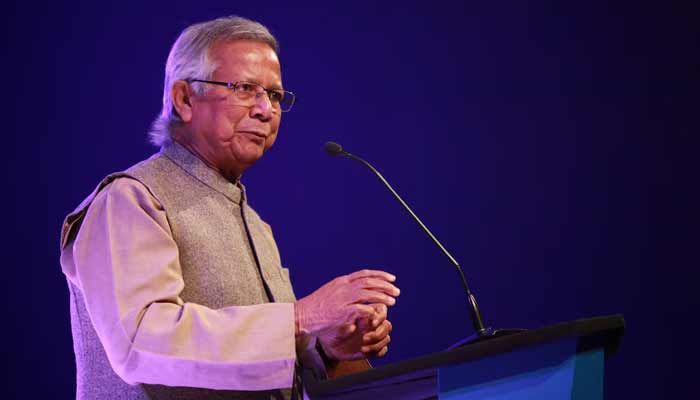
- “That was the day of great liberation,” says Yunus.
- Newly-elected lawmakers expected to sworn in on Tuesday.
- Ex-interim leader congratulated BNP over landslide victory.
DHAKA: Bangladesh’s interim leader Muhammad Yunus stepped down on Monday in a farewell broadcast to the nation before handing over to an elected government.
“Today, the interim government is stepping down,” the 85-year-old Nobel Peace Prize winner said.
“But let the practice of democracy, freedom of speech, and fundamental rights that has begun not be halted.”
Yunus returned from self-imposed exile in August 2024, days after the iron-fisted government of Sheikh Hasina was overthrown by a student-led uprising and she fled by helicopter to India.
“That was the day of great liberation,” he said. “What a day of joy it was! Bangladeshis across the world shed tears of happiness. The youth of our country freed it from the grip of a demon.”
He has led Bangladesh as its “chief adviser” since, and now hands over power after congratulating the Bangladesh Nationalist Party (BNP) and its leader Tarique Rahman on a “landslide victory” in elections last week.
“The people, voters, political parties, and stakeholder institutions linked to the election have set a commendable example,” Yunus said.
“This election has set a benchmark for future elections.”
Rahman, 60, chief of the BNP and scion of one of the country’s most powerful political dynasties, will lead the South Asian nation of 170 million.
‘Rebuilt institutions’
Bangladeshi voters endorsed sweeping democratic reforms in a national referendum, a key pillar of Yunus’s post-uprising transition agenda, on the same day as the elections.
The lengthy document, known as the “July Charter” after the month when the uprising that toppled Hasina began, proposes term limits for prime ministers, the creation of an upper house of parliament, stronger presidential powers and greater judicial independence.
“We did not start from zero — we started from a deficit,” he said.
“Sweeping away the ruins, we rebuilt institutions and set the course for reforms.”
The referendum noted that approval would make the charter “binding on the parties that win” the election, obliging them to endorse it.
However, several parties raised questions before the vote, and the reforms will still require ratification by the new parliament.
The BNP alliance won 212 seats, compared with 77 for the Jamaat-e-Islami-led alliance, according to the Election Commission.
Jamaat chief Shafiqur Rahman conceded on Saturday, saying his party would “serve as a vigilant, principled, and peaceful opposition.”
Newly elected lawmakers are expected to be sworn in on Tuesday, after which Tarique Rahman is set to become Bangladesh’s next prime minister.
Police records show that political clashes during the campaign period killed five people and injured more than 600.
However, despite weeks of turbulence ahead of the polls, voting day passed without major unrest and the country has responded to the results with relative calm.
The war in the Middle East will lead to higher inflation and slower global growth, the head of the International Monetary Fund (IMF) told Reuters on Monday, ahead of a forecast for the world economy planned by the global lender for next week.
The war has triggered the worst-ever disruption in global energy supply, with millions of barrels of oil production shuttered due to Iran’s effective blockage of the Strait of Hormuz, crucial for shipping one-fifth of the world’s oil and gas.
Even if the conflict is swiftly resolved, the IMF is set to reduce its forecast for economic growth and bump up its outlook for inflation, Kristalina Georgieva, managing director of the IMF, said.
The war is expected to dominate discussions among finance officials from around the world at next week’s spring meetings of the IMF and World Bank in Washington.
The Fund is expected to release a range of scenarios in its upcoming World Economic Outlook due on April 14.
It signalled a possible downgrade in a March 30 blog post, citing the asymmetric shock of the war and tighter financial conditions. Without the war, Georgieva said the IMF had expected a small upgrade in its projection for global growth of 3.3% in 2026 and 3.2% in 2027 as economies continue to recover from the pandemic.
“Instead, all roads now lead to higher prices and slower growth,” said Georgieva, who will preview the spring meetings in a speech on Thursday. World Bank President Ajay Banga will present his view at an Atlantic Council event on Tuesday.
“We are in a world of elevated uncertainty,” the IMF chief said, citing geopolitical tensions, technological advancements, climate shocks and demographic shifts. “All of this means that after we recover from this shock, we need to keep our eyes open for the next one.”
The war has shrunk global oil supply by 13%, Georgieva said, with the impact rippling through oil and gas shipments and into related supply chains such as helium and fertilisers.
Even a rapid end to hostilities and a fairly rapid recovery will result in a “relatively small” downward revision of the growth forecast and an upward revision of its inflation forecast, she said. If the war is protracted, the effect on inflation and growth will be greater.
Poor countries will be hit harder
Poor, vulnerable countries with no energy reserves will be hardest hit, Georgieva added, noting that many countries had little to no fiscal space to help their populations weather the price increases caused by the war, which in turn also increased the prospects of social unrest.
Georgieva said some countries had already asked for funding help, but did not name them. She said the IMF could augment some existing lending programs to meet countries’ needs. Eighty-five percent of the IMF’s members are energy importers.
Broad energy subsidies were not the answer, she said, urging policymakers to avoid government payments that could further inflame inflationary pressures.
The impact has been asymmetric, hitting energy-importing countries hardest, but even energy exporters such as Qatar are feeling the effect from Iranian strikes against their production facilities.
Qatar expects it will take three to five years to restore 17% of its natural gas production because of the damage, Georgieva said, while the International Energy Agency has reported 72 energy facilities have been damaged in the war, one-third of which have suffered significant damage.
“Even if the war is to stop today, there would be a lingering negative impact to the rest of the world,” she said.
Food security a concern
After the US and Israel attacked on February 28, Iran effectively closed the Strait of Hormuz, sending the price of crude oil and liquefied natural gas sharply higher.
The international Brent crude benchmark settled near $110 on Monday, with cash benchmarks sourced to the Middle East at a substantial premium to that price.
The heads of the IMF, IEA and World Bank said last week they would form a coordinated effort to assess the energy and economic effects of the war.
Georgieva said the IMF was also engaging with the United Nations’ World Food Programme and Food and Agriculture Organisation on food security.
The World Food Programme said in mid-March that millions of people will face acute hunger if the war continues into June. Georgieva said the IMF did not see a food crisis yet, but that could happen if the delivery of fertilisers were impaired.
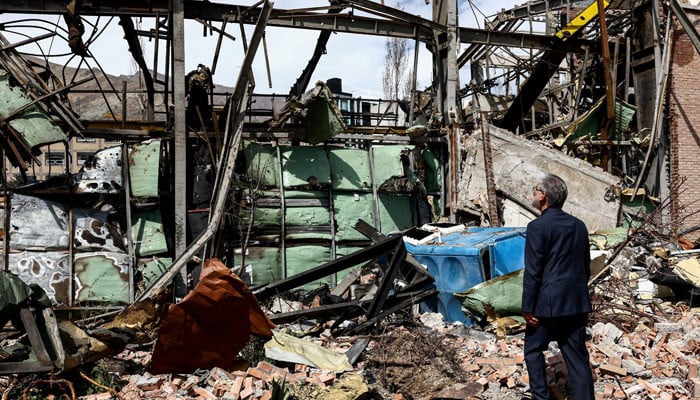
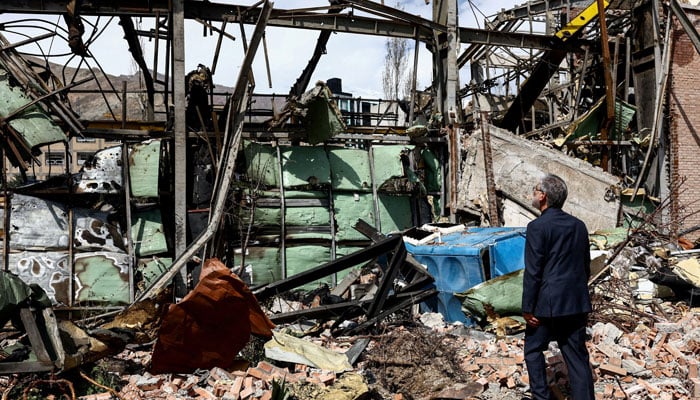
- Iran rejects demands permanent end to conflict via Pakistan.
- Iran’s response includes lifting sanctions, safe passage in Hormuz.
- Trump threatens severe action if Iran does not agree to deal.
Iran said on Monday it wanted a lasting end to the war with the US and Israel, and pushed back against pressure to swiftly reopen the Strait of Hormuz under a temporary ceasefire as the Americans and the Iranians weighed a framework plan to cease their five‑week-old conflict.
Iran conveyed its response to the US proposal for ending the war to Pakistan, rejecting a ceasefire and emphasising the necessity of a permanent end to the war, the official IRNA news agency said on Monday.
The Iranian response consisted of 10 clauses, including an end to conflicts in the region, a protocol for safe passage through the Strait of Hormuz, lifting of sanctions, and reconstruction, the agency added.
President Donald Trump, who has threatened to rain “hell” on Tehran if it did not make a deal by 8pm EDT Tuesday (midnight GMT) to open the vital route for global energy supplies, rejected the Iranian proposal on Monday and said his deadline was final.
“They made a proposal, and it’s a significant proposal. It’s a significant step. It’s not good enough,” Trump told reporters at an annual White House Easter event, referring to Iran.
Iran responded to US and Israeli attacks in February by effectively closing Hormuz, a conduit for about a fifth of the world’s oil and natural gas supply. The waterway’s stranglehold on the global economy has proved a powerful Iranian bargaining chip and on Monday it showed reluctance to relinquish it too easily.
The Pakistani-brokered framework for ending the war emerged from intense overnight contacts and proposes an immediate ceasefire, followed by talks on a broader peace settlement to be concluded within 15 to 20 days, a source aware of the proposals said on Monday.
Chief of Army Staff (COAS) and Chief of Defence Forces (CDF), Field Marshal Asim Munir, was in contact “all night long” with US Vice President JD Vance, special envoy Steve Witkoff and Iranian Foreign Minister Abbas Araqchi, the source said.
Iran’s foreign ministry spokesperson Esmaeil Baghaei said on Monday that Tehran’s demands “should not be interpreted as a sign of compromise, but rather as a reflection of its confidence in defending its positions.” He added that earlier US demands, such as a 15-point plan, were rejected as “excessive”.
Ceasefire proposal ‘one of many ideas’
“This is one of many ideas, and (Trump) has not signed off on it. Operation Epic Fury continues,” White House official told Reuters, referring to the US name for the operation against Iran.
Brent crude futures LCOc1 were up 0.5% to $109.60 a barrel at 1545 GMT.
In a post laden with expletives on his Truth Social platform on Sunday, Trump threatened further strikes on Iranian energy and transport infrastructure if Iran failed to make a deal and reopen the Strait by Tuesday.
Anwar Gargash, an adviser to the president of the United Arab Emirates, said any settlement must guarantee access through Hormuz. He warned that a deal that failed to rein in Iran’s nuclear programme and its missiles and drones would pave the way for “a more dangerous, more volatile Middle East”.
Fresh aerial strikes were reported across the region on Monday, more than five weeks since the US and Israel began pounding Iran in a war that has killed thousands and damaged economies by sending oil prices surging.
Iranian state media said the Revolutionary Guards’ intelligence chief, Majid Khademi, has died. Israel on Monday claimed responsibility for his death.
A US-Israeli attack hit the data centre at Sharif University of Technology in Tehran, damaging infrastructure underpinning the country’s national artificial intelligence platform and thousands of other services, Fars News Agency said on Sunday.
Iran continues to fight back
Iranian weekend strikes on petrochemical facilities and an Israeli-linked vessel in Kuwait, Bahrain and the UAE underscored the country’s ability to fight back despite Trump’s repeated claims to have knocked out its missile and drone capabilities.
Israel saw a heavy day of rocket volleys on Monday, with the sounds of sirens and missile interception booms ringing out across the country throughout the day.
Israel’s military told Reuters there had been 20 missile launches from Lebanon and five from Iran during the day. Several of the attacks resulted in impacts, although it was unclear whether it was from falling missile debris or direct strikes.
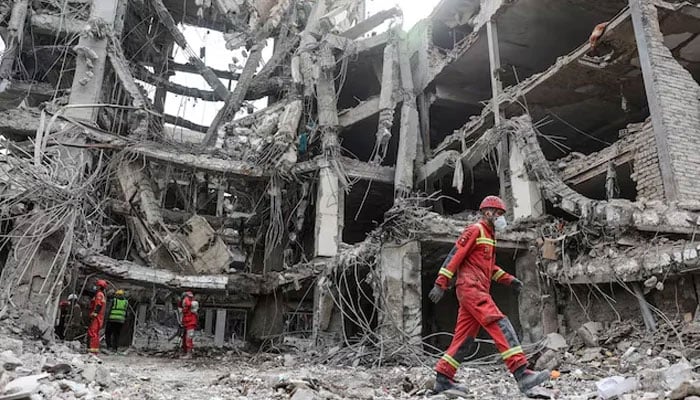
A missile hit Haifa overnight, tearing a building apart and killing four under the rubble, taking the death toll in Israel to 23, according to Israel’s ambulance service.
Yemen’s Iran-aligned Houthis said on Monday that they also carried out missile and drones attack against Israel.
About 3,540 people have been killed in Iran in the war, including at least 244 children, said US-based rights group HRANA.
Israel has also invaded southern Lebanon and struck Beirut in a fight against Iran-backed Hezbollah that has become the most violent spillover of the war on Iran.
Lebanon’s heavy casualties include 1,461 killed, including at least 124 children, Lebanese authorities say.
Thirteen US service members have died and hundreds of others have been wounded.
Politics
‘Sprit of resistance will continue’: Iran officials condemn Israeli assassination of IRGC intel. chief
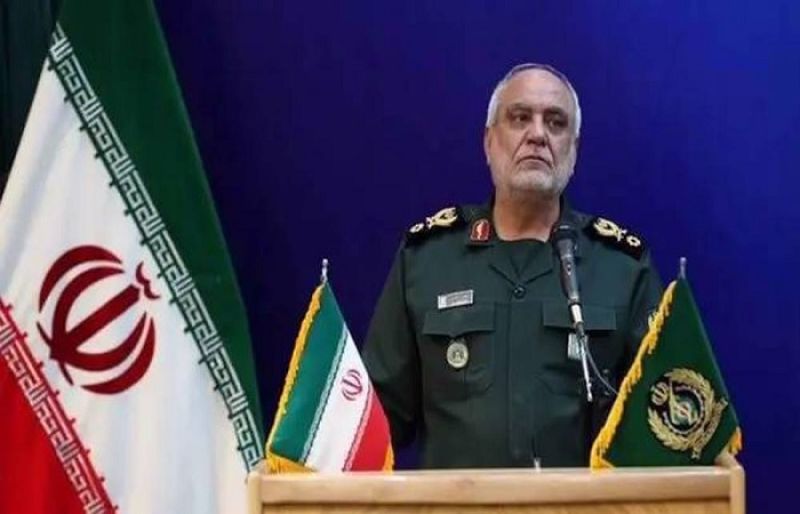
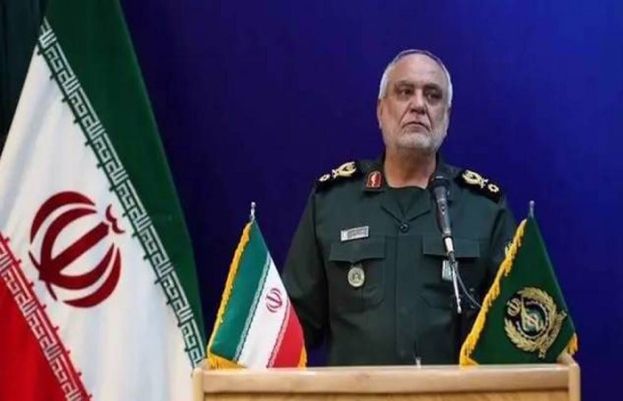
Messages of condolences pour in after the head of the Intelligence Organization of the Islamic Revolution Guards Corps (IRGC), Major General Majid Khademi, was assassinated in a US-Israeli terror strike in Tehran.
In a statement on Monday, the IRGC Public Relations Department said General Khademi, an elite commander, was martyred in the terrorist attack in the early hours of the day.
Major General Ali Abdollahi, commander of Iran’s Khatam al-Anbiya Central Headquarters, praised Khademi for his great endeavors to protect Islamic values and defend national security. He was martyred, Abdollahi said, by the “most vicious American-Israeli terrorists”.
The American and Zionist enemies must know that the martyrdom of such devoted commanders will make the Iranian nation and armed forces even “more resilient and determined” to keep on the path of the martyrs, General Abdollahi said.
‘Assassination will not undermine Iran’s national coherence’
Commander-in-chief of the Iranian Army Major General Amir Hatami said the barbarism put on global display by the American-Israeli enemy will fail to influence the “spirit of resistance of the proud Iranian nation”.
Iran’s adversaries, he said, are under the delusion that they can make any achievement through such wicked and blind moves. But the blood of martyrs only strengthens national will.
“This painful loss will not weaken the morale of the great Iranian people but rather strengthen national resolve and unity toward safeguarding independence and dignity”.
‘Enemies must await harder blows’
Parliament Speaker Mohammad Baqer Qalibaf said the martyrdom of the head of the IRGC Intelligence Organization is proof that the Israeli regime and the US are desperate.
The US-Israeli enemies are going to great lengths to make up for their weakness on the battlefield through cowardly assassinations, he said.
“This blind conspiracy of global arrogance is always doomed to failure, and even harsher blows await them”.
The illegal, imposed war of aggression by the United States and Israel began on February 28 when they assassinated Leader of the Islamic Revolution Ayatollah Seyyed Ali Khamenei, along with several senior military commanders.
In response, Iranian Armed Forces have launched decisive, devastating attacks against US and Israeli interests in the occupied territories and across West Asia.
As the war entered its sixth week, Iran continues to have an upper hand on the battlefield. The enemy is looking for an off-ramp amid heavy human and material loss.


How Dusty May and Michigan turned a team of transfers into a national champion

India’s major ports handle record 915 MT cargo in FY 2025-26

Turkiye’s apparel exports ease 2.8% in Jan-Feb 2026

-
Uncategorized4 days ago
[CinePlex360] Please moderate: “Trump signals p
-
Uncategorized1 week ago
[CinePlex360] Please moderate: “Further tariff
-

 Tech3 days ago
Our Favorite iPad Is $50 Off
-

 Entertainment3 days ago
Joe Jonas shares candid glimpse into parenthood with Sophie Turner
-

 Fashion6 days ago
China’s Anta Sports posts record $11.62 bn revenue in 2025
-
 Politics1 week ago
Trump considers asking Arab allies to help to pay for Iran war
-
 Business6 days ago
UPI transactions hit record Rs 29.53 lakh crore in March; volumes cross 22.6 billion – The Times of India
-
 Sports1 week ago
Fakhar Zaman denies ball-tampering charge in PSL match | The Express Tribune