

Business
NEPRA issues draft amendments to Solar Policy 2026 | The Express Tribune

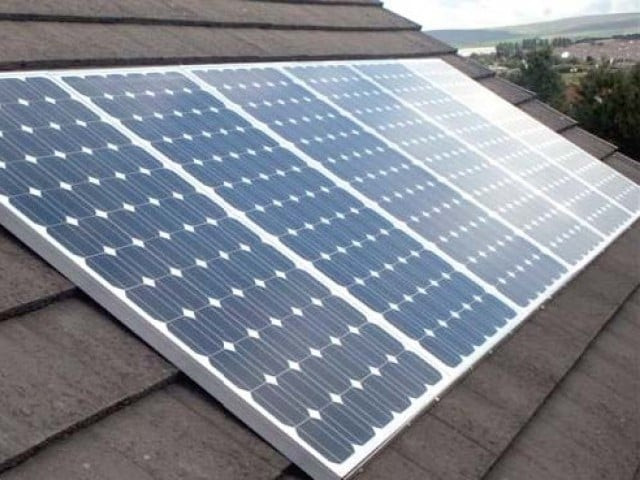
Invites suggestions from stakeholders and partners within 30 days for further deliberation
ISLAMABAD:
The National Electric Power Regulatory Authority (NEPRA) has issued a draft of amendments to the Solar Policy 2026 that roll backs some controversial changes to its net metering policy, it emerged on Monday.
NEPRA recently significantly revised the terms of contracts for all existing and future net-metered solar consumers — or prosumers — in an effort to manage rising solar energy penetration and protect an expensive and inefficient state-owned power network. It abolished exchange of electricity units in solar net metering. At present, the buyback rate for solar net generation is Rs25.9 per unit which may be reduced to Rs11 per unit. The contract period has been reduced from seven to five years. The burden of capacity payments is being shifted to solar consumers now.
Under the new rules, utilities will be required to purchase excess electricity from prosumers, households, businesses and industries generating up to one megawatt at the national average energy purchase price, while selling electricity back to them at the applicable consumer tariff, effectively ending one-to-one net metering. The federal government’s new solar policy drew sharp criticism from multiple quarters, prompting Prime Minister Shehbaz Sharif to instruct the Power Division to appeal to NEPRA to review the new regulations, aiming to protect existing contracts for current solar users.
Accordingly, NEPRA has issued a draft of an amendment to the new regulations, inviting suggestions from stakeholders and partners within 30 days for further deliberation.
The amendments are set to take effect from February 9 and exclude existing solar net metering users from the ambit of the regulations until their current agreements expire.
“Notwithstanding the repeal effected by these regulations, nothing shall affect approvals granted, licences or concurrences issued and agreements executed under the repealed regulations before the commencement of these regulations and any distributed generator having a valid agreement executed under the repealed regulations shall be billed in accordance with rate and mechanism provided in the repealed regulations till the expiry of the term of the agreement executed under the repealed regulations,” the draft reads.
Following the prime minister’s directives to the Power Division, Power minister Awais Leghari announced that the government would not seek a review to reverse recent changes to the solar policy for new consumers, citing an aim to save non-solar consumers from an additional Rs2.87 per unit impact.
Leghari said the government would file a review with Nepra only to maintain the existing net-metering terms for the 466,506 current solar panel owners.
The minister added that the policy change affected only 1% of consumers, but could not provide a clear explanation as to why this small group was prioritised over systemic issues such as electricity theft, low recovery rates, high line losses, idle capacity payments and cross-subsidies.
NEPRA’s revised policy abolishes netting of sold and purchased units, introducing separate rates for electricity sold and bought by solar panel owners. Under the new terms, solar owners will sell electricity at Rs8.13 per unit but purchase it at rates as high as Rs60 per unit.
Last year, non-solar users paid Rs223 billion (Rs2.44 per unit) due to net-metering, which was projected to rise to Rs2.87 per unit this fiscal year. However, the increase is far smaller than the Rs12 per unit that high-consumption households pay to cross-subsidise low users and the Rs4-5 per unit lost due to theft and system inefficiencies.










Sir Keir Starmer says it is “deeply concerning” the rapper is set to headline a festival after recent antisemitic comments.
Source link
Business
Stock markets outlook: Dalal Street braces for swings as RBI MPC decision, war risks weigh on sentiment–Check key triggers – The Times of India

Domestic equities are expected to remain volatile this week as investors track the Reserve Bank’s monetary policy decision, global macroeconomic cues and evolving developments in the West Asia conflict, analysts said, according to PTI.Market participants will also keep a close watch on crude oil price movements and foreign fund flows, which continue to influence sentiment.Vinod Nair, Head of Research at Geojit Investments Ltd, said the RBI’s Monetary Policy Committee (MPC) meeting will be the key domestic trigger, with investors focusing on the central bank’s stance on inflation and growth.“A rate pause is near-certain consensus, the central bank walks a tightrope between crude-driven inflation risks and a four-year low Manufacturing PMI signalling a softening growth impulse. The governor’s commentary on the rate cycle trajectory and FY27 projections will be closely monitored.“Globally, the US March CPI reading will carry significant importance, as it buries residual Fed rate-cut hopes, strengthens the dollar and tightens financial conditions for emerging markets, including India,” Nair said.He added that geopolitical developments in West Asia will remain the dominant factor shaping market direction.“Indian markets return after a three-day gap and remain acutely vulnerable to weekend war developments, with crude trajectory and any credible ceasefire signal being the decisive variable that could either trigger a sharp relief rally or extend the current sell-on-rise mode,” he said.In the previous holiday-shortened week, the BSE Sensex declined 263.67 points, or 0.35%, while the NSE Nifty fell 106.5 points, or 0.46%.Siddhartha Khemka, Head of Research (Wealth Management) at Motilal Oswal Financial Services Ltd, said investor sentiment will remain closely linked to developments in the West Asia conflict.Brent crude prices have stayed elevated near $107 per barrel, fuelling concerns around imported inflation. Currency pressures have also intensified, with the rupee weakening sharply before recovering towards Rs 93 against the US dollar following RBI intervention, he noted.Foreign institutional investor (FII) outflows remain a key overhang, with March witnessing heavy selling of Rs 1.2 lakh crore, among the highest monthly outflows in recent years.“Investors will monitor the US Federal Open Market Committee (FOMC) meeting minutes, GDP data, and initial jobless claims for further cues on growth and the policy trajectory.“Overall, markets are expected to remain volatile as geopolitical developments, crude price movements, FII flows and global macro data continue to drive sentiment,” Khemka said.Analysts said any signs of de-escalation in the West Asia conflict could ease crude prices and stabilise the currency, offering relief to markets, while further escalation may prolong risk aversion and keep pressure on foreign flows.

One elderly couple had to find £1,000 for an oil delivery and suppliers are not giving quotes, a councillor says.
Source link


Olivia Munn urges fans for ‘early’ cancer checkup

Islanders fire head coach Patrick Roy with four games left in the season amid playoff race

Actress Tori Spelling hospitalized after Southern California crash; authorities investigating cause

-

 Sports1 week ago
USMNT handed reality check by Doku, Belgium ahead of World Cup
-

 Sports1 week ago
2026 NCAA men’s hockey tournament: Schedule, results
-

 Fashion1 week ago
EU apparel imports slump 15.48% YoY in Jan; Bangladesh hardest hit
-

 Tech2 days ago
Our Favorite iPad Is $50 Off
-
Uncategorized6 days ago
[CinePlex360] Please moderate: “Further tariff
-
Uncategorized3 days ago
[CinePlex360] Please moderate: “Trump signals p
-

 Entertainment1 week ago
The Avett Brothers’ bassist explains why he wrote a book about John Quincy Adams
-
Uncategorized1 week ago
[CinePlex360] Please moderate: “Apple scrapping