

Sports
The favorite in slalom, Mikaela Shiffrin aims for Olympic gold

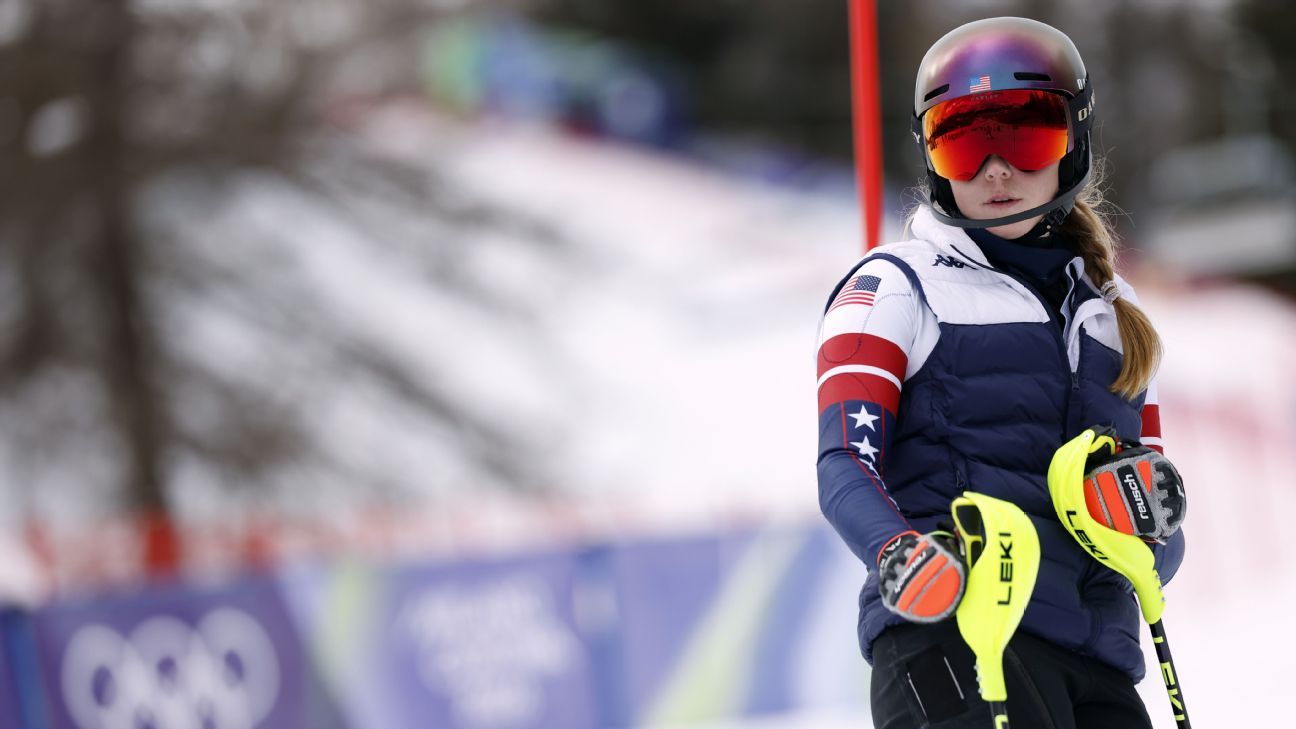
CORTINA D’AMPEZZO, Italy — On Wednesday, Mikaela Shiffrin will enter the start gate of the Olympic slalom as the favorite for gold. On Sunday, she took a giant step toward that result.
Shiffrin was not expected to medal in Sunday’s giant slalom. Despite being the 2018 Olympic gold medalist in the event, and the all-time World Cup wins leader, Shiffrin only recently returned to a GS podium in January. Less than a year ago, she didn’t know if she would ever stand in another giant slalom start gate.
“After the injury last year and then returning to GS racing, I was so far off,” Shiffrin said Sunday. “I felt like there was no hope to be faster.”
That’s why her 11th-place finish in Sunday’s giant slalom felt like a win for the 30-year-old and why, all smiles in the mixed zone after the race, she called it “a beautiful day of racing.” Shiffrin skied smooth, tight lines with confidence and said she was pushing and “turning nervous energy into intensity and taking power from the course.” Her result was within a few tenths of the podium, a positive step in the right direction.
“To be here now, just in touch of the fastest women, that’s huge for me,” Shiffrin said. “I’m so proud.”
Fifteen months ago in November 2024, Shiffrin crashed in a GS race in Killington, Vermont, on a day she was attempting to win her 100th World Cup title at her home race. She slid off course and into the safety nets and, once in the ambulance, medics realized she had been impaled in her abdomen, likely by the slalom gate she crashed into. Her physical recovery from the injury was grueling. Her mental journey back to racing took longer.
Shiffrin has spoken openly about managing her struggles with post-traumatic stress disorder as she fought her way back. In an essay for The Players’ Tribune last May, she wrote that after the crash, her mind and body had become disconnected — the ski racing equivalent of the “twisties.”
“You absolutely need to be able to trust that what you see happening in your mind is fully connected with what you then do with your body,” she wrote. “If that connection is off … the danger level increases exponentially.”
Shiffrin began to find her footing again through therapy and exposure — and by letting go of the outcome. When she stopped caring about times, podiums or medals, fear began to loosen its grip. In January, she finished third in a World Cup giant slalom, her first podium since the crash.
And then she came to the Olympics, where expectations and pressure are unavoidable and unlike on the World Cup circuit, another opportunity comes only once every four years. The first week of these Games alone have seen several top athletes succumb to the pressure, including Shiffrin, who finished 15th of 18 racers in the slalom leg of last week’s team combined, squandering the lead her teammate, Breezy Johnson, had built after the downhill.
That’s why on Sunday, she said she was taking only positives from her performance in the GS, an event she hasn’t raced consistently since her injury. “I was like, I don’t know, maybe I’ll never race GS again,” Shiffrin said. “And here we are, in a totally different position, and it shows that you can fight.”
Wednesday’s slalom will be different.
The slalom is Shiffrin’s best event. Seventy-one of her record 108 World Cup wins have come in the slalom — more than any skier in any discipline ever — and this season alone, she has won seven of eight starts and already clinched her ninth slalom Crystal Globe.
But Shiffrin has a rocky relationship with the Olympics. She’s a two-time Olympic gold medalist, yet she hasn’t earned a medal in her past eight Olympic starts. For Shiffrin, as for most ski racers, success has been punctuated with crashes, injuries, setbacks and comebacks, as well as big wins in big moments when the world is watching.
At 18, she became the youngest Olympic slalom champion in history in Sochi. She hasn’t won Olympic slalom gold since.
In Pyeongchang, she left with giant slalom gold — and disappointment.
In Beijing, she unraveled. Expected to medal in at least three of the six events she raced, she medaled in none.
“I don’t want Beijing to be the reason that I’m scared of the Olympics,” Shiffrin told Olympics.com last fall. Shortly before arriving in Cortina, she recorded an episode of her podcast in which she talked about coming to terms with an awareness that “the Olympics are not designed for the comfort or to prioritize performance of the athletes and teams competing.”
The season after her disappointing Beijing Games, Shiffrin broke the World Cup wins record. She suffered injuries over the next two seasons, has been unstoppable in the slalom this year and has had a confounding start to her fourth Olympics.
Even for the greatest of all time, success is not linear.
On Wednesday, Shiffrin has two runs to trust her mind and her body — and to trust herself to be the best in the world. She said she and her team had a “really wonderful” session of slalom training and that she’s heading into her final race with more knowledge of what it takes to ski fast on this course, and with a new mentality.
“There were a lot of turns where I was quite quick on the team combined day, and a handful where there was just a misalignment,” Shiffrin said. “And then my mentality was not matching the day. So I’m going into [Wednesday] with my eyes open that we can see a very similar situation [to last week]. And I will try to handle it differently.”
On Wednesday, handling it differently might mean more than gold.
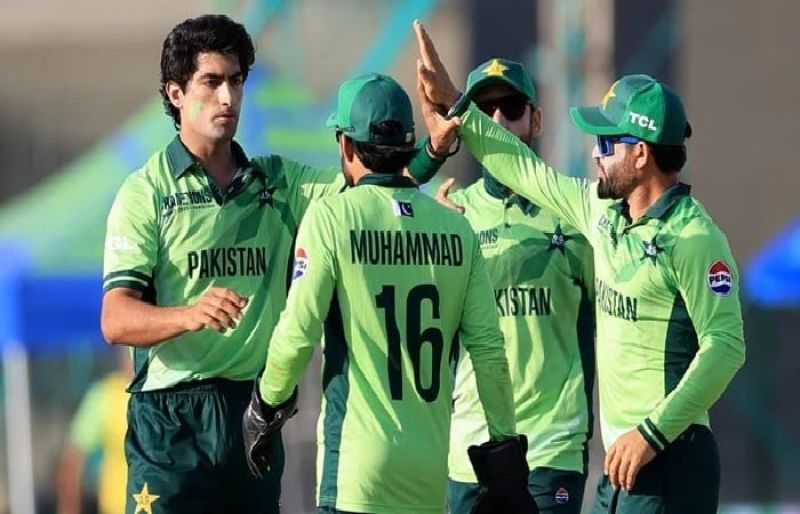
The Pakistan Cricket Board (PCB) has named a 16-member squad for the upcoming three-match ODI series against Australia, scheduled from 30 May to 4 June in Rawalpindi and Lahore.
The national selection committee confirmed that the squad will be led by captain Shaheen Shah Afridi, with Salman Ali Agha serving as vice-captain.
Star batter Babar Azam and pacers Haris Rauf and Naseem Shah have been recalled after missing the previous away series against Bangladesh. Mohammad Rizwan has been left out, with wicketkeeping options now including Muhammad Ghazi Ghori and uncapped Rohail Nazir.
Besides Nazir, the squad includes two more uncapped players, Ahmed Daniyal and Arafat Minhas. Fakhar Zaman and Saim Ayub remain unavailable due to injuries and are undergoing rehabilitation under the PCB medical panel, according to the PCB.
The 16-member squad will assemble in Islamabad later tonight and will train under the coaching staff from Saturday, 23 May. The media advisory regarding the camp will be shared in due course.
Australia men’s team will arrive in Islamabad on 23 May. They will also take part in training sessions at the Rawalpindi Cricket Stadium, details of which will be announced in due course.
The ODI series opener will be played on 30 May at Rawalpindi Cricket Stadium, followed by matches on 2 and 4 June at Gaddafi Stadium, Lahore.
Squad
Shaheen Shah Afridi (captain), Salman Ali Agha (vice-captain), Abdul Samad, Abrar Ahmed, Ahmed Daniyal, Arafat Minhas, Babar Azam, Haris Rauf, Maaz Sadaqat, Muhammad Ghazi Ghori (wk), Naseem Shah, Rohail Nazir (wk), Sahibzada Farhan, Shadab Khan, Shamyl Hussain, Sufyan Moqim.
Team management:
Naveed Akram Cheema (manager), Mike Hesson (head coach), Ashley Noffke (bowling coach), Hanif Malik (batting coach), Shane McDermott (fielding coach), and support staff including medical, fitness, analysis, and security units.
NEWYou can now listen to Fox News articles!
NASCAR driver Casey Mears reflected on the death of Kyle Busch on Friday, saying his impact on the sports of professional racing “immeasurable.”
Busch died at the age of 41, hours after it was announced he was going to forgo any racing activities at Charlotte Motor Speedway this weekend due to a “severe illness resulting in hospitalization.”
Mears appeared on Fox News Channel’s “Fox & Friends First” as he mourned Busch’s death.
CLICK HERE FOR MORE SPORTS COVERAGE ON FOXNEWS.COM
Casey Mears, driver of the No. 13 GEICO Chevrolet, leads Kyle Busch, driver of the No. 18 M&M’s Toyota, during practice for the NASCAR Sprint Cup Series Quaker State 400 at Kentucky Speedway in Sparta, Ky., on June 27, 2014. (Christian Petersen/Getty Images)
“I would say, really, it’s immeasurable. What he’s accomplished in the sport is done by nobody else. Kyle’s won so many races,” he said of Busch’s impact on the sport. “I mean, there was a stretch there for a handful of years where if Kyle didn’t win a Busch race, a Cup race or one of the truck races throughout the weekend, something was wrong because he was constantly winning races.
“I think that the end of the day he was just a tremendous competitor you absolutely knew he was going to leave 110% on the table at all times. Just one of the best that’s ever been in a racecar. The biggest thing is that he’d just become such an amazing dad, father, husband, brother. I’m just thinking about everybody in the family. Tom and Gaye, his mom, and brother, obviously Samantha and the kids. He was a true champion at home as a family man as well.”
NASCAR, the Busch family and Richard Childress Racing announced the death Thursday evening, but did not offer a cause of death.
“On behalf of the Busch family, everyone at Richard Childress Racing and all of NASCAR, we are devastated to announce the sudden and tragic passing of Kyle Busch,” the statement said. “Our entire NASCAR family is heartbroken by the loss of Kyle Busch. A future Hall of Famer, Kyle was a rare talent, one who comes along once in a generation. He was fierce, he was passionate, he was immensely skilled and he cared deeply about the sport and fans.
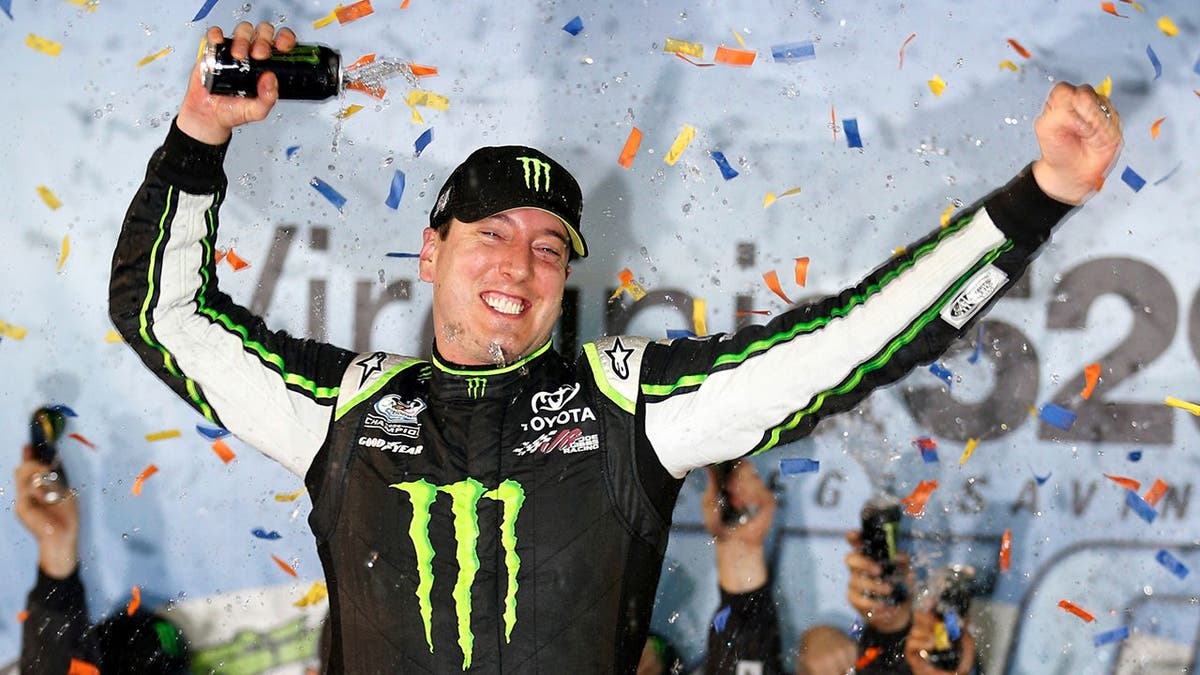
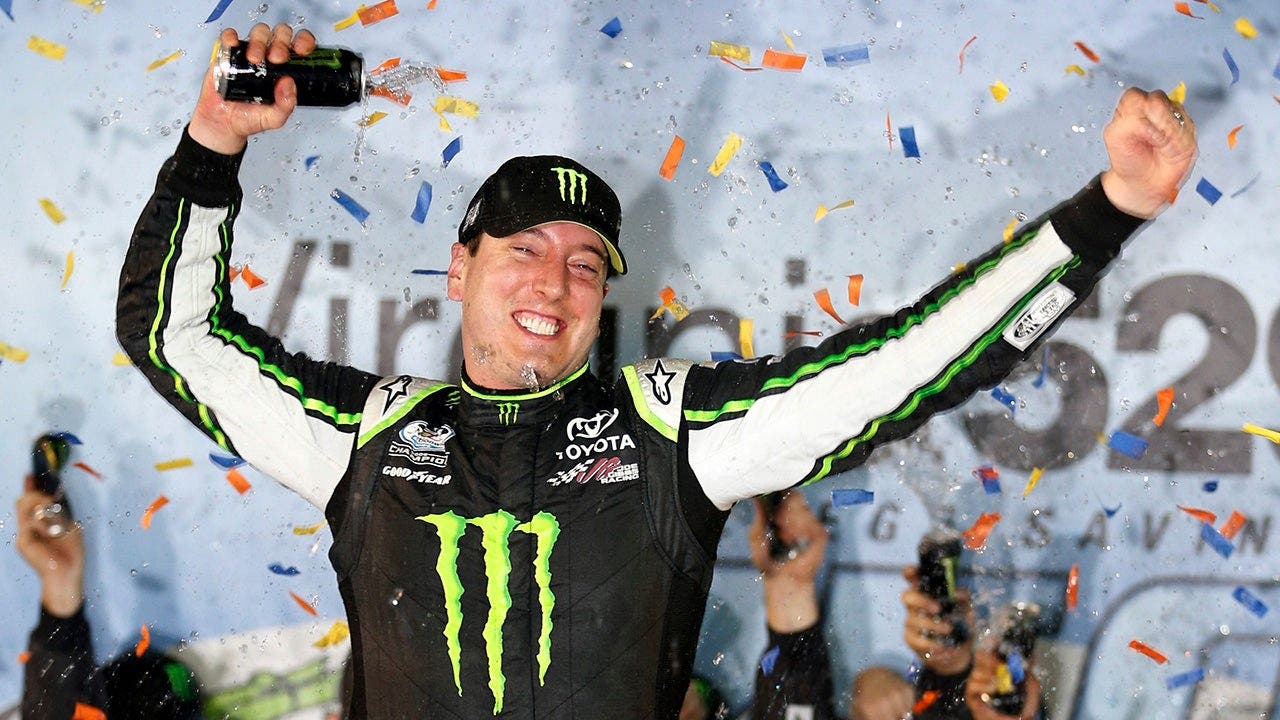
Kyle Busch celebrates his win in the NASCAR Nationwide Series race in Victory Lane at Richmond International Raceway in Richmond, Va., on Sept. 5, 2014. (Steve Helber/AP)
KYLE BUSCH ON ‘HANG OUT WITH SEAN HANNITY’
“Throughout a career that spanned more than two decades, Kyle set records in national series wins, won championships at NASCAR’s highest level and fostered the next generation of drivers as an owner in the Truck Series. His sharp wit and competitive spirit sparked a deep emotional connection with race fans of every age, creating the proud and loyal ‘Rowdy Nation.’
“Our thoughts are with Samantha, Brexton and Lennix, Kyle and Samantha’s parents, Kurt and all of Kyle’s family, Richard and Judy Childress, everyone at Richard Childress Racing, his teammates, friends and fans. NASCAR lost a giant of the sport today, far too soon.
“During this incredibly difficult time, we ask everyone to respect the family’s privacy and continue to keep them in your thoughts and prayers. Further updates will be shared as appropriate.”
Busch was a two-time NASCAR Cup Series champion and had been on the series since 2004, He made 762 career starts with 63 wins. Busch won the championship in 2015 and 2019, and had 234 victories across all three NASCAR national series.
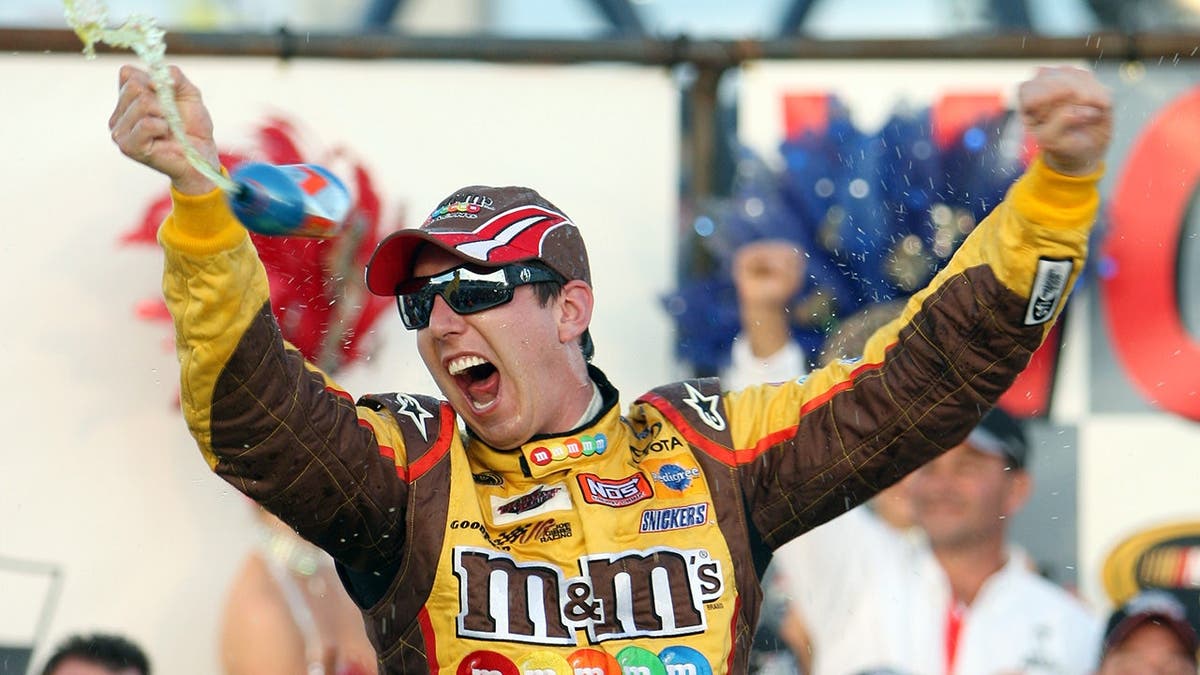
Kyle Busch celebrates his victory in the NASCAR Shelby 427 race at Las Vegas Motor Speedway in Las Vegas on March 1, 2009. (Isaac Brekken/AP)
CLICK HERE TO DOWNLOAD THE FOX NEWS APP
Busch is the all-time record-holder for wins in both the NASCAR O’Reilly Auto Parts Series (102) and NASCAR Craftsman Truck Series (69). His most recent win came last weekend at Dover, when he led 147 laps in a dominating Truck Series victory.
Fox News’ Zach Dean contributed to this report.
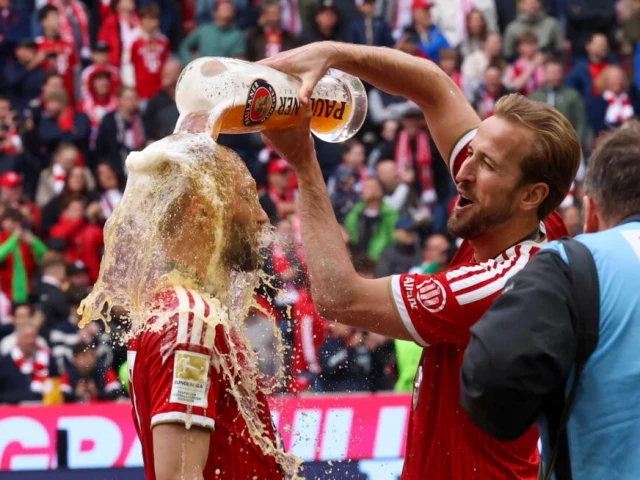
Bayern Munich striker Harry Kane has won back-to-back Bundesliga titles. Photo:AFP
LONDON:
Bayern Munich face holders Stuttgart in the German Cup final on Saturday knowing defeat will sour what had been one of their most promising seasons in recent memory.
Just weeks ago, Bayern were flying high and hopeful of a treble after beating Real Madrid for the first time in over a decade, in the Champions League quarter-finals.
But despite challenging defending champions Paris Saint-Germain over two semi-final legs in a breathless display, Bayern finished a goal behind in the tie on aggregate and were eliminated.
Bayern have beaten Stuttgart three times already this season by a collective 11 goals to three. However a defeat on Saturday will sting a club with their ambitions — and their resources.
With just three defeats in all competitions, Bayern have been incredible this season.
Finishing the Bundesliga 16 points ahead of second-placed Borussia Dortmund, Bayern scored 122 goals in 34 matches to shatter the previous single season goalscoring record of 101, becoming the first side in league history to average over three goals a game.
But the Bavarian giants’ financial muscle has meant the league title has become par for the course in recent years, with 13 wins in the past 14 seasons.
A victory on Saturday would not just crown an excellent season, it would break what is becoming a surprisingly long drought in the competition.
The Bavarians have won the German Cup a record 20 times — 14 more than the next best side, Werder Bremen — but they have not lifted the trophy for six years dating back to 2020, the biggest gap between cup wins this century.
Bayern twice crashed out to lower league opposition in that run and only made it to the quarter-final stage once.
– ‘Painful’ –
In 2021-22, Bayern lost 5-0 to Borussia Moenchengladbach in the second round — their biggest defeat in any competition since the mid-1970s.
“We really want to win that again because it’s painful for us that we haven’t won the cup for six years,” Bayern CEO Jan-Christian Dreesen said on Sunday.
Harry Kane finally broke through for a first team trophy when Bayern won the Bundesliga last season but admitted failing to win Saturday’s showpiece would put a different spin on the campaign.
“If we don’t win, it will leave a bitter taste in our mouths,” Kane said of the clash with Stuttgart at Bayern’s Bundesliga title celebrations in Munich on Sunday.
By lifting the cup on Saturday, Bayern would win the double for a remarkable 14th time. No other team in German history has done so more than once.
A Bayern-Stuttgart clash opened the season in the newly renamed Franz Beckenbauer Supercup, which features the league and cup holders.
That the domestic season should close with the same two teams duking it out shows how far Stuttgart have come under coach Sebastian Hoeness.
The coach, a nephew of Bayern powerbroker Uli, took over with Stuttgart in relegation danger in 2023 but guided them to two Champions League qualifications and their first silverware in 28 yeras.
Stuttgart may be the defending champions but striker Deniz Undav said the pressure is all on the Bavarian giants, with his side happy to play the role of spoilers.
“It’s a bonus game. We’ve got nothing to lose — we’re the complete underdog,” the Germany striker said, adding “there’s one clear favourite and that’s Bayern”.


Finland’s Amer Sports raises 2026 guidance after strong Q1 growth

Future King’s visit to Isles of Scilly leaves locals inspired

Why Matt Damon and Tom Holland got jealous of Zendaya during ‘The Odyssey’

-

 Entertainment6 days ago
Where Pete Davidson, Elsie Hewitt stand after breakup: Details revealed
-

 Entertainment1 week ago
Emilia Clarke recalls near-death incident while filming ‘Game of Thrones’
-
 Business1 week ago
Jersey Election 2026: Cost of living concern in St Helier Central
-

 Politics6 days ago
Rising diesel costs from Iran war strain US school budgets
-

 Tech1 week ago
Greg Brockman Officially Takes Control of OpenAI’s Products in Latest Shakeup
-

 Politics1 week ago
UK’s Starmer faces survival battle as potential rivals circle
-

 Entertainment1 week ago
Drake drops highly anticipated "Iceman" album, plus two surprise albums
-

 Politics1 week ago
Trump says China will order 200 Boeing jets