

Sports
NBA offseason storylines: Watching LeBron, Reaves, Giannis, more

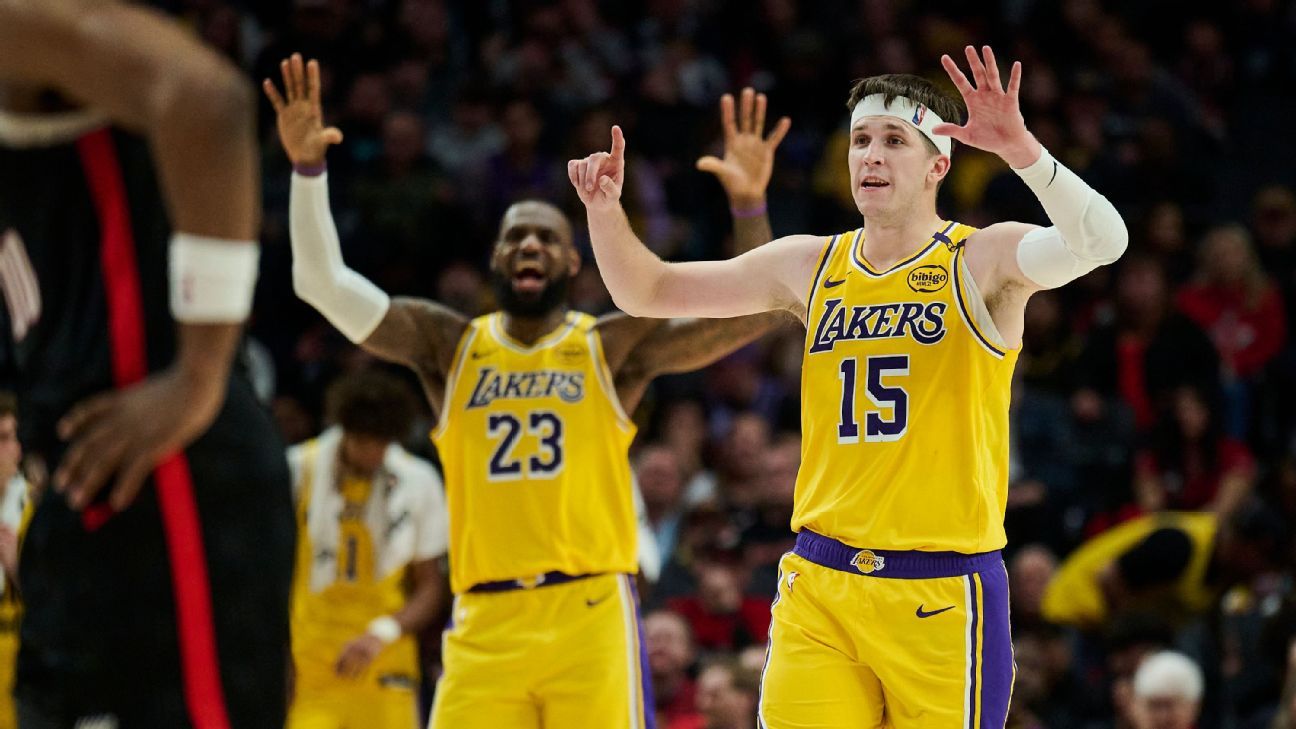
Which players, teams and storylines will dominate the NBA offseason?
The next step in the saga between Giannis Antetokounmpo and the Milwaukee Bucks is high on the list. So is the future of the Los Angeles Lakers‘ roster, which features major free agent decisions for LeBron James and Austin Reaves. Leaguewide, plenty of franchises will face decisions that could alter the NBA’s hierarchy.
We’re breaking down the 10 most important questions of the summer, including superstars at a crossroads, top free agent and trade targets, and why June’s draft is so important for a handful of lottery-bound teams.
Jump to a section:
Summer of Giannis “https://www.espn.com/nba/story/_/id/47969549/LeBron’s decision
Lakers’ options “https://www.espn.com/nba/story/_/id/47969549/Free agents to watch
High-stakes draft “https://www.espn.com/nba/story/_/id/47969549/Extension storylines
Wemby’s next deal “https://www.espn.com/nba/story/_/id/47969549/Trade landscape
Next for Warriors “https://www.espn.com/nba/story/_/id/47969549/Thunder vs. the apron
Will the Giannis saga delay offseason movement?
The answer could depend on which direction the Bucks take this summer.
“I want to win a championship with the Milwaukee Bucks,” Antetokounmpo told ESPN’s Malika Andrews during All-Star Weekend. “And if that is not on the table, maybe I have to pivot because I really want to win.”
Headed to the lottery for the first time since 2016, the Bucks will add a valuable 2026 draft pick to their list of tradable resources. Milwaukee can also trade first-rounders in 2031 and 2033 and can swap picks in 2031, 2032 and 2033. Persuading Antetokounmpo to sign an extension in the fall could depend on where June’s pick lands and whether the franchise plans to use those picks in a deal.
Improving via free agency could prove more difficult. Milwaukee has nine free agents this summer, five with player options (Kevin Porter Jr., Gary Trent Jr., Gary Harris, Taurean Prince and Jericho Sims). The Bucks are also projected to be over the cap this offseason, thanks in part to signing center Myles Turner last offseason and owing Damian Lillard $20.2 million per season through 2029-30 after waiving and stretching his contract.
Outside of using Turner’s, Kyle Kuzma‘s or Bobby Portis‘ contracts in a trade, Milwaukee will have the $15.1 million non-taxpayer midlevel, $5.5 million biannual and veteran minimum exceptions available to sign players.
The Bucks explored trades for Antetokounmpo before the deadline and will likely do so again if there is an indication he is not committed long term. The market for Antetokounmpo should expand this summer for several reasons.
Teams that were limited in tradable draft picks at the deadline will have more selections available starting the night of the draft. The Lakers, for example, will see their tradable first-rounders increase from one to three. The Miami Heat will have up to four firsts to trade instead of two at the deadline. The New York Knicks will go from zero to two.
More importantly, there is always a sense of urgency from the front office when a team loses early in the playoffs. The Houston Rockets and Orlando Magic were eliminated in the first round last season, then traded for Kevin Durant and Desmond Bane, respectively. Would the Knicks or the Cleveland Cavaliers choose to go all-in for Antetokounmpo if they suffer similar playoff fates?
Other reasons we could see a Giannis trade this summer:
-
Players who signed rookie extensions, such as the Magic’s Paolo Banchero and the Rockets’ Jabari Smith Jr., will no longer have a position restriction in their contract. A total of nine players will see the restriction removed starting July 1.
-
Teams will be allowed to send out or receive more contracts than during the regular season. Offseason roster sizes will expand from 15 to 21.
-
Teams will have more financial flexibility, as the first and second apron levels are projected to increase by 7.3%.
0:33
LeBron James: ‘I have no idea’ if I’ll play a 24th season
LeBron James says he just wants to live and doesn’t know if he’ll play for a 24th season.
Where will LeBron James be next season?
Last week, after he became the oldest player to record a triple-double, 41-year-old James discussed one major factor that could determine how long the NBA’s leading career scorer stays in the league.
“My game is not going anywhere. It’s just my body,” James told reporters after the Lakers’ win over the Dallas Mavericks before the All-Star break. “[But] how long can I stay in love with the process?
“Because that’s always been my thing. If I can’t continue to stay in love with the process, then if [my mental commitment] goes, then my body’s going to go. And once my body goes, then it’s a wrap.”
Remarkably, James, who has averaged at least 33 minutes and 20 points in every season of his career, is on pace to add a 23rd consecutive year to the list.
James’ options for a 24th season? This offseason, the pending free agent can:
-
Return to the Lakers
-
Sign with a contender
-
Retire
Re-signing with Los Angeles would come with a significant pay cut from his current $52.6 million. But, few contenders are projected to have cap space this summer. For example, it’s likely that the Cavaliers, Denver Nuggets and Knicks could offer LeBron only the veteran’s minimum exception.
How will the Lakers continue building around Luka Doncic?
Since trading for Doncic in February 2025, the Lakers have been operating under two timelines: LeBron’s and Luka’s.
“Having optionality now is really a positive thing for us this coming offseason,” president of basketball operations Rob Pelinka said after this season’s Feb. 5 trade deadline.
This offseason, the franchise’s top priority is re-signing Austin Reaves, who will likely decline his $14.9 million player option for 2026-27 to pursue a long-term extension.
Before injuring his left calf on Christmas, Reaves was averaging a career-high 26.6 points and shooting better than 50% from the field. (In five games since returning, Reaves has averaged 20.0 points on just 25.4 minutes.) “I’ve said it a million times. I want to be in L.A. I love it,”https://www.espn.com/nba/story/_/id/47969549/Reaves told ESPN’s Dave McMenamin in November.
“Even though the other extension was turned down, that doesn’t mean that I’m trying to go get a f—ing gigantic number that doesn’t make sense. I want to be here; I want to win.”
The Lakers, Chicago Bulls and Brooklyn Nets are among the teams with enough spending power to sign Reaves to a lucrative contract. But as the Bucks showed when they waived and stretched Lillard’s contract last season, teams without cap space have methods to manufacture cap space.
Because of Reaves’ $20.9 million free agent hold, the Lakers could have up to $50 million in cap space this summer, the most of any team. To create that room, however, Los Angeles would need to renounce every free agent on the roster — including LeBron.
Besides James and Reaves, which other free agents should we watch?
Peyton Watson and Collin Gillespie.
In Watson’s case, Denver failing to reach an extension before the season could be costly.
“With the new CBA and the second apron, things of that nature, [the Nuggets] wanted to stay out of that,”https://www.espn.com/nba/story/_/id/47969549/Watson told The Denver Post in October. “As a business, you’ve gotta operate [based on] what’s best for your business. And when it comes time for me to make my decision next summer, I’ve gotta operate as a business myself.”
Watson is a restricted free agent this offseason, allowing Denver to match any offer sheet. The Nuggets are projected to be $3.6 million below the second apron next season.
Watson, named a Western Conference Player of the Week in January, is averaging career highs in points and shooting efficiency this season. And in 39 starts, he is averaging 17.5 points with a 50.4 field goal percentage and 41.7% shooting from 3.
Gillespie, meanwhile, has outplayed the one-year, $2.3 million contract he signed with the Suns.
He scored a career-high 30 points in a Feb. 3 win against the Portland Trail Blazers and has at least six assists in 16 games this season. The Suns are plus-4.8 points per 100 possessions when Gillespie is on the floor, according to Cleaning the Glass.
Gillespie is eligible to sign a four-year, $66.6 million contract with Phoenix. Because he has early Bird rights, the contract must be a minimum of two seasons (not including an option).
As for the rest of the free agent class, here are the top names to watch:
-
All-Star level: LeBron James, Jalen Duren (restricted), Austin Reaves, James Harden (player option)
-
Top starter level: Trae Young (player option), Lu Dort (team option), Draymond Green (player option), Walker Kessler (restricted), Norman Powell
-
Starter level: Peyton Watson (restricted) Neemias Queta (team option), Collin Gillespie, Deandre Ayton (player), Harrison Barnes, Coby White, Mitchell Robinson, John Collins, Tari Eason (restricted), Rui Hachimura, Tobias Harris, Kevin Porter Jr., (player option), Isaiah Hartenstein (team option), Jaden Ivey (restricted), CJ McCollum, Kristaps Porzingis, Fred VanVleet (player option), Nikola Vucevic, Zach LaVine (player option), Andrew Wiggins (player option) and Mark Williams (restricted)
1:40
Windhorst: Jazz tanking more ‘egregious,’ but still within the rules
Brian Windhorst chimes in on accusations that the Utah Jazz have been “tanking” late in games and says they’re not the only franchise doing it.
Why are the next two months so important for teams jockeying for lottery position?
We’ve closely documented the 2026 draft class for some time, with a historically strong group of college freshmen creating one of the deepest lottery groups in recent memory. Darryn Peterson, AJ Dybantsa and Cameron Boozer have long been headliners. Fellow freshmen Caleb Wilson, Kingston Flemings, Keaton Wagler, Nate Ament, Darius Acuff Jr. and Mikel Brown Jr. currently round out our top nine.
The trade deadline amplified the stakes for teams such as the Jazz, Washington Wizards and Indiana Pacers, who might flirt with fate on lottery night due to the protections on their first-round selections. The reason for those teams to lose games is obvious: maximize their chances of keeping their picks.
The subtext behind this exciting draft is that NBA teams haven’t been as bullish on the 2027 and 2028 draft classes, as they continue to scour for talent domestically and internationally. It’s far too early to treat that as conclusive, but those drafts appear short on archetypal star power. It’s no coincidence that long-mired teams such as Washington and Utah are positioned to take a step forward next season. There is simply less incentive to lose games in 2026-27.
That perception places even more weight on the 2026 lottery, where this top group of players represents many teams’ clearest chance at a franchise-altering talent. — Jeremy Woo
Will veteran extensions impact the 2027 free agent class?
Analyzing what happens next for Antetokounmpo and James gives us the obvious storylines to watch this offseason. But players eligible to sign veteran extensions will play a larger role, not just this summer but in the 2026-27 trade landscape.
Starting the day after the Finals, a who’s who of All-Stars will become eligible to sign extensions:
Nikola Jokic, Kawhi Leonard, Karl-Anthony Towns, Draymond Green, Trae Young, LaMelo Ball, Ja Morant, Tyler Herro, Zion Williamson, Tyrese Haliburton, Pascal Siakam and Domantas Sabonis. Jokic bypassed signing a three-year extension last summer for financial reasons, not because he was unhappy with the direction Denver was headed with its roster. A year later, he can extend up to four more seasons starting in 2027-28.
In addition to Jokic, Donovan Mitchell (July 7), Anthony Edwards (July 8), Jaylen Brown (July 26), Anthony Davis (Aug. 6) and Stephen Curry (Aug. 29) become extension-eligible at some point in the offseason. (Because of the over-38 rule, Curry and Leonard can extend for two additional seasons.)
Victor Wembanyama will be the next $250 million player. Which rookie extension candidates could join him?
There will be little negotiating on Wembanyama’s next contract.
On or after July 6, San Antonio and its franchise star will agree to a projected five-year, $252 million maximum extension. The contract will include All-NBA, Defensive Player of the Year and MVP language, which could increase the deal to $303.3 million if he reaches the criteria in 2026-27. Because Wembanyama was ineligible for league honors in 2024-25, he is not eligible for 30% of the salary cap in Year 1 of the extension — even if the criteria are reached this season.
Close to 200 miles from San Antonio, the Rockets’ Amen Thompson could join Wembanyama as the second player to sign a rookie max extension this summer. Thompson is averaging a career high in points, assists and field goal percentage, and the Rockets are five points better per 100 possessions when Thompson is on the court.
Other notable extension candidates include Brandon Miller, Ausar Thompson, Cason Wallace, Dereck Lively II and Brandin Podziemski.
1:53
Shams: Warriors’ pursuit of Giannis is over after Porzingis acquisition
Shams Charania breaks the news that the Warriors are trading Jonathan Kuminga and Buddy Hield to the Hawks in exchange for Kristaps Porzingis.
What will happen with Golden State this offseason?
Two days after the trade deadline, general manager Mike Dunleavy Jr. made it clear Golden State had the resources to improve in the summer. “We’ve got the goods to make deals,” he said.
“I think the only way we wouldn’t be in the mix is if we gave out assets, young players, all the things you need to get a great player. We still have all that. I think that’s one of the reasons the [Kristaps Porzingis] trade is really good for us, similar to Jimmy [Butler III] last year. We don’t feel like we gave up a ton. We still have the kind of firepower to move forward and do more deals.”
Dunleavy is referring to the Warriors’ four first-round picks and the right to swap picks in the next seven years. (They owe Dallas their 2030 first-rounder, but only if it falls outside of the top 20.)
What could hinder the Warriors in any trade talks are the contracts available to use in deals. While Golden State is well below the apron to absorb salary, its three highest-paid players are either untouchable (Curry), injured (Butler) or potentially a free agent — Green has a $27.7 million player option for 2026-27.
The Warriors do have $18 million in salary of former first-round picks Moses Moody and Podziemski. Porzingis could also be flipped in a sign-and-trade if he approves.
Besides Antetokounmpo, which players under contract should we watch?
We could see a domino effect of extension-eligible players in trade discussions this summer.
For example, will the Clippers continue their youth movement and explore trades for All-Star Kawhi Leonard? In two separate trades before the deadline, LA acquired former lottery picks Darius Garland, Bennedict Mathurin, Isaiah Jackson and two first-round picks.
“We were just trying to get younger,” Leonard said after the trade deadline. We came in the year with the oldest team. It makes sense for them to try to get some assets and try to build for the future. It’s a big class coming in 2027, hopefully. They gotta do what’s best for them.”
Leonard, 34, will earn $50.3 million next season, his last year under contract with the Clippers.
Whether the Knicks find postseason success could play a role in roster decisions this summer. The Knicks will enter the offseason as a potential second apron team if they re-sign center Mitchell Robinson and have four players under contract earning more than $33.5 million next season, including Karl-Anthony Towns. The All-Star big man is eligible to sign up to a four-year, $275 million extension and has a $61 million player option for 2027-28.
Ja Morant and the Memphis Grizzlies are worth watching. As ESPN’s Shams Charania reported in early January, the Grizzlies were gauging the market for a new home for their once franchise player. Morant has two years remaining on his contract ($42.2 million and $44.9 million).
Since June, Memphis has traded Desmond Bane and Jaren Jackson Jr., deals that have netted the franchise seven future first-round picks.
Will the second apron break up Oklahoma City?
Extensions for Jalen Williams and Chet Holmgren project the Thunder to be $24 million over the second apron next season. But unlike other high-spending teams that dismantled their rosters because of the stringent restrictions, OKC can keep its core intact.
The Thunder will not pay a luxury tax penalty for a sixth consecutive season despite having the highest winning percentage of teams since 2023-24.
The apron restrictions work to take away the tools a front office has to improve the roster in free agency and trades. The Thunder have all 15 players under contract in 2026-27.
Unlike other high-spending teams, Oklahoma City has a surplus of 13 first-round picks and 15 second-rounders over the next seven years. The Thunder could have up to three first-rounders in June from the Clippers, the Philadelphia 76ers (if Nos. 5-30) and the Utah Jazz (if 9-30). In addition, they have the right to swap first-rounders with the Clippers in 2027 and with the Mavericks in 2028.
The Thunder can also offset the cost of the roster with players on rookie contracts. Three examples are Jared McCain, Nikola Topic and Thomas Sorber, first-round picks over the past two seasons.
Most importantly, the Thunder have staggered their contracts for the next five seasons. While the Williams and Holmgren extensions start next season, Shai Gilgeous-Alexander‘s new deal does not begin until 2027-28. Over the past two seasons, the Thunder have signed Isaiah Hartenstein, Isaiah Joe, Aaron Wiggins, Jaylin Williams and Ajay Mitchell to contracts that either decline, have a team option or are partially guaranteed.
OKC does face a few decisions on its supporting cast. Hartenstein, Lu Dort and Kenrich Williams have team options next season, while Dort, Williams and Cason Wallace are extension-eligible this summer.

The 90th edition of the Masters Tournament continues on Friday.
Rory McIlroy started off his title defense admirably, posting a 5-under par on Thursday to tie with Sam Burns on top of the leaderboard. Xander Schauffele is a little farther down the leaderboard, posting a 2-under despite a tee shot of his landing in a spectator’s gift bag.
They’re all back in action on Friday as the tournament continues. Here are the top sights and sounds from the second round of the Masters.

Clark starts strong in the second round
Three in a row for Wyndham Clark. #themasters pic.twitter.com/lh3BQBJfaT
— The Masters (@TheMasters) April 10, 2026
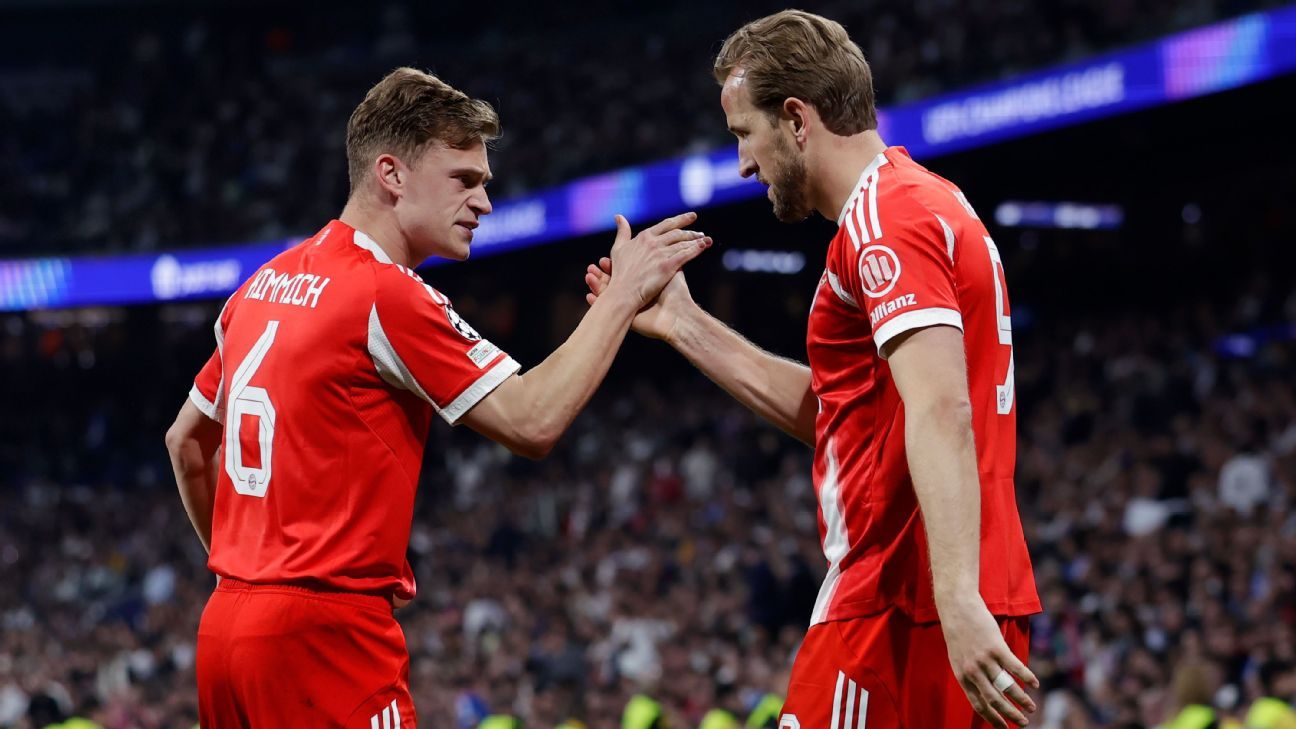
Being a Bundesliga fan can sometimes involve hefty contradictions from one domestic weekend to the next European club midweek.
If you’re not a Bayern Munich follower, then you tend to regularly bemoan the success of Germany‘s Rekordmeister and invoke concepts such as Bayern-Dusel (Bayern luck) and the inevitable Bayern-Bonus (alleged preferential treatment from referees). Then of course, there is an outpouring of Schadenfreude on the few occasions when the Munich giants actually do badly on the pitch.
Frequently, however, on European nights, those who wished Bayern considerable ill just a few days prior are cast in the role of their unlikely defenders. It’s difficult not to take this stance when snide comments about the supposed weakness of the Bundesliga are made by international pundits who frankly should know a lot better.
How on earth are Bayern meant to keep themselves sharp for the UEFA Champions League when they’re playing teams like Freiburg, for goodness sake?
– Madrid say they can overcome Bayern after poor first leg. Are they right?
– Tracking Europe’s top soccer leagues: Title races, UCL, relegation
– Yamal, Güler, Karl lead best U21 men’s soccer players
Freiburg, for the record, are very competent and, like Bayern, auf drei Hochzeiten tanzen (literally dancing at three weddings), an expression used to describe a team still competing in three different competitions. In the case of Freiburg, it’s the UEFA Europa League, the league, and the DFB-Pokal.
Last Saturday, they gave their Bavarian guests an almighty examination. Freiburg, who pressed and battled intelligently throughout, were 2-0 in front with nine minutes of normal time left, but Bayern eventually began taking bites into the lead. Two goals, one with either foot, from the talented Tom Bischof, saw the match level by the beginning of stoppage time.
I posed the question in the live world feed commentary regarding whether Bayern could actually go on and win the game now.
With 99 minutes on the clock and the match about to conclude, Bayern produced an aesthetically pleasing move. It started with a beautiful butter-soft diagonal pass from Joshua Kimmich to substitute Alphonso Davies on the left. The Canadian fed it across for 18 year-old Lennart Karl to finish off from close range.
Cue absolute bedlam in the nearby Gästeblock (away section). It was more than Bayern’s most dramatic winning goal of a spectacular season. This will go down as the club’s 100th Bundesliga goal of the campaign, only the third time they or any team in the Oberhaus has scaled such impressive scoring heights.
It is to be expected that on Saturday at the Millerntor in Hamburg against St. Pauli, Bayern will set a brand new record for bulging the net in a single Bundesliga season. Two more goals and they’ll have surpassed the great 1971-72 team that featured the legendary Franz Beckenbauer, Gerd Müller, Sepp Maier and Uli Hoeneß.
Those of us who live and breathe Germany every week, hopefully know what we’re watching and I’ve said it often this term and will happily repeat it here: I believe this is a special incarnation of Bayern. The goal numbers alone, of course, tell you that. They’re doing what no German side has done before.
However, the eye test reveals a style of play that is among the finest many of us have ever been lucky enough to witness. Credit to Vincent Kompany and to the Bayern decision makers who believed in the Belgian when others saw an idealistic eighth- or ninth-choice candidate who had relegated Burnley in England.
It does seem though, that only the Champions League will be the Maßstab (yardstick) for those who lazily disparage the Bundesliga. On Tuesday, it was remarkable how refreshing Bayern seemed to people who clearly don’t watch the German domestic game, preferring to focus on the Premier League. Perhaps that’s also an indictment of what they’ve been served up in England and it’s not my place or intention to critique the sport from there in this space.
But this is a long way of saying, maybe this edition of Bayern is simply very good. They still have work to do against Real Madrid, but would anyone of fair mind argue they’re not well placed to be crowned European club champions and to do it in style?
Funnily enough, most regular Bayern watchers would tell you the weakest link has been the man richly praised on Tuesday: 40-year-old Manuel Neuer. His greatness is undeniable and Neuer will be remembered as a truly revolutionary goalkeeper for his modern interpretation of the position, but more mistakes are creeping in, and we have seen them in each of his past two competitive games.
In terms of the outfield players, I genuinely see no suspect areas. I often hear colleagues who dip in and out highlight Dayot Upamecano‘s shortcomings, and I suppose his comportment on the Real Madrid goal will be grist to their mill. The fact remains, I can’t recall a raft of wobbles from the Frenchman this season.
We can go player by player — from Jonathan Tah at the back to Konrad Laimer and his versatility, to Kimmich’s thoroughness and the explosive qualities in attack of Michael Olise, Karl, Harry Kane, Serge Gnabry and Jamal Musiala.
It really doesn’t matter what Kompany’s constellation is on any particular day. Bayern are a force to be reckoned with — domestically and in Europe.
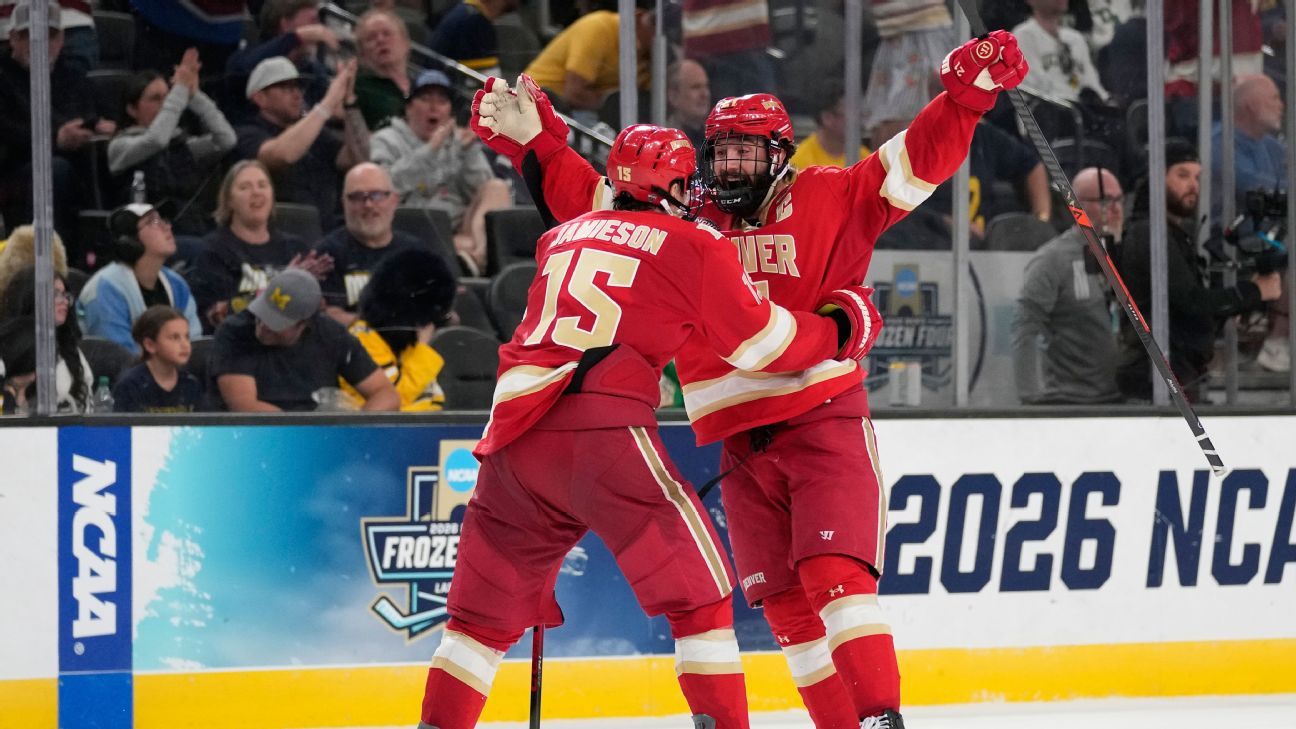
LAS VEGAS — Kent Anderson scored from the slot at 7:25 of the second overtime to back up Johnny Hicks’ 49 saves and lift Denver to a 4-3 victory over Michigan on Thursday night in a Frozen Four semifinal and keep alive the Pioneers’ hoping of winning their third national title in five years.
The Pioneers (28-11-3), a No. 2 regional seed, advance to Saturday’s championship game against Wisconsin (24-12-2), a 2-1 winner over North Dakota in the other semifinal. Denver will try to extend its record to 11 titles.
“I don’t score many goals, so this is ranking up top so far,” Anderson said. “That means everything to play in this national championship game.”
Michigan (31-8-1) had hoped to make its first championship appearance since 2011 and win its first title since 1998. The Wolverines, who outshot the Pioneers 52-26, also were trying to tie Denver for most overall championships.
They had hoped to take the next step this weekend, having reached the Frozen Four for the fourth time in five years.
“It’s hard to have it be over,” Michigan coach Brandon Naurato said. “What these seniors have done for this program, it’s really special. You can tell a little bit from the outside, but if you’re in that room and all the conversations we had with these guys, they changed the program.”
Denver’s Clarke Caswell sent the game into overtime with a goal and had an assist. Kyle Chyzowski and Cale Ashcroft also scored, and Hicks — a freshman — set a personal high in saves.
Hicks, who entered this game leading the nation with a 1.12 goals-against average and .958 save percentage, stayed in after taking a nasty hit early in the third period when teammate Eric Jamieson made contact with Michigan’s Malcolm Spence on a rush to the net.
“He’s a battler, he’s unfazed — he was our best player tonight,” Pioneers coach David Carle said.
Josh Eernisse, Jayden Perron and T.J. Hughes each scored for Michigan, with Hughes’ goal giving the Hobey Baker finalist 179 career points, tops among active players. Jack Ivankovic saved 22 shots.
The Wolverines were on the verge of advancing to the final when Perron scored from the right point with 8:58 left in regulation. That goal came on a power play, the nation’s top-ranked unit that entered the game by converting 31.6% of its chances.
Denver, however, kept alive its season when Caswell redirected a shot from Garrett Brown from the goal line with 2:46 remaining in regulation.
Neither team scored in the first overtime, though Pioneers winger Rieger Lorenz hit the crossbar. Teammate Boston Buckberger later had his left hand badly bloodied when it was stepped on, but he played through it.
Michigan outplayed Denver through the extra sessions, outshoooting the Pioneers 21-8, including 13-3 in the second OT.
“We stuck with it throughout the whole game,” Anderson said. “Our belief didn’t change when we were down one in the third.”
Wisconsin 2, North Dakota 1
In the other semifinal, Simon Tassy and Ryan Botterill scored 27 seconds apart in the first period, and Wisconsin held on to make the Frozen Four title game for the first time since 2010.
The Badgers (24-12-2) have won six titles, the most recent one coming 20 years ago.
“At this time of the season, [winning is] all that matters,” Wisconsin coach Mike Hastings said. “It doesn’t have to be a Mona Lisa. You’ve just got to find a way to make sure you’re living for another day, and this group has talked about this moment for a long time.”
Wisconsin defeated North Dakota (29-10-1) for the first time in the NCAA tournament after going 0-3 against the Fighting Hawks. Wisconsin, which beat a No. 1 seed for the second time in a row, had gone 1-11-2 in its previous 14 meetings with the Hawks.
“I think at this time of year, you should be playing your best hockey,” Wisconsin defenseman Ben Dexheimer said. “We’ve been slowly ramping up, and it’s pretty close to one of our best [games]. So we’re just going to keep moving the trajectory upwards.”
North Dakota, which came less than a minute from being shut out for the first time in more than a year, has gone a decade since winning its eighth national championship.
Daniel Hauser stopped 21 shots for the Badgers, including a tough glove save through traffic while sitting down on a 6-on-5 with 2:05 left.
“Luckily, I found a sight line,” Hauser said. “I was lucky enough to get a glove on it. That was probably a boxout from one of our D-men to let me see it. It was kind of a funny play, but I came up with it.”
Front-line center Ellis Rickwood scored North Dakota’s lone goal on a 6-on-5, and Jan Spunar made 35 saves.
The Badgers’ defense limited a North Dakota offense that entered the game third nationally in scoring (3.8 goals per game). But Wisconsin’s forecheck dictated the early points and set the tone.
Wisconsin dominated the first period, taking 18 shots on goal to four. The Badgers scored when Tassy and Botterill hit the back of the net from the right circle.
Even when the Hawks had chances, they usually failed to take advantage, going 0-for-5 on the power play, including a 5-on-3 in the second period that lasted 1:56. Ollie Josephson also missed a chance in that period to score on a breakaway.
“Special teams is such an important part of the game,” North Dakota defenseman Jake Livanavage said. “We just weren’t good enough. The amount of power plays we had, we really should capitalize.”
The Associated Press contributed to this report.


Afrika Bambaataa, hip-hop pioneer and founder of Universal Zulu Nation, dies at 68

Sights and sounds from the second round of the Masters

US inflation jumps to highest level in almost two years

-
 Business1 week ago
Jaguar Land Rover sees sales recover after cyber attack
-
Uncategorized1 week ago
[CinePlex360] Please moderate: “Trump signals p
-

 Entertainment7 days ago
Joe Jonas shares candid glimpse into parenthood with Sophie Turner
-

 Tech7 days ago
Our Favorite iPad Is $50 Off
-
 Sports7 days ago
UConn Final Four run could trigger a $50M furniture giveaway for Massachusetts-based Jordan’s Furniture
-
 Business7 days ago
Video: Why Is the Labor Market Stuck?
-

 Entertainment7 days ago
Blake Lively reacts to harassment claims dismissal against Justin Baldoni
-

 Politics7 days ago
Iran can sustain Strait of Hormuz closure for years, will cut US military logistics: Official