

Business
US Top Court Blocks Trump’s Tariff Orders: Does It Mean Zero Duties For Indian Goods?

Last Updated:
The verdict does not overturn all of Trump’s tariff actions as duties imposed on steel and aluminium under separate legal provisions remain intact.




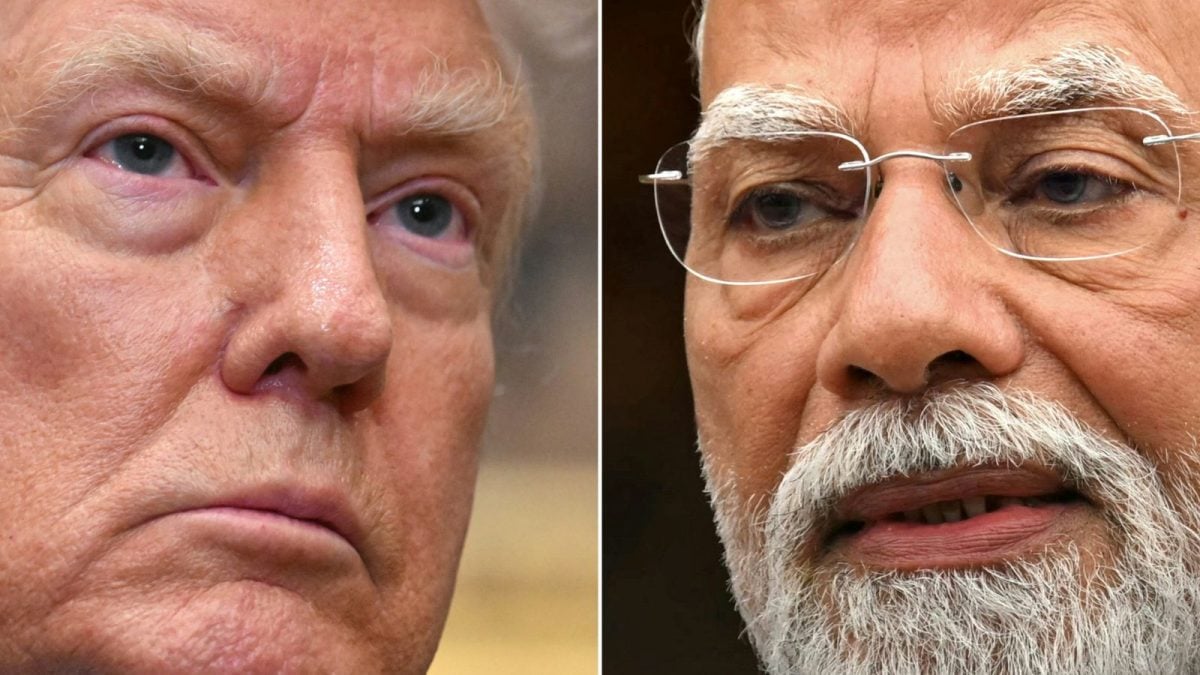
US President Donald Trump and PM Modi | File Image
The US Supreme Court has struck down President Donald Trump’s sweeping global tariff regime, ruling that the measures were imposed without legal backing.
In a 6-3 ruling, the court held that the International Emergency Economic Powers Act (IEEPA) does not authorise the president to unilaterally impose broad, across-the-board tariffs.
The 1977 law allows the executive to regulate certain international economic transactions during a declared national emergency, but does not extend to blanket tariff actions, the court said.
Chief Justice John Roberts, who authored the majority opinion, said Congress has delegated tariff-setting powers only in limited and clearly defined circumstances.
He was joined by the court’s three liberal justices and conservative justices Neil Gorsuch and Amy Coney Barrett. Justices Samuel Alito, Clarence Thomas, and Brett Kavanaugh dissented.
Also Read: US To Refund Billions? What Next After Supreme Court Strikes Down Trump Tariffs
What The Ruling Means For India
The verdict does not overturn all of Trump’s tariff actions. Duties imposed on steel and aluminium under separate legal provisions remain intact. However, it invalidates two major categories of tariffs introduced using IEEPA.
These include the so-called “reciprocal” tariffs, which carried a baseline rate of 10 per cent for most countries, and a separate 25 per cent levy imposed on select imports from Canada, China and Mexico over fentanyl-related concerns.
India had been subject to the reciprocal tariffs, with a 26 per cent rate announced on Trump’s “Liberation Day” in April 2025, later revised to 25 per cent.
With the court ruling, these IEEPA-based tariffs no longer apply, effectively bringing reciprocal tariffs on most Indian exports down to zero for now.
Separately, India had also faced a 25 per cent “penalty” tariff linked to its imports of Russian oil, a measure the US had said was tied to the Ukraine war.
That levy was removed earlier this month after New Delhi and Washington reached a trade understanding. As a result, both the penal tariff and the reciprocal tariff on Indian goods now stand withdrawn.
Under the trade framework discussed earlier, the reciprocal tariff was expected to be reduced to 18 per cent, but the court’s decision renders that rate moot for the time being.
Tariffs That Still Apply
Despite the relief, US tariffs on Indian goods do not disappear entirely.
Duties on steel and aluminium exports, imposed under different statutory authority, continue to apply.
For other products, tariffs revert to pre-IEEPA levels, which are generally lower under the standard US tariff schedule, though sector-specific levies remain.
The ruling does not prevent Trump, or a future administration, from imposing tariffs using other laws.
However, such actions would face stricter procedural limits and could require congressional involvement.
US officials have indicated that alternative legal routes could still be explored to retain elements of the tariff framework.
For India, the decision comes at a critical juncture. Ongoing trade talks with Washington had been overshadowed by tariff uncertainty, particularly for exporters in textiles, pharmaceuticals and engineering goods.
 Click here to add News18 as your preferred news source on Google.
February 20, 2026, 21:55 IST
Read More





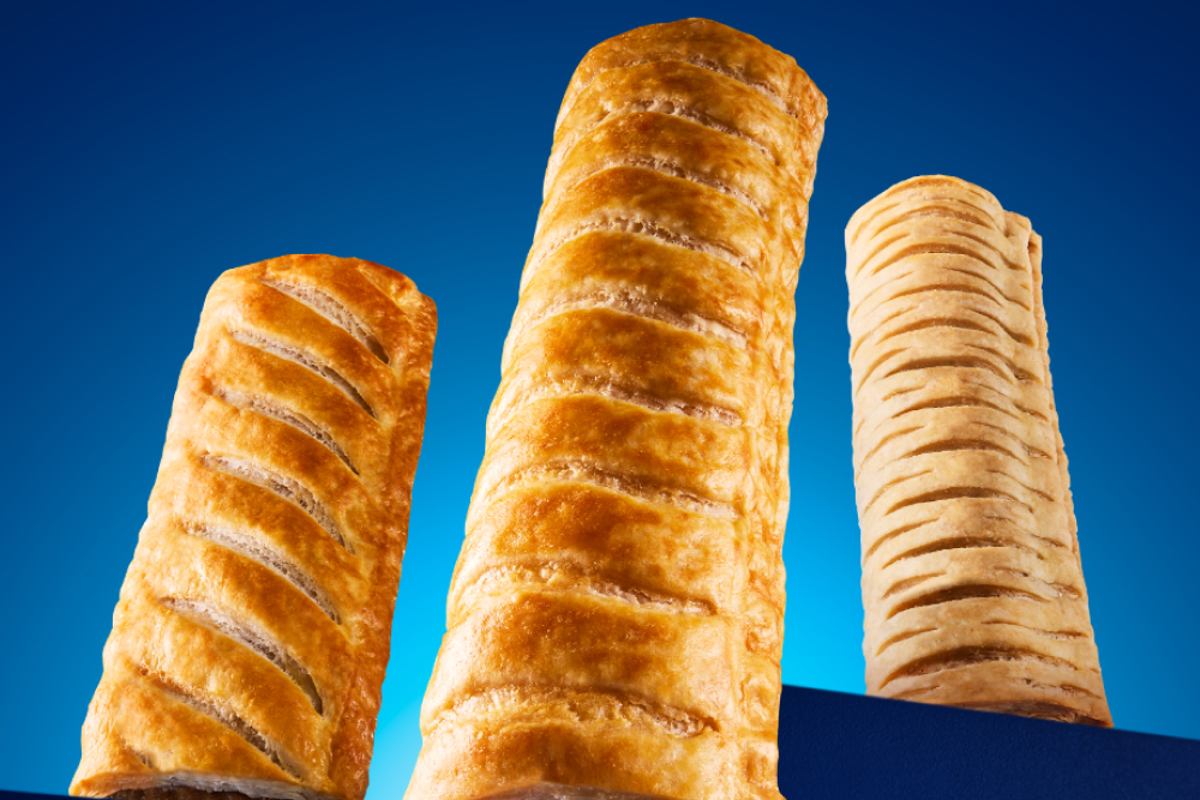
Greggs is launching a chicken version of its customer favourite sausage and vegan rolls in a permanent addition to its menu.
The Chicken Roll – described by the high street baker as “seasoned chicken wrapped in layers of crisp, golden, glazed puff pastry” contains 305 calories and will cost £1.35 when it goes on sale on Thursday.
It follows the Sausage Roll and the pork free Vegan Roll.
To celebrate the final launch of the “trilogy”, Greggs is allowing customers the chance to be among the first to taste the new roll with a 20-minute slot between 3.30pm and 9pm on Wednesday (April 8) at a pop-up location at 15 Bateman Street, in London’s Soho.
Places will be given on a first-come first-served basis but, in a nod to the trilogy theme, guests must arrive as part of a trio of friends or family.
Visitors will be able to pair their three complimentary rolls with a free chicken-themed cocktail or mocktail.
A Greggs spokeswoman said: “They say the best things come in threes, and our iconic roll trilogy is no exception.
“We can’t wait for our customers to experience the Chicken Roll as the ultimate headline act of our flaky franchise.”
Over the past year, Greggs has come under pressure from cautious shoppers affected by the rising cost of living, higher tax and labour costs, and the growing use of weight-loss treatments.
Last month, the Newcastle-based firm reported that statutory pre-tax profits fell by 17.9% to £167.4 million for the year to December 27, compared with a year earlier.
It also told shareholders that total sales grew by 6.8% to £2.15 billion over the year, with like-for-like growth buoyed by its continued store opening programme.
Greggs said it had 121 net store openings in 2025, expanding its shop estate to 2,739 locations by the end of the year.
It is targeting around 120 further openings this year as it highlighted ambitions to grow to “significantly more than 3,000 UK shops over longer term”.

Applied Nutrition is significantly expanding its product range to cater to customers using weight loss drugs, following a substantial increase in demand over the past year.
The health and wellness brand said it has identified a key business opportunity stemming from the sharp rise in Britons using GLP-1 treatments, such as Mounjaro and Wegovy.
The London-listed company, which already offers GLP-1-friendly high-protein ready meals launched in late 2025, confirmed that new products specifically designed for this market will be introduced later this year.
“The GLP-1 user is a growing customer. We see this as a consumer at the start of their weight loss journey who is now looking at how the medication can help them,” Thomas Ryder, founder and chief executive of the Liverpool-based firm, said.
“There is an opportunity, as those customers often need supplements and need smaller portions. I think this is a catalyst for the health and wellness space if we have that consumer in mind.
“We do have a number of products we will bring to market in this area because we do see that area growing.”
At least 1.6 million Britons have used weight loss jabs in the past year, according to research by University College London.
Applied Nutrition has reported strong growth, driven by targeting new customer opportunities and diversifying its sales channels, including expansion into UK retail stores.
In March, the company announced robust financial results, with pre-tax profits soaring by 77.1% to £20.9 million for the six months ending 31 January, compared to the previous year.
Sales also saw a significant uplift, rising by 56.5 per cent to £74.5 million over the same half-year period.
However, the firm cautioned that sales volumes in the Middle East are expected to be affected by the ongoing conflict in the region.
Applied Nutrition said it still expects to meet revenue targets for the year of around £140 million.
The company added: “Importantly, we have managed similar disruption in the past, supported by the agility of our operations.
“In this instance, we are working closely with customers to adapt our routes into the region and logistics arrangements to safeguard continued supply to those customers.”
Business
Trump administration finalizes better-than-feared Medicare Advantage payment rate in boost to health insurers

Administrator for the Centers for Medicare & Medicaid Services Mehmet Oz speaks during an event sponsored by the Action for Progress Coalition, at the National Press Club in Washington, D.C., U.S., Feb. 2, 2026.
Al Drago | Reuters
The Trump administration on Monday finalized a 2027 payment rate increase to privately run Medicare plans that was far bigger than initially proposed, a boost to health insurer stocks.
The government will increase average Medicare Advantage payments by 2.48%, or more than $13 billion, in 2027, according to a release from the Centers for Medicare & Medicaid Services. The Trump administration in January proposed a payment rate hike of 0.09%, which pummeled shares of insurers that run those plans.
Shares of UnitedHealth and CVS Health rose more than 9% in after-hours trading on Monday. Meanwhile, Humana‘s stock jumped around 12%.
“Medicare Advantage and Part D should work for the people who rely on them,” said CMS Administrator Dr. Mehmet Oz in a release. “These updates keep coverage affordable and ensure patients get real value from their plans.”
The closely watched government payment rate determines how much insurers can charge for monthly premiums and plan benefits they offer and, ultimately, their profits.
Medicare Advantage is a privately run health insurance plan contracted by Medicare. More than half of Medicare beneficiaries are enrolled in such plans, enticed by lower monthly premiums and extra benefits not covered by traditional Medicare, according to health policy research firm KFF.

Wellness brand announces new product range for those on weight-loss jabs
Greggs launches chicken version of sausage and vegan rolls in ‘iconic trilogy’

Golfers react to Tiger Woods’ absence at Augusta National during Masters week: ‘It’s unfortunate’

-

 Sports1 week ago
USMNT handed reality check by Doku, Belgium ahead of World Cup
-
Uncategorized4 days ago
[CinePlex360] Please moderate: “Trump signals p
-

 Sports1 week ago
2026 NCAA men’s hockey tournament: Schedule, results
-

 Tech3 days ago
Our Favorite iPad Is $50 Off
-
Uncategorized1 week ago
[CinePlex360] Please moderate: “Further tariff
-

 Entertainment3 days ago
Joe Jonas shares candid glimpse into parenthood with Sophie Turner
-
 Politics7 days ago
Trump considers asking Arab allies to help to pay for Iran war
-

 Entertainment1 week ago
Demystifying the PTI