

Business
Famed director James Cameron sends scathing letter to antitrust lawmaker over Netflix-WBD deal


Canadian filmmaker James Cameron poses during a photocall for the opening of the exhibition entitled ‘The Art of James Cameron’ at the Cinematheque Francaise in Paris on April 3, 2024.
Stephane De Sakutin | AFP | Getty Images
Legendary “Titanic” director James Cameron is likening the theatrical experience to a “sinking ship” if Netflix acquires Warner Bros. Discovery’s film studio.
Cameron penned a letter last week to Sen. Mike Lee, R-Utah, that was obtained by CNBC, in which he argues Netflix’s proposed acquisition of WBD’s studio and streaming assets could lead to massive job losses in Hollywood, fundamentally alter the theatrical landscape in the U.S. and negatively affect one of America’s largest export sectors.
Lee chairs the Senate subcommittee on antitrust, competitive policy and consumer rights, which held a hearing on Feb. 3 to discuss the potential impact of the Netflix-Warner Bros. transaction. Cameron sent his letter after the hearing, during which Netflix co-CEO Ted Sarandos and WBD executive Bruce Campbell testified.
“I believe strongly that the proposed sale of Warner Brothers Discovery to Netflix will be disastrous for the theatrical motion picture business that I have dedicated my life’s work to,” Cameron wrote to Lee. “Of course, my films all play in the downstream video markets as well, but my first love is the cinema.”
Cameron has been vocal in his opposition to the proposed tie-up, and his concerns echo those of the broader filmmaking industry, which generally sees combinations of movie studios resulting in fewer releases and less work. Cameron’s letter to Lee, which has not been previously reported, escalates his concerns to the lawmakers who could potentially stand in the way of Netflix completing its acquisition.
“We have received outreach from actors, directors, and other interested parties about the proposed Netflix and Warner Brothers merger, and I share many of their concerns,” Lee said in a statement. “I look forward to holding a follow-up hearing to further address these issues.”
In response to a request for comment, a Netflix representative pointed to Netflix’s written testimony and Sarandos’ comments during the hearing.
In its written testimony, Netflix outlined its investments in the film and TV production industry and its impact on the overall U.S. economy, including $20 billion in planned film and TV spend in 2026, a majority of which it said will be spent in America.
“With this deal, we’re going to increase, not reduce, production investments going forward, supported by a stronger combined business and balance sheet,” Netflix said, noting its production facilities, such as one in New Mexico and an upcoming New Jersey-based studio.
Since the deal’s announcement, Netflix’s top brass have consistently voiced their belief that the deal would not only win regulatory approval but would be good for the media industry.
During a recent earnings call, Sarandos called the deal “pro-consumer … pro-innovation, pro-worker.”
He has said on multiple occasions that the addition of WBD’s studio would preserve jobs — even as layoffs roil the media ecosystem — and has said the assets would bring new businesses under Netflix’s umbrella.
“We’re going to need those teams, these folks that have extensive experience and expertise. We want them to stay on and run those business,” Sarandos said. “So we’re expanding content creation, not collapsing it in this transaction.”
In addition to concerns specific to filmmakers and across the theater industry, the proposed Netflix-WBD transaction has awakened other regulatory questions.
In particular, critics have raised alarm about bringing together two of the top global streaming services — Netflix with 325 million global subscribers and WBD’s HBO Max with 128 million as of Sept. 30. Lawmakers have already questioned how a merger of those services would affect consumers and prices.
Paramount Skydance has leveraged some of the same arguments in its attempt to unseat Netflix and buy the entirety of WBD through a hostile tender offer.
Sarandos and co-CEO Greg Peters have argued that competition for viewers includes various platforms — from traditional TV to streaming services to social media platforms such as YouTube — making Netflix a small part of the ecosystem.
Theatrical shifts
Cameron, who has pioneered the creation of new filming technologies during his decadeslong career, including 3D production systems, advanced visual effects and high-frame-rate display, noted that theatrical exhibition has been a critical part of his “creative vision.”
He also highlighted previous comments by Sarandos calling movie theaters “an outdated concept” and an “outmoded idea,” in addition to comments telling investors that “driving folks to a theater is just not our business.”
“The business model of Netflix is directly at odds with the theatrical film production and exhibition business, which employs hundreds of thousands of Americans,” Cameron wrote. “It is therefore directly at odds with the business model of the Warner Brothers movie division, one of the few remaining major movie studios.”
Cameron noted that WBD releases around 15 theatrical films a year, volume that movie theater operators rely on at a time when production has shrunk and consumer habits have shifted.
He also suggested that the merger would “remove consumer choice by reducing the number of feature motion pictures that are made” as well as “restrict the choices of film-makers looking for studios to invest in their projects, which will in turn reduce jobs.”
Cameron touched on recent trade policy shifts by the Trump administration that have sought to protect U.S. exports. President Donald Trump has more than once floated the idea of tariffs to protect Hollywood.
“The US may no longer lead in auto or steel manufacturing, but it is still the world leader in movies,” Cameron said. Under a Netflix-WBD merger, “That will change for the worse.”
Cameron also questioned whether Netflix would honor verbal commitments its executives have made around future theatrical releases, including how long they would play in theaters and how many theaters they would play in.
In its written testimony from earlier this month, Netflix said it plans to put Warner Bros. films in theaters with 45-day windows and would continue to employ these employees, since “we don’t have those kinds of workers at Netflix today.”
“We are not acquiring these amazing assets to shut them down, but to build them up,” according to the testimony.
Still, Cameron questioned whether those commitments would hold.
“Their pledge to support theatrical releases (a business fundamentally at odds with their core business model) is likely to evaporate in a few years,” he said.
“Once they own a major movie studio, that is irrevocable,” he added. “That ship has sailed (as I like to say, mindful that I directed ‘Titanic.’ I am very familiar not only with ships that sail, but also those that sink. And the theatrical experience of movies could become a sinking ship.)”






Business
India-US trade deal back in focus: Indian delegation to visit Washington next week for talks – The Times of India
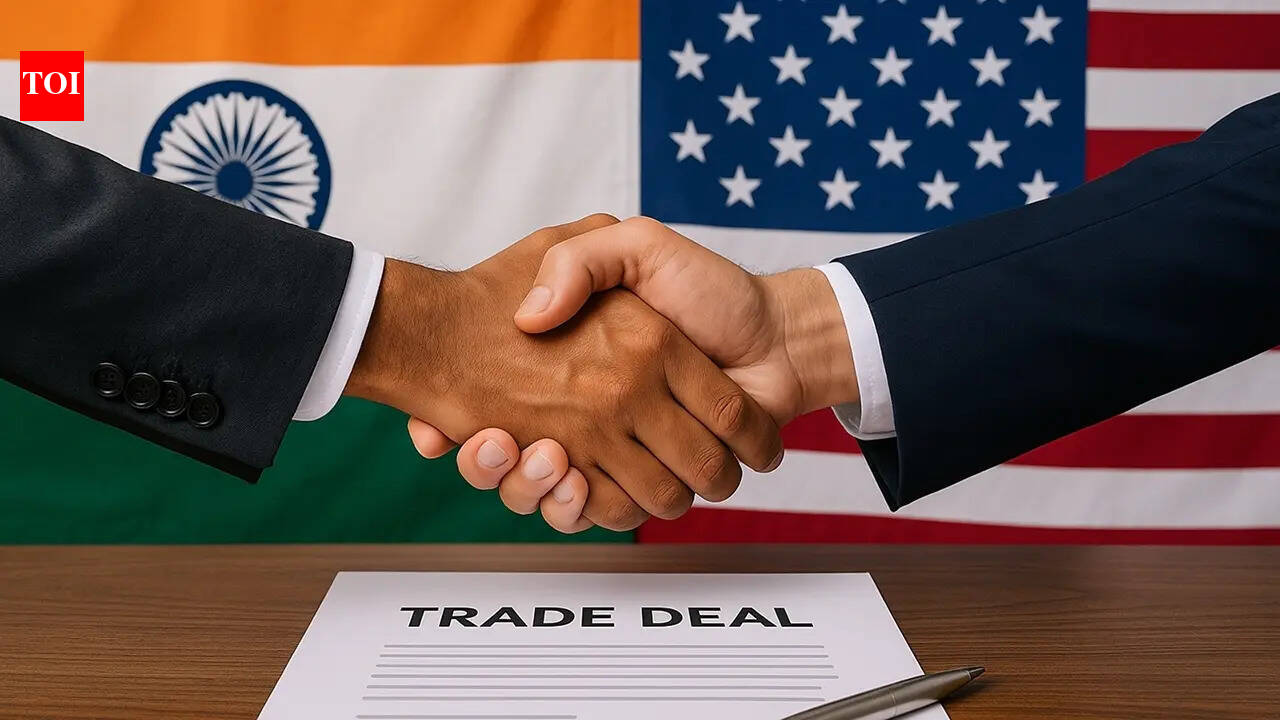
India-US trade deal update: Months after India and the US announced an interim trade agreement that reduces tariffs on India to 18%, an official Indian delegation is set to travel to Washington next week for discussions with US authorities, a government source said on Wednesday.According to a PTI source, the visit is scheduled for next week. The agreement had originally been expected to be signed in March, but developments in the Donald Trump tariff regime following a ruling by the Supreme Court of the United States have changed the circumstances.
In this light, the talks between trade representatives of India and the United States are seen as particularly significant. Officials had earlier indicated that the deal would be concluded only after clarity emerges on the revised tariff structure in the United States.In February, the two countries had announced that they had finalised the framework for the first phase of their bilateral trade pact. As part of this understanding, the US had agreed to bring down tariffs on Indian goods to 18 per cent.However, the tariff environment in the US shifted after the court struck down sweeping reciprocal tariffs introduced by President Donald Trump. Subsequently, the US administration imposed a uniform 10 per cent tariff on imports from all countries for a period of 150 days starting February 24.Amid these changes, a planned meeting between the chief negotiators from both sides was deferred last month. The two countries had been scheduled to meet in February to finalise the legal text of the agreement.At the time the framework was agreed, India enjoyed a relative advantage over competing nations. That edge has since narrowed, as all US trading partners are now subject to the same 10 per cent tariff.The upcoming talks will also be crucial in the context of two ongoing investigations initiated by the Office of the United States Trade Representative under Section 301.On March 12, the USTR launched a probe covering around 60 economies, including India and China. The investigation aims to assess whether policies or practices related to the enforcement of bans on goods produced using forced labour are unreasonable or discriminatory, or whether they restrict US trade.A day earlier, on March 11, the USTR had initiated another Section 301 investigation focusing on the policies and industrial practices of 16 economies, including India and China.

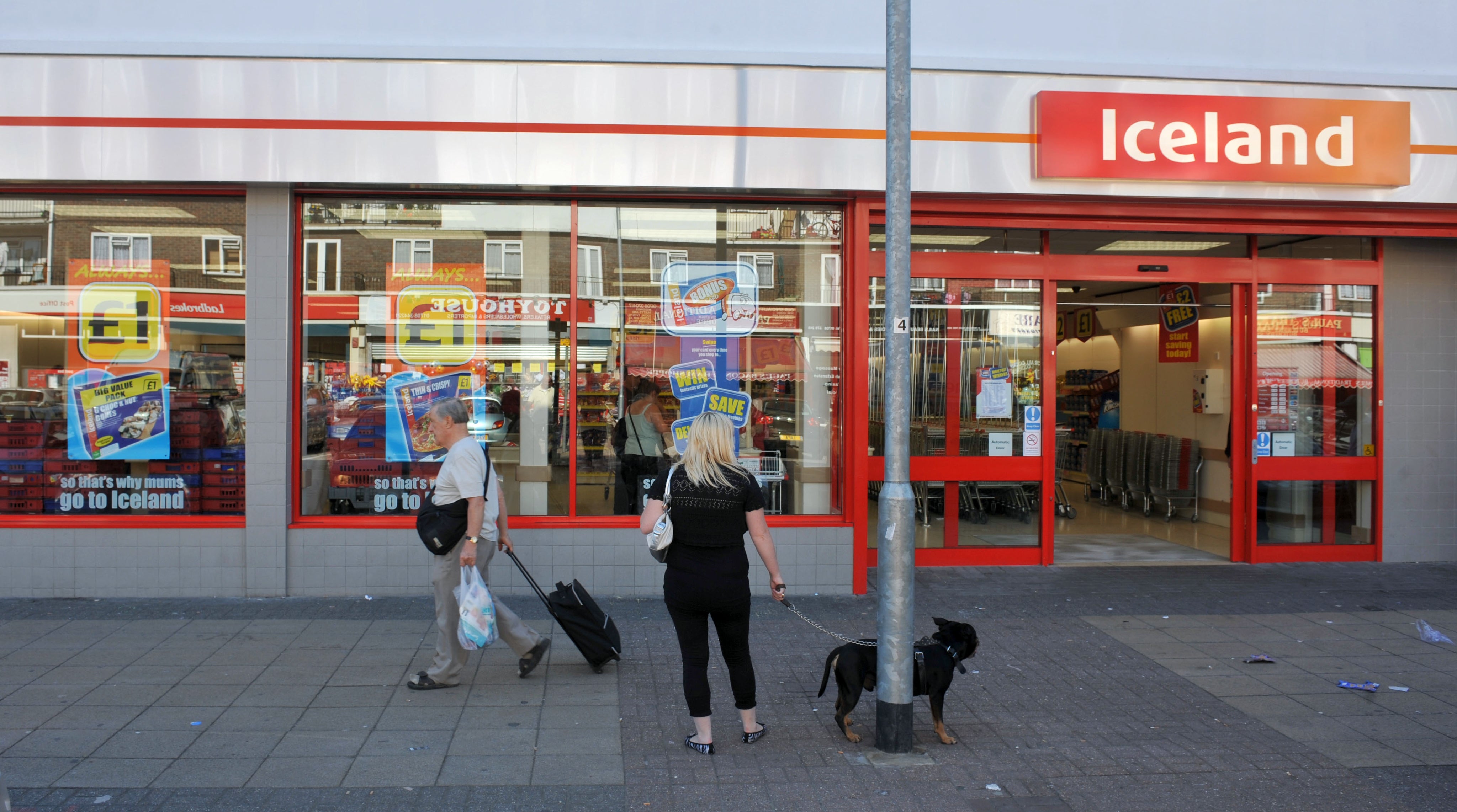
Ads for supermarkets Lidl and Iceland have become the first to be banned under new rules governing “less healthy” food and drink.
The rules, which came into effect at the beginning of the year, are part of Government efforts to tackle childhood obesity by preventing ads for food and drink that is high in fat, salt and sugar (HFSS) appearing on television between 5.30am and 9pm, and online at any time.
The new ban applies to products that fall within 13 categories considered to play the most significant role in childhood obesity, including soft drinks, chocolates and sweets, pizzas and ice creams, but also breakfast cereals and porridges, sweetened bread products, and main meals and sandwiches.
Products that fall into these categories are than also assessed as to whether they are “less healthy” based on a scoring tool that considers their nutrient levels and whether products are high in saturated fat, salt or sugar.
Only products that meet both of the two criteria are included in the restrictions.
The Advertising Standards Authority (ASA) said an Instagram post for Lidl Northern Ireland by influencer Emma Kearney featured the grocer’s cheese pretzel, which was not categorised as HFSS and therefore did not fall within the restrictions, and its Pain Suisse product, which was classified as both HFSS and a sweetened bread product and was therefore banned under the new rules.
Lidl said the ad had been removed and they had liaised with their marketing agency to ensure that all future ads complied with the new rules.
In a separate case, Iceland confirmed that two ads included a tub of Swizzles Sweet Treats, a packet of Chupa Chups Laces, a bag of Chooee Disco Stix and a bag of Haribo Elf Surprises, which were all classified as HFSS.
They also provided nutrient profile information from their supplier which confirmed that Pringles Sour Cream & Onion crisps, also included in the ads, were not an HFSS product.
Iceland’s Luxury Aberdeen Angus Beef Roasting Joint, Vegetable Spring Rolls, Sticky Chicken Skewers and Lurpak Spreadable Butter, which were also included in the ads, did not fall within the new restrictions.
The ASA did not uphold a complaint against an Instagram post by influencer John Fisher – known to many as Big John – which featured him promoting menu items at a new German Doner Kebab outlet because the specific items shown in the ad were not classified as less healthy foods.
The watchdog also cleared a TV ad for On The Beach promoting free airport lounge access which featured a boy approaching a buffet and taking a chocolate ring doughnut.
The ASA said viewers would see the ad as showing an example of what was available in the lounge rather than for the doughnut itself, meaning it did not break the rules.
ASA chief executive Guy Parker said: “As the ad regulator, our role is to remain impartial and independent, making sure our new LHF rules, which reflect the law, are applied fairly and consistently.
“These initial rulings are an important step in building a clearer picture of how the rules are applied in reality.
“We’ll be continuing to play our role in administering and enforcing them, including by using tech-assisted proactive monitoring.”
An Iceland spokesman said: “The products highlighted were part of a bigger range in the specific display ad and were featured due to a technical fault with a data feed from a third-party supplier.
“As the ASA has pointed out, these initial rulings are helping to build a clearer picture of how the new rules are applied, following the initial confusion and debate around the regulations.”

At a meeting of the local authority’s executive on Tuesday, MacBeath said the scheme aimed to move beyond emergency aid by helping families become more financially “resilient”, offering advice on managing money, accessing benefits, reducing debt and finding work.


Australian business confidence plunges in March amid uncertainty: NAB

Transfer rumors, news: Bayern eye move for Newcastle’s Gordon
India-US trade deal back in focus: Indian delegation to visit Washington next week for talks – The Times of India

-

 Fashion1 week ago
India’s exports face reset as EU links trade to carbon metrics: EY
-

 Entertainment1 week ago
Queen Elizabeth II emotional message for Archie, Lilibet sparks speculation
-

 Entertainment1 week ago
Lamar Odom shocking response to Khloé Kardashian account of his overdose
-

 Tech7 days ago
As the Strait of Hormuz Reopens, Global Shipping Will Take Months to Recover
-

 Tech7 days ago
Azure customers up in arms over ‘full’ UK South region | Computer Weekly
-

 Fashion1 week ago
CII submits 20-pt agenda to Indian govt to back firms hit by Iran war
-

 Tech6 days ago
This AI Button Wearable From Ex-Apple Engineers Looks Like an iPod Shuffle
-

 Tech1 week ago
A Single Strike Won’t Shut Off the Gulf’s Desalination System