

Politics
Iran nears deal to buy supersonic anti-ship missiles from China: report

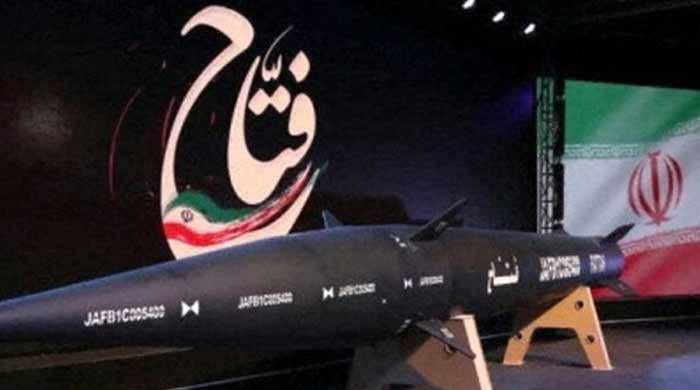
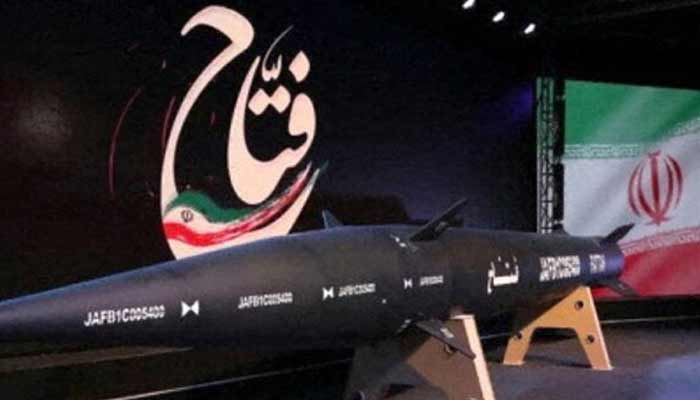
- Supersonic designed to evade shipborne defence.
- Iran, China also in discussions for anti‑ballistic weapons.
- Missiles’ transfer to defy UN’s weapons embargo.
Iran is close to a deal with China to purchase anti‑ship cruise missiles, according to six people with knowledge of the negotiations, just as the United States deploys a vast naval force near the Iranian coast ahead of possible strikes on the Islamic Republic.
The deal for the Chinese‑made CM‑302 missiles is near completion, though no delivery date has been agreed, the people said. The supersonic missiles have a range of about 290 kilometres and are designed to evade shipborne defences by flying low and fast. Their deployment would significantly enhance Iran’s strike capabilities and pose a threat to US naval forces in the region, two weapons experts said.
Negotiations with China to buy the missile weapons systems, which began at least two years ago, accelerated sharply after the 12‑day war between Israel and Iran in June, according to the six people with knowledge of the talks, including three officials who were briefed by the Iranian government as well as three security officials.
As talks entered their final stages last summer, senior Iranian military and government officials travelled to China, including Massoud Oraei, Iran’s deputy defence minister, according to two of the security officials. Oraei’s visit has not been previously reported.
“It’s a complete gamechanger if Iran has supersonic capability to attack ships in the area,” said Danny Citrinowicz, a former Israeli intelligence officer and now senior Iran researcher at Israel’s Institute for National Security Studies think tank. “These missiles are very difficult to intercept.”
Reuters could not determine how many missiles were involved in the potential deal, how much Iran had agreed to pay, or whether China would go through with the agreement now given heightened tensions in the region.
“Iran has military and security agreements with its allies, and now is an appropriate time to make use of these agreements,” an Iranian foreign ministry official told Reuters.
The Chinese delegation to the United Nations directed Reuters to seek comment from the Foreign Ministry in Beijing. The foreign and defense ministries did not respond to requests for comment.
The White House did not directly address the negotiations between Iran and China over the missile system when asked by Reuters. US President Donald Trump has been clear that “either we will make a deal or we will have to do something very tough like last time,” a White House official said, referring to the current standoff with Iran.
The missiles would be among the most advanced military hardware to be transferred to Iran by China and defy a United Nations weapons embargo that was first imposed in 2006. The sanctions were suspended in 2015 as part of a nuclear deal with the US and allies, and then reimposed last September.
US forces gathering near Iran
The potential sale would underscore deepening military ties between China and Iran at a moment of heightened regional tension, complicating US efforts to contain Iran’s missile programme and curb its nuclear activities. It would also signal China’s growing willingness to assert itself in a region long dominated by US military might.
While hosting Iranian President Masoud Pezeshkian for a military parade in Beijing in September, Chinese President Xi Jinping told the Iranian leader that “China supports Iran in safeguarding sovereignty, territorial integrity and national dignity.”
China joined Russia and Iran in a joint letter on October 18 to say they believed the decision to reimpose sanctions was flawed.
“Iran has become a battlefield between the US” on one side and Russia and China on the other, said one of the officials who was briefed by Iran’s government on the missile negotiations.
The deal comes as the US assembles an armada within striking distance of Iran, including the aircraft carrier USS Abraham Lincoln and its strike group. The USS Gerald R. Ford and its escorts are also heading to the region. The two ships together can carry more than 5,000 personnel and 150 aircraft.
“China does not want to see a pro-Western regime in Iran,” said Citrinowicz, the Israeli specialist on Iran. “That would be a threat to their interests. They are hoping that this regime will stay.”
Trump said on February 19 he was giving Iran 10 days to reach an agreement over its nuclear programme or face military action. The US is preparing for the possibility of sustained, weeks-long operations against Iran if Trump orders an attack, Reuters reported on February 13.
A depleted arsenal
The CM-302 purchase would be a significant improvement in an Iranian arsenal depleted by last year’s war, said Pieter Wezeman, a senior researcher at the Stockholm International Peace Research Institute.
China’s state-owned China Aerospace Science and Industry Corporation (CASIC) markets the CM-302 as the world’s best anti-ship missile, capable of sinking an aircraft carrier or destroyer. The weapons system can be mounted on ships, aircraft or mobile ground vehicles. It can also take out targets on land.
CASIC did not respond to a request for comment.
Iran is also in discussions to acquire Chinese surface‑to‑air missile systems, so-called MANPADS, anti‑ballistic weapons, and anti-satellite weapons, the six people said.
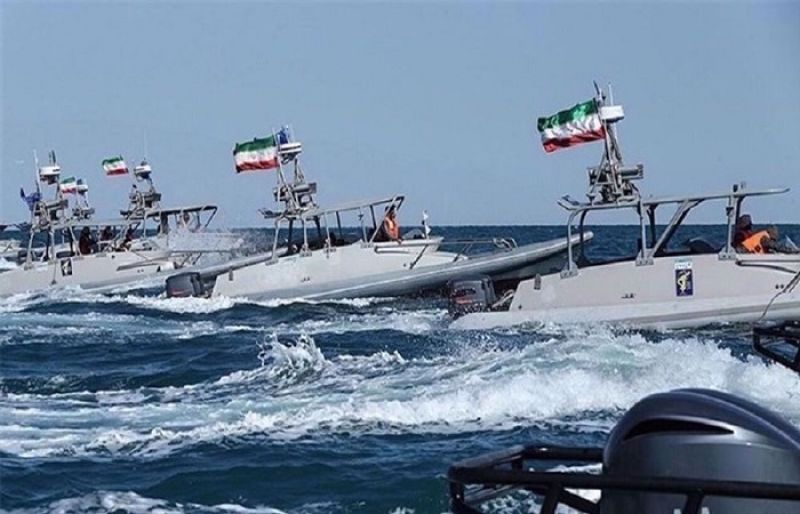
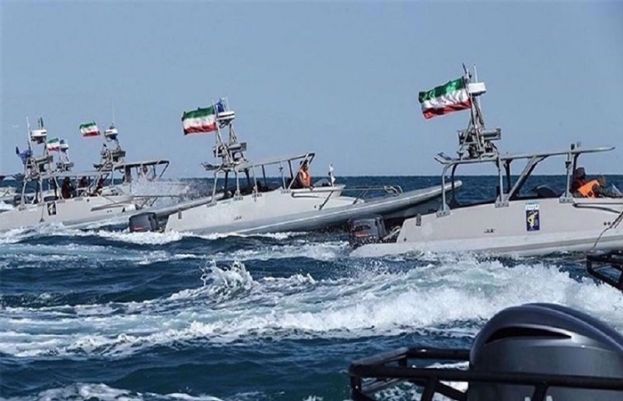
The Islamic Revolution Guards Corps (IRGC) Navy says the management of the Strait of Hormuz has entered a new stage.
The IRGC Navy made the announcement in a post on its social media account on Friday, two days after a temporary Pakistan-mediated ceasefire went into force between Tehran and Washington following the failure of the US and Israel to achieve their objectives after 40 days of war against the Iranian nation.
“The two days of silence in military battle clearly showed to friends and enemies that the management of the Strait of Hormuz has entered a new phase,” it said.
The announcement echoed Thursday’s remarks by Leader of the Islamic Revolution Ayatollah Seyyed Mojtaba Khamenei, who said Iran will “take the management of the Strait of Hormuz to a new stage.”
The United States and the Israeli regime launched their illegal act of aggression against Iran on February 28, but the Iranian armed forces responded by launching 100 waves of missile and drone operations targeting locations in the Israeli-occupied territories as well as US military bases and assets across the region.
Iranian forces also blocked the Strait of Hormuz to oil and gas tankers affiliated with the adversaries and those cooperating with them in an attempt to maintain security at the strategic waterway.
The US sought to form a coalition to open the strategic waterway, asking NATO countries to contribute naval and air assets. However, most of Washington’s allies have declined to commit forces.
Additionally, on Friday, South Korea’s Foreign Ministry said the country will send a special envoy to Iran to examine the situation in West Asia amid conflicting reports about the reopening of the Strait of Hormuz.
It added that the decision had been taken during a telephone conversation between top top Iranian and South Korean diplomats.
Meanwhile, Hamid Hosseini, spokesman for the association of Iranian oil product exporters said that the acceptance of Iran’s proposed provisions about the security and legal regime of the Strait of Hormuz as part of the truce agreement can be one of the most important diplomatic achievements in recent decades.
The strait was previously open, but now some international analysts believe that new conditions could benefit Iran, Hosseini noted.
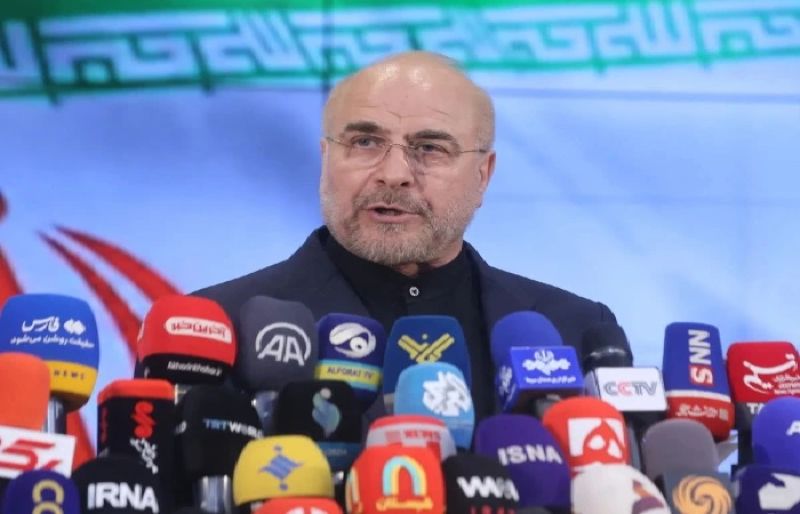
Iranian Parliament Speaker Mohammad Baqer Qalibaf says a ceasefire in Lebanon and the release of Iran’s blocked assets are requisite to the commencement of negotiations with the United States in the Pakistani capital of Islamabad.
Qalibaf made the remark in a post on his X account on Friday as Tehran and Washington are scheduled to hold a fresh round of talks in Islamabad on Saturday to effectively put an end to the war jointly launched by the US and Israel against the Islamic Republic late last month.
The negotiations come after the United States and Iran agreed on Wednesday to a Pakistan-brokered two-week ceasefire following Washington’s acceptance of a 10-point proposal from Tehran.
The top Iranian parliamentarian said there are two measures agreed upon by both sides which have not been implemented yet.
He emphasized that “a ceasefire in Lebanon and the release of Iran’s blocked assets” are conditions to the commencement of negotiations.
“These two matters must be fulfilled before negotiations begin,” Qalibaf pointed out.
Earlier on Friday, a high-ranking security source told Press TV that intense pressure and the threat to withdraw from talks with the United States in Islamabad from Tehran forced the Israeli regime to stop its military attacks on the Lebanese capital, Beirut.
According to the source, following the Zionist regime’s brutal aggression on Lebanon on Wednesday, Iran made the cessation of those attacks a firm precondition for its participation in temporary ceasefire negotiations with the United States.
He hastened to add that the travel of an Iranian delegation to Islamabad was delayed a few times, specifically due to the continued Israeli aggression against Lebanon.
The comments came after the Israeli regime carried out extensive attacks across Lebanon, killing at least 303 people and injuring more than 1,150. The regime said its aggression on Lebanon, which started concurrent with the joint US-Israeli aggression on Iran in late February, does not count as part of the ceasefire deal announced by Pakistan.
That comes as Pakistani Prime Minister Shahbaz Sharif said in a post on the X platform early on Wednesday that Iran and the US and their allies had agreed to “an immediate ceasefire everywhere including Lebanon and elsewhere”.
Meanwhile, Iranian Deputy Foreign Minister for Political Affairs Majid Takht Ravanchi also said on Friday that the upcoming negotiations with the United States in Pakistan will be based on the 10-point ceasefire plan proposed by Iran.
He added that Iran pursues a “responsible” approach to the declaration of the ceasefire, adding, “It has been agreed that Iran’s 10-article plan will be the basis for negotiations.”
- US VP Vance tells Iran not to ‘play’ US at Pakistan talks.
- Israeli strikes across southern Lebanon continue on Friday.
- Talks won’t start until US fulfil previous demands: Iran.
Iran said on Friday that blocked Iranian assets must be released and that a ceasefire must take hold in Lebanon before peace talks can proceed, throwing last-minute doubt over negotiations scheduled for Saturday in Pakistan.
Iran’s parliament speaker Mohammad Baqer Qalibaf said on X that the two measures had been previously agreed with the US and warned that negotiations would not start until they are fulfilled.
There was no immediate comment from the White House.
Earlier, Vice President JD Vance, who will lead the US delegation, set off for the talks in Pakistan saying he expected a positive outcome. But “if they’re going to try to play us, then they’re going to find the negotiating team is not that receptive”, Vance added.
Iran has been unable to obtain tens of billions of dollars of its assets in foreign banks, mainly from exports of oil and gas, due to US sanctions on its banking and energy sectors.
Tenuous truce
US President Donald Trump announced a two-week ceasefire in the six-week war on Tuesday, just hours before a deadline after which he had threatened to destroy Iran’s civilisation.
However, the truce is tenuous with Israel’s continuing bombardment of Lebanon and the ongoing closure of the Strait of Hormuz proving key sticking points for both sides.
The ceasefire has halted the campaign of US and Israeli air strikes on Iran. But it has so far done nothing to end the blockade of the strait, which has caused the biggest-ever disruption to global energy supplies, or to calm a parallel war waged by Israel against Iran’s Hezbollah allies in Lebanon.
Iran was doing a “very poor job” of letting oil through the strait, US President Donald Trump said in a social media post. He also warned Tehran against trying to collect fees from ships crossing it. “That is not the agreement we have!”
Israel has also said that its parallel campaign against Hezbollah in Lebanon was not part of the agreed ceasefire.
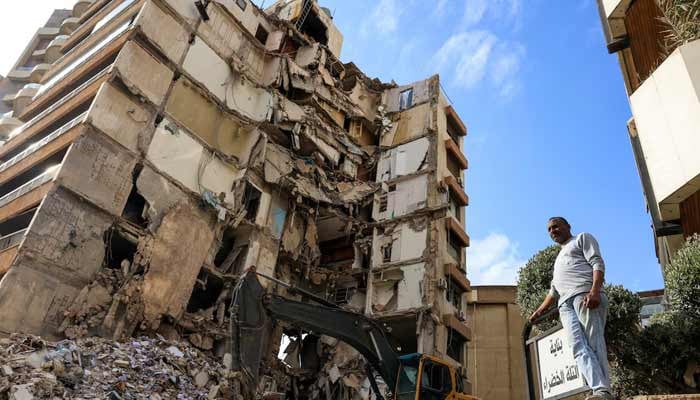
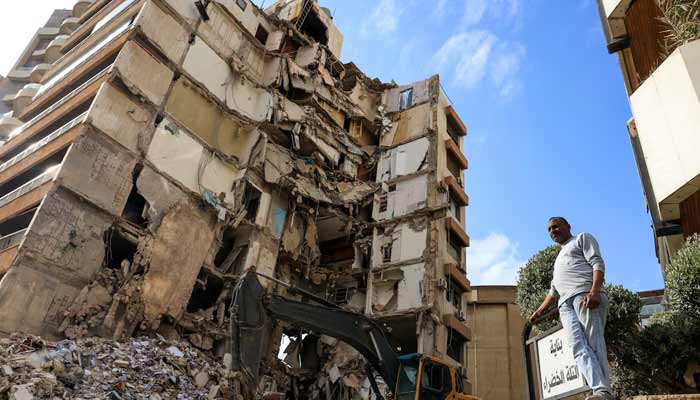
Israeli strikes continued across southern Lebanon on Friday, with more than a dozen people reported killed in various towns. One strike killed eight members of Lebanese state security forces, the country’s state media said.


Former Jets, Falcons QB Browning Nagle dead at 57 after cancer diagnosis

Artemis II capsule splashes down in Pacific, ending first crewed lunar flyby in 50 years

Usher and Chris Brown put aside three year long feud for upcoming tour

-
 Business1 week ago
Jaguar Land Rover sees sales recover after cyber attack
-
Uncategorized1 week ago
[CinePlex360] Please moderate: “Trump signals p
-

 Entertainment1 week ago
Joe Jonas shares candid glimpse into parenthood with Sophie Turner
-

 Tech1 week ago
Our Favorite iPad Is $50 Off
-

 Sports1 week ago
UConn Final Four run could trigger a $50M furniture giveaway for Massachusetts-based Jordan’s Furniture
-
 Business1 week ago
Video: Why Is the Labor Market Stuck?
-

 Entertainment1 week ago
Blake Lively reacts to harassment claims dismissal against Justin Baldoni
-
 Politics1 week ago
Iran can sustain Strait of Hormuz closure for years, will cut US military logistics: Official