

Sports
How Shakhtar keep signing so many Brazilians amid Russia-Ukraine war

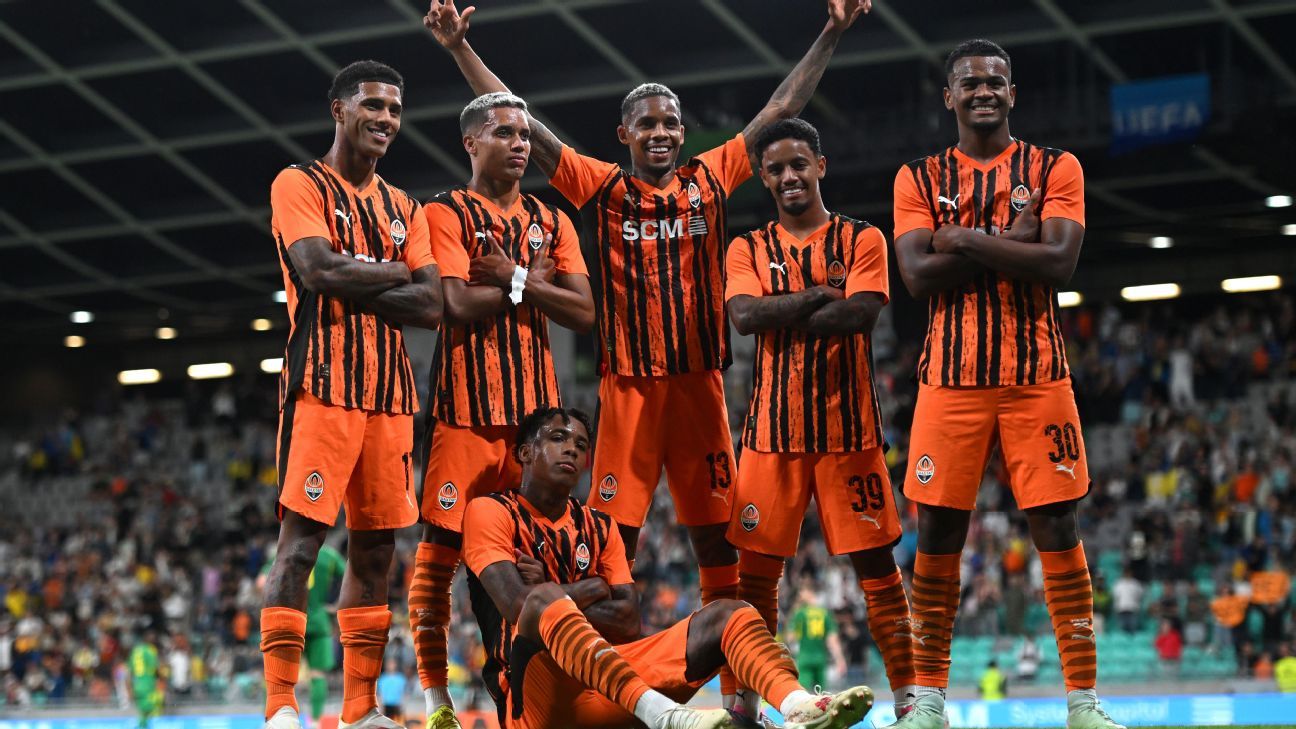
Shakhtar Donetsk sporting director Darijo Srna recalls “a couple of times” when the Ukrainian club’s players and staff had to huddle together in their hotel reception, alerted to an incoming drone strike and waiting for the call to head for the air-raid shelter. It happened once on matchday. “We were all in reception together until 6 a.m. but did not go and afterwards we slept until 12, then we had a meeting at 2 and a game at 4 p.m.,” Srna tells ESPN. “We lost, but this is part of our life.”
Tuesday marks four years of this reality. Russia’s full-scale invasion of Ukraine began on Feb. 24, 2022 and The Center for Strategic International Studies (CSIS) believes it is the deadliest conflict since World War II. Estimates vary, but the CSIS states as many as 140,000 Ukrainians have been killed in addition to 325,000 Russians. The UN High Commissioner for Refugees believes 5.9 million Ukrainians have left the country.
It is all the more remarkable that against this backdrop, Shakhtar’s strategy for survival as a club remains heavily reliant on the transfer market outside Ukraine, specifically signing young players from Brazil.
– Shakhtar Stalevi: The ‘made of steel’ soccer team in Ukraine
– Story of Shakhtar Donetsk to be made into Hollywood movie
– Ukraine chief blasts FIFA president Infantino for Russia remark
The policy began more than 20 years ago, a product of Shakhtar president Rinat Akhmetov’s fondness for the country’s flamboyant football style. The club established an extensive network of contacts in Brazil and over time, created a lineage of players who would join Shakhtar and then, later, an elite European side.
Willian (Chelsea), Fernandinho (Manchester City), Douglas Costa (Juventus), Fred (Manchester United) and Luiz Adriano (AC Milan) are among the big names to tread this path. Most recently, winger Kevin joined Fulham last September in a €40 million transfer, a record fee for the Premier League side.
In total, club sources told ESPN that Shakhtar have signed 47 Brazilian players, who have scored more than 1,000 goals combined, since 2002. (Luiz Adriano, who played between 2007 and 2015, is still the club’s all-time top scorer with 128 goals.) But the money generated through outgoing transfers has become vitally important. Club officials suggest the transfer of Brazilian players has raised in excess of €350m and that revenue stream is more vital than ever in wartime.
“The biggest two sources of income now are UEFA competitions and player sales,” Shakhtar chief executive Sergei Palkin tells ESPN. “That’s it. We have almost zero sponsorship, no matchday revenue, no TV revenue, nothing. To survive here, you have to change the ways to develop the club.”
Shakhtar’s story is a reminder that the conflict has been going on for much longer. Russia occupied and annexed Crimea in 2014, forcing the club’s displacement from their home in Donetsk. They have played European ‘home’ games in six different cities — Krakow, Poland is their base for this season’s UEFA Conference League campaign — and complete domestic fixtures in Lviv, which lies in western Ukraine. The team cannot fly to Poland due to airspace restrictions, and so European away games involve bus rides to the border, with journeys taking up to 16 hours, depending on the destination: in last season’s Champions League, they made trips right across Europe for fixtures at Arsenal and PSV Eindhoven.
Ukraine is experiencing one of the harshest winters on record, exacerbating the debilitating effects of Russian attacks targeting the country’s infrastructure which have left more than a million citizens without electricity, water and heating. The European Union has sent Ukraine almost 10,000 generators since the invasion began in 2022.
“If anybody would tell me at the beginning of 2022 that the war would continue four years, I wouldn’t believe it,” Palkin says. “Four years is a big part of your life.
“Our players, they live in a hotel and opposite the hotel, we have a pitch to train. In Europe, you can easily maintain the level of pitch but in Ukraine it is not possible because of one issue: light. When you have blackouts for one, two, three days, how can pitches survive in these conditions, especially after this severe winter when we had temperatures like -25 [Celsius, -13 Fahrenheit]?
“For my life, I don’t remember these kind of temperatures. We have a training camp in Kyiv and we maintain pitches there because they need a chance to train before games. You need to completely restructure the management of pitches because nobody had experience of doing it in wartime.
“And in modern medical history, you will not find experience like this where you can fully recover players after 16 hours of travel to play again.”
And yet, Brazilian players still join Shakhtar in large numbers. There are 12 listed in their first-team squad, the majority of whom joined the club within the last four years. Says Palkin: “You know why they come? Because they understand, here we create an unbelievable platform for the development of those players to build a bridge to top European football.
“They see all examples. The last one is Kevin. When the war started, we sold David Neres [for €15m]. He didn’t play one game for our club but we sold him to Benfica for more than we paid [€12m]. Even if it is risky for life, to reach something in top European football, they should come to us.
“We are signing a lot of deals now. I spend 70% of my time in negotiations convincing players to come in this very hard time because we have war. I need to show where a player lives, what happens for example when we have air raid sirens, all the security issues.
“I need to be open and explain, but the biggest explanations come when players call our existing players. They explain everything and it helps.”
Marlon Gomes was able to go one better. The 22-year-old joined Shakhtar from Vasco da Gama in January 2024 and consulted his veteran teammate Alex Teixeira, who made the same move in 2010. Teixeira spent six years in Ukraine and later returned to Vasco in 2022 before joining Greek side Panserraikos last month.
“Shakhtar always was a famous club, especially in Brazil,” Gomes tells ESPN. “Among young players with a promising talent, it is really known as a platform you can use to pass to the higher tier leagues.
“Alex Teixeira is a good friend of mine. In my career at Vasco, we speak a lot. Also he told me a bunch of things about Shakhtar — the way they are interested in young Brazilian players.
“When I discovered the history [of Brazilian players who have moved to Shakhtar], I have been thinking and dreaming about the same [journey and] the trophies they won. I was really inspired by those examples. Alex advised me that Shakhtar would be a beautiful option. There is not a single day I regret that decision.”
Gomes’ family, including his seven-year-old daughter Maite, remains in Brazil, where his mother anxiously watches news reports of the ongoing conflict.
“She watches TV and reads all the articles as well and she is getting really worried,” Gomes says. “For my side, I try to keep her calm and explain that in fact not everything is as terrible as can be displayed in the media. Yes, some attacks may occur even in the western part of Lviv where we currently stay but even despite that, the club is doing everything possible to keep us safe.
“During the season, we spent some time in Lviv and some in Kyiv. Whenever people from Brazil ask me something about Ukraine, I only reply with positive things. I really love the city of Kyiv, I believe it is one of the most beautiful cities I have ever seen and even despite all those terrible moments, I enjoy my life in Ukraine.
“Sometimes you can hear or see the drones attacking Ukrainian cities unfortunately and in fact all the TV, all the media shows part of living in Ukraine but they cannot represent what is going on inside the country. Of course, those events are completely terrible and I am deeply concerned about that but the country keeps living, keeps moving on for day to day and that can be the true inspiration for everybody.”
The adaptation process is vital, Palkin says: “When a new Brazilian player comes, we connect them with each other, they explain everything that is going on here, how we treat everybody, what’s going on, where we live, how we travel.
“When they move here, they can have any personal issues, especially in wartime, and so we have special people involved in all processes of adaptation and they understand what they want, they are always in contact with players and in a position to help any time.
“We create a structure that allows them to adapt very quickly and in wartime, this adaptation is even accelerated because we have no time. Fifteen years ago, we could wait two years for Brazilian players to arrive at the top level. Today, we have one or two months adaptation, and they go straight to the main squad.”
But Shakhtar’s established model of attracting promising players from Brazil and then transferring some of them to Europe’s elite is being squeezed by those top clubs being more willing and able to go direct to the source. Chelsea, for example, agreed a deal to sign Estêvão from Palmeiras in 2024 and Andrey Santos from Vasco a year earlier, while Denner will arrive from Corinthians this summer.
“Chelsea have changed the market in Brazil,” says Srna. “They are buying players not just in Brazil, but Argentina and Ecuador who are 16 or 17 years. Manchester City look too.
“For us it is more difficult than before, but there is still a lot of talent in Brazil. Estêvão for example, was on our list, but it is difficult to fight with Chelsea.”
Palkin explains how Shakhtar have adapted. “What it means for us is if before we signed players who were 18, 19, 20 years old, we need to pay attention to 16-, 17-year-olds,” he says. “And we need to be very quick. If you are not quick, you lose. Speed is the most important condition of how to be successful in the Brazilian market.
“Our president makes decisions very quick. He is not afraid to invest big money into young Brazilian players. He believes in his strategy and therefore even taking into account the war, we are still competitive in this market. Chelsea, City and other clubs are there and they could destroy the Brazilian market for clubs like Shakhtar, Benfica and Porto etc. for financial issues. They pay big money and it is difficult to compete with them.”
Money is a bigger issue when Shakhtar are not competing in the Champions League this season. Revenues are much smaller in the Conference League, but at the same time, there is something bigger at stake: the pride of a nation.
“It is a critical humanitarian platform to keep international attention on Ukraine and provide positive emotions for the people of Ukraine and our fans,” says Palkin. “People living in Ukraine, 90% of all news is negative. Every day, morning, evening, daytime. Emotionally, it is a very big pressure on our people. When we play European competitions and we win, it brings positive emotions.
“All our coaches who stayed during the four years, every time when they prepare a team for Ukrainian or European competitions, in all their speeches, they have words about the people living in Ukraine.”
Srna puts it in even starker terms. “When you play in Europe, you beat someone, the people feel happy because you are sending a message to the whole world: we are here, we fight until the end,” he says.
2:06
Vitali Klitschko honored to receive Arthur Ashe Courage Award
Vitali Klitschko is appreciative to receive the Arthur Ashe Courage Award and stresses the importance of bringing peace to Ukraine.
Shakhtar continue to feel left behind by FIFA. The row over Article 7 — an annex to the game’s regulations that allowed foreign players in Russia and Ukraine to unilaterally suspend their contracts following the outbreak of war in the region. The club estimates this cost around €60m in lost income. And, earlier this month, FIFA president Gianni Infantino claimed that he favours the lifting of a ban preventing Russia from competing in international sport.
“I suggest Infantino visits Ukraine to witness the destruction first hand rather than making this kind of irresponsible statement from a distance,” says Palkin. “Reintegrating Russia while Ukraine suffers from this war, it is a betrayal of the sport’s ‘one family’ claim.
“He should not think about reintegrating Russia: he should think how to create a fund that will finance a rebuild of sport infrastructure in Ukraine. We have unbelievable conditions. Our football is in a very, very critical situation. Infantino should think about this, and not about integrating a country that fully invaded Ukraine and tried to kill our people, our children.”
Shakhtar, like the rest of Ukraine, just keep going. Akhmetov has donated more than $300m to the government since the beginning of the war. He has provided 13 million food kits since 2014 and 700,000 units of medicine to Ukrainians affected. The club provides treatment and rehabilitation of severely injured soldiers, started an amputee team for veterans and opened a shelter for refugees. Shakhtar matches are 90 minutes of escapism.
“Each time we have a domestic game, we are happy to see people in the stand enjoying the game,” says Gomes. “That’s a chance for them to be distracted for those two hours from the cruel reality that they are currently surrounded by.
“If I leave Ukraine, either to another club or back to my homeland, I will keep all the experiences and lessons I have learned here. I will always keep them in my heart and bring them everywhere I go in my future.”
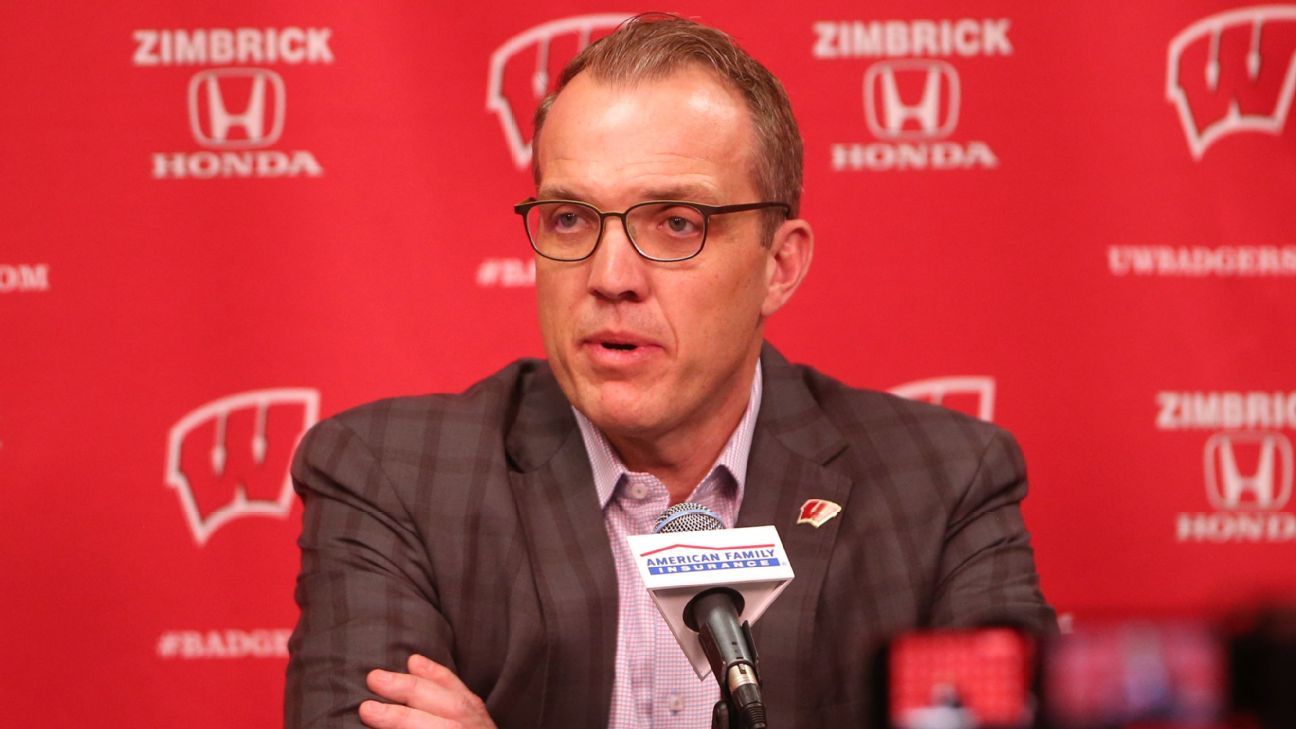
Wisconsin athletics director Chris McIntosh is leaving the school to become the Big Ten’s deputy commissioner for strategy, sources told ESPN’s Adam Rittenberg on Sunday, confirming multiple reports.
McIntosh will work closely with commissioner Tony Petitti and the league’s senior staff, sources told Rittenberg.
“On one hand it’s very difficult for me to transition away from a place that’s so important to me,” McIntosh told the Sports Business Journal. “On the other hand, it’s an incredible honor and an incredible opportunity to be able to transition to a position at the Big Ten and to work for an incredible leader like Commissioner Petitti and alongside some top-tier, very capable members of the Big Ten as we navigate a dynamic period for college athletics.”
McIntosh, 49, took over as athletic director in the summer of 2021 after the retirement of Barry Alvarez. He played football for the Badgers and was part of two Rose Bowl-winning teams coached by Alvarez.
McIntosh was named associate athletic director in 2014. He became deputy athletic director under Alvarez in 2017.
He fired football coach Paul Chryst midway through the 2023 season and hired Luke Fickell to replace him. Fickell has gone 17-21, including a 4-8 finish last year and a 5-7 mark in 2024 that snapped what had been a Power Four-leading streak of 22 consecutive winning seasons.
Also in 2023, McIntosh fired men’s hockey coach Tony Granato and brought in Mike Hastings from Minnesota State. Wisconsin reached the Frozen Four this season and lost 2-1 to Denver in the national title game Saturday.
During McIntosh’s tenure, Wisconsin has won three national championships in women’s hockey (2023, 2025 and 2026) and one in women’s volleyball (2021).
In July 2024, he signed five-year contract extension that ran through June 30, 2029.
The Associated Press contributed to this report.
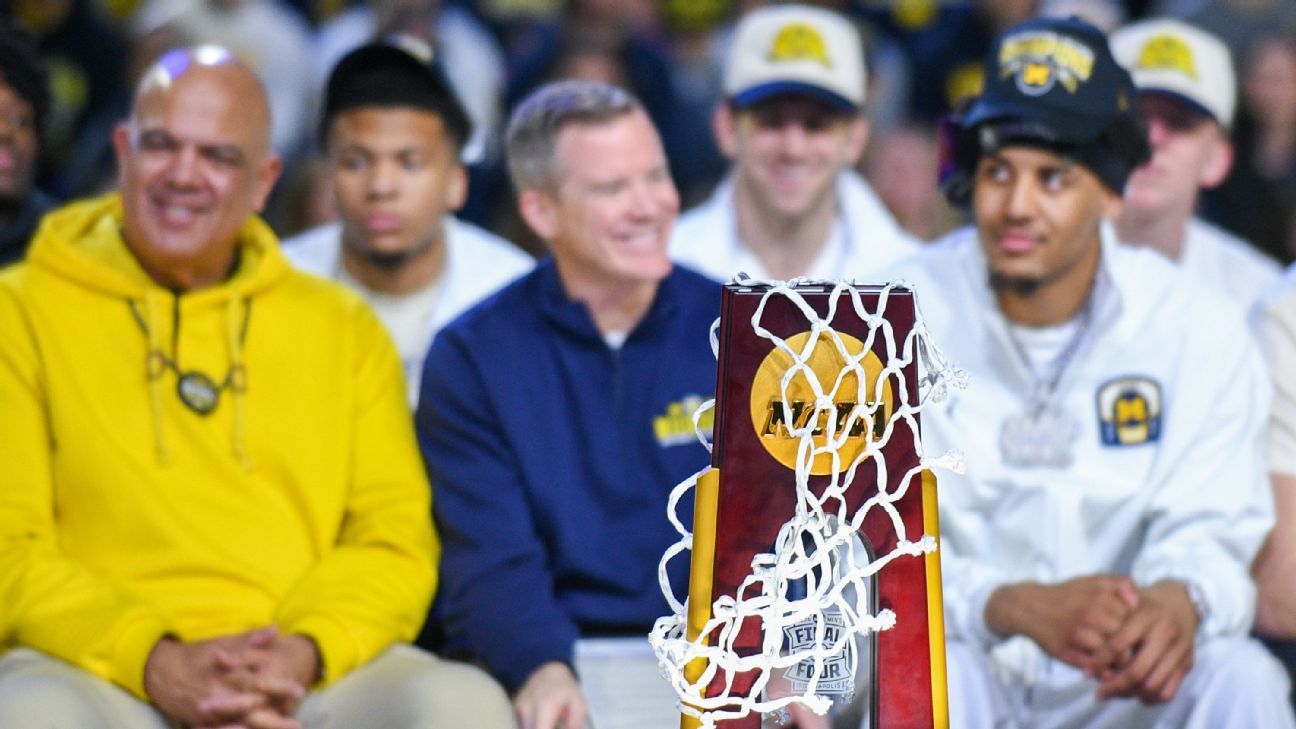
ANN ARBOR, Mich. — Michigan coach Dusty May has agreed on a deal that will have him continuing to lead the Wolverines “for many years to come,” athletic director Warde Manuel said Saturday.
Manuel made the comment during a ceremony celebrating Michigan’s NCAA tournament championship.
“Dusty and I have already reached an agreement,” Manuel said in a remark that resulted in a standing ovation as well as chants of “Dusty!” from the crowd that had gathered at the Crisler Center.
Manuel then finished his comment: “And he will be the leader of this basketball team for many years to come.”
May, 49, led Michigan to a national title in his second season on the job after inheriting a program that went 8-24 the year before his arrival. Michigan went 37-3 this season and earned its first national title since 1989 by defeating UConn 69-63 in the NCAA tournament championship game.
He had been mentioned as a potential target for North Carolina, which hired former Denver Nuggets coach Michael Malone on Tuesday to replace the fired Hubert Davis.
May owns an overall coaching record of 190-82. He went 126-69 at Florida Atlantic from 2018-24 and led the Owls to a 2023 Final Four appearance before going 64-13 at Michigan the last two seasons.
NEWYou can now listen to Fox News articles!
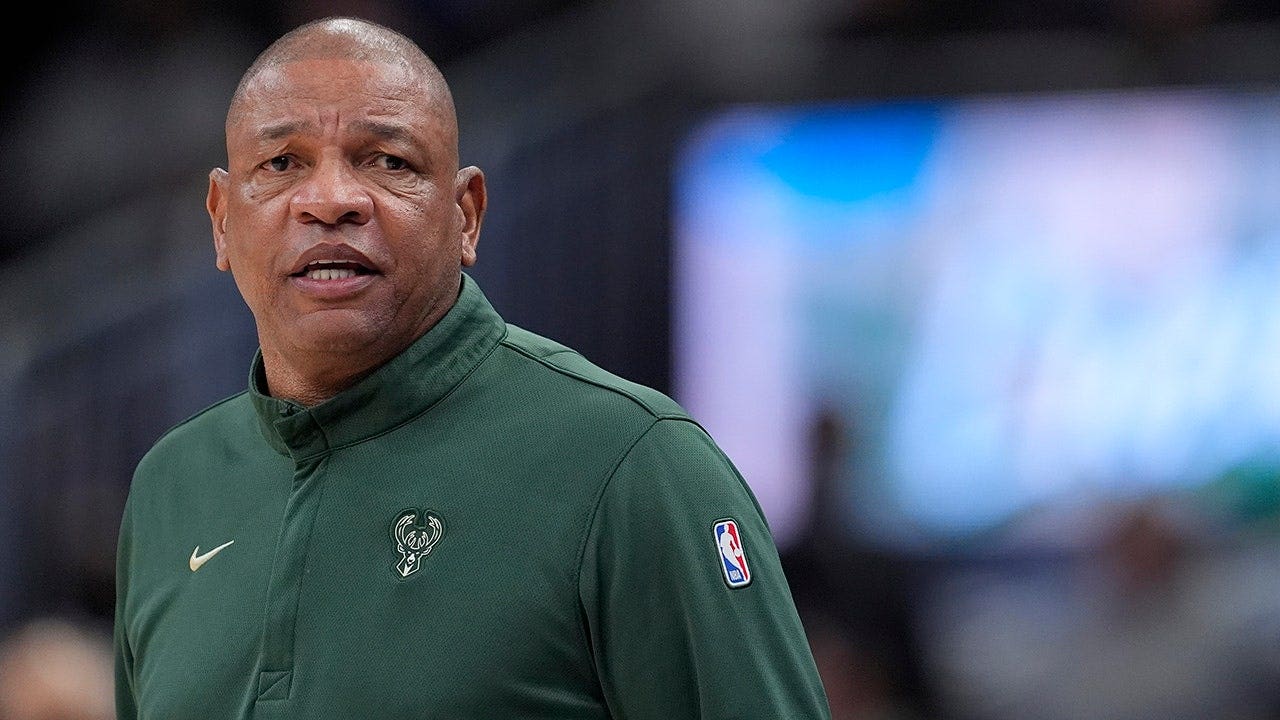
Doc Rivers is out as the Milwaukee Bucks’ head coach, ESPN reported Sunday, citing sources.
Rivers left his broadcasting job to return to the NBA sidelines as the Bucks’ coach shortly after Adrian Griffin was fired 43 games into the 2023-24 season. Now Rivers exits Milwaukee after a 126-106 loss to the Philadelphia 76ers on Sunday, capping a 32-50 season that ended in a missed NBA playoff berth.
Rivers coached the Bucks to first-round playoff exits in each of the past two seasons.
CLICK HERE FOR MORE SPORTS COVERAGE ON FOXNEWS.COM
Milwaukee Bucks head coach Doc Rivers looks on against the New Orleans Pelicans during the second half at Smoothie King Center in New Orleans, Louisiana, Apr 6, 2025. (Stephen Lew/Imagn Images)
The Bucks will now launch their third head coaching search in the past three years. Rivers’ departure comes amid uncertainty surrounding the future of franchise star Giannis Antetokounmpo.
The Bucks will now launch their third head coaching search in the past three years. Rivers’ departure comes amid uncertainty surrounding the future of franchise star Giannis Antetokounmpo.
The NBA trade deadline passed in February without a deal involving Antetokounmpo. The two-time league MVP saw limited action in the 2025-26 season, appearing in a career-low 36 games.
Antetokounmpo dealt with a knee hyperextension and bone bruise during the season. He was later sidelined for a stretch of games, fueling speculation the Bucks shut him down despite his being healthy, prompting an NBA investigation into the handling of the star forward.
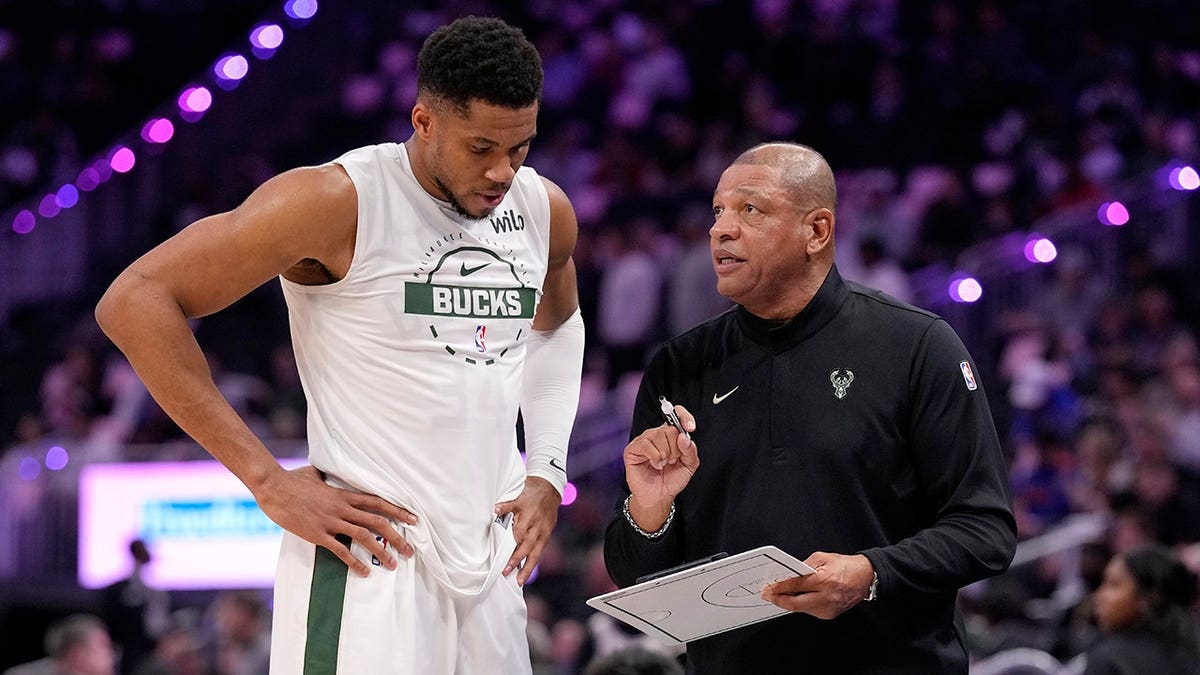
Giannis Antetokounmpo and head coach Doc Rivers of the Milwaukee Bucks talk before the third quarter against the New York Knicks at Fiserv Forum in Milwaukee, Wisconsin, on Oct. 28, 2025. (Patrick McDermott/Getty Images)
Antetokounmpo’s frustration boiled over as he insisted he was healthy enough to play despite being sidelined for a 10th straight game when Milwaukee faced the Boston Celtics on April 3.
“I’ve never seen a case of a player saying, my caliber of player, that’s like — I’m saying it publicly — I want to f—ing play. You know what I’m saying?” he said, via The Athletic. “I don’t think I’ve seen this. So, if there needs to be an investigation, great. There should be. I don’t know. There should be. Until we figure something out.”
He then said he was “available to play.”
Rivers addressed Antetokounmpo’s comments after the team’s 133-101 loss.
“The tough part about all this is that I’m in the middle, and I have nothing to do with it,” Rivers said. “Coaches don’t decide any of this. The problem with our league is the coaches are the ones sitting out front.
“And we have to sit here and answer this stuff. I think there are two sides to this — I will tell you that — but I don’t want to get too involved in it.”
Rivers added that he didn’t like that the feud had gone “public.”
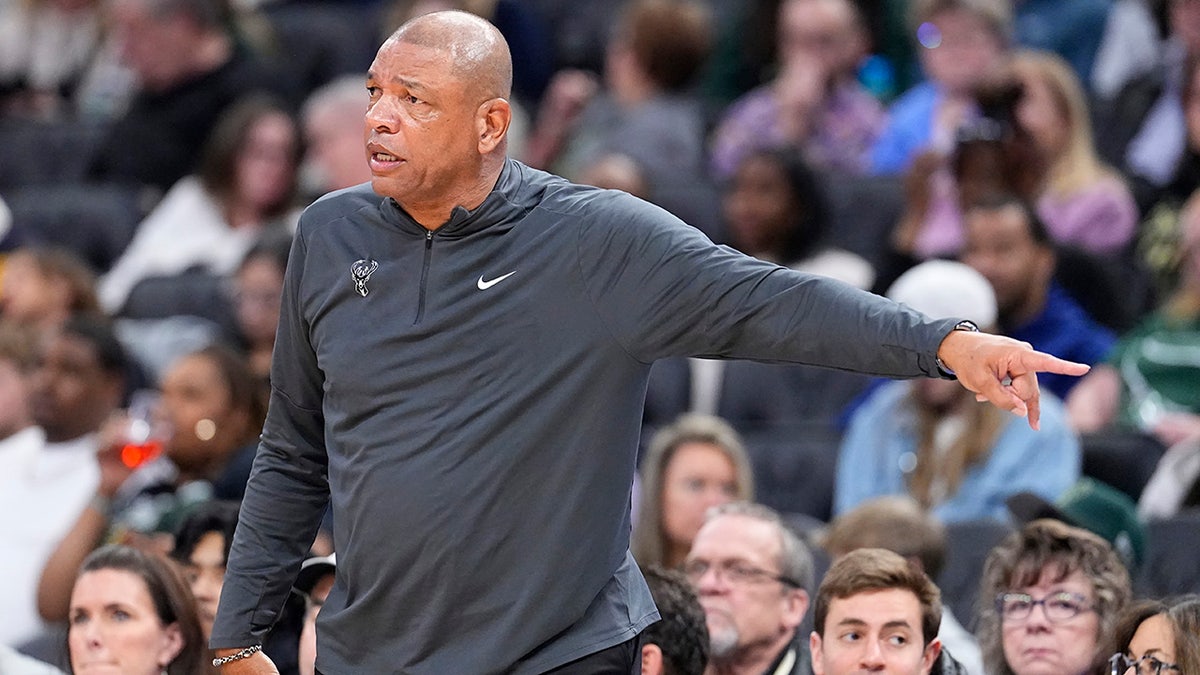
Milwaukee Bucks head coach Doc Rivers directs traffic his team against the Memphis Grizzlies in the first half at Fiserv Forum on April 5, 2026 in Milwaukee, Wisconsin. (Michael McLoone/Imagn Images)
CLICK HERE TO DOWNLOAD THE FOX NEWS APP
Antetokounmpo averaged 27.6 points and 9.8 rebounds this season. He was named NBA Finals MVP when he helped the Bucks secure the franchise’s first championship since 1971.
Rivers coached the Celtics to the NBA title in 2008. He was drafted by the Atlanta Hawks in 1983. After retiring as a player, Rivers moved into broadcasting, calling NBA games. In 1999, he was named head coach of the Orlando Magic, a role he held until 2003.
Before returning to the coaching ranks, Rivers was part of ESPN’s lead NBA broadcasting team.
Fox News’ Ryan Gaydos contributed to this report.
Follow Fox News Digital’s sports coverage on X, and subscribe to the Fox News Sports Huddle newsletter.


Bangladesh’s BTMA inks MoU with global partners to host DTG exhibition

Australia appoints woman to lead its army for the first time
Stocks to buy: What’s the outlook for Nifty for April 13-April 17 week? Check list of top stock recommendations – The Times of India

-

 Fashion6 days ago
India’s exports face reset as EU links trade to carbon metrics: EY
-

 Politics1 week ago
Trump confirms rescue of airman whose F-15 was downed in Iran
-

 Entertainment5 days ago
Queen Elizabeth II emotional message for Archie, Lilibet sparks speculation
-

 Tech4 days ago
This AI Button Wearable From Ex-Apple Engineers Looks Like an iPod Shuffle
-

 Tech6 days ago
A Single Strike Won’t Shut Off the Gulf’s Desalination System
-

 Fashion6 days ago
ICE cotton hits 11-month high on drought concerns, demand boost
-

 Tech5 days ago
Azure customers up in arms over ‘full’ UK South region | Computer Weekly
-
 Sports1 week ago
Transfer rumors, news: Arsenal eye Bayer Leverkusen forward