

Politics
UK’s Starmer concerned after man with weapons enters Manchester mosque to ‘kill’ Imam

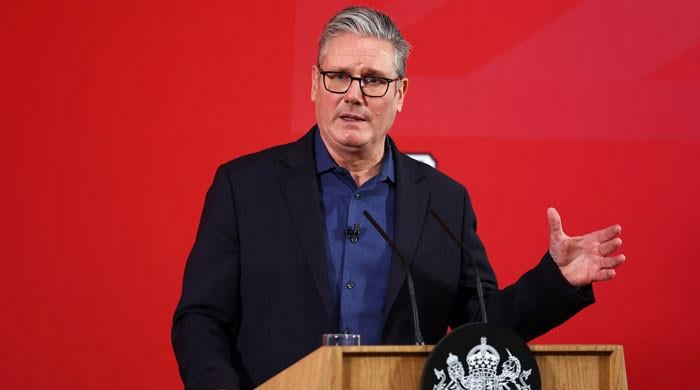
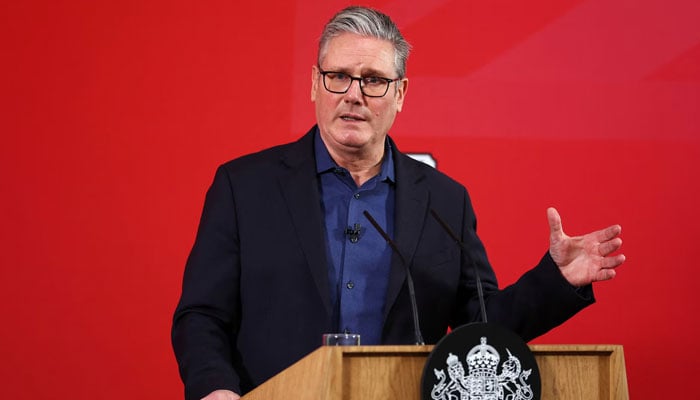
- Starmer vows to ensure communities live without fear.
- Says: “I know this will be worrying for Muslim communities.”
- Police say incident not being treated as terror-related.
LONDON: Prime Minister Keir Starmer has expressed concern after the arrest of a man for entering a mosque in Manchester during Ramadan prayers carrying multiple weapons, including an axe and threatening to kill the Imam.
The prime minister said he understood the incident would be worrying for Muslim communities.
The suspect, a white man in his 40s, was with another man, a black male, who entered Manchester Central Mosque in the Victoria Park area of south Manchester at around 8:40pm on Tuesday.
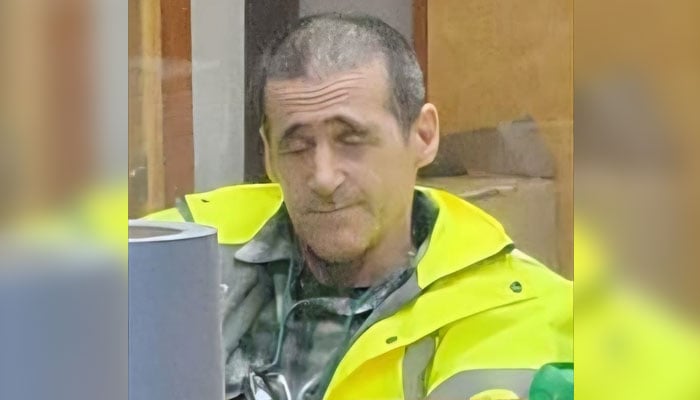
The first suspect was subsequently arrested by police on suspicion of carrying an offensive weapon and possession of class B drugs.
He remains in custody for questioning.
Greater Manchester Police (GMP) said they are not treating the incident as terror-related.
Keir said: “I am concerned to hear of the incident at Manchester Central Mosque last night. I know this will be worrying for Muslim communities, especially during Ramadan, a time of peace and reflection.”
“My thanks go to the volunteers and emergency services for their quick response,” he added.
“We have provided up to £40 million funding for additional security at mosques, Muslim schools and community centres, and will continue to act to ensure communities are able to live without fear.”
In a statement, the mosque said a “serious security incident” had occurred during prayers.
The statement added: “A white male entered the mosque wearing a hi-vis jacket carrying a large bag. He was accompanied by a black male, both entering the mosque at the same time. The mosque volunteers spotted the suspicious bag containing an axe, which was placed into the main hall of the mosque by the assailant.”
“The white male was escorted to a separate room by volunteers and was found to have been carrying multiple weapons, including a hammer and a knife. He was eventually arrested by the police,” it added.
“The black male left the mosque shortly before police arrived, after it became apparent that the situation had been contained. To our knowledge, he has not yet been arrested by Greater Manchester Police,” read the statement.
“All relevant information and CCTV footage have been passed on to the police, who are continuing their investigation.”
The statement further said: “The Muslim community in the UK has experienced a notable rise in threats and hostility over recent years. The increase in Islamophobic incidents is a serious concern, and greater resources are urgently needed to address this growing and real risk.”
“We will continue to cooperate fully with the police and urge all mosque attendees to remain vigilant. Congregants are advised to travel in groups where possible and to ensure that children are not left unattended.”
“The swift and responsible actions of our volunteers played a crucial role in containing the situation. Without their intervention, the consequences could have been far more serious,” it added.
Superintendent Simon Nasim of GMP said: “Yesterday evening, officers attended a local mosque after it was reported that two men were acting suspiciously and carrying an offensive weapon while people were worshipping during the holy month of Ramadan.
“We have swiftly arrested one individual and officers are working to locate the second man. No threats were made and thankfully, no one was injured. You may notice an increased presence of patrols in the area while our inquiries continue. Please feel free to chat with our officers and let them know your concerns,” said the superintendent.
The official said: “There’s no place for weapons on our streets and we are committed to ensure all our communities feel safe to worship in peace and go about their daily lives without fear.”
“Anyone committing such offences will be dealt with in accordance with the law,” the superintendent added.
Afzal Khan, the local MP for Rusholme, said: “I am deeply concerned about the incident that occurred at Manchester Central Mosque last night, whereby two individuals entered the mosque with weapons.
“Thankfully, everyone is safe, no one is hurt, and Greater Manchester Police have arrested one of the suspects. I’m in touch with the mosque leadership, the mayor of Greater Manchester, and the prime minister about this incident,” Afzal added.
“Just this week, the Chancellor and Home Secretary announced more funding for protecting mosques, and this incident demonstrates once again why this funding is so vital,” he added.
The lawmaker said: “This is the consequence of far-right politicians scapegoating Muslims. This is Islamophobia, plain and simple.”
Officers are appealing for witnesses to help with inquiries.
Anyone with information is urged to contact GMP on 101 or through the LiveChat function on the force’s website. Alternatively, contact Crimestoppers on 0800 555 111.
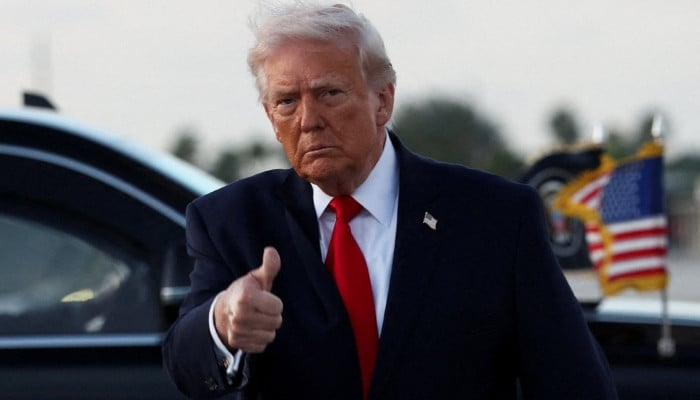
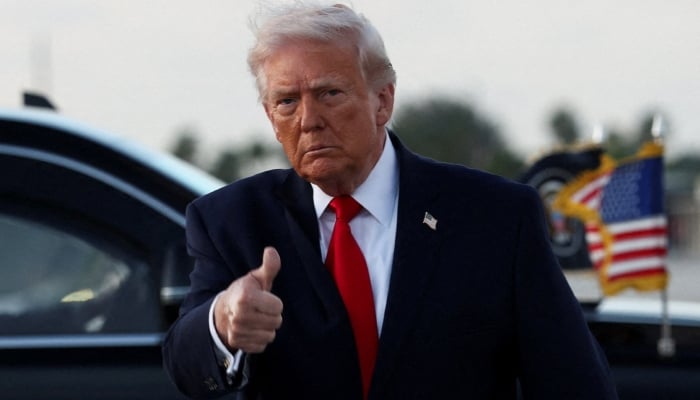
- Trump announces naval blockade of Strait of Hormuz.
- Democratic senator questions US president’s strategy.
- Trump’s approval rating slump since war on Iran began.
US President Donald Trump on Sunday said that the price of oil and gasoline may remain high through November’s midterm elections, a rare acknowledgement of the potential political fallout from his decision to attack Iran six weeks ago.
“It could be, or the same, or maybe a little bit higher, but it should be around the same,” Trump, who is in Miami for the weekend, told Fox News‘ “Sunday Morning Futures With Maria Bartiromo” when asked whether the cost of oil and gas would be lower by the fall.
The average price for regular gas at US service stations has exceeded $4 per gallon for most of April, according to data from GasBuddy. Trump’s comments on Sunday came after weeks of asserting that the spike in prices is a short-term phenomenon, though his top advisers are cognisant of the war’s economic impacts, officials have said.
Earlier on Sunday, Trump announced on social media that the US Navy would blockade the Strait of Hormuz and intercept any ship that paid a crossing fee to Iran, after marathon talks between the US and Iran in Pakistan over the weekend did not yield a peace deal.
“No one who pays an illegal toll will have safe passage on the high seas,” he wrote on Truth Social.
Any US blockade is likely to add more uncertainty to the eventual resolution of the conflict, which is currently subject to a tenuous two-week ceasefire. The new tactic is in response to Iran’s own closure of the strait’s critical shipping lanes, which has caused global oil prices to skyrocket about 50%.
Unpopular war hits Trump’s approval
The war began on February 28, when the US launched a joint bombing campaign with Israel against Iran. The scope quickly expanded as Iran and its allies attacked nearby countries, while Israel targeted Hezbollah with massive strikes in Lebanon.
The war has buffeted global financial markets and caused thousands of civilian deaths, mostly in Iran and Lebanon.
Trump’s political standing at home has suffered, with polls showing the war is unpopular among most Americans, who are frustrated by rising gasoline prices.
The president’s approval rating has hit the lowest levels of his second term in office, raising concern among Republicans that his party is poised to lose control of Congress in the midterm elections. A Democratic majority in either chamber could launch investigations into the Trump administration while blocking much of his legislative agenda.
US Senator Mark Warner of Virginia, the ranking Democrat on the Senate Intelligence Committee, questioned the strategy behind Trump’s planned blockade.
“I don’t understand how blockading the strait is going to somehow push the Iranians into opening it,” he told CNN’s “State of the Union” on Sunday.
In a separate appearance on CBS’s “Face the Nation,” Warner said the blockade would not undermine Iranian control of the waterway.
“The Iranians have hundreds of speedboats where they can still mine the strait or put bombs against tankers in closing the strait,” he said. “How is that going to ever bring down gas prices?”
Although Trump has repeatedly said that the war would be over soon, Republican US Senator Ron Johnson of Wisconsin told ABC News‘ “This Week” on Sunday that achieving US aims in Iran “could take a long time.”
“It’s going to be a long-term project,” said Johnson, who was not asked about Trump’s proposed blockade. “I never thought this would be easy.”
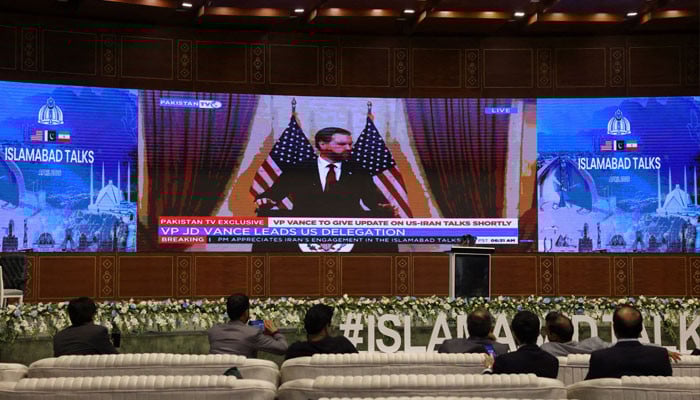
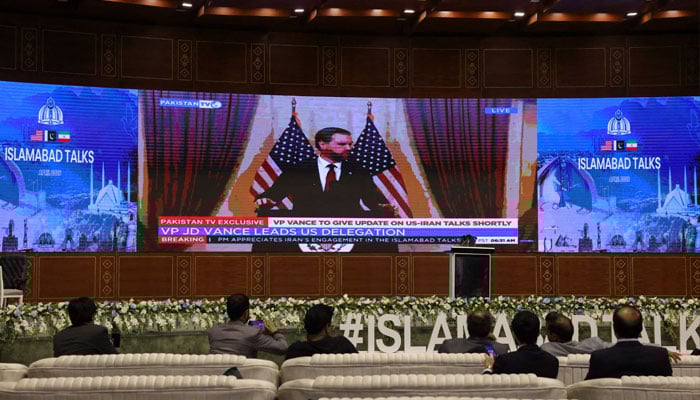
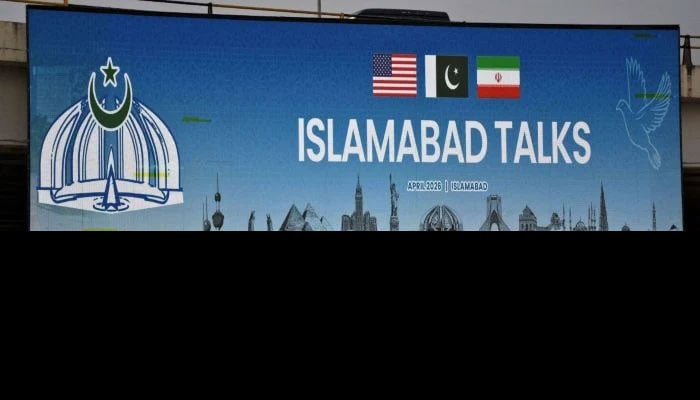
- Iran, US fail to reach deal in Islamabad peace talks.
- JD Vance says US makes “final and best offer” to Iran.
- Dispute over Hormuz control stalls US-Iran agreement.
Iran and the United States failed to strike a deal Sunday to end the war in the Middle East, but there was no immediate return to hostilities, and world leaders quickly urged both sides to pursue the diplomatic route to peace.
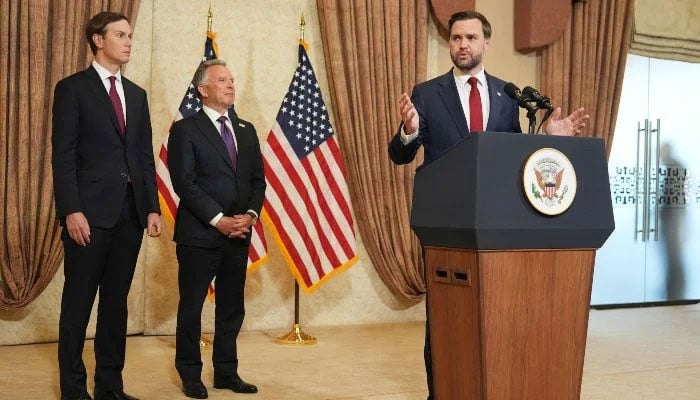
US Vice President JD Vance left Pakistan after the talks — the highest-level meeting between the two sides since 1979 — and warned that Washington had made Tehran its “final and best offer” for a deal.
“We leave here with a very simple proposal,” he said. “We’ll see if the Iranians accept it.”
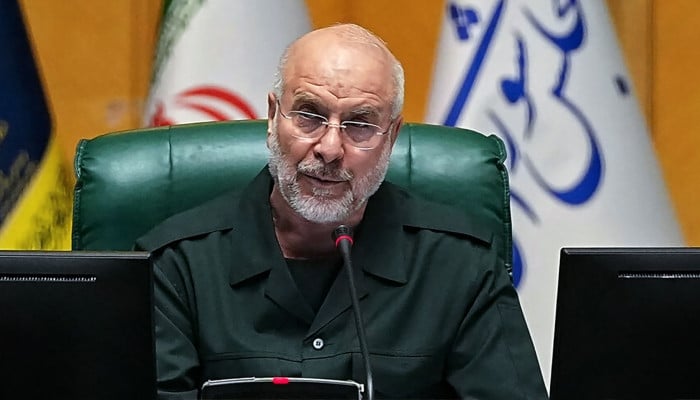
Iran’s parliamentary speaker, Mohammad Bagher Ghalibaf, said his negotiating team had “put forward constructive initiatives but ultimately the other side was unable to gain the trust of the Iranian delegation in this round of negotiations”.
Iranian and US reports said the two sides were unable to agree on who would control the Strait of Hormuz skipping lane, nor whether Tehran would have the right to enrich uranium under any deal.
As talks ended without a deal in Islamabad, world figures urged the United States and Iran to keep negotiating to end the war in the Middle East.
Pakistan’s Foreign Minister Ishaq Dar, whose government hosted the talks and acted as a mediator, said that it is imperative that the parties continue to uphold their commitment to the ceasefire.
“Pakistan has been and will continue to play its role to facilitate engagement and dialogue between the Islamic Republic of Iran and the United States of America in the days to come,” he said in a brief statement broadcast by state media.
Diplomacy is “essential” to resolve the war in the Middle East, a European Union spokesman said.
Noting failed US-Iranian talks hosted by Pakistan, EU foreign affairs spokesman Anouar El Anouni said “we salute Pakistan for its mediation efforts” and added Brussels would contribute to further efforts to reach a settlement in coordination with its partners.
Russian President Vladimir Putin told his Iranian counterpart Masoud Pezeshkian that he was ready to help mediate efforts to achieve peace in the Middle East, the Kremlin said.
“Vladimir Putin emphasised his readiness to further facilitate the search for a political and diplomatic settlement to the conflict, and to mediate efforts to achieve a just and lasting peace in the Middle East,” the Kremlin said in its readout of the call.
UK health minister Wes Streeting said: “It’s obviously disappointing that we haven’t yet seen a breakthrough in negotiations and an end to this war in Iran that is a sustainable one.”
“As ever in diplomacy, you´re failing until you succeed. So while these talks may not have ended in success, [it] doesn’t mean there isn´t merit in continuing to try,” he added.
Australian Foreign Minister Penny Wong said that the “priority now must be to continue the ceasefire and return to negotiations,” adding it was “disappointing that the Islamabad talks between the United States and Iran have ended without agreement”.
- No trust in US due to experiences of previous wars: Ghalibaf.
- Says Iranian delegation “raised forward-looking” initiatives.
- US has to decide whether it can earn Iran’s trust in talks: Ghalibaf.
Iran’s Parliament Speaker Mohammad Bagher Ghalibaf, who was part of peace talks with the United States this weekend, on Sunday said that Washington was “unable” to win Tehran’s trust during the discussions.
“My colleagues in the Iranian delegation… put forward constructive initiatives but ultimately the other side was unable to gain the trust of the Iranian delegation in this round of negotiations,” Ghalibaf said in a post on X.
Delegations from the US and Iran held more than 20 hours of high-stakes talks in Islamabad starting Saturday, with Pakistan mediating after brokering a two-week ceasefire.
The talks ended without a deal, with US Vice President JD Vance stating that Tehran rejected Washington’s terms, which Iranian state media labelled “unreasonable”.
Addressing a press conference following the talks, Vance said negotiations with Iran covered a range of critical issues.
“The bad news is that we have not reached an agreement, and I think that’s bad news for Iran much more than it’s bad news for the United States of America,” Vance said.
“So we go back to the United States having not come to an agreement. We’ve made very clear what our red lines are,” he added.
Iran’s foreign ministry spokesman Esmail Baghaei later said that no one had expected Tehran and Washington to reach an agreement in a single meeting.
Meanwhile, Ghalibaf said that Iran had no trust in the “opposing side” before entering the negotiations due to the experiences of the previous two wars.
Ghalibaf maintained that Washington now faces a decisive moment. “America has understood our logic and principles, and now it’s time for it to decide whether it can earn our trust or not.”
He vowed that the Iranian delegation “will not for a moment cease” its efforts to consolidate Iran’s achievements during the six-week war.
Ghalibaf also acknowledged Pakistan’s crucial role in facilitating the talks and extended his regards to the Pakistani public.
He concluded his statement by praising both the Iranian public and negotiating team, citing public support and the intensity of the discussions.
“To my colleagues in these intense 21-hour negotiations, I say: well done… Long live and enduring be our dear Iran,” he said.
The conflict, which began on February 28 following joint US-Israeli strikes targeting Iran’s leadership and infrastructure, has resulted in more than 2,000 deaths and widespread regional instability.
Tehran responded with retaliatory operations, including the disruption of shipping through the Strait of Hormuz and attacks on Israeli and US bases in the region.
A ceasefire was announced on April 8, with Pakistan playing a central role in mediation between the two sides.
Washington then proposed a 15-point framework focusing on nuclear and missile issues, sanctions relief and reopening of the Strait of Hormuz, while Tehran has presented a 10-point plan seeking greater control over the Strait of Hormuz, transit fees, and comprehensive sanctions removal.


Trump says oil, gas prices may remain high through November midterm election
[CinePlex360] Please moderate: “Ronaldo risks k

UFC 327 takeaways: Ulberg blew out his knee, but Procházka blew his title chance

UConn Final Four run could trigger a $50M furniture giveaway for Massachusetts-based Jordan’s Furniture

India’s exports face reset as EU links trade to carbon metrics: EY

Blake Lively reacts to harassment claims dismissal against Justin Baldoni

-
 Fashion5 days ago
India’s exports face reset as EU links trade to carbon metrics: EY
-
 Sports1 week ago
UConn Final Four run could trigger a $50M furniture giveaway for Massachusetts-based Jordan’s Furniture
-
 Entertainment1 week ago
Blake Lively reacts to harassment claims dismissal against Justin Baldoni
-

 Entertainment1 week ago
Barbie Ferreira reveals where she stands with ‘Euphoria’ girls after exit
-
 Politics1 week ago
Trump confirms rescue of airman whose F-15 was downed in Iran
-

 Tech1 week ago
Meta Pauses Work With Mercor After Data Breach Puts AI Industry Secrets at Risk
-

 Tech6 days ago
A Single Strike Won’t Shut Off the Gulf’s Desalination System
-

 Entertainment5 days ago
Queen Elizabeth II emotional message for Archie, Lilibet sparks speculation