

Politics
What are Iran’s ballistic missile capabilities?

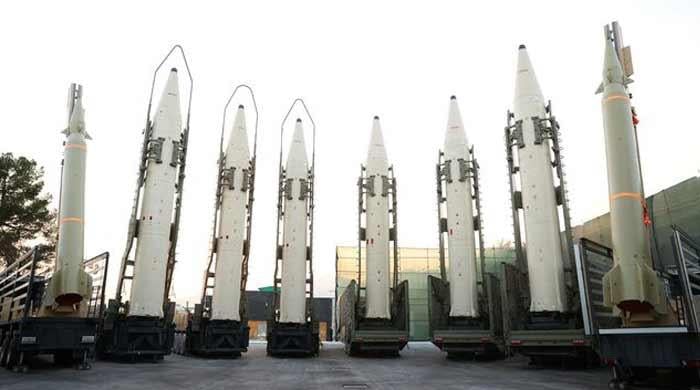
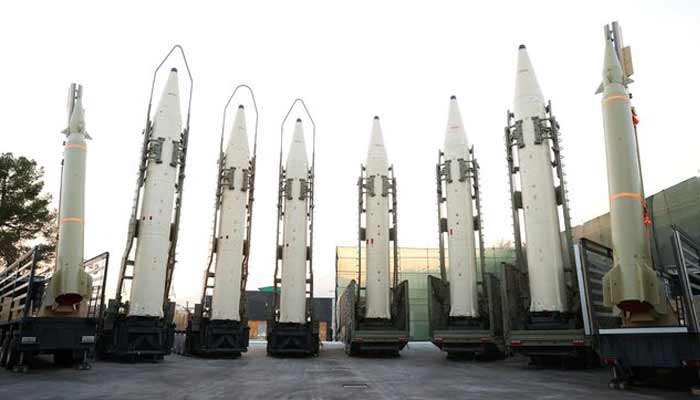
Iran holds a new round of nuclear talks with the United States on Thursday in Geneva. Its arsenal of missiles has been a sticking point in negotiations.
Here are some details about Iran’s missiles:
What are ballistic missiles?
A ballistic missile is a rocket-propelled weapon that is guided during its ascent but follows a free-fall trajectory for most of its flight. It delivers warheads — containing either conventional explosives or potentially biological, chemical or nuclear munitions — over varying distances.
Western powers regard Iran’s ballistic missile arsenal both as a conventional military threat to Middle East stability and a possible delivery mechanism for nuclear weapons, should Tehran develop them. Iran denies any intent to build atomic bombs.
Iranian missile types and ranges
Iran has the largest stockpile of ballistic missiles in the Middle East, according to the US Office of the Director of National Intelligence. They have a self-imposed range of 2,000 km (1,240 miles), which Iranian officials have said was enough to protect the country as they can reach Israel.
Many of Iran’s missile sites are in and around Tehran. There are at least five known underground “missile cities” in various provinces, including Kermanshah and Semnan, as well as near the Gulf region.
The arsenal encompasses multiple long-range missiles that can reach Israel, according to the Center for Strategic and International Studies. It says these include the Sejil, with a 2,000-km range; Emad, 1,700 km; Ghadr, 2,000 km; Shahab-3, 1,300 km; Khorramshahr, 2,000 km; and Hoveyzeh 1,350 km.
The semi-official Iranian news outlet ISNA published a graphic in April 2025 showing nine Iranian missiles it said could reach Israel, including the Sejil, which ISNA said was capable of flying at more than 17,000 km (10,500 miles) per hour and had a range of 2,500 km; the Kheibar, with a range of 2,000 km; and the Haj Qasem, 1,400 km.
Washington-based think tank, the Arms Control Association says Iran’s ballistic arsenal included the Shahab-1, with an estimated range of 300 km; the Zolfaghar, 700 km; Shahab-3, 800-1,000 km; Emad-1, under development, 2,000 km; and a Sejil model under development, 1,500-2,500 km.
When did Iran last use its missiles?
During the 12-day war with Israel in June 2025, Tehran fired ballistic missiles into Israel, killing dozens of people and destroying buildings.
The Institute for the Study of War (ISW) and AEI Critical Threats Project said Israel “likely destroyed around a third of the Iranian missile launchers” during the conflict. Iranian officials have said Tehran has recovered from the damage incurred during the war.
Iran also responded to US participation in Israel’s air war by firing missiles at the US Al Udeid air base in Qatar. Tehran gave advance warning and no one was hurt. Washington announced a ceasefire hours later.
Iran’s Revolutionary Guards used missiles in January 2024 when they said they had attacked Israel’s spy headquarters in Iraq’s semi-autonomous Kurdistan region, and that they had also fired at Daesh in Syria.
In 2020, Iran launched missiles at US-led forces in Iraq in retaliation for a US drone strike that killed Major General Qassem Soleimani of the Revolutionary Guards.
Missile strategy and development
Iran says its ballistic missiles provide a deterrent and retaliatory force against the United States, Israel and other potential regional targets.
According to a 2023 report by Behnam Ben Taleblu, a senior fellow at the US-based Foundation for Defense of Democracies, Iran continues to develop underground missile depots complete with transport and firing systems, as well as production and storage centres. In 2020, Iran fired a ballistic missile from underground for the first time, it said.
“Years of reverse-engineering missiles and producing various missile classes have also taught Iran about stretching airframes and building them with lighter composite materials to increase missile range,” the report said.
In June 2023, Iran presented what officials described as its first domestically made hypersonic ballistic missile, the official IRNA news agency reported. Hypersonic missiles can fly at least five times faster than the speed of sound on a complex trajectory, making them difficult to intercept.
The Arms Control Association says Iran’s missile programme is largely based on North Korean and Russian designs and has benefited from Chinese assistance.
Iran also has cruise missiles such as the Kh-55, an air-launched nuclear-capable weapon with a range up to 3,000 km.

- Those killed included a teacher and three students: governor.
- Minister says immediate investigations launched into shooting.
- Witnesses quoted by media say intense gunfire was heard.
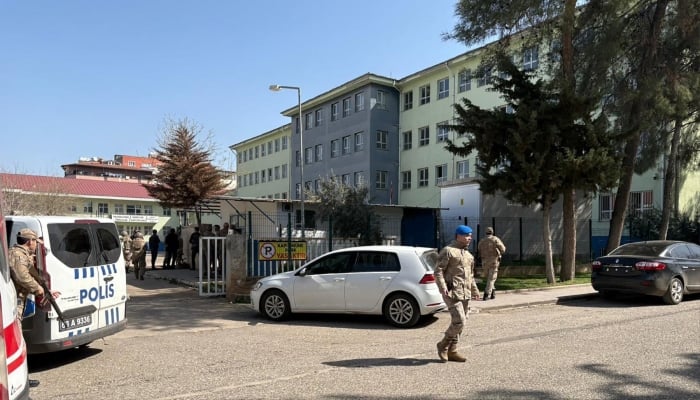
Four people were killed and 20 others were wounded when a middle school student opened fire at a school in the Turkiye’s southeastern province of Kahramanmaras on Wednesday, Governor Mukerrem Unluer told reporters.
Unluer said a teacher and three students were among those killed, and added the shooter was a student who used his father’s weapons, concealed in a backpack, to carry out the attack. The shooter also died, he added.
Footage released by IHA private news agency showed a person, body and face covered, being evacuated in an ambulance, as well as tearful parents who had rushed to the school in the southern province´s main city, Kahramanmaras.
Witnesses quoted by media said intense gunfire was heard.
Police have increased security around the building, and television footage showed ambulances present in the area.
Justice Minister Akin Gurlek said prosecutors had launched an immediate investigation into the shooting.
On Tuesday, an ex-student opened fire at his former high school, wounding 16 people including students before killing himself in a showdown with police, officials said.
School shootings in Turkiye are rare. In May 2024, a former student killed a private high school principal in Istanbul with a firearm five months after he was expelled.
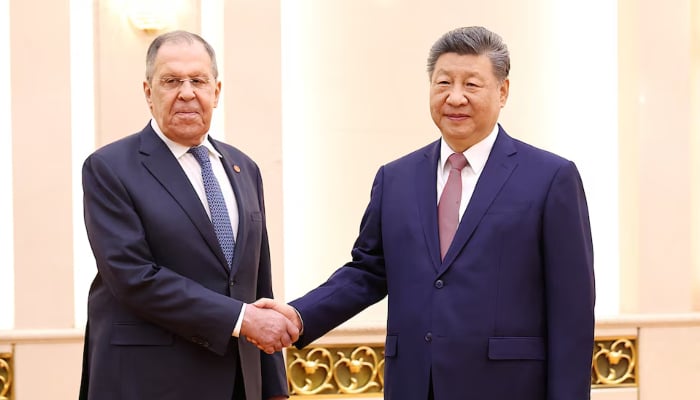
- China, Russia pledge deeper cooperation, mutual support.
- Putin expected to visit China in first half of this year.
- Lavrov says visit likely during week beginning May 18.
Russia is ready to increase energy supplies to China ahead of an expected visit by President Vladimir Putin, Russian news agencies quoted Foreign Minister Sergei Lavrov as saying on Wednesday at a news conference in Beijing.
The agencies quoted Lavrov as saying that the visit would take place in the first half of the year, while the Vedomosti newspaper cited sources as saying it would be during the week beginning May 18.
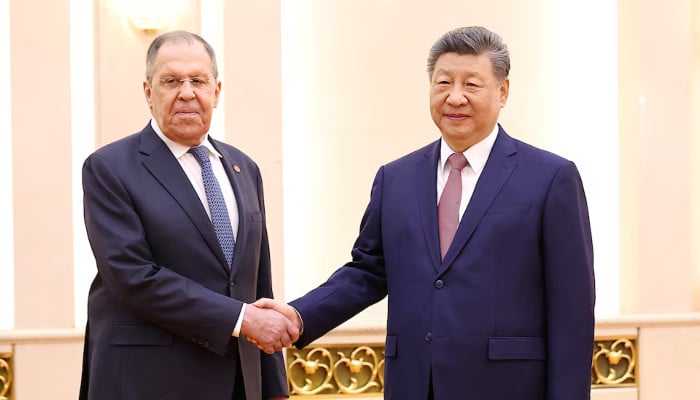
President Xi Jinping met Lavrov on Wednesday, assuring Moscow of China’s friendship and saying that China and Russia must trust and support each other, deepen cooperation, and defend each other’s interests.
US President Donald Trump is also scheduled to meet Xi during his first visit to China in eight years on May 14 and 15.
Lavrov told the news conference that Russia was ready to help China and other countries affected by the Middle East crisis with energy supplies.
“Russia can, of course, make up for the resource shortfall facing both China and other countries that are interested in working with us on an equal and mutually beneficial basis,” Lavrov told the news conference in China.
Lavrov also said that Russia and China had all the necessary means to avoid reliance on what he described as US efforts to disrupt global energy markets through conflict in the Middle East.
“Thank God, China and Russia have every capability, including those already in use, reserve capacity, and planned capacity, to avoid depending on such aggressive gambits, which undermine the global economy,” he said.
- Iran military directed satellite to monitor US military sites: FT.
- Images taken before and after strikes on those locations: report.
- ‘IRGC received access to commercial stations operated by Emposat.’
Iran secretly acquired a Chinese spy satellite in late 2024 that allowed it to target US military bases across the Middle East during the recent war, the Financial Times reported on Wednesday.
The TEE-01B satellite, built and launched by the Chinese company Earth Eye Co, was acquired by the Islamic Revolutionary Guard Corps’ Aerospace Force after it was launched into space from China, the report said, citing leaked Iranian military documents.
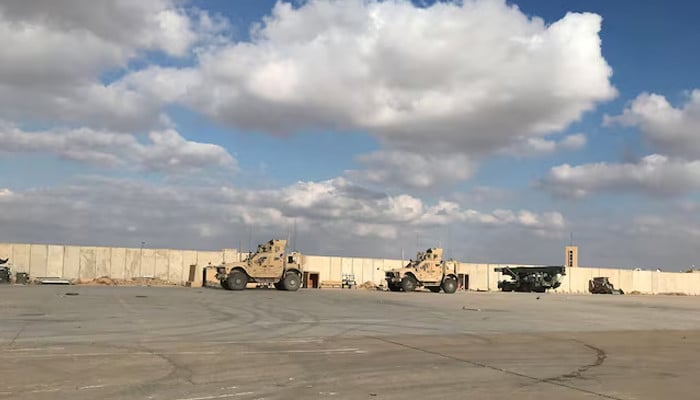
Iranian military commanders directed the satellite to monitor major US military sites, the newspaper said, citing time-stamped coordinate lists, satellite imagery and orbital analysis. The images were taken in March, before and after drone and missile strikes on those locations, the FT added.
As part of the deal, the IRGC received access to commercial ground stations operated by Emposat, a Beijing-based provider of satellite control and data services with a network extending across Asia, Latin America and other regions, according to the report.
Reuters could not verify the report.
The White House, CIA, Pentagon, as well as China’s foreign affairs ministry, defence ministry and its embassy in Washington did not immediately respond to Reuters’ requests for comment. Earth Eye Co and Emposat also did not immediately respond to Reuters’ queries.
The FT said the White House did not comment on the relationship between Emposat and the IRGC, but a spokesperson referred to comments US President Donald Trump made at the weekend when he warned that China would face “big problems” if it provided Iran with air defence systems.
When asked about the matter, the Chinese embassy in Washington told the FT: “We firmly oppose relevant parties spreading speculative and insinuative disinformation against China.”
The satellite captured images of Prince Sultan Air Base in Saudi Arabia on March 13, 14 and 15, the FT said.
On March 14, Trump confirmed US planes at the base had been hit.
According to the report, the satellite also monitored the Muwaffaq Salti Air Base in Jordan and locations close to the US Fifth Fleet naval base in Manama, Bahrain, and Erbil airport, Iraq, around the time of IRGC-claimed attacks on facilities in those areas.


Morgan Stanley tops estimates as trading revenue exceeds expectations by nearly $1 billion

Kornit brings global apparel leaders together at Konnections 2026

Four killed, 20 wounded in school shooting in southern Turkiye, says governor

-

 Fashion1 week ago
India’s exports face reset as EU links trade to carbon metrics: EY
-

 Entertainment1 week ago
Queen Elizabeth II emotional message for Archie, Lilibet sparks speculation
-

 Entertainment1 week ago
Lamar Odom shocking response to Khloé Kardashian account of his overdose
-

 Tech7 days ago
As the Strait of Hormuz Reopens, Global Shipping Will Take Months to Recover
-

 Tech1 week ago
Azure customers up in arms over ‘full’ UK South region | Computer Weekly
-

 Fashion1 week ago
CII submits 20-pt agenda to Indian govt to back firms hit by Iran war
-

 Tech6 days ago
This AI Button Wearable From Ex-Apple Engineers Looks Like an iPod Shuffle
-

 Tech1 week ago
A Single Strike Won’t Shut Off the Gulf’s Desalination System