

Business
UAE announces petrol and diesel prices for March 2026: Are drivers paying the war tax amid Iran and US–Israel clashes? – The Times of India

The United Arab Emirates Fuel Price Committee has released its official fuel price updates for March 2026, giving motorists a clear picture of how much they will be paying at the pump for petrol and diesel this month. The monthly revision, which takes effect from March 1, 2026, reflects shifts in global crude oil markets and aligns local retail prices with international trends, as part of a pricing regime introduced when the UAE deregulated fuel prices in 2015.
UAE’s new fuel prices for March 2026 amid Iran and US–Israel clashes
Here’s how the UAE petrol and diesel prices stack up for March –
- Super 98 petrol: Dh 2.59 per litre (up from Dh 2.45 in February)
- Special 95 petrol: Dh 2.48 per litre (up from Dh 2.33)
- E-Plus 91 petrol: Dh 2.40 per litre (up from Dh 2.26)
- Diesel: Dh 2.72 per litre (up from Dh 2.52)
These increases end a brief period of cheaper fuel at the start of 2026, when prices had dipped in January and February following earlier declines. The committee reviews fuel prices monthly to reflect average international oil prices and the costs associated with refining and distribution.
Why fuel prices in the UAE increased: Global oil market context amid Iran and US–Israel clashes
The rise in local pump prices for March comes amid broader global oil price pressures, partly driven by geopolitical tensions in the Middle East, especially the recent escalation involving Iran, the United States and Israel, which have pushed crude prices up in recent weeks. These tensions can heighten a geopolitical risk premium in oil markets, meaning traders factor in extra costs due to supply disruption fears, particularly around strategically important chokepoints like the Strait of Hormuz, through which about a fifth of global crude oil passes.
UAE Fuel Prices March 2026: Petrol and Diesel Costs Rise Amid Global Oil Pressures
In addition, crude oil benchmarks such as Brent have been trending higher compared with the months that underpinned February’s fuel prices, nudging the committee toward a modest upward adjustment at the pump.
How UAE’s monthly fuel pricing system works
Since 2015, the UAE has used a market-linked fuel pricing mechanism. Under this system:
- Oil prices are averaged over the month preceding the pricing decision.
- The government adds refining, distribution and retail costs to set local prices.
- These adjusted rates are then announced at the end of each month and apply for the following month.
This approach ensures that UAE petrol and diesel prices reflect actual global supply and demand dynamics rather than being fixed — a policy that both informs consumers and aligns local fuel costs with international benchmarks.
What it means for drivers in the UAE
For everyday motorists and commercial transporters in the UAE, slightly higher fuel costs mean filling up a typical compact car will cost more than last month. Diesel-powered vehicles, widely used in logistics and trucking, will also face marginally increased costs. Monthly budget planning may need to accommodate these shifts, especially if crude prices remain elevated.While the hike in March is not a dramatic leap, it reflects how closely UAE fuel prices are tied to global oil market moves, which in turn respond to factors such as geopolitical events, seasonal demand and production decisions by major oil-producing countries.
UAE Fuel Prices Surge: Geopolitical Tensions Drive Up Costs for Drivers
Fuel prices in the UAE are expected to continue reflecting global crude dynamics in the coming months. If geopolitical tensions ease or global oil supply increases, pump prices might stabilise or even head lower again later in 2026. Conversely, further upward pressure on crude could lead to higher fuel rates in April and beyond.For now, drivers in the Emirates should prepare for a slight increase at the pump but also keep an eye on international news and oil markets, as these will shape future pricing decisions. UAE fuel prices rose in March 2026, with petrol and diesel up across all major grades. Super 98 is Dh 2.59/litre, Special 95 is Dh 2.48, and diesel is Dh 2.72. Price changes reflect global oil market trends, influenced by geopolitical risk and crude cost movement. Fuel pricing in the UAE is reviewed monthly under a market-linked system introduced in 2015.

Business
Rs 20,000 crore gold, silver rush: What will people buy this Akshaya Tritiya? – The Times of India
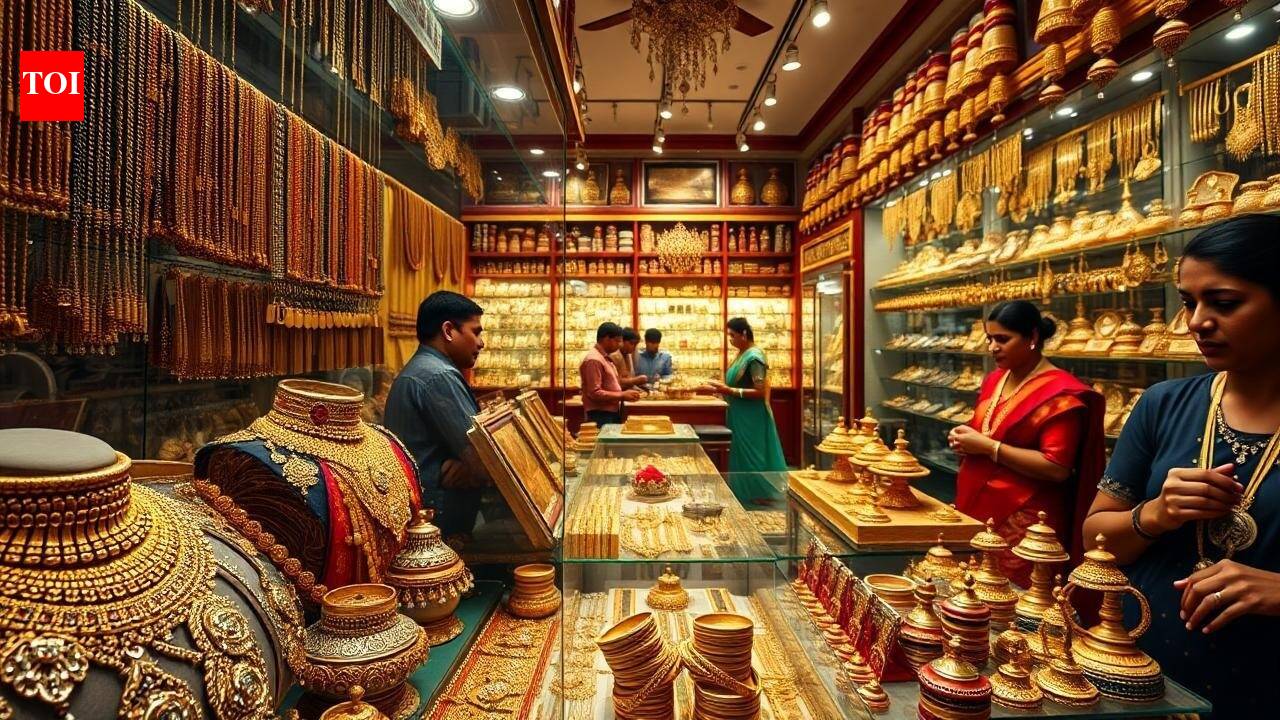
This Akshaya Tritiya, India’s gold and silver markets are heading for bumper purchases, with overall trade likely to cross Rs 20,000 crore even as record-high prices reshape buying patterns. The estimate, shared by the Confederation of All India Traders (CAIT), is higher than last year’s Rs 16,000 crore, signalling growth in value despite a sharp rise in bullion rates.Prices for the yellow metal have surged sharply over the past year, going from Rs 1,00,000 per 10 grams, to Rs 1.58 lakh. Meanwhile, silver has shown a steeper rally, jumping from Rs 85,000 per kilogram to Rs 2.55 lakh per kilogram. According to CAIT, this sharp escalation has not weakened demand, but is instead prompting consumers to make more deliberate and value-oriented purchases.Praveen Khandelwal, member of parliament from Chandni Chowk and secretary general of CAIT told ANI, “Akshaya Tritiya has traditionally been one of India’s most auspicious occasions for purchasing gold… While gold continues to dominate, the nature of purchasing is evolving significantly in response to steep price escalation.”Commenting on customer preference, CAIT national president BC Bhartia highlighted, “There is a clear shift towards lightweight, wearable jewellery, alongside a stronger focus on silver and diamond products. Attractive incentives such as reduced making charges and complimentary gold coins are also helping sustain consumer interest.”Despite the increase in overall trade value, the quantity of metals being sold tells a different story. Pankaj Arora, National President of the All India Jewellers and Goldsmith Federation (AIJGF), an associate of CAIT, explained that the projected Rs 16,000 crore gold trade amounts to nearly 10,000 kilograms (10 tonnes) at current rates. The value, spread across an estimated 2 to 4 lakh jewellers, translates to average sales of only 25 to 50 grams per jeweller, “clearly indicating a sharp decline in volume”.Meanwhile for silver, the estimated Rs 4,000 crore trade corresponds to around 1,56,800 kilograms (157 tonnes), resulting in average sales of about 400 to 800 grams per jeweller during the festival period. “These figures underline a critical shift: while the value of business is expanding due to rising prices, actual consumption is contracting,” Khandelwal said.This gap between value and volume is also reshaping consumer’s buying pattern, with smaller items and lightweight jewellery gaining popularity. At the same time, jewellers are facing challenges due to fluctuating prices, especially when it comes to managing inventory.Even so, festive demand remains steady, with markets witnessing healthy footfall. “Consumers are now adopting a more cautious and pragmatic approach, balancing traditional beliefs with financial discipline,” Khandelwal added.At the same time, it’s not just about physical gold anymore as consumers are increasingly exploring alternatives like digital gold, Sovereign Gold Bonds and gold ETFs, drawn by the promise of liquidity, safety and flexibility when prices are volatile.CAIT and AIJGF have urged jewellers to comply with mandatory hallmarking standards, including HUID certification, and advised buyers to verify the purity and authenticity of their purchases.

Lauren Elcock is among the young Londoners who say rising rents are forcing them to quit the capital.
Source link

As governments across the world restricted the movements of their citizens during Covid lockdowns from 2020, people spent more time online. We bought more online and socialised more online, and this brought us closer to the people who want to scam us. At the same time, realistic video impersonations, voices, websites, and texts became more commonplace, and scammers increased their use of social media including WhatsApp.

Rs 20,000 crore gold, silver rush: What will people buy this Akshaya Tritiya? – The Times of India

Prince Harry corrects blunder before peace with King Charles suffers again
The cost of rising rents: Working four jobs and pushed on to benefits

-

 Entertainment6 days ago
Palace left in shock as Prince William cancels grand ceremony
-

 Sports6 days ago
The case for Man United’s Fernandes as Premier League’s best
-

 Politics1 week ago
Chinese, Taiwanese will unite, Xi tells Taiwan opposition leader
-

 Entertainment1 week ago
Dua Lipa hits major career high ahead of wedding with Callum Turner
-
 Business1 week ago
The FAA wants gamers to apply for air traffic control jobs
-
 Business1 week ago
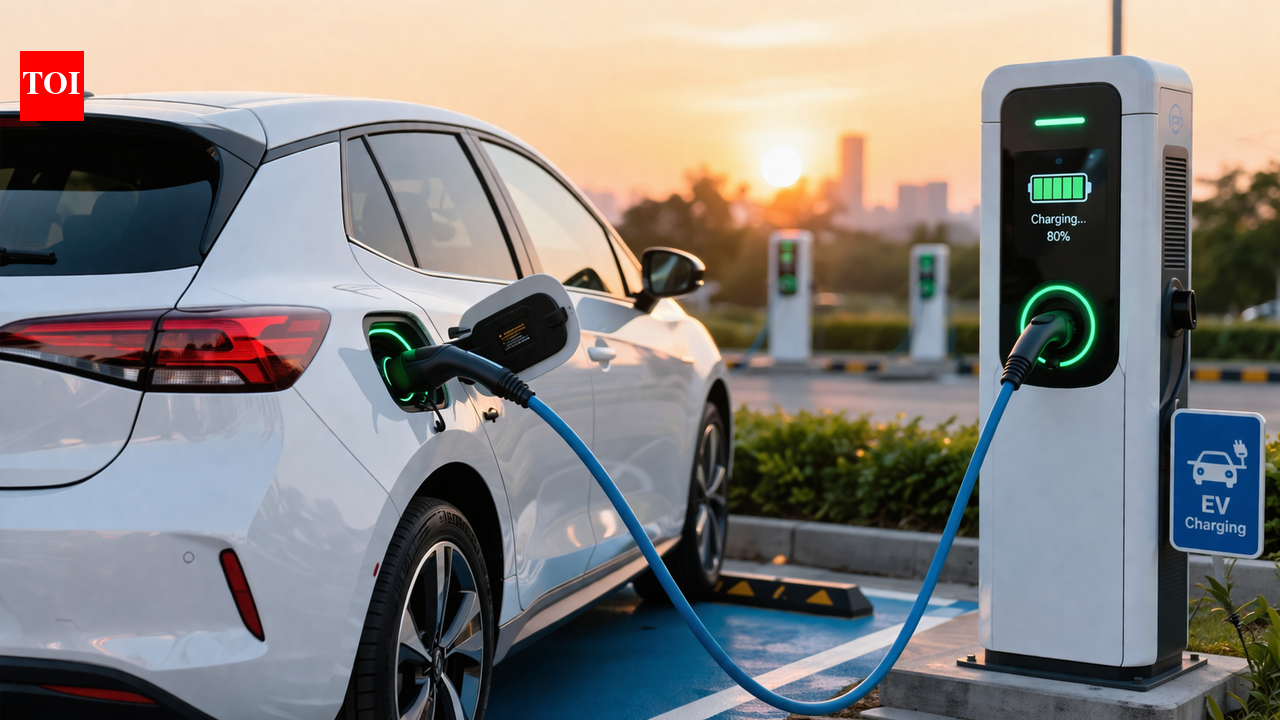
100% road tax waiver for electric cars, new rules for 2, 3 and 4 wheelers – what Delhi govt’s draft EV policy says – The Times of India
-
 Business6 days ago
UK could adopt EU single market rules under new legislation
-

 Fashion6 days ago
Energy emerges as biggest cost driver in textile margins