

Business
Trump sides with crypto firms in trillion-dollar battle with banks over stablecoin yield


US President Donald Trump boards Air Force One before departing Palm Beach International Airport in West Palm Beach, Florida, on March 1, 2026, on his way back to Washington, DC.
Mandel Ngan | Afp | Getty Images
President Donald Trump has thrown his support behind crypto firms in their high-stakes battle with U.S. banks over whether they can offer interest-like returns on stablecoins.
Trump, in a social media post late Tuesday, ratcheted up pressure on banks to relent on the stablecoin yield issue.
That’s the key point of contention holding up passage in Congress of the Clarity Act, which is a companion bill to the Genius Act approved last year, setting up a framework for regulated stablecoins.
“The Genius Act is being threatened and undermined by the Banks, and that is unacceptable,” Trump said in his post. “They need to make a good deal with the Crypto Industry because that’s what’s in best interest of the American People.”
Coinbase shares surged as much as 13% in early trading Wednesday, while shares of JPMorgan Chase and Bank of America fell less than 1%.
While Trump’s decision to back the crypto industry could sway members of his Republican Party in the GOP-led Congress, it’s unclear whether his support is enough to ensure the bill’s passage. The move also raises fresh questions over potential conflict of interests, as the president and his family have reportedly generated hundreds of millions of dollars in wealth from interests in firms including the crypto platform World Liberty Financial.
The dispute between the industries centers on whether crypto firms like Coinbase can offer yields on stablecoins. While crypto companies see it as a consumer-friendly innovation that will let people earn money on their idle funds, banks have warned that the competing product could siphon trillions of dollars from their industry.
$6.6 trillion threat?
Executives from JPMorgan and Bank of America, the two largest American lenders by assets, have cited a Treasury study that indicated that banks could lose up to $6.6 trillion in deposits if stablecoins offered a yield.
That could destabilize some banks, especially smaller ones, and remove a source of funding for loans to businesses across the country.
Allowing the less-regulated crypto industry to behave like quasi-banks could heighten systemic risk, banks argue. Crypto firms say that the risks are contained and that stablecoins backed by Treasuries will boost demand for U.S. debt.
“It can’t be, you have these people doing one thing without any regulation, and these people doing another,” JPMorgan CEO Jamie Dimon told CNBC’s Leslie Picker on Monday. “If you do that, the public will pay. It will get bad.”
In recent months, the president has hosted a series of White House meetings between the two sides in hopes of brokering a deal, but the banks haven’t relented, according to people with knowledge of the gatherings.
Now, he is explicitly putting his weight behind crypto.
“Americans should earn money on their money,” Trump said in the post. “This industry cannot be taken from the People of America when it is so close to becoming truly successful.”
‘Full of s–t’
That phrasing is similar to language that Coinbase CEO Brian Armstrong has used in interviews. Coinbase is the largest U.S. crypto platform and provides yield to members through what critics in the banking industry call a “loophole” in current regulations.
Armstrong, seen by banks as their main adversary in this dispute, met with Trump at the White House shortly before the president’s social media post Tuesday, according to a person with knowledge of the meeting. That detail was reported earlier by Politico.
Both banks and crypto firms have reasons to support passage of the Clarity Act, but it’s unclear whether that will happen, given the disagreement. Earlier this year, Trump attempted to pressure banks to cap credit card interest rates, but the industry had enough support among both Republicans and Democrats to ward off that threat.
Tensions between Armstrong and banking CEOs have climbed since the Coinbase CEO publicly called out banks for their opposition to stablecoin yields.
In January, Dimon reportedly told Armstrong he was “full of s–t” during a chance interaction at the World Economic Forum in Davos, Switzerland.



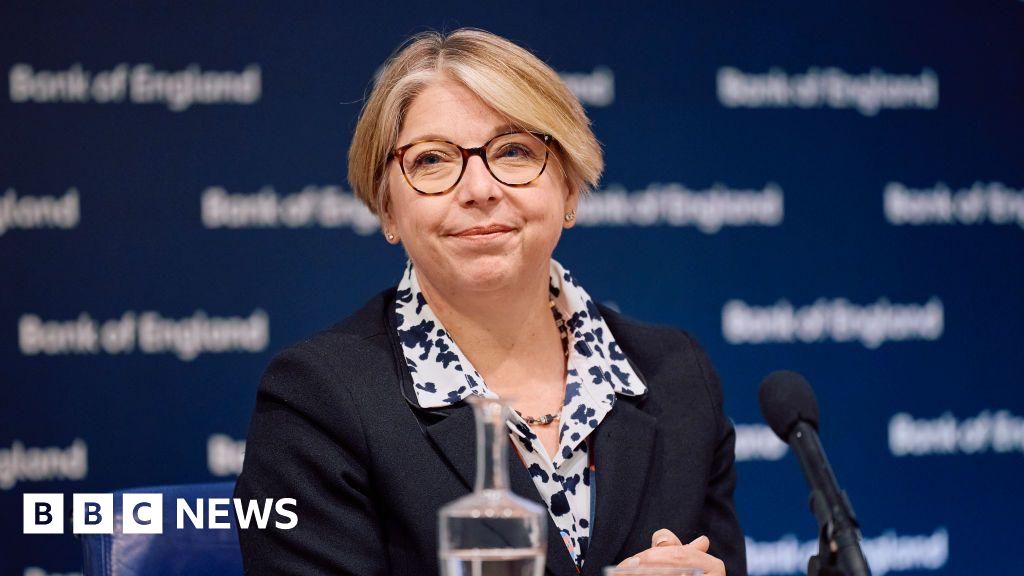
It is unusual for a senior figure at the Bank to be so forthright on market movements.
Source link

Consumer confidence has fallen for the third consecutive month amid household “jitters” over rapid price rises, figures show.
GfK’s long-running consumer confidence index fell four points to minus 25 in April, following falls of two points and three points in March and February respectively.
The deepening concern was driven by perceptions of the UK economy, with a six-point slide in confidence for the next 12 months to minus 43, its lowest level since February 2023.
Confidence in personal finances over the coming year fell five points to minus four – one point lower than this time last year.
The major purchase index – an indicator of confidence in buying big ticket items – held steady, albeit at minus 18 but one point better than last April.
The only measure to improve was the savings index – often an indication that households are concerned about their finances and looking to build contingency funds – which is up five points to 32.
Neil Bellamy, consumer insights director at GfK, said: “Consumers really do have the jitters now.
“It is a year since we last saw a monthly drop of this size, and we have to go back to October 2023 to find the last time consumer confidence was lower.
“Everyone is grappling with rapid price rises, especially at the fuel pumps, which are taking a dent out of household budgets, and people know further price hikes are coming.
“Consumer confidence is deteriorating sharply, with fuel prices and threats of more energy price increases acting as constant reminders of inflation.
“While the Gulf crisis is intensifying pressures, much of the current strain reflects earlier domestic cost increases.
“How long can all this disruption and pain continue?”

People walk past a Nike store in New York City, on April 2, 2025.
Kylie Cooper | Reuters
Nike announced a new round of layoffs Thursday affecting approximately 1,400 employees across the organization, mostly concentrated in its technology department.
In a note from COO Venkatesh Alagirisamy, the company said the layoffs were part of Nike’s broader “Win Now” turnaround strategy aiming to reshape its technology team, modernize its Air manufacturing, move some of its Converse Footwear operations and integrate its materials supply chain work into its footwear and apparel supply chain teams.
“Collectively, these changes will result in a reduction of approximately 1,400 roles in global operations, with the majority in technology,” Alagirisamy wrote. “These reductions are very hard for the teammates directly affected and for the teams around them, too.”
A Nike spokesperson said the layoffs are about better positioning the organization for the current pace of sports and accelerating its growth. The layoffs affect employees across North America, Asia and Europe and represent less than 2% of the company’s total global head count.
“This is not a new direction,” Alagirisamy wrote. “It is the next phase of the work already underway.”
Affected employees will be notified beginning Thursday, Nike added.
CEO Elliott Hill has been working to turn Nike around after years of slumping sales. While Hill has made some initial progress, it’s come with some bumps in the road.
Nike announced 775 job cuts in January, primarily at its U.S.-based distribution centers, due to the company’s work in accelerating its use of automation. At the time, the company said the cuts are part of Nike’s goal to return to “long-term, profitable growth.”
Those layoffs came on top of a round of cuts last summer that affected less than 1% of Nike’s corporate staff as part of the company’s efforts to realign the business.
In its third fiscal quarter earnings report last month, the retailer warned that sales will continue to fall for the rest of the year, primarily led by an anticipated 20% decline in China during the current quarter.
— CNBC’s Jessica Golden contributed to this report.


Rams make surprise first-round move, take Alabama QB Ty Simpson

Luke Grimes shares what disappoints ‘Yellowstone’ fans the most

US Special Forces Soldier Arrested for Polymarket Bets on Maduro Raid

-

 Fashion1 week ago
France’s LVMH Q1 revenue falls 6%, shows resilience amid Iran war
-

 Entertainment1 week ago
Is Claude down? Here’s why users are seeing errors
-

 Tech1 week ago
The Deepfake Nudes Crisis in Schools Is Much Worse Than You Thought
-

 Sports1 week ago
PSL 11: Peshawar Zalmi win toss, opt to field first against Quetta Gladiators
-
 Business1 week ago
Standard Life buys rival in £2b deal to create savings giant
-

 Tech1 week ago
CYBERUK ’26: UK lagging on legal protections for cyber pros | Computer Weekly
-

 Fashion1 week ago
Raymond unveils luxury Chairman’s Collection Store in Mumbai
-
 Business1 week ago
PepsiCo earnings beat estimates as North American food business improves