

Sports
Sizing up 2026 NFL offseason trades: DJ Moore, Trent McDuffie

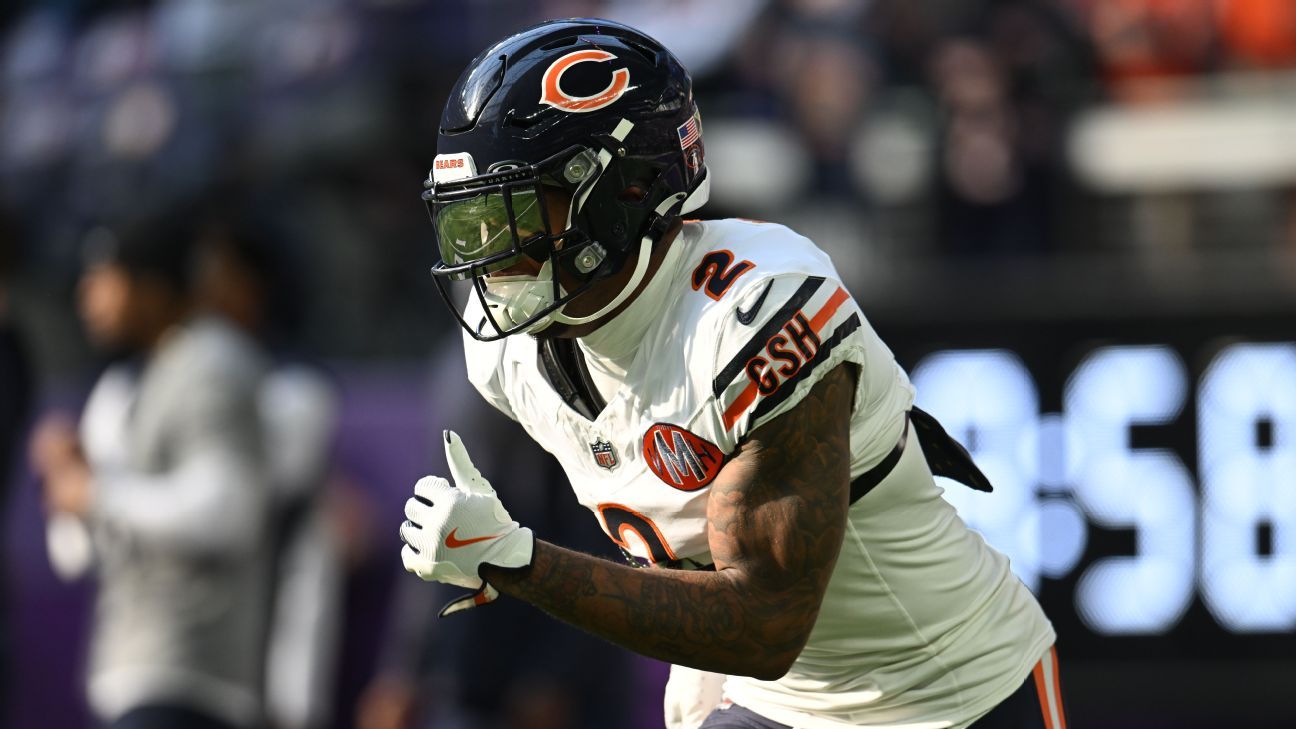
We’re in the thick of NFL trade season, and before 2026 free agency has even opened, we’ve seen a pair of fascinating deals go down this week.
On Wednesday, the Rams pounced on an opportunity to add former All-Pro cornerback Trent McDuffie, sending a first-round pick and three other selections to the Chiefs to acquire one of Kansas City’s top defenders. Then 24 hours later, the Bills finally landed the wide receiver GM Brandon Beane has sought for several years, sending a second-round pick to the Bears for DJ Moore and a fifth-round selection.
Subscribe: ‘The Bill Barnwell Show’
I’m here to try to make sense of these deals. Why did a Bears team that had been in asset collection mode around Caleb Williams suddenly trade away its most accomplished wide receiver? Did the Bills really land a No. 1 option for Josh Allen? And although the Rams trading a first-round pick away shouldn’t have surprised anybody, why did a Chiefs team that perennially expects to compete for a Super Bowl deal away its top defensive back?
Let’s break that all down and figure out who got the better of these two swaps. I’ll start in Chicago, where the Moore deal might have been as much about what’s happening off the field as what’s going on between the lines.
Jump to a trade:
Moore to BUF | McDuffie to LAR



Bills get: WR DJ Moore, 2026 fifth-round pick
Bears get: 2026 second-round pick
What does the deal mean for the Bears’ financial flexibility?
Bears general manager Ryan Poles managed to turn a difficult situation into a shockingly favorable return here. To understand how the Bears got here, go back to the summer of 2024. With Moore coming off a 1,364-yard season and having two years to go on his existing deal, it’s reasonable to understand why Poles would want to lock in his No. 1 receiver for then-rookie quarterback Caleb Williams over the long term. In a rapidly accelerating wide receiver market, Moore signed a four-year, $110 million extension, averaging $27.5 million per season.
Two years later, that deal hasn’t even really begun, and the situation looks totally different in Chicago. The Bears have used first-round picks on receiver Rome Odunze and tight end Colston Loveland, and second-rounder Luther Burden III was impressive down the stretch as a rookie. Moore’s numbers have dropped each of the past two years, as he finished with exactly half as many receiving yards in 2025 (682) as he did in 2023. Chicago’s season finished with Moore running an imperfect or wrong route on a Williams interception in overtime against the Rams.
Coach Ben Johnson never seemed to have any desire to build his offense around Moore as the focal point of the passing attack. Moore made big plays, with the touchdown catch in overtime to beat the Packers as the most notable example, but his target share and route efficiency stats were way down from where they had been two years earlier. Moore also isn’t one of the league’s better blocking wide receivers, something Johnson really values given how heavily his offense leans into the run and screen games. I would suspect that Johnson wants to play more 12 personnel (two WRs, two TEs, one RB) in 2026, which would limit opportunities for a third wideout to get on the field.
Crucially, the Bears were about to lock in for the first two years of Moore’s new deal. They already paid Moore a $20 million signing bonus before the contract years of the extension ever kicked in, so that number has become a sunk cost. Moore’s $23.5 million base salary for 2026 was already guaranteed, and $15.5 million of his $23.5 million base salary for 2027 guarantees later this month. Adding per-game roster bonuses to the mix, the Bears were going to be on the hook to pay Moore $49 million over the next two seasons if they kept him on the roster.
For a top receiver coming off a massive season, that number is eminently reasonable. Coming off 2025, though, Moore projected to be somewhere between the third and fourth option in the Bears’ passing attack. That’s an untenable cost for a guy who isn’t going to be one of the key receivers in the offense, and it’s a situation Poles needed to extricate the Bears’ cash from this offseason before the 2027 guarantees kicked in.
Dumping Moore’s contract for a Day 3 pick would have been reasonable for Chicago. When I looked at potential trade options last month, I pegged Moore’s value as somewhere in the ballpark of a fifth-round pick as part of a hypothetical deal to the Raiders. He is unquestionably worth more to other teams than he is to the current Bears given their roster construction, but I’m just not sure there should have been teams lining up to pay Moore this much money for his age-29 and age-30 seasons.
Instead, Poles landed meaningful draft capital. The Bears got the 60th pick as part of this deal, and although they’re sending a fifth-rounder to Buffalo along with Moore, the difference between those two selections amounts to something like the 89th pick in a typical draft, per the Chase Stuart draft chart. Landing a mid-third-round pick’s worth of value for a player whose contract wasn’t a good fit for the roster is a great move for Poles, even if paying that $20 million signing bonus two years ago for a contract that Moore never played a snap on in Chicago turned out to be a major mistake.
What’s most important for the Bears, though, is the cash. They’re freeing up $49 million to spend over the next two years, which is critical for a team with major needs. Even if the Bears want to spend that money on offense to surround Williams with as much talent as possible, reallocating those resources to address center (where Drew Dalman unexpectedly retired this week) and left tackle (where late-season starter Ozzy Trapilo tore his patellar tendon and won’t be ready to start in 2026) is a much better use of their money. The Bears could pour much of that money into offensive line help and spend a more reasonable amount on a Moore replacement as their WR3, either by signing a veteran on a low-cost contract like Olamide Zaccheaus or adding another wideout in the draft.
On the other hand, Poles might want to use the cash he freed up to address the defense, which was a much bigger weakness for the Bears in 2026. I’m one of the many people linking the Bears to a potential Maxx Crosby swap. Although Chicago is already spending more than $36 million on the edge between Dayo Odeyingbo and Montez Sweat, it still doesn’t have a pass rush that projects to be very good in 2026. Sweat has topped out as a very solid second edge rusher so far in his career, and Odeyingbo is recovering from a torn Achilles.
Crosby would add another $30 million to that mix, but with $35.5 million in cash for Dalman and Moore coming off the books, the Bears suddenly have much more financial flexibility. Odeyingbo is likely to be gone after 2026, when the Bears will need to start preparing for new contracts for Williams, Odunze and right tackle Darnell Wright. If they are ever going to take that big swing on defense, now’s the time.
1:12
Stephen A. reacts to DJ Moore’s trade to Bills
Stephen A. Smith reacts to wide receiver DJ Moore getting traded from Chicago to Buffalo.
And of course, after Thursday’s trade, the Bears now have four top-90 picks (Nos. 25, 57, 60 and 89) to dangle in a potential Crosby swap. The Raiders are reportedly hoping to land a Micah Parsons-sized haul for their star edge rusher, but I’m not sure that sort of return is going to be realistic for a player who is several years older than the Packers standout. A Quinnen Williams-level return might be more possible, and the Bears could now offer first- and second-round picks and still have two picks to work with on Day 2.
We’ll see what Poles and the Bears do with their newfound flexibility, but they’re in a much more logical build for 2026 than they were with Moore on the roster. The Bills will also feel like they’re in a better situation, but was this really the right move?
Did the Bills throw too much at their problem?
The Bills, on the other hand, are not going to have Moore as their fourth option in the passing game. This is an offense that was running out Tyrell Shavers, Brandin Cooks, Gabe Davis and Keon Coleman for 25 or more snaps in the wild-card round against the Jaguars, only for Shavers and Davis to tear ACLs. Mecole Hardman Jr. and Curtis Samuel played meaningful snaps in the subsequent loss to the Broncos, where the key play of the game came down to Cooks being outmuscled on an interception by Broncos slot corner Ja’Quan McMillian.
What has happened since has made one thing clear: The Bills are not willing to head into 2026 with this same situation. They fired Sean McDermott and promoted offensive coordinator Joe Brady to head coach. Owner Terry Pegula publicly denigrated the coaching staff for steering the Bills toward Coleman in the second round of the 2024 draft, although he then subsequently promoted the team’s lead offensive mind into the head coaching role.
General manager Brandon Beane has tried to fill this outside receiver role for Josh Allen multiple times since trading Stefon Diggs to the Texans before the 2024 season. He used a second-round pick on Coleman. At that year’s trade deadline, the Bills sent a third-round pick and a swap of late-round selections to the Browns for Amari Cooper. Beane signed Samuel and Joshua Palmer to middle-class deals in free agency. After he failed to add a playmaker at the trade deadline last year, the Bills scoured the waiver wire for just about anybody with name recognition over the final few months of the 2025 season. None of those moves really worked.
Will this one be different? Beane is certainly betting that it will. He has sent Buffalo’s second-round pick to the Bears to get this deal done, and although the Bills are getting a fifth-rounder back, the picks cancel out to produce a pretty significant amount of draft capital for a player coming off a 682-yard season. It sure seems that the Bills are buying high in this trade for Moore.
Beane also is taking on a significant financial investment for a team that has multiple free agents up front and just rewarded Allen, James Cook III and Khalil Shakir with new contracts over the past 12 months. As I mentioned earlier, just by taking on Moore’s existing contract, the Bills are committing to paying the 2018 first-round pick $24.5 million in 2026 and, barring something truly unexpected, $24.5 million more in 2027.
What’s really shocking, though, is that Beane didn’t think that was enough. As part of this deal, the Bills also guaranteed $15.5 million of Moore’s $23.5 million base salary in 2028, which essentially locks them into paying Moore that full base salary two years down the line. In other words, Buffalo is either going to pay Moore $55.5 million for one year, $64.5 million for two years or $73.5 million over the next three years, with the latter scenario being the most likely.
I’m not sure why Beane was willing to make this sort of sacrifice to get this deal done. It’s the sort of thing you do for a veteran who doesn’t really want to go somewhere and has the leverage to get out of a deal, but Moore didn’t have any no-trade protection, and the Bills wouldn’t have done this trade if Moore was unwilling to report to Buffalo. Taking on two significant guaranteed years for Moore was already a lot. The $15.5 million won’t mean as much in 2028 if we assume the cap rises another 15% or so between now and then, but it’s still a meaningful amount of money to guarantee well down the line for a player who is coming off his worst season as a pro.
One of the ways I try to estimate trade value is by comparing what a player makes on his existing deal to what I believe he would get as a free agent. There’s a slim chance Moore would get $49 million guaranteed over the next two years on a new deal as a free agent, and I don’t believe there’s any world where he would get a third season mostly guaranteed as part of that free agent contract.
On top of that, the Bills are also sacrificing draft capital to get this deal done. Per Ben Baldwin’s draft chart, the pick swap the Bills are sending is worth another $4.5 million per season in surplus value over the next four years. Since Buffalo is forgoing that value to acquire Moore, it is really paying him $29 million per year over the next three years and an additional $4.5 million in 2027, virtually all of which is guaranteed within the next couple of weeks.
The Bills are making a three-year bet that Moore will look more like the guy from 2023 and 2024 than the one who fell off dramatically in 2025. Are there reasons to think that they could be right? Sure. Moore’s catch rate dropped precipitously in 2025, falling from 70.6% in 2023 and 70.0% in 2024 to 58.8% in 2025. Moore posted a catch rate 5.0% above expectation across his first two seasons in Chicago and a rate 5.7% below expectation in Year 3, per NFL Next Gen Stats.
I’d put a fair amount of the blame for those issues on Williams. Although we saw plenty of late-game heroics from him, Williams’ 20.2% off-target rate was the second-worst figure in the NFL last season, ahead of only Michael Penix Jr. Some of that can be attributed to how a quarterback responds to pressure, but Williams posted a 16.1% off-target rate from clean pockets, which was the fourth-worst rate in the league. In contrast, Allen’s 9% off-target rate without pressure was the seventh-best mark in the NFL.
At the same time, Moore’s catch rates during those first two years in Chicago might be the outliers. Across his time with the Panthers and Bears, his career catch rate is just over 62%, and he has run a collective catch rate 0.3% above expectation, suggesting that he catches just about what he’s supposed to on the whole. There is nothing wrong with those marks, and there’s no question that Moore’s going to get a quarterback upgrade in Buffalo, but I’m not sure we can count on his catch rate to hit 70% again in 2026.
It’s fair to suggest that Moore didn’t always look invested or work reliably within the structure of the various offenses the Bears ran during his time in Chicago. There were some half-hearted routes on tape in 2024, when the Bears were slogging through a hopeless season. Moore can go into power-saving mode at times when he isn’t getting the football. And while that’s true for a fair number of receivers, it’s not something that’s going to play well in Buffalo, where Allen’s greatest strength might be his ability to extend plays and create out of structure as part of scramble drills. The Bills are going to need to hope that playing for a winning team and for Brady — his former offensive coordinator in Carolina — will keep Moore’s effort level where it needs to be on an every-snap basis.
Moore does offer the Bills something they didn’t consistently have as an outside receiver who can win at all three levels. He is at his best running away from defensive backs in coverage across the field, which is where Brady will try to use him to create on crossers. He’s not really the contested catch threat that the Bills lack on the outside and might have added if Cooper had panned out, but there’s plenty of opportunity for Moore to make an impact as the primary wide receiver in Buffalo.
Beane might also make the case that there really isn’t a better alternative likely to come available on this year’s market, especially if the Jaguars don’t want to trade away Brian Thomas Jr. Signing A.J. Brown would have cost much more. The Bills aren’t desperate to reunite with Stefon Diggs. Alec Pierce is a useful player, but he doesn’t have Moore’s skill set. Romeo Doubs and Jauan Jennings have their own flaws and haven’t been as productive at their best as Moore. And drafting a rookie wouldn’t have offered the same level of certainty. If the Bills wanted to ensure that they had a receiver they believed in coming out of this offseason, Moore might have been the best option available.
All of that can be true, and this can still be a risky move and an overpay for the Bills. Buffalo’s offense, for all the consternation about the playmakers, wasn’t the issue with the Bills last season. McDermott’s defense was what held the Bills back, particularly against the run, where Beane signed a pair of defenders in Michael Hoecht and Larry Ogunjobi who both immediately faced suspensions after their arrival. Joey Bosa, the team’s prized addition on the edge, didn’t have a great year against the run.
The move to trade for Moore and pay him this much takes a significant amount of money out of the budget to improve things on the defensive side of the ball. I understand the desire to have a playmaker who might have won on that contested-catch opportunity in the playoffs, but remember that before the interception, the Bills were in position to win in Denver if they could have just stopped Bo Nix from going the length of the field for a touchdown with 4:06 to go. They couldn’t hold up.
Although it certainly feels like the Bills haven’t made a major commitment at wide receiver, they’ve quietly committed a remarkable amount of resources to the position without coming away with a sure thing or a legitimate WR1. They’ve now used a second-round pick to trade for Moore, a third-rounder to trade for Cooper and another second-round pick on Coleman, who was the first selection on Day 2 of the 2024 draft.
If the Bills were left with players on cheap, cost-controlled deals at the position, that would be one thing, but this room is more expensive than you might think. Moore’s making $24.5 million in cash. Shakir, who signed an extension last season, will earn $12.7 million. Palmer will take home $10.3 million if the Bills keep him on the roster, and he’ll make $4.6 million if the Bills release him. It would be a surprise if Samuel stuck around at $8 million in 2026, but right now, the only team spending more cash at wide receiver than the Bills is the Bengals, who have two superstars.
Do the Bills even have one? I would expect Moore to bounce back this season, but the track record for wideouts who fall off so dramatically at this point of their careers isn’t very encouraging. Leaving injured players aside, there have been five WRs since 1990 who posted a 1,000-yard season in their age-26 season and dropped their receiving yardage by more than 50% by their age-28 campaign. Moore, remember, fell by exactly 50% between those two years. Those five players were Hunter Renfrow, Brian Hartline, Kenny Golladay, Peerless Price and Jeff Graham. Not one of them managed a single 1,000-yard season after his age-28 campaign.
Just ahead of that 50% clip are guys like Marty Booker, Santana Moss, Andre Rison and Drew Bennett. Moss (two years) and Rison (one) had some more success after 28, but none came close to reaching the heights of their age-26 campaign again.
There’s just not the right mix of upside and downside for the Bills in this deal. If it works out, the Bills are basically paying a second-round pick and low-end WR1 money for the privilege of adding a player who was that guy two years ago. That’s fine, but it probably doesn’t move the needle, and it doesn’t really address Buffalo’s biggest need outside of sports talk radio.
If it doesn’t work out, though, the Bills are paying a significant premium into 2028 to add a player who hasn’t looked like a WR1 or really close to it over the past two seasons. They’re paying for a level of certainty I’m not sure Moore’s performance really provides.


Rams get: CB Trent McDuffie
Chiefs get: 2026 first-round pick, 2026 fifth-round pick, 2026 sixth-round pick, 2027 third-round pick
Does this put the Rams over the top?
The McDuffie trade, on the other hand, fits more in line with what we know about each of the teams involved. There’s a reason I had McDuffie going to the Rams for the 29th pick in the 2026 draft when I wrote up my list of potential trades that made sense for both sides last month. The compensation ended up leaning more heavily toward the Chiefs than I expected, and we’ll get to that in a minute. But in terms of the fit for McDuffie on the field and where both organizations want to use their assets, it’s a really logical swap.
You’ve heard how general manager Les Snead feels about draft picks. And if you’ve been paying attention, you probably know that Snead’s cavalier attitude toward those picks is a mischaracterization. Look at the 2025 Rams roster, and you’ll see trade acquisitions such as Matthew Stafford, Kevin Dotson and Emmanuel Forbes Jr. and free agent signing Davante Adams all in key roles. But much of what made the Rams great last season was homegrown drafted talent. The devastating four-man defensive front that the Rams rode to the NFC title game was made up of 2023 and 2024 draft picks. Their two top offensive playmakers were Puka Nacua and Kyren Williams, both fifth-round picks. Blake Corum, Steve Avila, Davis Allen and Terrance Ferguson all played meaningful roles on offense — all draftees.
The Rams don’t have any particular affinity for late first-round picks, and Snead has been willing to either trade those selections when they land in the bottom quarter of the first round or make a bet that they will land there if he trades future picks. Those bets have mostly been correct outside of 2023, when the Rams ended up sending the sixth selection as a future first-rounder to the Lions, who turned it into Sam LaPorta and Jahmyr Gibbs. Of course, the Rams won a Super Bowl with Stafford from the other end of that trade, and flags fly forever.
1:47
Why did the Chiefs let go of All-Pro CB Trent McDuffie?
Pat McAfee & Co. try to decipher why the Chiefs have traded All-Pro cornerback Trent McDuffie to the Rams.
It’s no surprise, then, that Snead was willing to shop the 29th pick around, especially given that the Rams still have the 13th pick as a result of last year’s trade with the Falcons. And if they were going to trade for any particular position, it was going to be at cornerback, where they struggled badly to find reliable reps outside.
Cobie Durant was solid in his final year before free agency, and Forbes was surprisingly effective for most of the season after quickly flaming out in Washington. But on the other side, the Rams cycled through the likes of Ahkello Witherspoon, Darious Williams and Roger McCreary with limited results. Forbes also got picked on by bigger receivers in key spots, most notably when the Eagles and Panthers worked him in their regular-season victories over L.A.
The Rams are also a team that wants to live in smaller, lighter defensive personnel groupings. They used dime packages on 32.4% of snaps last season, the highest rate in the league by nearly nine percentage points and more than triple the league-average rate. Coordinator Chris Shula lined his defense up in base just 24.9% of the time, which was the ninth-lowest rate. Some of that’s a product of playing in pass-friendly game scripts by virtue of being ahead, but the Rams expect to play from ahead in 2026, and they’ll want to be in nickel and dime packages when they get there.
To live in those groupings in more competitive situations, teams must have defensive backs who can hold up near the line of scrimmage. They need multiple players who can kick inside and play in the slot or as the overhang defender while serving as legitimate pieces in the run fit. The Rams have Quentin Lake in that role, whom they signed to an extension this past year, but adding a cornerback who can play inside or outside and hold his own against the run would be the ideal fit for the current iteration of this roster.
Guess what McDuffie can do? He has played very well in the slot in years past, but the Chiefs had no qualms about moving him outside or playing him in man coverage against tough receiver matchups. He’s not the best pure cover corner in the league, but McDuffie is an excellent blitzer, racking up 5.5 sacks and 22 pressures over his four seasons in Kansas City. And as is the case for just about every Chiefs defensive back under Steve Spagnuolo, McDuffie is a very good tackler, posting a 6.1% missed tackle rate with the Chiefs.
McDuffie falls somewhere between the two corners the Rams have paid significant draft capital to acquire over Sean McVay’s time in Los Angeles. He’s a more complete player than Marcus Peters, who offered more big-play ability without the same impact as a run defender or player near the line of scrimmage. And he’s not quite as complete as Jalen Ramsey, who was better in coverage at his best than McDuffie has been so far as a pro. Isolated against great receivers like DeVonta Smith and Nico Collins last season, McDuffie gave up a few more big plays than you would like from a truly high-end cornerback.
And as a result, the trade compensation for McDuffie falls somewhere between those two other corners. Peters cost the Rams second- and fourth-round picks and had two years to go before free agency. Ramsey, who was a year and a half away from free agency, cost the Rams two first-round picks when they acquired him from the Jaguars in the middle of the 2019 season (magically healing the star cornerback’s mysterious back injury in the process).
The Rams are acquiring McDuffie after the end of his fourth year in the league, meaning they’ll inherit only the fifth-year option of his rookie deal (which offers him a significant raise to $13.6 million). Missing out on a cost-controlled fourth season as part of a trade both limits the surplus value created for the Rams and allows McDuffie to ask for more as part of the inevitable contract extension that’s coming as part of this deal, given that he is one year closer to being an unrestricted free agent.
With that in mind, I thought a first-round pick was probably just about fair value for him, with the Chiefs actually sending a fifth-round pick back to the Rams as part of that mock trade from last month. Instead, Kansas City general manager Brett Veach was able to extract a better haul than I would have expected for a player entering the final year of his rookie deal. The Chiefs held on to their fifth-round pick and instead landed three other selections, including two Day 3 picks and a 2027 third-rounder. Even if we assume that last pick lands toward the end of the third round, that’s still a pretty meaningful cushion for the Chiefs beyond that late first-round selection, even if they use those picks just to move around the board.
Did the Rams pay too much? If they did, it wasn’t by as much as the Bills did for Moore — or even close. From Snead’s perspective, was there really an alternative on the market likely to be as immediately impactful as McDuffie? The Rams could have called the Ravens about Marlon Humphrey, who might be a potential cap casualty in Baltimore, and that wouldn’t have cost anywhere near as much in terms of draft capital. The Rams could have gone into free agency and signed someone like Cor’Dale Flott, which wouldn’t have cost anything in terms of draft capital whatsoever.
In terms of a guy who can step right in and play at a high level as he enters his peak seasons over the next few years, though, I can’t fault the Rams for looking at the high end of the market. Cornerback was their biggest need, and McDuffie was the best player available. Even if the move doesn’t pan out as well as the Rams are hoping right now, it’s easy to understand why they would take this swing at this moment in time, given that Stafford is on a season-by-season basis at this point. If there was a quarterback the Rams liked who was going to be on the board at No. 29, saving this pick might have made more sense. But McDuffie is going to help them put the best possible lineup on the field in 2026.
Don’t the Chiefs need McDuffie?
As a team with Super Bowl aspirations, the Rams understandably want to add an All-Pro talent in the prime of his career at a position of need, which is why they traded a first-round pick for McDuffie. Is it weird that the Chiefs, who have been to the Super Bowl in five of the past seven years, don’t feel the same way?
One interpretation of Veach’s decision to trade McDuffie is that the Chiefs don’t have high hopes of contending in 2026 and want to get the best deal for him now, as opposed to waiting a year and either tag-and-trading him or losing him for nothing in free agency. And that could be a reflection of the status of Patrick Mahomes, who tore an ACL in December at the end of a wildly frustrating season. If the Chiefs don’t believe that Mahomes will be ready until the midway point of 2026, well, they’re probably not going to be a title contender, with or without McDuffie on defense.
There might be a kernel of truth to that possibility, but I don’t think that is what’s happening here. And that’s because the Chiefs simply have not been willing to pay their top cornerbacks significant money when they’ve come up for new deals. Veach traded Peters to the Rams in 2018 for draft picks. L’Jarius Sneed then emerged as a shutdown cornerback for the Chiefs, but after he played out his rookie deal, Veach franchise-tagged Sneed and dealt him to the Titans for a third-round pick.
Chiefs fans will note that those moves worked out well for Kansas City. Peters wasn’t the same guy in Los Angeles, and the Rams eventually dumped him on the Ravens to clear out a spot in the lineup for Ramsey. Sneed has missed 22 of 34 possible games in Tennessee, but he has allowed a 107.7 passer rating in Tennessee. And of course, McDuffie was acquired in part by the draft capital the Chiefs picked up in the Tyreek Hill trade, when Veach dealt away a proven player at another position for picks and in turn landed a valuable player on a rookie contract.
1:51
How far are the Chiefs from making it back to the Super Bowl?
The “Get Up” crew weighs in on how far off the Chiefs are from returning to a Super Bowl.
Even beyond the trades, the Chiefs have been comfortable letting above-average corners like Charvarius Ward and Steven Nelson leave in free agency after playing well in Kansas City. Before 2025, the only time Veach had paid more than $3.5 million to a cornerback in a single season was 2022, when McDuffie took home $8 million as a product of the signing bonus that came with his rookie deal. Since 2018, only the Raiders and Seahawks have spent less cash on their cornerbacks than the Chiefs under Veach.
In 2025, though, Veach made an out-of-character choice by signing Chargers cornerback Kristian Fulton to a two-year, $20 million pact, guaranteeing the veteran $10 million in 2025 and $5 million of the remaining $10 million at the time of signing in 2026. The move bombed. Fulton battled an ankle injury but wasn’t in the lineup often even after returning, spending weeks at a time as a healthy scratch. Fulton played just 208 defensive snaps in his first year with the Chiefs and might not be back in Year 2, even with half of his $10 million salary in 2026 guaranteed.
Signing Fulton didn’t cost the Chiefs McDuffie, but I wonder if it only further discouraged Veach from investing at the position. The Chiefs have been willing to lean into draft picks, undrafted players and veterans with lower-cost deals at cornerback in years past, trusting that Spagnuolo has a keen eye for landing the right sort of player for his scheme. They have developed players such as Sneed and Ward from unheralded prospects into standout starters, and McDuffie was an immediate success after recovering from a hamstring injury early in his rookie tenure.
But it’s also fair to wonder if the Chiefs have enough at cornerback right now. McDuffie is gone. Jaylen Watson, who allowed one touchdown over the past two seasons, is an unrestricted free agent, as is starting safety Bryan Cook. Reserve cornerback Joshua Williams, who was phased out of the lineup in 2025 after playing 1,159 snaps over the prior three seasons on defense, will also hit the open market.
There’s not much left. Fulton might not return. Rookie third-rounder Nohl Williams flashed as a rookie, but the Chiefs didn’t trust him with regular work until McDuffie got hurt in Week 14. Chris Roland-Wallace played 190 snaps in his second year out of the slot before hitting injured reserve. Chamarri Conner also saw time in the slot, but he was inconsistent and might be needed at safety with Cook going into free agency. The Chiefs need multiple contributors who can step in next season.
Of course, they do have a lot invested elsewhere on their roster. Mahomes is in the middle of a 10-year, $450 million deal. Chris Jones reset the defensive tackle market when he signed a five-year, $158.8 million contract in free agency, and his $44.9 million cap hit will be the largest for any defensive player in football before the Chiefs adjust it in the days to come. Creed Humphrey and Trey Smith became the highest-paid players at center and guard, respectively, when they signed their extensions in Kansas City. Nick Bolton‘s $15 million salary is the fifth highest among off-ball linebackers. And Travis Kelce‘s $17.1 million salary was third among tight ends a year ago.
At the moment, though, Veach has cleared out a lot of cash. McDuffie’s $13.6 million fifth-year option is now off the books. Kelce is a free agent, and although the legendary tight end could return to Kansas City, it probably won’t be for $17 million again. The Chiefs also cut right tackle Jawaan Taylor and defensive tackle Mike Danna, freeing up an additional $29 million.
Where is that money going to go? Will the Chiefs use it to bring back their free agents, a class that includes Kelce, Watson, Cook and Leo Chenal? Will Veach go after another significant edge rusher to try to upgrade a pass rush that wasn’t reliably able to get home with four last season? Will he shrug off the Fulton mistake and spend more aggressively in the secondary? Or will the Chiefs target speed and playmakers on offense to make life easier for Mahomes as he returns from the ACL injury?
Some combination of those paths is probably where this goes. Kansas City was 25th in sack rate when blitzing last season, and although Spagnuolo’s never going to take his foot all the way off the gas, I wonder if the Chiefs might lean into trying to supplement that front four in the hopes of easing the load for an inexperienced secondary. I’m not sure Jeremiyah Love is in the cards for Kansas City, but Veach needs to find a back who is more explosive than Kareem Hunt and Isiah Pacheco were for the past two years.
And after this trade, of course, Veach has more draft capital to work with than ever before. The Chiefs have three of the top 40 picks in the draft, including the ninth selection, as they try to surround their stars with young talent. Critics will point to late first-round picks that haven’t worked out for the Chiefs, such as Clyde Edwards-Helaire and Felix Anudike-Uzomah, but Veach and coach Andy Reid have had more successes in the draft than failures after we adjust for where they’ve picked.
The McDuffie trade isn’t a surprise given the history of how the Chiefs have valued cornerbacks, but what happens next might be one. If there was ever an opportunity for the Chiefs to change how they do business and radically reshape their roster in the Mahomes era, this is it. Until that happens, though, this feels like another bet by Veach that his team can overcome what looks like a deficit at CB and come out smiling on the other side.
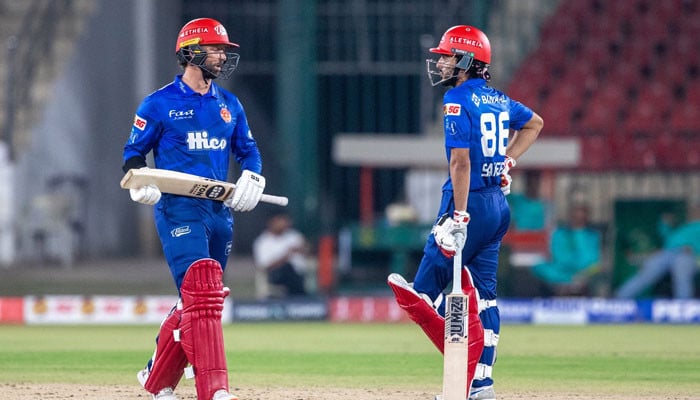
KARACHI: Islamabad United on Friday handed Hyderabad Kingsmen a humiliating eight-wicket defeat in the 36th match of the ongoing Pakistan Super League (PSL) 11 at the National Bank Stadium.
The victory, which marked United’s fifth in the ongoing eight-team tournament, propelled the three-time champions into the playoffs, joining leaders Peshawar Zalmi and 2021 champions Multan Sultans.
Set to chase a modest 81-run target, the United comfortably knocked the winning runs for the loss of just two wickets and 80 balls to spare.
The 2024 champions, however, had a contrasting start to the pursuit as they lost left-handed opener Devon Conway (zero) on the second delivery of the innings.
But Sameer Minhas and Mohsin Riaz batted sensibly to put United within touching distance as they put together 79 runs for the second wicket until Ali struck again, dismissing Riaz, who top-scored with 42 off just 18 deliveries, studded with six fours and two sixes.
Minhas, on the other hand, remained unbeaten with 27 off 20 deliveries, featuring three fours and a six, while skipper Shadab hit the winning runs in the same over with a boundary on the first delivery he faced.
For the Kingsmen, Mohammad Ali remained the solitary wicket-taker in the gruelling defeat with two scalps.
United captain Shadab Khan’s decision to field first paid dividends as his team’s bowling unit booked the new entrants for 80 in 15.5 overs.
Kingsmen got off to the worst possible start to their innings as Gleeson dismissed Maaz Sadaqat (zero) on the first delivery of the innings.
The right-arm pacer swept through their top order by getting rid of Marnus Labuschagne (five) and Saim Ayub (12) in his next two overs and brought the total down to 24/3.
Following Gleeson’s early blitz was backed by the experienced spin duo of captain Shadab and Imad Wasim as they dismantled Kingsmen’s middle and lower orders by taking three wickets each despite last match centurion Usman Khan’s grit.
The wicketkeeper batter waged a lone battle for the Kingsmen with an unbeaten 25 off 35 deliveries, during which he struck only one boundary.
Besides Usman and Saim, only Kusal Perera and Asif Mehmood, 12 each, could amass double figures against a ruthless United bowling attack.
For United, Gleeson, Imad and Shadab bagged three wickets each, while left-arm pacer Salman Mirza chipped in with one scalp.
Playing XIs
Hyderabad Kingsmen: Maaz Sadaqat, Marnus Labuschagne (c), Saim Ayub, Kusal Perera, Usman Khan (wk), Glenn Maxwell, Muhammad Irfan Khan, Hassan Khan, Hunain Shah, Mohammad Ali and Asif Mehmood.
Islamabad United: Devon Conway (wk), Sameer Minhas, Mark Chapman, Mohsin Riaz, Shadab Khan (c), Haider Ali, Faheem Ashraf, Chris Green, Imad Wasim, Richard Gleeson and Salman Mirza.
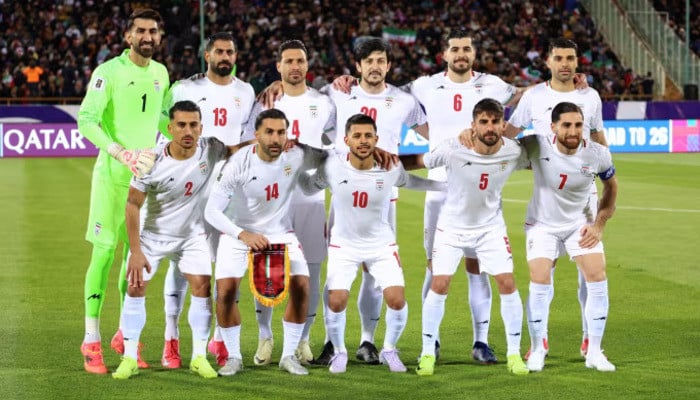
Secretary of State Marco Rubio said on Thursday Washington had no objections to Iranian players participating in the 2026 Fifa World Cup but he added the players will not be allowed to bring with them people with ties to Iran’s Islamic Revolutionary Guard Corps (IRGC).
“Nothing from the US has told them they can’t come,” Rubio told reporters.
President Donald Trump also said his administration “would not want to affect the athletes” in comments he made at the White House.
The 2026 soccer World Cup is set to begin on June 11 across the United States, Mexico and Canada.
Paolo Zampolli, a Trump envoy who has no official connection with the World Cup, had earlier suggested that Italy should replace Iran at the tournament.
“The problem with Iran would be not their athletes. It would be some of the other people they would want to bring with them, some of whom have ties to the IRGC. We may not be able to let them in but not the athletes themselves,” Rubio said.
“They can’t bring a bunch of IRGC terrorists into our country and pretend that they are journalists and athletic trainers,” Rubio added. Washington has designated the IRGC as a “foreign terrorist organisation.”
Currently there is no suggestion Iran will withdraw or be banned from the tournament that Italy missed out on.
After the start of the Iran war, Iran requested that Fifa move the team’s three group matches from the US to Mexico, which was rejected.
The US and Israel attacked Iran on February 28. Iran responded with its own strikes on Israel and Gulf states with US bases. US-Israeli strikes on Iran and Israeli attacks in Lebanon have killed thousands and displaced millions. A fragile ceasefire in the Iran war began over two weeks ago.
VILLARREAL:
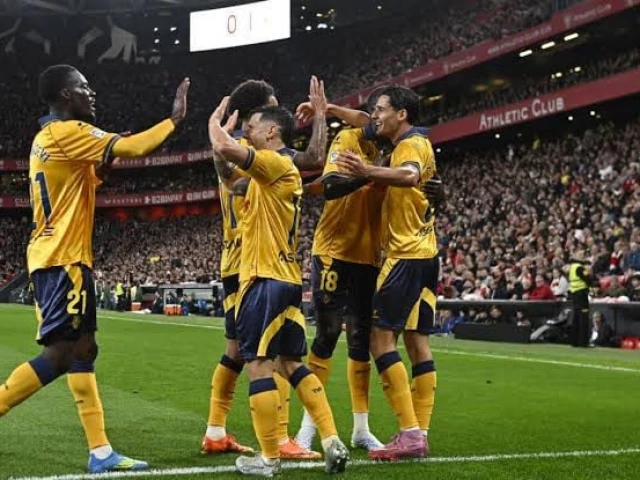
Villarreal moved closer to securing third place in La Liga with a 1-1 draw at Real Oviedo on Thursday, while another defeat left Sevilla teetering on the brink of the relegation zone.
Nicolas Pepe’s first-half penalty looked to have been enough to send Villarreal seven points clear of Atletico Madrid, but Ilyas Chaira’s strike midway through the second period ensured the spoils were shared.
Despite the result, Villarreal moved to 62 points and boast a five-point cushion over fourth-placed Atletico, who are on a four-match losing streak in the league.
Real Oviedo, who were looking to make it three wins from three, remain bottom of La Liga, six points away from safety.
Former Arsenal winger Pepe won and converted a penalty on 13 minutes to put the visitors in front.
But Oviedo levelled in the 69th minute as Ilyas’ heavily-deflected effort left goalkeeper Arnau Tenas with no chance.
Ayoze Perez came within inches of winning it for Villarreal inside the final 10 minutes but his effort came off the bar and bounced to safety from the goal-line.
Earlier, seven-time Europa League and UEFA Cup winners Sevilla sank further into the relegation battle as they went down 2-0 at Levante.
Ivan Romero netted in the 38th minute to put the 19th-placed hosts in front, before adding a second late on to secure all three points for Levante.
Sevilla languish in 17th place, one point above Alaves in the final relegation spot.
Victory for Levante gave them hope of escaping the drop zone as they climbed to 32 points — two behind the Andalusians and safety.
Rayo Vallecano put some distance between themselves and the relegation dogfight courtesy of a 1-0 win at home to Espanyol.
Sergio Camello’s 87th-minute winner took Rayo to 38 points and 11th place, one spot ahead of the Catalans on goal difference.
On Friday, Real Madrid will look to close the gap, provisionally, to Liga leaders Barcelona when they visit Real Betis.
Alvaro Arbeloa’s charges sit nine points behind their arch-rivals and know a victory early in the weekend’s round of matches will amp up the pressure on Barcelona 24 hours after the news that star Blaugrana attacker Lamine Yamal will miss the rest of the season with a hamstring injury.


AI-Designed Drugs by a DeepMind Spinoff Are Headed to Human Trials
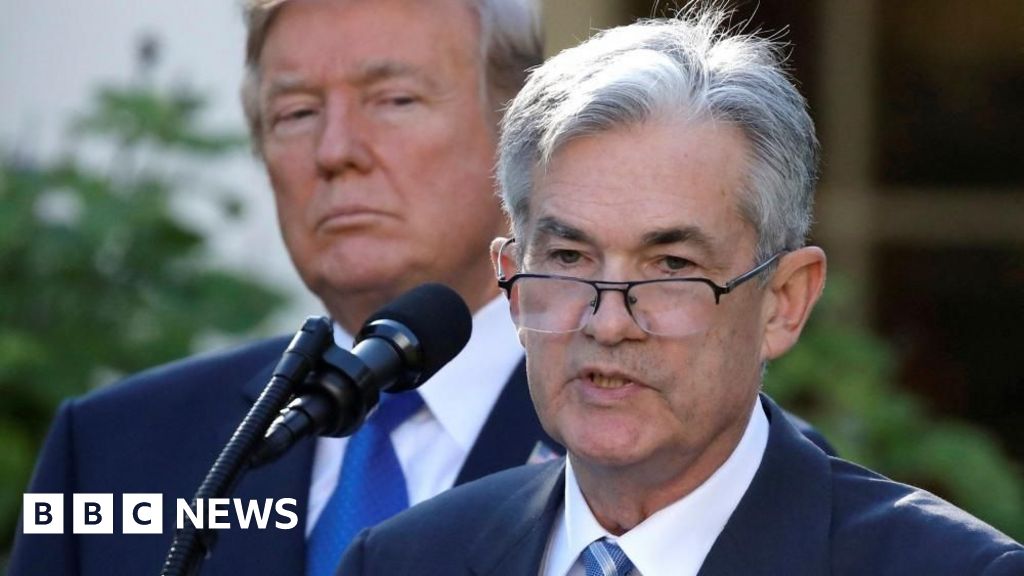
US justice department drops probe into Fed chairman Jerome Powell

Offset teases new album plans after recent shooting accident

-

 Fashion1 week ago
France’s LVMH Q1 revenue falls 6%, shows resilience amid Iran war
-

 Tech1 week ago
CYBERUK ’26: UK lagging on legal protections for cyber pros | Computer Weekly
-

 Sports5 days ago
WWE WrestleMania 42 Night 2: Live match results and analysis
-

 Sports5 days ago
NCAA men’s gymnastics championship: All-time winners list
-
 Business1 week ago
PepsiCo earnings beat estimates as North American food business improves
-
 Sports1 week ago
Faheem Ashraf backs Islamabad United’s push, calls league a ‘career-changing platform’
-

 Tech1 week ago
Anthropic Plots Major London Expansion
-
 Business1 week ago
Oil prices fall again amid Middle East ceasefire hopes