

Business
Best Buy reports modest sales recovery, but says tariffs are complicating its turnaround


Logo of Best Buy displayed outside a Best Buy store in Edmonton, Alberta, Canada, on March 22, 2025.
Artur Widak | Nurphoto | Getty Images
Best Buy surpassed Wall Street revenue and earnings expectations for its most recent quarter on Thursday, but stuck with its full-year forecast, citing tariff uncertainty.
On the company’s earnings call, CEO Corie Barry said the retailer is “increasingly confident about our plans for the back half of the year.” She said the company is “trending toward the higher end of our sales range.”
Yet she said, “given the uncertainty of potential tariff impacts in the back half, both on consumers overall as well as our business, we feel it is prudent to maintain the annual guidance we provided last quarter.”
The consumer electronics retailer said it expects revenue of $41.1 billion to $41.9 billion and adjusted earnings per share in a range of $6.15 to $6.30 for its full fiscal year 2026. In May, Best Buy had cut its full-year profit guidance from a prior range of $6.20 to $6.60.
The middle of Best Buy’s expected full-year revenue range would be roughly flat to its revenue of $41.53 billion in the previous year. Best Buy said it expects full-year comparable sales, a metric that tracks online sales and sales at stores open at least 14 months, to range between a 1% decline and a 1% increase.
Chief Financial Officer Matt Bilunas said the company’s full-year guidance reflects that some shoppers could hold off on purchases in the third quarter. He said the retailer could see a slowdown in the business in October “as people are waiting for those holiday deals to come.”
For Best Buy, back-to-school season is a crucial time as families and students come to the store for laptops, tablets and more. Barry said the company has seen “a strong customer response” to its sales events during the season.
“These results demonstrate an important aspect of our thesis: Our model really shines when there is innovation,” she said.
Shares of Best Buy were down about 4% in afternoon trading.
Here’s how the retailer did for the three-month period that ended August 2 compared with what Wall Street was expecting, according to a survey of analysts by LSEG:
- Earnings per share: $1.28 adjusted vs. $1.21 expected
- Revenue: $9.44 billion vs. $9.24 billion expected
Best Buy’s net income for the fiscal second quarter of 2026 fell to $186 million, or 87 cents per share, from $291 million, or $1.34 per share, in the year-ago quarter. Adjusting for one-time items, including restructuring charges, Best Buy reported earnings per share of $1.28.
Revenue increased from $9.29 billion in the year-ago quarter.
Best Buy has been navigating a challenging trifecta of factors. Customers have bought fewer kitchen appliances as they put off home purchases and projects because of higher interest rates. Some have hesitated to splurge on pricier items because of tariff-related uncertainty or held out on tech replacements as they wait for new or eye-catching items. The company’s annual sales have declined for the past three years.
To spur growth, Best Buy launched a third-party marketplace earlier this month to offer shoppers a wider selection of consumer electronics, accessories and more. On the marketplace, sellers who apply for the platform can list their own brands and items on Best Buy’s website and app.
The company already increased prices on some items because of tariff-related higher costs, Barry said on a mid-May call with reporters. She did not specify which items now cost more and described price increases as “the very last resort.”
Still, tariffs did not have a material impact on fiscal second-quarter financial results, Barry said on the company’s earnings call Thursday.
Shopping patterns
Barry said that shopping patterns at Best Buy have not changed from previous quarters. She said customers are “resilient, but deal-focused” and have been attracted to the company’s sales events like the one it held in July.
“In the current environment, customers continue to be thoughtful about big ticket purchases and are willing to spend on high price point products when they need to, or when there is technology innovation,” she said.
Best Buy’s comparable sales rose 1.6% in the fiscal second quarter compared to the year-ago period. That marked the company’s highest growth in three years, Barry said on the company’s earnings call.
In the U.S., comparable sales increased 1.1%, as customers bought mobile phones, video gaming equipment and items from its computing category. However, those sales trends were partially offset by weaker sales of appliances, home theaters, tablets and drones, the company said.
Investors have looked for signs that the replacement cycle is picking up about five years after consumers stocked up on laptops, kitchen appliances, computer screens and more during the Covid pandemic.
There were some indications of that rebound in Best Buy’s second quarter. Barry said the retailer’s computing category marked its sixth consecutive quarter of sales growth. It also recorded the highest number of second-quarter laptop unit sales in 15 years, she said.
Gaming in particular had stronger-than-expected sales in the quarter, thanks to the release of the Nintendo Switch 2, Barry said. The retailer capitalized on the highly anticipated launch by offering a way for customers to pre-order and opening stores at midnight when the gaming console dropped on June 5, so customers could line up and get it right away.
In the back half of the year, Barrie said Best Buy will try to rev up sales in slower categories like appliances and home theater by sharpening price points, adjusting the merchandise it sells and expanding the staffing devoted to them. The retailer has increasingly leaned on its vendor partners to staff stores, bringing in employees of Apple and Samsung for example, to support sales in different parts of its stores.
Barry said the retailer expects brands to ramp up those staffing contributions in the back half of the year.
Along with adding more dedicated brand experts to its stores, Best Buy has added new experiences to attract and engage customers. It’s testing mini-showrooms with Ikea that feature kitchen and laundry room appliances and merchandise from both retailers in 10 stores in Florida and Texas. It is also rolling out new experiences with Breville and SharkNinja to show off trendy coffeemakers, beauty items and more, Barry said. And it has areas in stores where shoppers can try out Ray-Ban and Oakley sunglasses with Meta AI technology.
For the Nintendo Switch 2 launch, Best Buy worked with Nintendo to double the space in stores ahead of the June launch. Nintendo also brought game trucks to select stores, physical trailers where customers could play with the new system and try out the latest videogames.
Best Buy’s fiscal second-quarter online sales in the U.S. rose 5.1% year over year and accounted for about a third of Best Buy’s total U.S. revenue in the quarter.




Business
Asian stocks today: Markets inch higher mirroring Wall Street gains; Kospi jumps 10%, Nikkei up 1,400 points – The Times of India
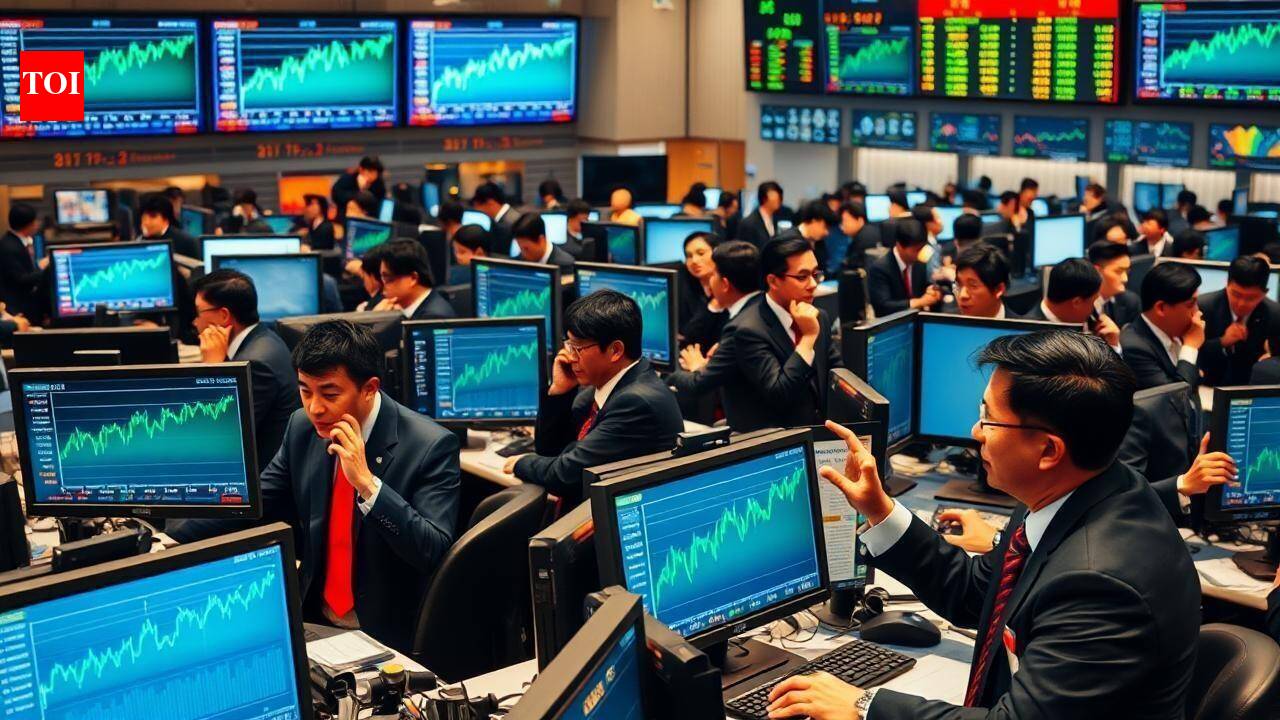
Asian stocks inched higher on Thursday, after days of trading in red amid ongoing Middle East tensions. This comes as equities were lifted by a rebound on Wall Street as oil prices paused their recent spike and economic updates painted a more positive picture of the American economy. In South Korea, Kospi hit a pause on its downward rally to add a whopping 10% or 513 points, to reach 5,606. Japan’s Nikkei 225 also climbed 2.7% to 55,713. Hong Kong’s HSI also traded in green, rising 353 points to 25,603 as of 9:10 am. Shanghai and Shenzhen added 0.9% and 1.7% respectively. Gains elsewhere in the region were more modest. Australia’s S&P/ASX 200 added 0.3% to 8,927.20, while New Zealand’s benchmark index moved 0.9% higher. In contrast, US futures indicated a subdued start ahead. Futures linked to the Dow Jones Industrial Average were almost unchanged, while S&P 500 futures ticked up 0.2%. The S&P 500 advanced 0.8% on Wednesday, clawing back much of the decline seen since the onset of the Iran conflict. The Dow Jones Industrial Average rose 0.5%, and the Nasdaq Composite outperformed with a 1.3% gain. Globally, market sentiment has remained sensitive to developments in the Middle East, with oil price swings continuing to steer trading direction. Crude prices eased during Wednesday’s session. Brent crude briefly moved above $84 a barrel before settling at $81.40, roughly matching the previous day’s level. US benchmark crude edged up 0.1% to finish at $74.66 per barrel. By early Thursday, however, oil was on the rise again. Brent crude climbed 2.4% to $83.32 per barrel, while U.S. benchmark crude jumped 2.5% to $76.53 per barrel.
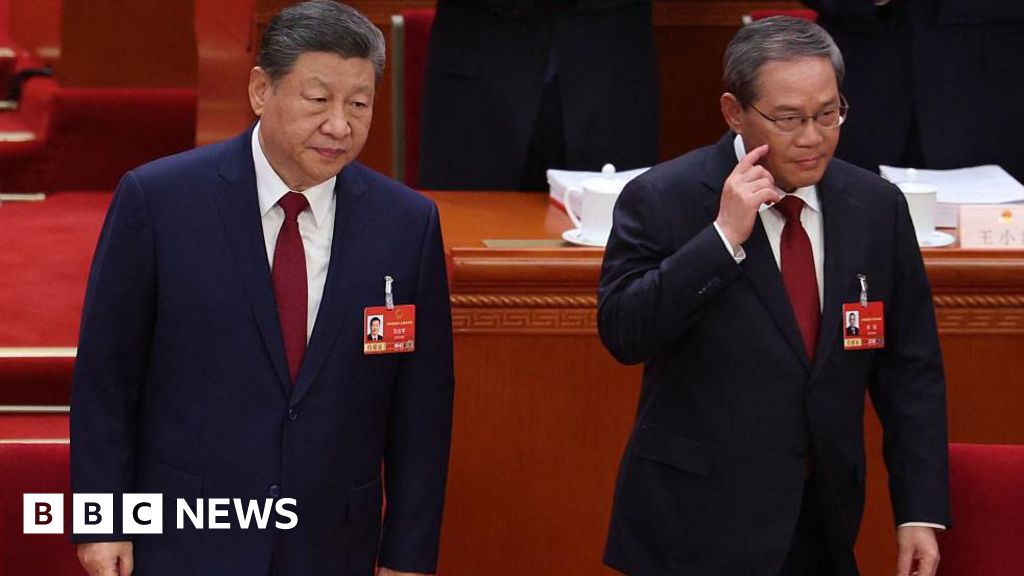
It is also the first time the target has been lowered since it was cut to “around 5%” in 2023.
Source link
Business
World’s Second-Largest Shipping Firm Maersk Suspends Cargo Bookings Across West Asia Amid War
Last Updated:
Maersk has halted cargo bookings to several West Asian ports due to war disruptions. Affected ports include UAE, Iraq, Kuwait, Qatar, Bahrain, most of Oman, and two in Saudi.




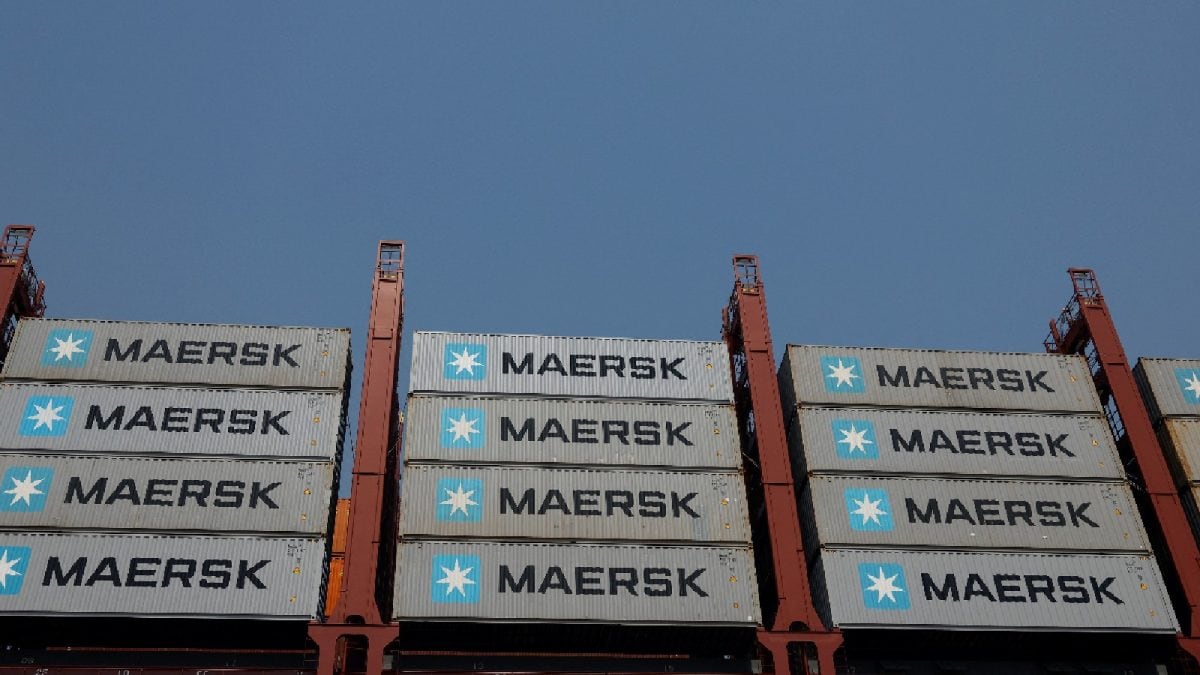
Maersk cited regional conflict and personnel safety as it suspended cargo bookings across West Asia, signalling growing disruption to global trade routes. (IMAGE: REUTERS)
Maersk, the world’s second-largest container shipping company that handles a significant share of global trade, said it has suspended cargo bookings to and from several ports in the West Asia region as the ongoing war begins to disrupt global shipping routes.
The company on Wednesday said it will no longer accept cargo bookings involving ports in the United Arab Emirates, Iraq, Kuwait, Qatar, Bahrain, most of Oman and two ports in Saudi Arabia, according to a report by Barron’s.
However, the suspension will not apply to shipments of critical food supplies, medicines and other essential goods, which will continue to move through the region.
Maersk said the decision was part of operational measures aimed at protecting personnel and safeguarding cargo amid the escalating conflict.
“We are taking operational measures to ensure the safety of our personnel, safeguard your cargo and maintain service stability across affected trades in the Middle East,” the company said in a statement accessed by Barron’s.
Maersk had earlier announced that it would reroute vessels bound for the Suez Canal around the southern tip of Africa and suspend all vessel crossings through the Strait of Hormuz as tensions escalate in the region.
The changes mean ships travelling between Asia and Europe may now take longer routes around the Cape of Good Hope, adding time and cost to global shipping, the news agency said in its report.
Financial markets also reacted to the development. Shares of Maersk traded in Denmark fell nearly 2% on Wednesday following the announcement.
The disruption comes as insurance providers pause coverage for vessels operating in parts of the Gulf amid the intensifying conflict.
US President Donald Trump on Tuesday said the United States Navy would escort oil tankers through the Strait of Hormuz if necessary, as concerns mount over energy supply disruptions.
Copenhagen, Denmark
March 05, 2026, 02:15 IST
Read More


US Senate Rejects Resolution to Limit Trump’s Iran War Powers

David Beckham supports Cruz at Manchester gig after emotional Brooklyn moment
Asian stocks today: Markets inch higher mirroring Wall Street gains; Kospi jumps 10%, Nikkei up 1,400 points – The Times of India

India Us Trade Deal: Fresh look at India-US trade deal? May be ‘rebalanced’ if circumstances change, says Piyush Goyal – The Times of India

What are Iran’s ballistic missile capabilities?

Households set for lower energy bills amid price cap shake-up

-
Business6 days ago
India Us Trade Deal: Fresh look at India-US trade deal? May be ‘rebalanced’ if circumstances change, says Piyush Goyal – The Times of India
-
 Politics7 days ago
What are Iran’s ballistic missile capabilities?
-
Business1 week ago
Households set for lower energy bills amid price cap shake-up
-

 Politics7 days ago
US arrests ex-Air Force pilot for ‘training’ Chinese military
-
 Business6 days ago
Attock Cement’s acquisition approved | The Express Tribune
-
 Fashion1 week ago
OECD GDP growth slows to 0.3% in Q4 amid mixed trends
-

 Fashion6 days ago
Policy easing drives Argentina’s garment import surge in 2025
-

 Sports7 days ago
Sri Lanka’s Shanaka says constant criticism has affected players’ mental health