

Politics
US, China economic chiefs to meet in Paris to clear path to Trump-Xi summit

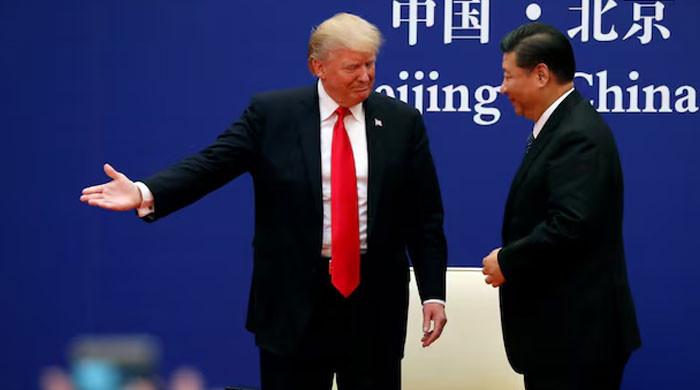

- Talks to focus on tariffs, rare earths, high-tech export controls.
- Analysts see little prospect for breakthrough due to Iran war.
- New US trade probes could lead to more tariffs on China.
PARIS: Top US and Chinese economic officials are set to launch a new round of talks in Paris on Sunday to iron out kinks in their trade truce and clear a smooth path for US President Donald Trump’s trip to Beijing to meet with Chinese President Xi Jinping at the end of March.
The discussions, led by US Treasury Secretary Scott Bessent and Chinese Vice Premier He Lifeng, are expected to focus on shifting US tariffs, the flow of Chinese-produced rare earth minerals and magnets to US buyers, American high-tech export controls and Chinese purchases of US agricultural products.
The two sides will meet at the Paris headquarters of the Organisation for Economic Cooperation and Development, a source familiar with their planning said. China is not a member of the club of 38 mostly wealthy democracies and considers itself a developing country.
US Trade Representative Jamieson Greer will also join the talks, which continue a string of meetings in European cities last year aimed at easing tensions that threatened a near collapse of trade between the world’s two largest economies.
US-China trade analysts said that with little time to prepare and Washington’s attention focused on the US-Israeli war with Iran, prospects for a major trade breakthrough are limited, in Paris or at the Beijing summit.
“Both sides, I think have a minimum goal of having a meeting, which sort of keeps things together and avoids a rupture and re-escalation of tensions,” said Scott Kennedy, a China economics expert at the Centre for Strategic and International Studies in Washington.
Trump may want to come away from Beijing with major Chinese commitments to order new Boeing aircraft and buy more US liquefied natural gas and soybeans, but to get that he may need to offer some concessions on US export controls, Kennedy added.
Instead, Kennedy said chances were high for a summit that “superficially suggests progress but that really just leaves things about where they’ve been for the last four months.”
Trump and Xi could potentially meet three other times this year, including at a China-hosted APEC summit in November and a US-hosted G20 summit in December that could yield more tangible progress.
Iran war and oil concerns
The US-Israeli war on Iran will likely come up at the Paris talks, especially in reference to the spike in oil prices and the closure of the Strait of Hormuz, through which China gets 45% of its oil. Bessent on Thursday night announced a 30-day waiver of sanctions to allow the sale of Russian oil stranded at sea in tankers, a move to raise supplies.
On Saturday, Trump urged other nations to help protect shipping in the Strait of Hormuz, after Washington bombed military targets on Iran’s Kharg Island oil loading hub and Iran threatened to retaliate.
“Meaningful” progress in Sino‑US economic cooperation could restore confidence to an increasingly fragile global economy, China’s state-run Xinhua news agency said in a commentary on Sunday.
Trade truce
The two sides are expected to review their progress in meeting commitments under the October 2025 trade truce declared by Trump and Xi in Busan, South Korea. The deal forestalled a major flare-up in tensions, trimmed US tariffs on Chinese imports, and paused for a year China’s draconian export controls on rare earths. It also paused the expansion of a US blacklist of Chinese companies banned from buying high-technology US goods such as semiconductor manufacturing equipment.
China also agreed to buy 12 million metric tons of US soybeans during the 2025 marketing year and 25 million tons in the 2026 season, which will start with the fall harvest.
US officials, including Bessent, have said that China has so far met its commitments under the Busan deal, citing soybean purchases that met initial goals.
But while some industries are receiving rare earth exports from China, which dominates global production, US aerospace and semiconductor firms are not and are facing worsening shortages of key materials, including yttrium, used in heat-resistant coatings for jet engines.
“US priorities will likely be about agricultural purchases by China and greater access to Chinese rare earths in the short term” at the Paris talks, said William Chou, a senior fellow at the Hudson Institute, a Washington think tank.
Trade probes
Greer and Bessent also bring a new irritant to the Paris talks, a new “Section 301” investigation into unfair trade practices targeting China and 15 other major trading partners over alleged excess industrial capacity that could lead to a new round of tariffs within months. Greer also launched a similar probe into alleged forced labour practices in 60 countries, including China, that could ban certain imports into the US
The probes aim to rebuild Trump’s tariff pressure on trading partners after the US Supreme Court struck down Trump’s global tariffs under an emergency law as illegal. The ruling effectively reduced Trump’s tariffs on Chinese goods by 20 percentage points, but he immediately imposed a 10% global tariff under another trade law.
China on Friday denounced the probes and said it reserved the right to take countermeasures. An editorial by state-run China Daily added that the probes were representative of unilateral actions that complicate negotiations.
“The new round of talks is both an opportunity and a test,” Xinhua said.
“Whether the upcoming talks can achieve progress will largely depend on the US side. Washington needs to approach the negotiations with a rational and pragmatic mindset and act in line with the principles that underpin stable China-US economic relations.”
Politics
Iranian FM Araghchi to travel to Beijing for continued diplomatic consultations with key partners
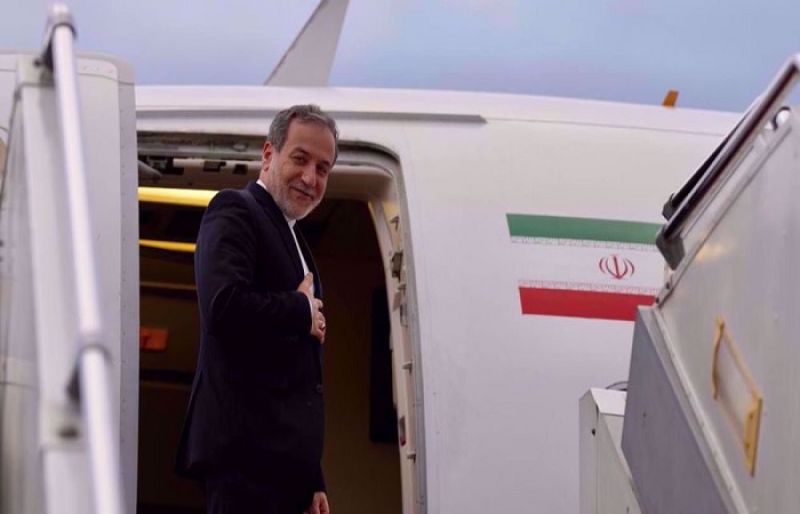
Iranian Foreign Minister Abbas Araghchi will travel to Beijing on Tuesday for high-level talks with his Chinese counterpart on bilateral ties and regional developments.
The visit is part of Tehran’s broader diplomatic outreach to key partners. Araghchi’s agenda includes discussions on mutual cooperation as well as regional and international issues, according to a brief statement by the Iranian Foreign Ministry.
The visit to China comes as Araghchi traveled to Russia last Monday as part of a broader diplomatic tour that also included Pakistan and Oman.
During the Moscow visit, Araghchi held talks with President Vladimir Putin, alongside meetings with his Russian counterpart.
Iran closed the strategic Strait of Hormuz to adversary nations and their allies following the commencement of US-Israeli aggression against Iran on February 28, which resulted in the assassination of the Leader of the Islamic Revolution, Ayatollah Seyyed Ali Khamenei, and several senior military commanders.
On April 8, forty days into the war, a temporary Pakistan-brokered ceasefire came into effect. Negotiations subsequently took place in Islamabad but failed to produce an agreement amid maximalist demands and intransigent positions from the United States.
Meanwhile, the US has imposed a blockade on Iranian ports, which Tehran slams as illegal and in violation of the ceasefire terms. In response, Iran has asserted control over the Strait of Hormuz and is denying passage to vessels belonging to the US and its allies.
Tehran has submitted proposals to Washington aimed at permanently resolving the war, but these have reportedly been rejected by the White House, which has continued to issue military threats against Iran.
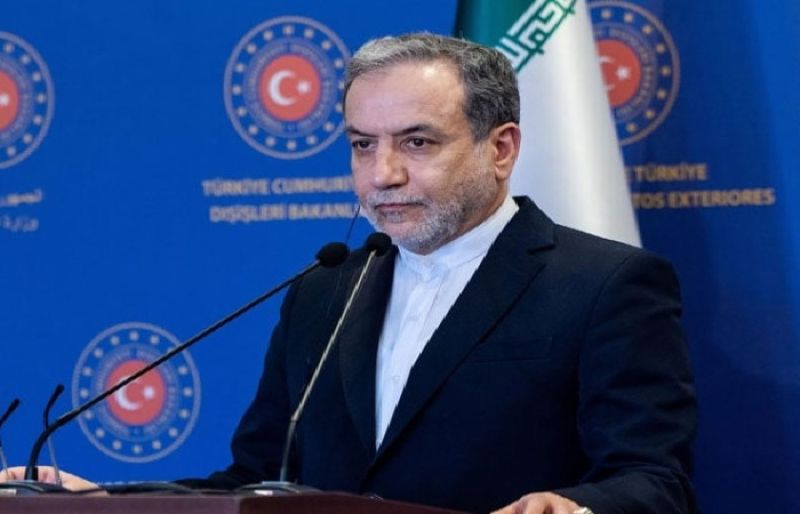
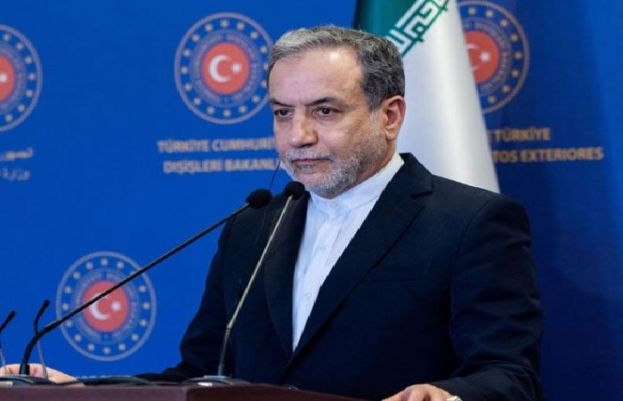
Iranian Foreign Minister Abbas Araghchi on Monday night said talks with the United States were making progress with Pakistan’s “gracious effort,” while cautioning Washington against being drawn into further escalation amid a standoff over the Strait of Hormuz.
The statement comes after US and Iran launched new attacks in the Gulf on Monday as they wrestled for control over the Strait of Hormuz with duelling maritime blockades, shaking a fragile truce.
US President Donald Trump launched a new effort to get stranded tankers and other ships through the strait, the vital energy-trade chokepoint that has been virtually closed since the US and Israel began attacks on Iran in February, a war that has killed thousands of people across the region.
Trump gave scant details about his new effort, which he called “Project Freedom,” to help stuck ships travel through the strait when he announced it on social media, two days after a legal deadline under US law had passed for him to get authorisation from Congress for the war. Trump told Congress the war was “terminated” and the deadline was moot, a claim disputed by some lawmakers.
It was the first apparent attempt to use military force since last month’s ceasefire announcement to unblock the world’s most important energy shipping route, which Iran’s Islamic Revolutionary Guard Corps has said can only happen with its permission.
The cost of shipping insurance has also rocketed. For weeks, the US Navy has blockaded Iran’s trade by sea, which Iran says is itself an act of war.
But Trump’s latest move, at least initially, appeared to have backfired, bringing no surge of merchant ship traffic while provoking a promised show of force from Iran, which has threatened to respond to any escalation with new attacks on its neighbours hosting US soldiers. Major shipping companies said they were likely to wait for an agreed end to hostilities before trying to cross the strait.
Meanwhile, Iranian FM Araghchi said Monday’s events showed there was no military solution to the crisis. He said peace talks were progressing with Pakistan’s mediation while warning the US and the UAE against being drawn into a “quagmire by ill-wishers.”
Criticising the US initiative aimed at escorting vessels through the Strait of Hormuz, Araghchi said: “Project Freedom is Project Deadlock.”
Nonetheless, the US military said two US merchant ships made it through the strait, without saying when, with the support of Navy guided-missile destroyers. While Iran denied any crossings had taken place in recent hours, Maersk said the Alliance Fairfax, a US-flagged ship, exited the Gulf via the Strait of Hormuz accompanied by the US military on Monday.
The commander of U.S. forces in the region said his fleet had destroyed six small Iranian boats, which Iran also denied. Admiral Brad Cooper said he “strongly advised” Iranian forces to keep clear of U.S. military assets carrying out the mission.
Iranian authorities released a map of what they said was an expanded sea area now under their control, extending far beyond the strait to include long stretches of the UAE’s coastline.
‘Dialogue and diplomacy’
A day earlier, Deputy Prime Minister and Foreign Minister Ishaq Dar held a telephonic conversation with his Iranian counterpart, during which both sides discussed the evolving regional situation and Pakistan’s ongoing diplomatic efforts.
According to the Foreign Office, Araghchi appreciated Pakistan’s constructive role and mediation efforts, while Dar reaffirmed Islamabad’s commitment to promoting dialogue and engagement.
He stressed that diplomacy remained the only viable path to achieving lasting peace and stability.
Negotiations between Washington and Tehran have remained stalled since a ceasefire took effect on April 8, with tensions centred on Iran’s blockade of the Strait of Hormuz following US-Israeli strikes. The move has disrupted global flows of oil, gas and fertiliser, while the United States has responded by imposing a counter-blockade on Iranian ports.
Pakistan has emerged as a key intermediary in efforts to revive dialogue, hosting high-level engagements between the two sides in Islamabad last month, though a second round of talks has yet to materialise.
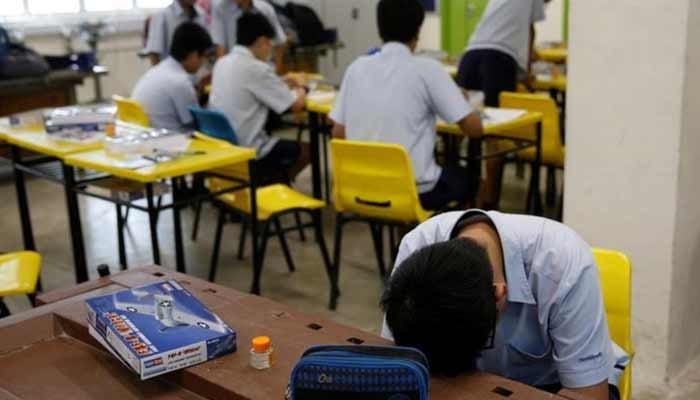
School bullies in Singapore face caning under new guidelines, but the education minister said on Tuesday it would be meted out only as a last resort with strict safeguards.
Human rights groups regularly criticise Singapore for the use of corporal punishment, which remains part of both the school system and criminal justice, but authorities have defended it as a deterrent to crime and serious misconduct.
Caning was discussed in parliament on Tuesday after legislators asked how it would be used in relation to bullying in schools.
The debate followed stricter guidelines against serious student misconduct, including bullying, unveiled by the education ministry last month.
Under the guidelines, offenders could face between one and three strokes of the cane.
“Our schools use caning as a disciplinary measure if all the other measures are inadequate, given the gravity of the misconduct,” Education Minister Desmond Lee said Tuesday.
“They follow strict protocols to ensure safety for the student. For instance, caning must be approved by the principal and administered only by authorised teachers,” he said.
“Schools will consider factors such as the maturity of the student and if caning will help the student learn from his mistake and understand the gravity of what he has done.”
The punishment is given only to boys, per “the Criminal Procedure Code, which states that women shall not be punished with caning”, Lee said.
Caning in Singapore is a legacy from British colonial rule, but Britain has long abolished corporal punishment.
After the caning is meted out, the school will “monitor the student’s wellbeing and progress”, including providing counselling, Lee said.
According to a World Health Organisation (WHO) report last year “there is now overwhelming scientific evidence that corporal punishment of children carries multiple risks of harm and has no benefits”.


Climate is now in the cost sheet

Dolly Parton shares health update after canceling Las Vegas residency
[CinePlex360] Please moderate: “Hundreds in Teh

-

 Tech1 week ago
A Brain Implant for Depression Is About to Be Tested in Humans
-

 Tech1 week ago
Almost 90% of women leave tech industry within 10 years | Computer Weekly
-

 Sports1 week ago
Pro wrestling star Steph De Lander reveals how colleague’s advice helped lead her to title triumph at ACW
-
 Business1 week ago
‘I had £20,000 stolen and had to fight a 13-month fraud reporting rule to get it back’
-
 Entertainment1 week ago
Norway joins Type 26 Frigate Programme to boost NATO naval power
-
 Business6 days ago
PSX plunges over 4,800 points | The Express Tribune
-

 Entertainment1 week ago
Melania Trump says ABC should ‘take a stand’ on late-night host Kimmel
-

 Tech1 week ago
This Ambitious Laptop Doesn’t Leave Much Room for Your Hands